
Politics
Rob Lorei leaves behind a legacy of realized dream, conflict
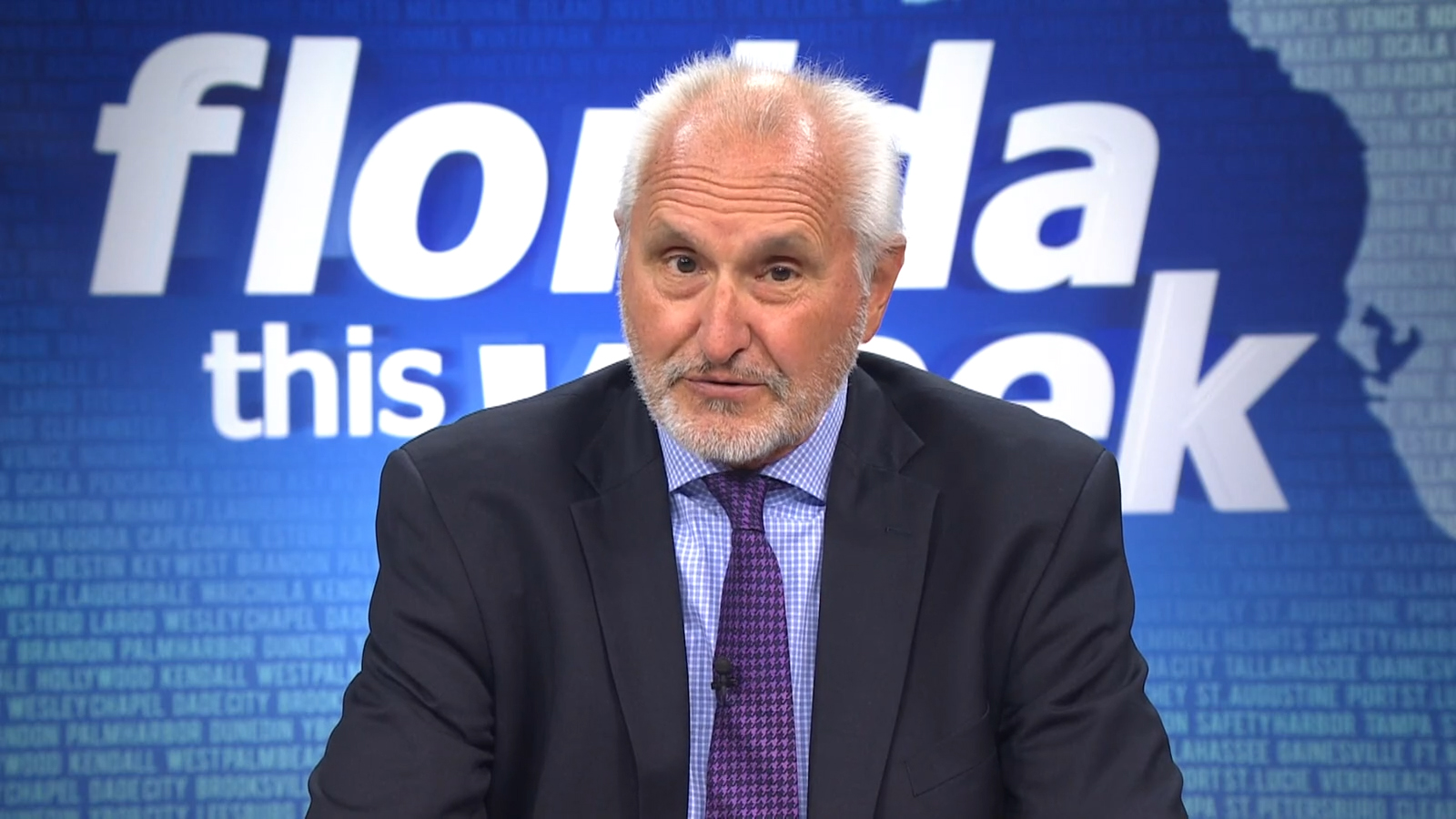
In the late 1970s, nine workers fanned out across the better-off neighborhoods of Tampa, trying to raise cash for a community radio station. They wanted the money not from anyone who might donate, but from those who could afford to.
Leading the effort was a good-looking man in his late twenties. Rob Lorei, an Antioch College graduate and the prospective station’s news director, freely admitted that he and his staff had no experience in starting a radio station from scratch or that they were combing through manuals to rebuild mixing boards they would use to play borrowed records over the radio.
“It’s 99% guts we’re doing this with,” Lorei told the Tampa Times in April 1979.
WMNF-FM 88.5 opened in September 1979, broadcasting from the sun porch of a weathered two-story home in Hyde Park. Lorei, who died Sunday of cancer, is a huge reason why the station has continued to thrive, becoming a Tampa Bay mainstay. That legacy looms so large, it is tempting to relegate the most controversial events within it – his getting fired twice in three years – to a footnote.
It is more than that. Lorei, who could be a model of equanimity and self-restraint on the air, could be challenging to work with off it, some of his former colleagues say. Nonetheless, his reputation as WMNF’s most formative influence and a driving force is accurate.
For nearly 24 years, he also hosted a show on WEDU-TV, Florida This Week, a public affairs discussion forum, ending earlier this year to focus on his health.
WMNF – “where music, news and culture collide,” the tagline reads – is owned by the Nathan B. Stubblefield Foundation, established in 1978 for that purpose. The concept had its share of doubters at the beginning. Q105-FM, a Top 40 station at the time, openly predicted WMNF would fail.
In the end, not fitting in actually helped.
“The skeptics said, ‘It’ll never work in Tampa Bay,’” said Randy Wynne, Lorei’s program director for 35 years. “But I think it worked because there wasn’t much else, whereas in Boston or New York, it wouldn’t stand out as much as it did in Tampa Bay. All of a sudden, we had this cool station that plays bluegrass and alternative rock and has news reports that are outside the mainstream.”
WMNF has built an eclectic brand capable of surprising the casual listener with R&B, folk, rockabilly, soul, salsa, and more while satisfying niche fans of a particular genre. Yet Lorei advocated veering outside of the exclusively “alternative” lane at times, mixing in some Springsteen or maybe a three-hour Beatles retrospective and NPR news at the top of the hour.

“I think that was part of Rob’s genius,” Wynne said. “Some directors in community radio would say, ‘If the other stations are playing it, we won’t touch it. We are going to be the clear alternative.’ And so, they limit themselves to being fringe.
“At WMNF, yeah, we’ll take the fringe, but we also want some of the mainstream. If you play something that’s familiar, then you can play something that’s unfamiliar. And I think Rob had a sense of that, and that’s how the station was set up.”
Lorei might have left his most significant imprint with Radioactivity, the talk show he hosted weekdays at 11 a.m. He quizzed politicians, labor leaders, artists, and activists in a lively but civil atmosphere. The program was so popular that fans came to regard Lorei as “the voice” of WMNF.
Meanwhile, he trained volunteers upon whom WMNF has always relied to do some heavy lifting, including news gathering.
“It was his job to sort of cultivate people and teach them journalism,” said Eric Deggans, a former Tampa Bay Times media critic and a frequent guest on Lorei’s shows. “Being a community-supported radio station, there’s a responsibility to do that. Your main job is just to report things that you know will inform the community and help the community, and he was all about that. He embodied that.
“One thing I always admired about him was that he seemed humble; he didn’t need much by way of resources. He could do a lot with a little.”
In the mid-1990s, he took on additional duties with WEDU, the Tampa PBS affiliate, auditioning in 2001 for the moderator of a television show in the only suit he owned. He got the job hosting Florida This Week while continuing as news director at WMNF. He excelled at WEDU as the mild-mannered, fact-based interviewer whose reach extended beyond Florida, interviewing Janet Reno, George Soros, then-Florida Attorney General Pam Bondi, Bill Moyers, Jimmy Carter, Greta Van Susteren, politicians and pollsters.
After taping a show, he often invited guests who might have argued politics to join him at Four Green Fields for drinks.
“It’s hard to be toxically opposed to somebody when you’ve shared a drink with them, heard about their family and their kids,” said Deggans, who is now a Knight Professor of Journalism and Media Ethics at Washington and Lee University.
Tampa author Ben Montgomery, who appeared multiple times to discuss his popular nonfiction books starting with “Grandma Gatewood’s Walk,” remembers Lorei as an interviewer who had done his homework.
In the publicity rollout, Montgomery said, “You talk to so many people. And I guarantee you, 80% of them have not read more than a page or two of your book. But Rob’s questions were so insightful, I knew he wasn’t just a guy who was giving it a cursory glance and throwing out some softball questions. He was a guy who had read the thing cover to cover and that’s very rare.” (Montgomery, a former Tampa Bay Times reporter, also co-hosted The Skinny, a WMNF podcast.)
In February 2019, Lorei was fired by Craig Kopp, the general manager. Details are murky and multilayered. At the time, Kopp, WMNF’s third general manager of the decade, said Lorei was “unmanageable.”
Lorei told The Catalyst he thought he was fired because he had publicly criticized a WMNF fundraising cruise as being wasteful and bad for the environment. Listener outrage over the firing mounted, some of it encouraged by Lorei, who called his ouster the “greatest crisis WMNF has ever faced.”
But behind the scenes, a quiet discontent had been brewing for years. While revered publicly, those who worked with Lorei said his discerning mind and laser-sharp, insightful nature had another side and could at times take a turn toward argumentativeness, criticism and abrasiveness.
Fans threatened to renege on pledged donations. The station relented and reinstated Lorei in March 2019, a month after firing him. Kopp resigned a month after that.
Kopp declined to comment for this story, texting, “I said everything I had to say at the time. My condolences to his family.”
In 2021, the station again fired Lorei for using what Kopp’s successor deemed an antisemitic “ethnic slur.” The email in question came during a testy exchange with a listener who, Lorei said, had been minimizing the danger posed by the far-right Proud Boys. The word general manager Rick Fernandes deemed offensive was “kapo,” referring to a concentration camp inmate who collaborates with captors.
Lorei said he meant “kapo” in a “political” but not an ethnic context. This time, he did not contest being fired.
“I didn’t really have the inside track on (the firings),” said Wynne, the 35-year program director who now works as a volunteer. “It came from the Board. Both times I heard about it after it happened.”
The explanations he heard from WMNF’s leadership “never really made sense,” Wynne said, “except I knew Rob was kind of hard to deal with as a staff member. He had strong opinions.
A turnover of general managers – five between 2009 and 2021 – didn’t help. “The managers would come and didn’t have the history with the station,” Wynne said. “And Rob didn’t always kowtow to everything they had to say. I don’t really understand it. But I’m not going to criticize the station for firing him.”
Lorei continued hosting Florida This Week on WEDU, and according to veteran volunteer and staffer JoEllen Schilke, it turned out to be his best work.
“As frustrated as he was about WMNF, it made his WEDU show even better,” said Schilke, who has hosted Art In Your Ear since 1992. “It was a very human thing, a healthy response. It’s like if you break up with someone, and then you see them and they’re looking really good.”
Lorei addressed an audience in April at Cafe con Tampa, apologizing for a slight rasp in his voice, which he attributed to cancer. Reflecting on his career, he noted that he had always made a point of challenging anyone calling someone else a “bigot” to supply proof. He also lamented the seeming alignment between networks and political parties.
“I hate the idea that reporters are cheerleaders,” he said. “We are in our silos.”
He also worried about shrinking news budgets around the country, resulting in fewer journalists covering local news.
“I think our democracy suffers the fewer reporters we have,” he said. “This used to be a great news town.”
Post Views: 0