Connect with us

Fashion

River Island to close over 30 stores before the end of the January sales

Published

on


Published


December 12, 2025

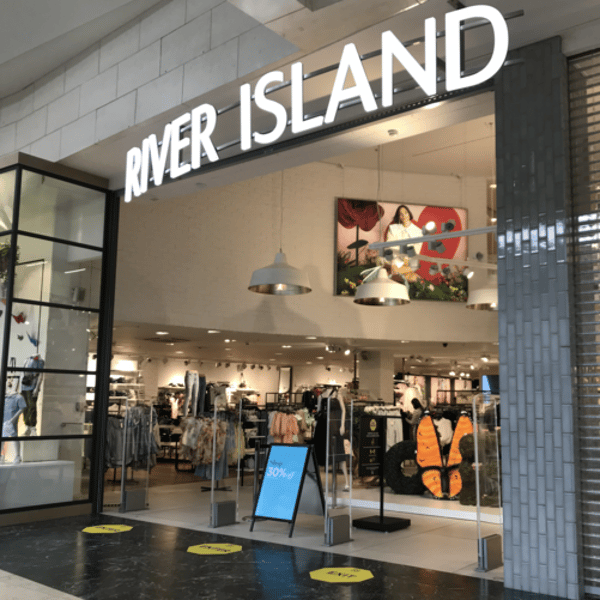
River Island’s store closure programme will move into high gear within weeks as 33 stores will close by the end of January under the chain’s court-approved restructuring plan.

Photo: Sandra Halliday

The plan should also see it starting to pay reduced rents for 71 of its current 200+ chain. That could include up to three years of rent cuts or even no rents being paid for some River Island stores.

Its restructuring plan was approved earlier this year amid dire warnings that the business might collapse if the restructuring process didn’t go through.

Only this month the fashion retailer’s newly-filed accounts showed that River Island Holdings Limited made a loss before tax of £124.3 million in 2024, much wider than the £32.2 million loss of the year before. That came as turnover fell to £690.1 million from £701.5 million.

At the hearing for its restructuring plan in August, its legal team told the court that external pressures meant it hadn’t been able to reverse the downward trend.

The stores that will close within weeks are: Aylesbury, Bangor Bloomfield, Barnstaple, Beckton, Brighton, Burton-Upon-Trent, Cumbernauld, Didcot, Edinburgh, Falkirk, Gloucester, Great Yarmouth, Grimsby, Hanley, Hartlepool, Hereford, Kilmarnock, Kirkcaldy, Leeds Birstall Park, Lisburn, Northwich, Norwich, Oxford, Perth, Poole, Rochdale, St Helens, Surrey Quays, Sutton Coldfield, Taunton, Workington, and Wrexham.

Copyright © 2025 FashionNetwork.com All rights reserved.


Source link

Continue Reading

Fashion

The ‘Ralph Lauren Christmas’ trend is marketing gold

Published

on


By

Bloomberg

Published


December 12, 2025

If you’ve been scrolling through social media lately, you won’t have escaped the plaid trimmings, pine garlands, and rich red ribbons, all warmed by the glow of a roaring fire.

A Ralph Lauren festive store display – Ralph Lauren- Facebook

Welcome to “Ralph Lauren Christmas.” The aesthetic, which demonstrates how to create Ralph Lauren Corp.’s signature style for the holidays, has been trending recently, sending the brand’s visibility soaring.

This viral moment has been years in the making. Ralph Lauren has been polishing its image and honing its product range for the best part of a decade. And luck has been on its side, with the company squarely in the intersection of several fortunate trends.

Preppy style is having a major fashion moment and Ralph Lauren is the look, thanks to its traditional staples such as cable-knit sweaters, blazers, and rugby shirts. Even the quarter zip craze, which heralds a return to more sophisticated casual dressing, is contributing to the brand’s popularity, Laurent Vasilescu, analyst at BNP Paribas SA, wrote in a recent note.

Social media narratives take inspiration not just from how we dress but also how we feel. In uncertain times- particularly over the holidays- we often take comfort from the traditions of the past. Add in the old money vibe of quiet luxury, which might be in its final throes of popularity but refuses to disappear, and searches for “Ralph Lauren inspired Christmas” on Pinterest are up 3,000% in the four weeks to November 15 compared with the year earlier. 

So, how did the company position itself for this moment in the viral sun? Under chief executive officer Patrice Louvet, who took the reins in 2017- and of course its eponymous founder, who remains actively involved- Ralph Lauren has moved closer to the European luxury houses such as LVMH Moet Hennessy Louis Vuitton SE. It’s done so by taking its image upmarket and cutting back on selling through less chichi retailers. Even its outlet stores, which play an important but undisclosed role in the business, have undergone a glow up.

As part of this strategy, Ralph Lauren has invested in its core stores- where its particular holiday look is very much in evidence- and concentrated on the products it is best known for. The timing has been fortuitous: the brand is looking both luxe and accessible even as European rivals have aggressively increased prices.

The turnaround has been augmented by effective marketing, such as taking its Polo Bear from merchandise to the big screen, with the mascot’s first animated film. And through its cafes and restaurants, the brand has been at the forefront of luxury’s push into hospitality.

While Ralph Lauren Christmas grew organically, the company has encouraged an association with the season. This includes  holiday pop-ups in Seoul, Tokyo, Los Angeles, and London, where in Sloane Square visitors can sip hot chocolate, buy a holiday gift, make a seasonal floral display, or visit Santa’s grotto. 

The queues for selfies by the vintage red pick-up truck- with some sporting the signature Polo Bear sweater- underline Ralph Lauren’s marketing genius. The founder himself is Jewish, born Ralph Lifshitz in the Bronx. Yet his ability to draw people from all walks of life into his particular vision of the American dream has made his company as much a Christmas staple as eggnog and It’s a Wonderful Life. And it’s worth noting that he’s done so by embracing rather than ignoring the country’s diversity. For an example, look to the retailer’s 2022 collaboration with two historically Black colleges, which continued this year with a collection celebrating Oak Bluffs, a town on Martha’s Vineyard that is a summer haven for Black Americans.

Ralph Lauren isn’t the only one to benefit from the Christmas trend, according to retail intelligence company Edited. Styles featuring a palette of red, burgundy, and green, punctuated by hints of gold, as well as tartans and teddy bear motifs are appearing in chains on both sides of the Atlantic. Vans, for example, has gone big on plaid. Some social media posts show how to get the look for less at the likes of Amazon.com Inc. At the other end of the price spectrum, Hugo Boss AG has collaborated with teddy bear maker Steiff, while Burberry Group Plc has created a Gund bear as part of its tie-up with Macy’s Inc.’s Bloomingdale’s.

But given that the style is so intrinsically linked with Ralph Lauren, the company is likely to be the biggest winner. The holiday pop ups have so far generated about $6 million in value from social media posts, engagement and articles, according to Launchmetrics.

Revenue in the all important golden quarter looks to be benefiting as well. Based on Bloomberg Second Measure data for the third quarter to date, Ralph Lauren’s sales through its own US stores and website are tracking well ahead of consensus expectations for North American sales growth, according to Mary Ross Gilbert, an analyst at Bloomberg Intelligence.

The shares, which slipped after some investors were underwhelmed by the next stage of the turnaround outlined in September, hit a fresh high in late November.

Social media fads can quickly fade: Google and Pinterest data indicate that the Ralph Lauren holiday aesthetic may have already peaked. But the halo around the brand over the past couple of months should have helped it deepen its connection with shoppers.

The narrative has also highlighted Ralph Lauren’s home décor and hospitality offerings, reinforcing its broader lifestyle credentials, something the company is keen to develop.

And when the preppy look wanes, as it naturally will, Ralph Lauren should be able to adapt. It is one of the few luxury companies to retain distinct sub-brands, from its high-end Purple Label to the heritage workwear of Double RL, so it has a good chance of tapping into whatever fancy comes next. Its strategy of growing in womenswear, particularly handbags, is another way to make up any shortfall.

There is scope for Ralph Lauren to continue flexing its marketing muscles, too. It recently revealed the uniforms that the US Olympic and Paralympic teams will wear for the winter games opening and closing ceremonies in Milan in February, and will outfit athletes again for the Los Angeles summer games in 2028. Ralph Lauren should consider an LVMH-style takeover of the event on its home turf to keep its name at the forefront of consumers’ minds.

Ralph Lauren looks well positioned to adjust to changing seasons- and changing fashions. If so, the buzz around the brand should linger long after the pine needles have dropped and the tree trims have been packed away.


Source link

Continue Reading

Fashion

Online marketplaces key for all points of UK shoppers’ purchase journey – report

Published

on


Published


December 12, 2025

We’ve seen a dash by businesses to set up e-marketplaces in recent periods and that’s no surprise given that a new study shows that “online marketplaces dominate almost every stage of UK shoppers’ purchase journey”.

Photo: Akeneo

That’s according to product experience specialist and product information management solutions provider Akeneo. It said its data shows marketplaces are key from “discovery and comparison through to purchase, reviews and even returns”.

For “high-value purchases” (over £90) UK shoppers “lean more heavily on marketplaces than any other digital or physical touchpoint”. 

For instance, 24% most regularly use marketplaces for search and discovery; 26% for price and promotions comparisons; and 28% to compare or validate products.

Also, 26% use them most often to leave reviews while 21% get advice from other users via marketplaces (interestingly, they seek that advice via marketplaces more than they do social media).

And of course’s marketplaces are key for the actual purchase process. Some 30% of consumers most regularly use marketplaces to buy the product – ahead of stores and retailer sites — while 21% use marketplaces to initiate returns, second only to other routes (22%).

It’s particularly interesting that across the whole journey, “30% of UK consumers say they most often buy from online marketplaces, while just 6% most often buy from a brand’s own website”.

Amazon is perhaps the ‘ultimate’ marketplace with its business model having been founded on that concept. But other retailers have also cottoned on to their importance with big names such as Next, M&S and John Lewis having dived deep into marketplaces recently.

Boohoo/Debenhams Group is also embracing marketplaces for its basket of brands and the impressive recovery of the Debenhams business since Boohoo acquired it has been driven by a marketplace makeover.

“This peak season has confirmed what our research already shows; for UK shoppers, marketplaces are the default shop window, comparison engine, review hub and checkout,” said Romain Fouache, CEO at Akeneo. “If your product information and brand story do not show up clearly and consistently on marketplaces, you are invisible for a big share of high-value purchases. And in a world where AI agents and LLMs will increasingly replace search in guiding shoppers to the right products, being invisible on marketplaces means you may not exist at all for these new discovery engines.”

Copyright © 2025 FashionNetwork.com All rights reserved.


Source link

Continue Reading

Fashion

UK festive spend to rise only in line with inflation, but young shoppers to spend more

Published

on


Published


December 12, 2025

​UK spend will increase this festive season but won’t beat inflation according to the latest PwC forecast that predicts seasonal spend of £24.6 billion.

Photo: Pixabay

That would be a 3.5% year on year rise, which is close to the current inflation rate (3.6%) but still slightly behind. So in real terms, spending will be static.

Shoppers are expected to spend £461 per head (up from £449 in 2024), with the top priorities being food & drink, Christmas dinner, and health & beauty.

And importantly, plenty of 18 to 24-year-olds plan to spend more than last year.

The latest Festive Predictions Survey showed 15% of shoppers planning to increase their spending compared with last Christmas, but with an almost equal number (14%) saying they’ll spend less. This is a slightly more pessimistic outlook than this time last year, when 20% of consumers said they’d spend more on festivities and 16% spend less. 

As mentioned, younger shoppers should be key as they’re set to spend more on the festive period this year than other age groups, with 32% of 18 to 24-year-olds set to spend more. And as in previous years, they’re forecast to be the biggest spenders per head with an estimated £541. 

The 25 to 34 age group will be next with a spend of £476 each and just over one in five (21%) saying they’ll increase their festive spend. 

When it comes to more cautious consumers, they’re mainly found in older age groups with 18% of the 35 to 44 age group and 14% of those aged 45 to 54 keeping a close eye on their spending, The 45 to 54-year-olds are also the group forecast to spend the least per head, at £436. 

Among the consumers planning to spend less there’s a mix of reasons ranging from those who actually have less cash available to those who just feel less confident about their finances. 

PwC also said that in a reversal of what happened around Black Friday, women are forecast to spend more than men, with a £471 outlay per head forecast. Men are projected to spend £452 per head.   

Fashion and beauty spend to rise

It added that “there are winners and losers amongst the categories shoppers say they will be buying”.  

Health & beauty is among the winners with 18% saying they’ll spend more on such products, making it the third-most-prioritised category, overtaking both adult and children’s clothing and electricals & technology. Health & beauty has become particularly important for younger shoppers. 

That said, fashion is the fourth-highest priority for consumer spend this Christmas, with 17% planning to spend more on adult clothing this year. 

As for when and where consumers have shopped or will be shopping, 46% say they finished their shopping before the beginning of December, partly to be organised but also to take advantage of pre-Christmas discounts.

Young shoppers are most likely to be in this group with 25% of 18 to 24-year-olds and 23% of 25 to 34-year-olds saying they did their shopping earlier than usual. More than half of 25 to 44-year-olds finished most of their shopping by the start of December. 

But many consumers are still shopping in December with 47% doing it in the early or middle days of the month. Only 8% are leaving it until the week before Christmas. 

Women continue to be more organised than men, with the majority of women (54%) having bought most of their gifts by the start of December, and only 4% leaving it until the week before Christmas. Some 12% of men plan to do most of their shopping the week before Christmas.  

Most consumers plan to do their spending for the festive season online with 55% of purchases happening online for home delivery. Together with click & collect (9%), that leaves only a little over a third of shopping taking place in physical stores (36%). 

The combined 64% of Christmas presents bought online is an increase on the last two years, and the highest proportion spent online since the end of the pandemic. 

Copyright © 2025 FashionNetwork.com All rights reserved.


Source link

Continue Reading

Trending

Copyright © Miami Select.