Connect with us

Politics

Rising construction costs hammer builders in the state
Published

on


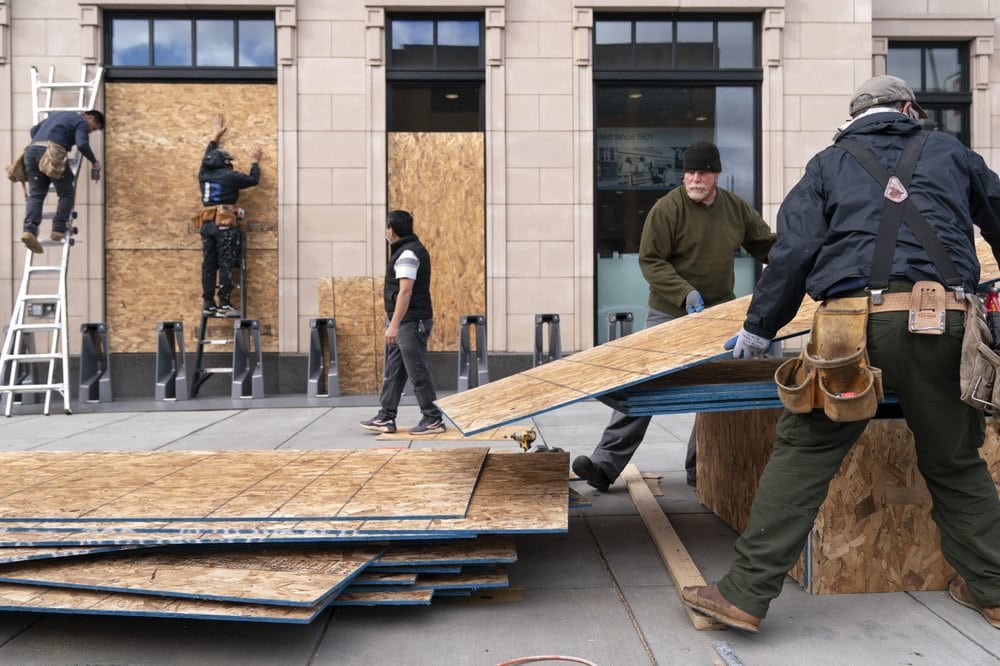
The more Florida’s population surges, the more construction is needed to keep up with growing demand. But a new study by a watchdog group shows that’s getting more expensive.

Florida TaxWatch published its “Trends in the Cost of Construction Materials” report. The findings show the construction industry accounts for about $97 billion, or 5.7%, of Florida’s gross domestic product. That’s a powerful element of the state’s economy, but the cost of keeping pace is going up.

TaxWatch analysts noted that since the COVID pandemic in 2020, construction materials have become increasingly expensive across the United States. Supply-chain disruptions, labor costs and trade uncertainty have all contributed to those rising costs. And given the inflation, Florida can’t avoid feeling those impacts, especially in housing.

“Florida is experiencing similar trends. The RoMac Building Supply Whole House Commodity Index, a measure of the cost to build a home in Florida, was 5.1% higher in July 2025 than in July 2024. These increases are estimated to add approximately $10,000 to the price of a new home and are causing budget overruns in affordable housing projects,” the TaxWatch report said.

Construction materials that have seen the most inflation in the Southeast U.S. include wood prices, which have jumped 8.2% year-over-year, and drywall and insulation, with a 6.2% jump. Steel costs went up by 5.1%, and the cost of concrete has ticked up by 4.7% between June 2024 and June 2025.

Complicating the situation are the international dynamics of tariff policies by the Donald Trump administration. “With domestic production struggling to meet demand, Florida remains vulnerable to global trade volatility,” the report said.

Dominic Calabro, President and CEO of Florida TaxWatch, said all those factors present a difficult outlook for construction businesses in the state.

“Florida’s economy is growing in terms of population and urban development. Moreover, as of May 2025, the construction industry is expected to grow by 7% in 2025, with a focus on mixed-use and infrastructure developments. Although contractors remain positive about the construction industry, prices in the sector have increased throughout the state, and higher prices are anticipated due to uncertainty in the trade market,” Calabro said.

Florida has already been facing questions about affordable housing for most of the past five years. But the rising construction prices will strain the housing market even more, according to Jeff Kottkamp, TaxWatch General Counsel and Executive Vice President.

“As of August 2025, there is a 50% tariff on all steel, aluminum, and copper imports in the U.S. and economists state that the construction industry, at present, is very volatile in terms of demand and supply — which normally means prices are volatile as well. The current situation with tariffs is very fluid and the best way to plan ahead, for anything construction related, is to stay constantly informed about trade laws and tariffs regarding construction materials,” Kottkamp said.


Post Views: 0


Source link

Continue Reading

Politics

Jacksonville City Council gives thumbs up to Jumbo Shrimp sale

Published

on


Jacksonville’s Minor League Baseball (MiLB) team the Jumbo Shrimp is going to be sold and the City Council signed off on a resolution Tuesday confirming it supports the transaction.

Jumbo Shrimp owner Ken Babby decided to sell the team after he advanced to CEO of the Tampa Bay Rays Major League Baseball (MLB) franchise. Babby announced Tuesday before the council meeting that the buyer of the Jumbo Shrimp was Prospector Baseball Group. There was no disclosed price, but Prospector is owned by Ben Boyer, a technology entrepreneur, and John Abbamondi, an executive with extensive experience in professional sports.

The City Council unanimously approved the resolution supporting the sale of the Jumbo Shrimp, the MiLB AAA farm club for the Miami Marlins, with little discussion.

Council member Nick Howland said there was no reason for the city to impede the transaction.

“I don’t want to hold up the deal and I think this is good for our city,” Howland said.

The key element the city is concerned with is the lease deal with the franchise for the use of the Baseball Grounds of Jacksonville. That stadium is known as VyStar Ballpark, which was contracted for the name by Jacksonville-based VyStar Credit Union.

The Jacksonville Jumbo Shrimp resolution before the Council stated, “The team has entered into an agreement whereby, upon closing, a buyer will acquire all equity of the Jacksonville Club (Jumbo Shrimp). The transaction is structured as a sale of equity interests; therefore, there is no direct assignment of the agreement, and the Jacksonville Club will remain a party to the agreement under its current name.”

Babby in a news release earlier Tuesday called the sale “bittersweet.”

In a joint statement, Abbamondi and Boyer said they were thrilled about the transaction.

“We are grateful to Ken Babby and his partners for their leadership and honored to have the opportunity to build upon their success. We believe in providing an exceptional, accessible game day experience at VyStar Ballpark, and we are equally excited for the Jumbo Shrimp to be a catalyst for the future growth of Downtown Jacksonville,” the joint statement said.

Babby has advanced quickly in the baseball world. He is also owner of the Akron RubberDucks in Ohio, a AA franchise in the MiLB affiliated with the MLB’s Cleveland Guardians. The RubberDucks franchise is also part of Prospector’s acquisition.

Babby shifted to CEO of the Rays and is now heavily involved in discussions for hammering out a stadium deal and location for the team to play on the Gulf Coast.

Babby bought the Jacksonville franchise from previous owner Peter Bragan Jr. in 2015 when the team was named the Jacksonville Suns, a moniker that was steady for decades. Babby changed the name to Jumbo Shrimp in November 2016.


Source link

Continue Reading

Politics

Voters send Ralph Massullo to Senate

Published

on


It’s a triumphant return for Ralph Massullo.

The Lecanto Republican is heading back to Tallahassee with strong voter support following Tuesday’s Special Election in Senate District 11.

Massullo won with 59% of the vote, buoyed particularly in Citrus and Sumter counties, over Democrat Ash Marwah, a civil engineer from The Villages.

The low-key election brought an 18% voter turnout.

Massullo topped 60% in Citrus and Sumter counties. Marwah and Massullo were neck-and-neck in Hernando County’s early votes, but Massullo pulled ahead with Election Day voting.

Massullo, a dermatologist, served eight years in House District 23 before term limits forced him from office in 2024. Gov. Ron DeSantis thwarted Massullo’s planned Senate campaign in 2022 by backing eventual winner Blaise Ingoglia; DeSantis supported Massullo’s Special Election bid this year.

When the SD 11 seat opened up with Ingoglia’s appointment as Chief Financial Officer, Massullo jumped in, and a host of big-name endorsements followed, including from Ingoglia, Agriculture Commissioner Wilton Simpson, U.S. Sens. Ashley Moody and Rick Scott, four GOP Congressmen, county Sheriffs in the district, and the Florida Chamber of Commerce.

The Florida LGBTQ+ Democratic Caucus endorsed Marwah.

Marwah ran for HD 52 in 2024, garnering just 24% of the vote against Republican John Temple

Massullo raised $249,950, compared with Marwah’s $12,125. Massullo’s $108,000 in spending includes consulting, events and mail pieces. One of those mail pieces reminded voters of the odd-year election.

The two opponents had few opportunities for a head-to-head debate. The League of Women Voters of Citrus County conducted an SD 11 forum on Zoom in late October, when the two candidates clashed over the state’s direction.

Marwah said DeSantis and Republicans are “playing games” in their attempts to redraw congressional district boundaries.

“No need to go through this expense,” he said. “It will really ruin decades of progress in civil rights. We should honor the rule of law that we agreed on that it’ll be done every 10 years. I’m not sure why the game is being played at this point.”

Massullo said congressional districts should reflect population shifts.

“The people of our state deserve to be adequately represented based on population,” he said. “I personally do not believe we should use race as a means to justify particular areas. I believe we should be blind to race, blind to creed, blind to sex, in everything that we do, particularly looking at population.”

Senate District 11 covers all of Citrus, Hernando and Sumter counties, plus a portion of northern Pasco County. It is safely Republican — Ingoglia won 69% of the vote there in November, and Donald Trump carried the district by the same margin in 2024.


Source link

Continue Reading

Politics

Eileen Higgins shatters glass ceiling with runoff victory in Miami Mayor’s race

Published

on


Eileen Higgins just made history, becoming the first woman ever elected Miami Mayor.

With 108 of 139 precincts reporting and full tallies of mail-in and early votes, Higgins — a former Miami-Dade County Commissioner — had 59% of the vote to defeat ex-City Manager Emilio González.

Higgins is a Democrat, while González is a Republican, though their party affiliations did not appear on Tuesday’s runoff ballot; still, most voters no doubt knew which side of the aisle the candidates stood on, considering the activity and interest that surrounded the race ahead of Election Day.

Pete Buttigieg, U.S. Sen. Ruben Gallego of Arizona, and Orange County Mayor-turned-gubernatorial candidate Jerry Demings and his wife, former U.S. Rep. Val Demings.

Meanwhile, high-profile Republicans like President Donald Trump, Gov. Ron DeSantis, U.S. Sens. Rick Scott and Ted Cruz, and U.S. Rep. Byron Donalds, who is running to succeed DeSantis, lined up behind González.

For many, Tuesday’s outcome in a city where growth, climate challenges and governance failures remain top concerns for nearly 500,000 residents will be viewed as a bellwether heading toward what is expected to be a volatile 2026 cycle.

The two candidates rose from a 13-person field Nov. 4, with Higgins winning about 36% of the vote and González taking 19.5%. Because neither surpassed 50%, they advanced to a runoff, each pitching their visions for a city grappling with affordability, rising seas, political dysfunction and rapid growth.

Both promised to bring more stability and accountability to City Hall. Both said Miami’s permitting process needs fixing.

Higgins, 61-year-old mechanical engineer by training and eight-year County Commissioner with a broad, international background in government service, emphasized affordable housing — urging the city to build on public land and create a dedicated housing trust fund — and backed a plan to expand the City Commission from five to nine members, which she said would improve neighborhood representation.

She also backed more eco-friendly and flood-preventative infrastructure, faster park construction and better transportation connectivity and efficiency.

She opposed Miami’s 287(g) agreement with U.S. Immigration and Customs Enforcement (ICE), calling recent enforcement “inhumane and cruel,” and pledged to serve as a full-time Mayor with no outside employment while replacing City Manager Art Noriega.

González, a 68-year-old retired Air Force colonel, former Director of U.S. Citizenship and Immigration Services and ex-CEO of Miami International Airport, argued Miami needs an experienced administrator to fix what he calls deep structural problems.

He made permitting reform a top priority, labeling the current system as barely functioning, and said affordability must be addressed through broader tax relief rather than relying on housing development alone.

He supported limited police cooperation with ICE and said Miami must prepare for the potential repeal of property taxes. He vowed to replace Noriega, but opposed Higgins’ effort to expand the City Commission.

He also promised, if elected, to establish a “Deregulation Task Force” to unburden small businesses, prioritize capital investments that protect Miamians, increase the city’s police force, modernize city services with technology and a customer-friendly approach, and rein in government spending and growth.

Notably, Miami’s Nov. 4 election this year might not have taken place if not for González, who successfully sued in July to stop officials from delaying its election until 2026.

Last year, Higgins was re-elected unopposed to the County Commission seat she first won in a 2018 upset before choosing to vacate her seat three years early to run for Mayor — a move that drew criticism from González.

Before winning elected office, she worked for years in the private sector, overseeing global manufacturing in Europe and Latin America. She also held lead marketing posts at Pfizer and Jose Cuervo.

In 2006, Higgins took a Director job with the Peace Corps in Belize, after which she served as a foreign service officer for the U.S. State Department under President Barack Obama, working in Mexico and in economic development areas in South Africa.

Since filing for the Mayor’s race in April, Higgins raised $386,500 through her campaign account. She also amassed close to $658,000 by the end of September through her county-level political committee, Ethical Leadership for Miami. Close to a third of that sum — $175,000 — came through a transfer from her state-level PC.

She also spent about $881,000.

González, an immigrant from Cuba, brought the most robust government background to the race. After leaving the military, he served as Miami’s City Manager from 2017 to 2020, CEO of Miami International Airport from 2013 to 2017 and as Director of Citizenship and Immigration Services at the U.S. Department of Homeland Security under President George W. Bush from 2005 to 2008.

He also served as Director of Western Hemisphere Affairs at the National Security Council under Bush.

In private life, he works as a partner at investment management firm RSMD Investco LLC. He also serves as a member of the Treasury Investment Council under the Florida Department of Financial Services.

Since filing to run for Mayor in April, he raised nearly $1.2 million and spent about $1 million.


Source link

Continue Reading

Trending

Copyright © Miami Select.