
Politics
Rick Roth adds $165K to SD 26 war chest in Q4 with big boost from his bank account

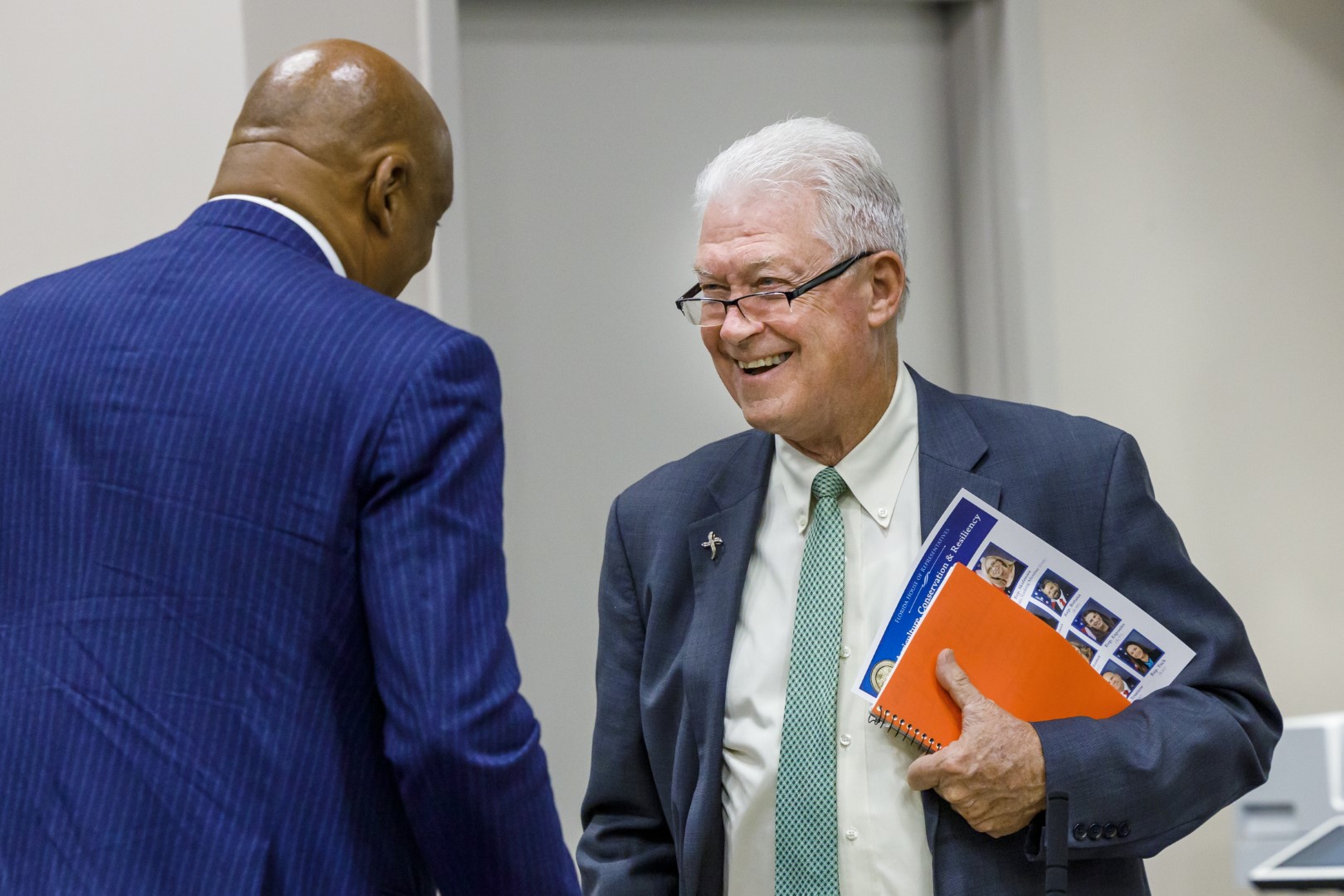
Former Republican Rep. Rick Roth added nearly $165,000 last quarter toward his bid for Senate District 26. All but $15,000 came from his bank account.
His lone Democratic opponent in the contest, former Rep. David Silvers, raised about $48,000, all from outside sources.
Heading into 2026, both candidates enjoyed six-figure war chests in the race to succeed Senate Democratic Leader Lori Berman, who has represented Palm Beach County in the upper chamber since 2018.
Roth, who represented the county in the House from 2016 to 2024, eschewed his political committee, Palm Beach Prosperity Fund, in amassing funds between Oct. 1 and Dec. 31, raising solely through his campaign account.
Beyond the $150,000 self-funded infusion to his campaign, Roth received 44 contributions in the fourth quarter of 2025.
Several came from political committees. He accepted $1,000 apiece from Inverness Republican Sen. Ralph Massullo’s political committee, Better Lives for Floridians, and Conservatives for Effective Government, a PC run by consultant David Ramba.
Friends of Rachel Plakon, the PC of Lake Mary Republican Rep. Rachel Plakon, gave $750. Florida Always First, a PC that backed former Republican Rep. Alina Garcia, now Miami-Dade County’s Supervisor of Elections, kicked in $500.
Industry interests gave too. Roth received $1,000 from Clewiston-based Berner Oil Inc., Delray Beach-based plant nursery Atchison Exotics Inc. and the Palm Beach Kennel Club. Perry Farms, based in Moore Haven, gave $750.
Roth spent $2,668 in Q4, leaving himself with about $288,000 by New Year’s Day. The lion’s share of his spending, $2,266, went to St. Petersburg-based Direct Mail Systems for advertising.
He also spent about $300 on a licensing fee and $30 on checks. The rest covered bank and donation-processing fees.

Silvers, who represented Housed District 89 from 2016 to 2024, collected $11,000 through his campaign account and $36,800 through his political committee, Friends of David Silvers, in Q4.
He also spent $30,300, leaving about $195,000 in his coffers by the quarter’s end.
His biggest gain, a $20,000 check, came from motorsports driver and auto magnate Rodin Younessi. His second-biggest gain, a $5,000 contribution, came from Miami-headquartered Southern Glazer’s Wine and Spirits.
Silvers received $3,500 from firefighter unions, $2,000 from the Florida OBGYN PAC and $1,000 from the International Longshoreman Association. Humana Inc. gave $2,500.
From the government relations sector, Silvers took $1,000 apiece from Capitol Alliance Group, Rubin Turnbull & Associates, TSE Consulting LLC, Florida Partners LLC, Lewis Longman & Walker, Lisa Miller & Associates and Venture PAC, a political committee run by Jones Walker LLP Director of Strategy and Management Chris Moya.
His Q4 spending went almost exclusively to consulting, including $15,000 to Tallahassee-based ENH Industries Inc., $10,000 to Tampa-based Renaissance Campaign Strategies and $5,250 to West Palm Beach-based Cornerstone Solutions.
The rest covered bank fees.
A third candidate, Republican lawyer Stephen Iacullo, filed for the SD 26 race Oct. 23, 2025, but did not file his Q4 campaign finance report by Monday’s deadline, according to the Division of Elections website.
SD 26 covers a southern portion of Palm Beach County, spanning the inland municipalities of Belle Glade, Golf, South Bay and Wellington; coastal Briny Breezes, Delray Beach, Highland Beach and Ocean Ridge; and a northern part of Boca Raton.
The 2026 Primary is Aug. 18, followed by the General Election on Nov. 3.
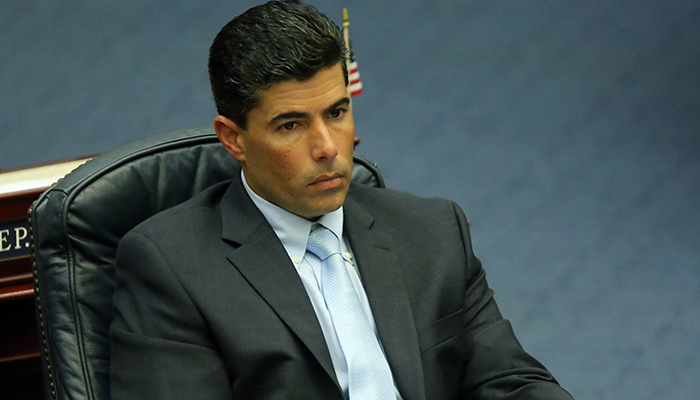
Gov. Ron DeSantis has declined to renominate his once loyal ally, former House Speaker José Oliva, to an influential state Board that oversees Florida’s public university system.
In a press release sent out just before his State of the State address started Tuesday, DeSantis named four new appointments and two reappointments to the State University System’s Board of Governors (BOG). Missing in the press release was any mention of Oliva, whose prior term ended Jan. 6.
Oliva was a DeSantis defender who had even been rumored to be on DeSantis’ list of Lieutenant Governor choices before DeSantis picked Jay Collins.
But Oliva clashed with DeSantis as the BOG voted on a new Chair in November.
The BOG elected Alan Levine as Chair instead of allowing Brian Lamb to remain for a third term. Influential University of Florida Board of Trustees Chair Mori Hosseini, a DeSantis supporter, had been pushing for Lamb. Hosseini had also loudly backed UF hiring Santa Ono as President, but the BOG rejected Ono’s bid in June.
“Insiders say DeSantis’ office lobbied the Board of Governors in November to block anyone who voted against Ono from ascending to board leadership. Oliva ended up nominating Alan Levine, then the vice chair, to be chair — bucking the governor’s demands,” Miami Herald reporter Garrett Shanley wrote on X.
The new members of the BOG, subject to Florida Senate approval, will be: Ashley Lukis, Michael Okaty, Keith Perry and Nick Sinatra. Ashley Bell Barnett and Charles Lydecker were also reappointed.
One of the new Board members is a former state lawmaker. Another has ties to national politics.
Perry, now President and Owner of Perry Roofing Contractors, previously was a Senator representing Senate Districts 8 and 9 as well as a Representative for House Districts 21 and 22.
Sinatra, founder of Sinatra and Company, was the Associate Political Director for The White House under President George W. Bush.

Meanwhile, DeSantis said “Lukis is a Shareholder at GrayRobinson, P.A., where she represents public entities and private clients alike in complex state, federal, and administrative litigation.”
Okaty “is a Partner at Foley & Lardner, LLP,” DeSantis said, who “was recognized as the 2023 Lawyer of the Year in business organizations law by The Best Lawyers in America.”

Florida’s health care system is at a crossroads. The state is growing rapidly, the population is aging, and families across Florida are struggling to access timely, affordable care.
In many cases, the challenge is not a shortage of skilled providers. Instead, outdated laws limit competition, restrict who can provide care, and reduce patient choices.
Rep. Mike Redondo has filed legislation to remove these government barriers and modernize Florida’s health care delivery system. HB 693 is designed to expand access to care by addressing multiple structural obstacles that prevent services from reaching patients who need them most.
Rather than relying on a single narrow reform, the bill addresses several long-standing issues simultaneously. When providers have greater flexibility to serve patients and patients have more options, care becomes more accessible and more affordable.
HB 693 eliminates remaining Certificate-of-Need requirements for nursing homes, hospice services, and intermediate care facilities for individuals with developmental disabilities. It also allows Florida to join interstate compacts for physician assistants and emergency medical services professionals, making it easier for qualified providers to move to Florida and meet growing demand without unnecessary delays.

The legislation expands independent practice authority for advanced registered nurse practitioners, including psychiatric nurse practitioners, nurse anesthetists, and clinical nurse specialists. These highly trained professionals already play a critical role in patient care, particularly in mental health and underserved communities.
HB 693 also removes the supervisory cap on physician assistants, allowing physicians to oversee more PAs and increase patient capacity. This reflects modern, team-based care models and helps ensure patients are seen sooner without sacrificing quality.
Importantly, the bill includes commonsense transparency protections. Patients would receive notice of out-of-network referrals, and payments made for cost-effective care would count toward deductibles, helping families avoid surprise expenses and make informed decisions.
Together, these reforms promote a patient-centered approach that prioritizes access, choice, and transparency. At a time when families are feeling the pressure of rising health care costs, HB 693 offers a path toward a more responsive and modern system.
Rep. Redondo’s bill puts patients first, and lawmakers should support its passage.

___
Skylar Zander is the State Director of Americans for Prosperity-Florida.
Politics
Daniel Perez warns of tough choices in 2026 as House braces for tax, insurance, drug-cost battles
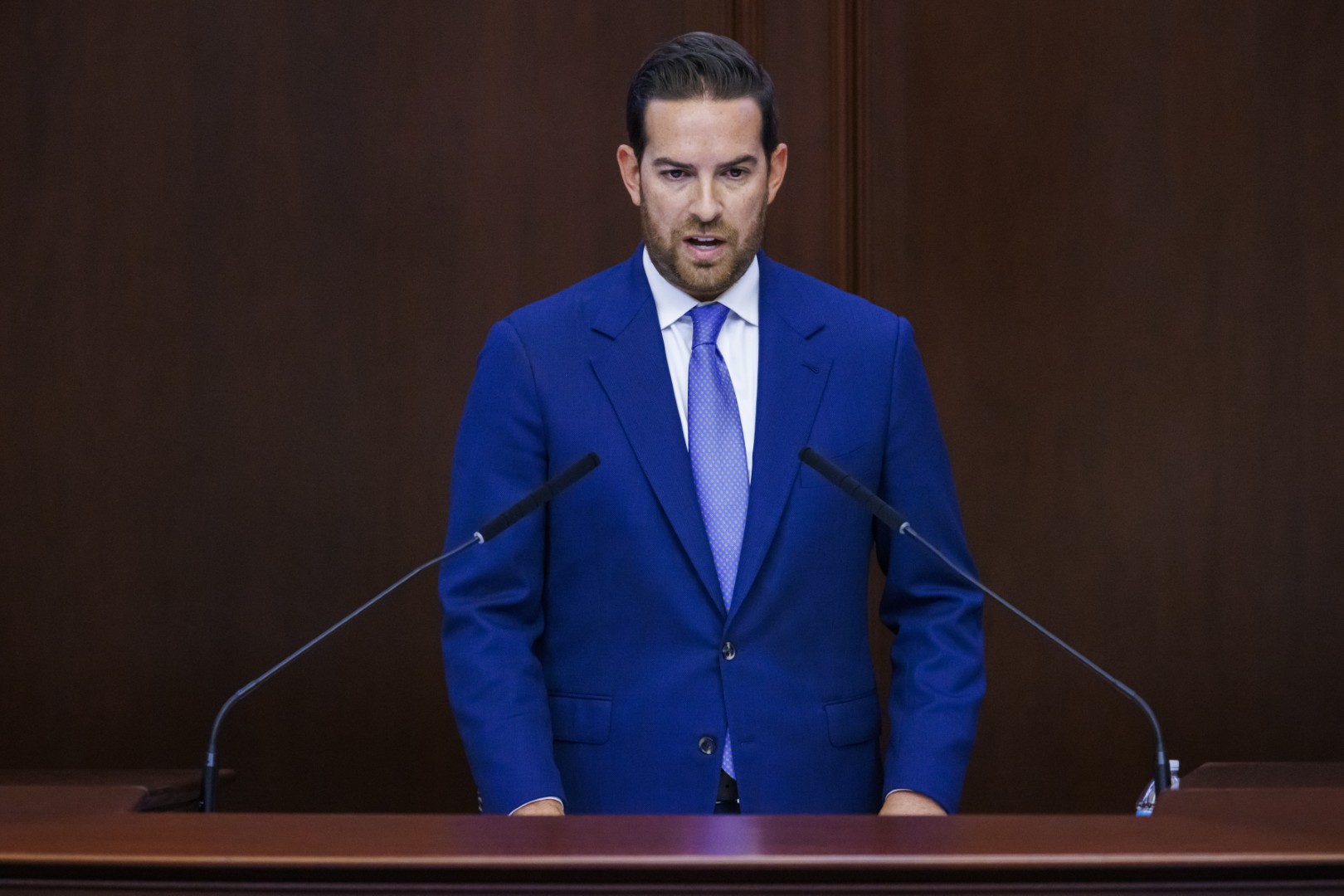
House Speaker Daniel Perez opened the 2026 Legislative Session by casting the chamber’s activities last year as a part of a necessary transition shaped by internal fights, bruising negotiations and a public rupture with Gov. Ron DeSantis.
When he took the gavel in November 2024, he said, House lawmakers entered the subsequent Session “believing that our service here could matter.”
“In the weeks and months that followed,” he continued, “our story took several surprising twists and turns.”
Perez’s message, while reflective, was largely a presaging of what lies ahead this year: a Session dominated by affordability pressures, property tax politics and a budget outlook that could force lawmakers to choose between trimming recurring spending and sustaining popular programs. “Affordability and insurance. Taxes and the economy. Prescription drug prices and the rising cost of public benefits,” Perez said.
“We must ensure Florida stays at the center of our planet’s race for the stars, and that our infrastructure keeps pace with our growth. Every child in Florida, from the unborn to our college graduates, deserves a fair shot at finding their own American Dream.”
The Miami Republican also used the moment to reflect on the volatility of the 2025 Session, when, in his telling, the House “found (its) voice” and “insisted on our independence.”
That included overrides of DeSantis’ budget vetoes, the investigation and dismantling of First Lady Casey DeSantis’ questionable Hope Florida charity, replacing DeSantis’ Special Session on immigration enforcement with one the Legislature devised and, ahead of the 2026 Session, introducing a fleet of bills with concrete property tax proposals while the Governor stalled on issuing his own.
When DeSantis fumed at the House’s open attempt to regain a coequal footing with the executive branch, Perez called the Governor “emotional” and prone to “temper tantrums” while stressing, “I consider him a friend. I consider him a partner.”
Under Perez, the House has also set to follow through on President Donald Trump’s call for mid-decade redistricting — an effort DeSantis and Senate President Ben Albritton also support, but have been slower to act on.
Perez framed the House’s comparative expeditiousness as an alternative to Tallahassee’s transactional culture.

“We learned that words without truth have no meaning. We learned that actions without humility lack consequence,” he said. “We learned that issues we tackle are not easily reducible to a slogan or an idea. … But difficult doesn’t mean impossible, and hard isn’t an excuse for cowardice.”
Those lines land in a Capitol still feeling the aftershocks of 2025, when budget and tax disputes between the House and Senate pushed the 60-day Regular Session into extended overtime. Perez’s friction with Albritton, whom he embraced before the Governor’s State of the State address Tuesday, remains a live factor. The Senate is again pushing Albritton’s “Rural Renaissance” package after it fell apart in the House last year, and Albritton has said he may prefer tackling major property tax relief after the Regular Session, which could collide with House urgency.
Hovering above it all is Perez’s feud with DeSantis, a rivalry that hardened last year and has since only been betrayed by a veneer of civility and common causes. On the most recent flashpoint, redistricting, the Governor this month called for a Special Session in April to redraw congressional lines — markedly later than when Perez views as ideal.
As for what will happen with that undertaking and many other hot-button issues the Legislature faces this year, it’s anyone’s guess, the Speaker said.
“Honestly, I don’t know what is going to happen,” he said. “That’s OK, because the journey is the best part.”


Gov. DeSantis boots José Oliva, a former ally, off state university Board

Down Arrow Button Icon

JoJo Siwa Posts Photo in Wedding Dress, Veil Ahead of Proposal Deadline
-

 Politics8 years ago
Congress rolls out ‘Better Deal,’ new economic agenda
-
Entertainment8 years ago
New Season 8 Walking Dead trailer flashes forward in time
-
Politics8 years ago
Poll: Virginia governor’s race in dead heat
-
Politics8 years ago
Illinois’ financial crisis could bring the state to a halt
-
Entertainment8 years ago
The final 6 ‘Game of Thrones’ episodes might feel like a full season
-
Entertainment8 years ago
Meet Superman’s grandfather in new trailer for Krypton
-
Business8 years ago
6 Stunning new co-working spaces around the globe
-
Tech8 years ago
Hulu hires Google marketing veteran Kelly Campbell as CMO