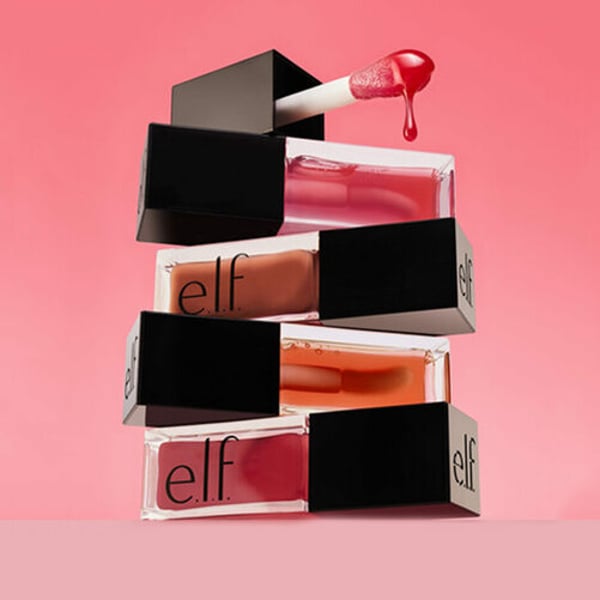
Fans of brands as varied as Le Creuset, Elf Beauty, Michaels Cos. and the Miami Heat can make a gamble: Spend some nominal amount of money to get merchandise worth much more. The catch? Shoppers don’t know what they’re getting until they open the box- a phenomenon known as “mystery” or “blind” shopping.
Elf Beauty reported a positive response to its mystery bundles – Elf Beauty
“It’s gamified commerce,” said Shreyas Sekar, assistant professor of operations management at the University of Toronto Scarborough, who has closely tracked the rise of blind boxes. The practice, long popular in parts of Asia, has spread to the US, UK, and Canada over the last three or four years, Sekar said, with more new companies jumping on the trend each year.
It’s partly thanks to Labubus, the wildly popular furry dolls that come in blind-box packaging. Their growth among US consumers, Sekar said, has served as a proof of concept for the viability of mystery shopping in markets outside of Asia. Pop Mart International Group, the Chinese company that owns Labubu, reported revenue in the Americas surged nearly 1,300% in the latest quarter.
Now, other retailers are realising they too can drive buzz- and at times offload unwanted merchandise- by playing up the secrecy angle.
Blind boxes are “a chance to gamble on getting something great,” said Jackie Mitchell, a 28-year-old social media influencer, in an interview. Last year, she recorded herself opening a Le Creuset mystery box she bought at the brand’s event in Columbus, Ohio. She estimated her haul- two plates, a skillet and a cast iron Dutch oven- was worth more than $600. To be eligible to buy the $50 box, she had to buy a $25 VIP ticket to the event and spend at least $150 there.
But as with any gamble, it doesn’t come without risk. Like the kid who receives a sweater instead of Legos for his birthday, shoppers at times have been disappointed by the contents of the boxes. And many of them air their grievances on social media.
Le Creuset faced customers’ frustration after selling mystery boxes at an event in Hartford, Connecticut. One TikTok content creator, who identifies herself as Linda from Buffalo, posted multiple videos criticizing the brand for what she said were lower values of mystery box merchandise from the event.
“The value of the boxes in everywhere else in the US was over that $675 amount, for the most part,” she said in one video. “And when it got to the Hartford event, $300.”
Le Creuset apologised to customers, acknowledging the event and mystery boxes “did not live up to expectations.” It called on customers who “received a mystery box below the guaranteed $300 value, or damaged product” to contact the company directly “to make things right.”
The company didn’t respond to a request for comment from Bloomberg.
Despite the risks, mystery boxes are showing up everywhere, from craft beer retailers to sports merchandise. Elf started selling six cosmetic mystery bundles, each with five to eight items, in early November, with the company advertising savings up to 50% off the normal price of the products included. The boxes contained bestselling items rather than “leftovers,” according to chief brand officer Laurie Lam. One of the kits sold out a week after launching.
“It was undeniable that we saw blind boxes take off,” Lam said, adding that “Pop Mart was a factor.”
The boxes are even showing up in food service. Cava offered “blind-bagged plushies” modelled after its pita chip flavours with its limited-time hot harissa meal last year. The surprise and collectability factor gave customers a reason to visit in-person, according to chief experience marketing officer Andy Rebhun. Cava had to rush to restock and ultimately sold more than 33,000 plushies and meals, with some guests purchasing specifically for the collectible.
“The trend works in the food and restaurant space when it’s not shoehorned in,” Rebhun said. He added that the trend may push “brands to think creatively about how to turn meals into experiences.”
It’s unclear how long mystery boxes will remain hot with shoppers, but they’ve emerged as a useful tool for companies that want to pare down their inventories. Brands should be sure to communicate with consumers, however, to set expectations, says Sarah Williams, who has built a business as a mystery and subscription box coach.
“You want to get that inventory off your shelves and back into the bank account,” Williams said. “My biggest advice is transparency- if it’s overstock, I’m going to put that in the description.”
Since starting her blind-box consulting business around 2020, Williams says she has coached over 7,000 clients. She’s also been running her own subscription-box service from Texas for the last nine years. The boxes often follow a theme- such as “teachers tees” or “Christmas clearance.” Contents range from custom shirts and mugs with inspirational quotes to tumblers and jewellery.
“When I put my boxes together, I make sure to include something of equal value in each box so no one is truly disappointed,” she said. “You want them to feel excited and like they got a good deal.”
Kaylie Wall, who owns a Barre3 fitness studio in Carlsbad, California, said she used mystery bags during the holidays to help reduce excess merchandise that built up this year, especially $22 grip socks that are required for classes. In November, she created about 20 bundles, classified by size, each with three pairs of socks for $33 as part of the location’s three-year anniversary sale.
Some customers were sceptical, but others were curious, she said. A couple of them made unboxing videos to share with friends.
“It’s basically a way to get rid of merchandise we’ve had for a long time,” Wall said. “I’m definitely not going to order as many Christmas socks this year.”
Adidas is to launch a footwear collaboration with British celebrity fashion/beauty influencer Molly-Mae Hague.
Image: Molly-Mae Hauge/Adidas
The collab has seen Hague work with Adidas on a limited footwear collection, with the sportswear brand confirming the partnering on an upcoming SS26 campaign and product launch. Further details have yet to be announced.
Posing by an Adidas-themed vehicle surrounded by the brand’s distinctive shoe boxes, Hague has just shared the news with her 8.5 million Instagram followers: “Three stripes. One vision. Curated by Molly-Mae. Coming soon…”, adding: “ADI X MM… what started as a dream years ago is now becoming reality. My own footwear collection with Adidas.”
Hague has her own fashion label, Maebe, launched in late 2024, positioned as ‘accessible luxury’, featured minimalist wardrobe staples including denim, tailored outerwear, shirts and vests, in a neutral colour palette.
She was also formerly a creative director for Prettylittlething brand in 2022 and retains her position as a brand ambassador for the label after first finding fame as a contestant on TV show Love Island in 2019.
A scion of the billionaire Brenninkmeijer dynasty behind clothing retail giant CA is the new chief executive officer of a private equity firm backed by the billionaire family that’s seeking to expand their empire.
Jens Brenninkmeyer is Bregal’s new CEO – Bregal Investments- Linkedin
Jens Brenninkmeyer, 38, a former Goldman Sachs Group Inc. banker and Sixth Street executive, starts next month in the top role at Bregal Investments after serving as the buyout firm’s chief strategy officer since 2023, according to a statement Tuesday.
He previously led a review of Bregal’s operations and also oversaw new deal activity across its strategies, ranging from buying stakes directly in companies to allocations for private equity funds, according to the statement from Cofra Holding, which oversees the Brenninkmeijers’ major assets.
Bregal is one of the driving forces behind the Brenninkmeijers’ push to open their business empire to more outside investors as they expand beyond CA, the clothing retailer that traces its origins back to 1841.
Founded in 2002, Bregal now has about €19 billion ($22 billion) in assets under management and recently established a new strategy to invest in secondary markets led by Luis Cabrera, who joined in October. Based in London and New York, Bregal opened to external capital in 2016, a year after the family’s real estate arm, Redevco, made a similar move.
Cofra oversees assets totaling more than €35 billion, with other divisions including an asset-management arm that opened to external capital from foundations and other long-term investors four years ago.
“From 2026 onwards, our goal is to accelerate growth and diversification by launching more strategies,” Boudewijn Beerkens, Cofra’s CEO, said in a separate statement.
Jens, a German native and sixth-generation family member, will be based in New York but spend at least a week each month in London, according to a person familiar with the matter. The firm is also seeking to participate in more co-investment opportunities, the person said, who asked not to be identified as the details are private.
Bregal’s latest appointment follows the recent departure of Goldman Sachs veteran Alain Carrier as CEO, while Ryan Selwood died in 2024 after becoming chief investment officer the previous year. The firm last year hired a veteran of direct lender Hayfin as chief financial officer, while another family scion, Lawrence Brenninkmeyer, became Bregal’s deputy chairman.
Jens Brenninkmeyer, a Harvard Business School graduate, started his career as an analyst at Goldman and later helped to lead fintech investments for San Francisco-based alternative-assets firm Sixth Street, according to his LinkedIn profile.
“I’m pleased to step into the CEO role at a key moment,” said Brenninkmeyer, who uses a variation of the dynasty’s surname.
There was big news at luxury label Roksanda on Tuesday with the appointment of Patricia Sancho as its new CEO, effective immediately.
Roksanda CEO Patricia Sancho
The company said that “as the London-based fashion house enters a new phase of growth and global expansion, it will now be led by two women, and we couldn’t be more excited”.
Sancho brings more than 20 years of experience across luxury and premium fashion, “with a strong track record of partnering with creative leadership to deliver strategic clarity, operational discipline, and sustainable commercial performance”.
She has an undeniably impressive CV that includes a period as CEO of another luxe UK label, Temperley London, as well as co-MD of Inditex’s footwear and accessories Tempe unit, and recently CEO of Athena Consultancy. She founded that advisory agency in 2020.
“Known for her ability to balance creative integrity with business vision, she joins Roksanda at a pivotal moment in the brand’s evolution,” we’re told.
Her arrival comes after the company was sold in 2024 to The Brand Group but with founder and creative director Roksanda Ilinčić staying in her role. Ilinčić said of the latest move: “As we evolve as a brand, staying true to our creative codes and values is essential. Patricia brings strategic insight, commercial experience, and a deep respect for creativity.”
Meanwhile Sancho added that she’s a long-time admirer of “Roksanda’s vision and artistry. My focus will be on driving thoughtful growth anchored in the brand’s core values — preserving its femininity, strength, and emotion — while shaping a clear offering and business strategy for the future. This is about growing with intention and integrity”.
As mentioned, Roksanda was sold in 2024 — specifically in May of that year — to brand development platform The Brand Group shortly after filing notice of intent to appoint administrators as it navigated a very tough market backdrop. It joined the still-new Vivere label as part of fashion entrepreneur Damian Hopkins’ growing empire.