Connect with us

Business

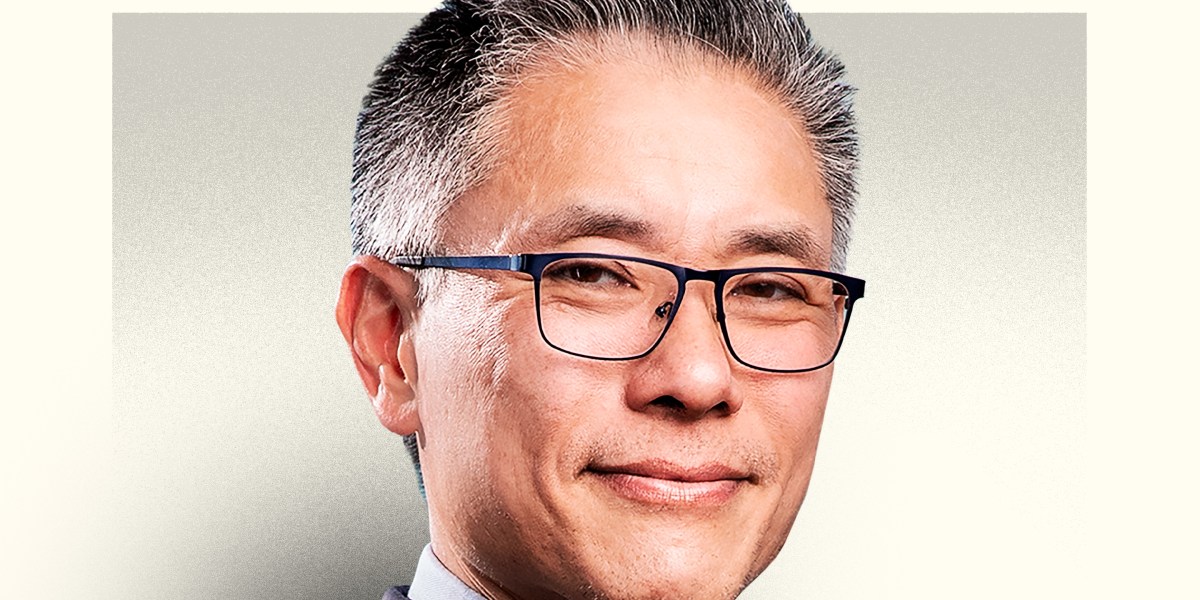
Reinsurance Group of America’s Tony Cheng on staying humble in leadership

Published

on


It’s rare to be offered a big promotion and turn it down, but it’s even rarer to warn superiors you don’t feel prepared for the role and be appointed anyway.

Yet that’s precisely what happened to Reinsurance Group of America boss, Tony Cheng, in his early years with the business. Cheng has worked his way up the ranks of RGA over the past three decades, helping grow the company to its current position of $3.9 trillion of reinsurance covering active policyholders.

In 2025, RGA announced a landmark $1.5 billion deal with Equitable to reinsure $32 billion worth of life insurance policies, securing its place as an industry leader and expected to boost earnings for quarters come.

Sitting down for an exclusive interview with Fortune this summer, Cheng reflected on that all-important promotion to CEO, and the value of staying humble even in the C-suite.

The following has been condensed and edited for clarity.

Tony, in an era where job-hopping is often seen as the fast track to career growth, you’ve chosen a different tactic—working up through RGA since 1997. Where did your work ethic come from, and what’s inspired your long-standing commitment to the company?

I was born in Hong Kong, and my parents—both teachers—felt for the future of their four kids (of which I was the youngest) Australia would provide the Western education they wanted. So I grew up in Australia from nine months to the age of 20 and didn’t travel overseas much.

My parents worked incredibly hard. Mom looked after the four kids and Dad unfortunately had to give up his love for teaching because it just wouldn’t pay the bills. Eventually they opened up small businesses and then we, the four kids, on the weekend would go work there—12 hour days—and didn’t think otherwise. That really bred in the sacrifice of the parents, the hard work, all things I’d wish to pass onto my kids.

Growing up as many of us in a Western country but very Asian family do, I think I went to Asia once in my life, so [I took] an opportunity to join RGA in 1997 in Malaysia. 

Between 1999 and 2002 you returned to the States to earn an MBA while working for RGA, before leaving to head up the Hong Kong office. When you arrived, you had a team of 10. The Asia Pacific region now has more than 1,000 employees and revenues of $4 billion. Are there untapped career opportunities in emerging markets as opposed to progressing in established regions?

We had a very small operation, but we were actually covering about 500 million people. It was Hong Kong and Southeast Asia so Malaysia, Thailand, all those countries. I went there as the actuary, and a year and a half later they promoted me to be the CEO of that business. It was daunting, right? 

The first time I was asked to take it by my boss, I sort of said, ‘No, I’m too young.’ At the time I was 29. He ignored that. 

The equation in my mind was I’ve probably got a 10% chance of success—and that would be great—or a 90% chance of failure, but hey, I’m gonna learn a hell of a lot. I had no mortgage, no kids, so just wanted to learn. Maybe that instinct, that desire and drive to keep learning was from my parents being teachers.

In its latest financial results RGA reported revenues of $22.1 billion. How has the start-up mentality you learned in Asia helped grow the business globally?

We built that business up with incredible hard work. I’d joke internally that once every month or so pest control would come in, and that meant we could go home at 5 o’clock because what else were we going to do with ourselves? That was the spirit. In the early days, you solve problems. I’d say to the team: ‘Let’s just try. We know it’s really hard, but let’s just try.’

In the U.S., people usually don’t create new products or create new things because the market’s so big, a lot of it’s already played out and it’s been created. Any good idea has been thought of, and that’s truly okay.

It’s actually more connecting the dots in the U.S., but with a drive to not just settle on: ‘Hey, here’s the market, we want a share of it’ it’s a drive to create new things or a new combination of things so that we [can] increase the pie and share in that greater value creation. That’s always been in the company spirit, it was just really about bringing that out again to the forefront.

Like a lot of other Fortune 500 CEOs we speak to, you clearly have a love for learning. In a world where AI is expected to disrupt the labor market, what are the skills you’re looking for in new talent?

I can only think of what I advise my son, who’s in his second year of college. As the younger generation already knows, AI is gonna accelerate, and therefore number one they’ve absolutely got to be able to use it and partner with it.

Ultimately AI, one would think, is gonna replace whatever is mathematically easier to replace. Had a conversation at one of the town halls with some risk professionals in the U.S. last week and I said all those soft skills really matter, you’ve still got to learn the hard skills, you’ve got to understand your subject matter expertise regardless of technology, but increasingly all those abilities to interact, to communicate, to join the dots, to be able to understand information, communicate it, and just put those dots together is the stuff that’s gonna be obviously harder for AI to replicate. 

Maybe it will one day, but then you’ve just got to keep elevating yourself. So, what is that a lesson of? It is a lesson of continually adapting, continually learning, a bit like a sports person. When they’ve lost their passion to play and fight, it’s time to retire. 

For me, when I’ve lost that passion to learn and grow, you’re probably not gonna give it your full go, hence maybe the learning really just keeps me going. It’s not like I ever said, ‘Hey, I want to be the CEO of the company.’ I was so far away, I just wanted to be treated right and enjoy the journey and the growth,

So the lesson to individuals is you’ve just got to keep learning, you’ve got to be humble. If you’re not humble, you’re not gonna listen to yourself or your failings, you’re gonna blame them on something else as opposed to, ‘Well, what was my role in that?’ so I can learn. 


Source link

Continue Reading

Business

New York City is officially getting 3 Las Vegas-style casinos

Published

on


The New York Mets’ ballpark in Queens. A Bronx golf course once operated by President Donald Trump ’s company. A slot parlor on a horse racing track near John F. Kennedy International Airport.

The three disparate sites, located far from the tourist hub of Manhattan, will become the future homes of New York City’s first Las Vegas-style resort casinos.

The state Gaming Commission on Monday awarded the three projects licenses to operate in the lucrative metropolitan-area market during a meeting at a riverside park in upper Manhattan.

The panel approved the licenses with the condition that the companies each appoint an outside monitor that would report regularly to the commission to ensure they meet their financial and legal obligations, as well as the promised investments they made to local communities.

Brian O’Dwyer, the commission’s chair, said the state looked forward to the promise of jobs, infrastructure improvements and gaming revenue being realized.

“You all have an important charge ahead of you, and you can be assured that this commission takes our responsibility to keep your feet to the fire with great respect,” he said to the project representatives in attendance.

Democratic New York Gov. Kathy Hochul said in a statement the projects would pump billions of dollars into the state’s transit and education systems and create tens of thousands of jobs.

But a handful of protesters opposed to billionaire Mets owner Steve Cohen’s Hard Rock plan vowed to continue their fight in court. They and other casino opponents worry the projects will only increase gambling addiction.

“You picked a billionaire over New Yorkers! Shame on you!” the group shouted as they walked out of the meeting.

Cohen and Hard Rock’s proposal calls for an $8.1 billion casino complex on a parking lot next to the Mets’ Citi Field that would include a performance venue, hotel and retail space.

Bally’s has proposed a roughly $4 billion casino at the Ferry Point golf course in the Bronx that would include a hotel, event center, meeting spaces, restaurants and other amenities.

And Resorts World has proposed investing more than $5 billion to expand its slots parlor at Aqueduct Race Track in Queens into a full casino with a hotel, dining and entertainment options.

The projects bested several other proposals that fell by the wayside during the high-stakes competition.

Among them were three casinos proposed for Manhattan that were rejected by local boards, including a Caesars Palace in the heart of Times Square backed by rapper Jay-Z. A plan for a resort on Coney Island’s iconic boardwalk in Brooklyn was also defeated by local opposition, and MGM abruptly pulled out of the once-crowded sweepstakes, despite local support.

The state gaming commission was authorized to license up to three casinos in the New York City area after voters approved a referendum in 2013 opening the door to casino gambling statewide.

Four full casinos, all upstate, now offer table games. The state also runs nine gambling halls without live table games, many of them also miles away from Manhattan.

Monday’s decision, in some ways, was largely a formality. Millions of dollars in gambling revenues are already factored into the state budget.

A state panel charged with vetting the proposals for the commission also recommended awarding a license to all three remaining proposals earlier this month.

The Gaming Facility Location Board, in its written decision, argued that the region’s dense and relatively affluent population, combined with high tourism, would be able to support all three plans, despite their relative proximity to each other.

The panel said its consultants conservatively estimated the casinos would generate a combined $7 billion in gambling tax revenues from 2027 to 2036, plus $1.5 billion in licensing fees and nearly $6 billion in state and local taxes.

Monday’s decision also means Trump could stand to claim a substantial prize. When Bally’s purchased operating rights for the city-owned Ferry Point golf course from the Trump Organization in 2023, it agreed to pony up an additional $115 million if it won a casino license.

Spokespersons for the Trump Organization didn’t respond to an email seeking comment Monday on the expected windfall.


Source link

Continue Reading

Business

Cadillac returns as sponsor for PGA tour event at Trump National Doral

Published

on


Cadillac is returning as the title sponsor of a lucrative PGA Tour event held at Trump National Doral, which will hold one of the $20 million signature events in 2026.

The Cadillac Championship will be held the first weekend in May on the course once dubbed the “Blue Monster.” Doral first became part of the PGA Tour schedule in 1962, and it was held each year through 2016 until becoming a World Golf Championship under various names.

Brian Rolapp, the CEO of the PGA Tour, referred to Trump National Doral as a “legacy venue on our schedule.”

“We appreciate the support of Cadillac as we bring a new era of the PGA Tour to our fans in Miami,” Rolapp said in a statement.

Cadillac was the title sponsor of the WGC at Trump National Doral from 2011 through 2016. But the automaker chose not to renew its contract, the PGA Tour could not find a replacement sponsor for Doral in 2016 when President Donald Trump was the presumptive Republican nominee and the WGC event was moved to Mexico City.

Doral is among eight courses that has held a regular PGA Tour event for at least 50 years — the others are Riviera, Pebble Beach and Torrey Pines in California; Colonial (Texas), Waialae (Hawaii), Harbour Town (South Caroline) and Muirfield Village (Ohio).

It returned to the golf landscape in 2022 by hosting a LIV Golf event each of the last four years until returning to the PGA Tour schedule for 2026. The tour designated Trump National Doral a signature event before it signed Cadillac as the title sponsor.

This story was originally featured on Fortune.com


Source link

Continue Reading

Business

Rob Reiner’s 32-year-old son in jail after fatal stabbing at Los Angeles home

Published

on


Rob Reiner’s younger son, Nick Reiner, was in jail Monday after being booked for what investigators believe was the fatal stabbing of the director-actor and his wife at their Los Angeles home a day earlier, authorities said.

It was not immediately clear what charges Nick Reiner, 32, would face. A police statement said he was being held without bail and the case will be presented to the district attorney’s office on Tuesday.

Representatives for the Reiner family did not immediately respond to a request for comment, and it wasn’t immediately clear if Nick Reiner had an attorney who could speak on his behalf.

Nick Reiner has spoken publicly of his struggles with addiction. By 18, he had cycled in and out of treatment facilities with bouts of homelessness and relapses in between. Rob and Nick Reiner explored their difficult relationship and Nick Reiner’s struggles with drugs in a semi-autobiographical 2016 film, “ Being Charlie.”

Rob and Michele Singer Reiner were found dead Sunday afternoon at their home in Los Angeles, and investigators believe they were stabbed, a law enforcement official told The Associated Press. The official, who was briefed on the investigation, could not publicly discuss the details and spoke to the AP on condition of anonymity.

Nick Reiner was arrested Sunday around 9:15 p.m., police said.

Reiner was long one of the most prolific directors in Hollywood, and his work included some of the most memorable movies of the 1980s and ’90s, including “This is Spinal Tap,” “A Few Good Men,” “When Harry Met Sally” and “The Princess Bride.”

His role as Michael “Meathead” Stivic in Norman Lear’s 1970s TV classic “All in the Family” as a liberal foil to Carroll O’Connor’s Archie Bunker catapulted him to fame and won him two Emmy Awards.

The son of comedy legend Carl Reiner, Rob Reiner married photographer Michele Singer Reiner in 1989. The two met while he was directing “When Harry Met Sally.” They had three children together: Nick, Jake and Romy.

Reiner told The New York Times in 1989 that the cinematographer on “When Harry Met Sally,” Barry Sonnenfeld, predicted he would marry her. “I look over and I see this girl, and whoo! I was attracted immediately,” Reiner said.

Michele Singer Reiner was a producer for “Spinal Tap II: The End Continues,” “God & Country,” “Albert Brooks: Defending My Life” and “Shock and Awe,” according to IMDB. Earlier in her career, she photographed the cover image of President Donald Trump’s 1987 bestseller “The Art of the Deal.”

Trump on Monday blamed Rob Reiner’s outspoken opposition to the president for the actor-director’s killing, delivering the unsubstantiated claim in a social media post that seemed intent on decrying his opponents even in the face of a tragedy.

Relatives of Lear, the legendary producer who died in 2023, said the Reiners’ deaths left them bereft.

“Norman often referred to Rob as a son, and their close relationship was extraordinary, to us and the world,” a Lear family statement said. “Norman would have wanted to remind us that Rob and Michele spent every breath trying to make this country a better place, and they pursued that through their art, their activism, their philanthropy, and their love for family and friends.”

Los Angeles Mayor Karen Bass called the deaths a devastating loss for the city.

“Rob Reiner’s contributions reverberate throughout American culture and society, and he has improved countless lives through his creative work and advocacy fighting for social and economic justice,” Bass said in a statement. “An acclaimed actor, director, producer, writer, and engaged political activist, he always used his gifts in service of others.”

Reiner was previously married to actor-director Penny Marshall from 1971 to 1981. He adopted her daughter, Tracy Reiner. Carl Reiner died in 2020 at age 98 and Marshall died in 2018.

Killings are rare in the Brentwood neighborhood. The scene is about a mile from the home where O.J. Simpson’s wife Nicole Brown Simpson and her friend Ron Goldman were killed in 1994.

__

Balsamo reported from Washington. Associated Press Entertainment Writer Andrew Dalton in Los Angeles contributed.


Source link

Continue Reading

Trending

Copyright © Miami Select.