Connect with us

Business

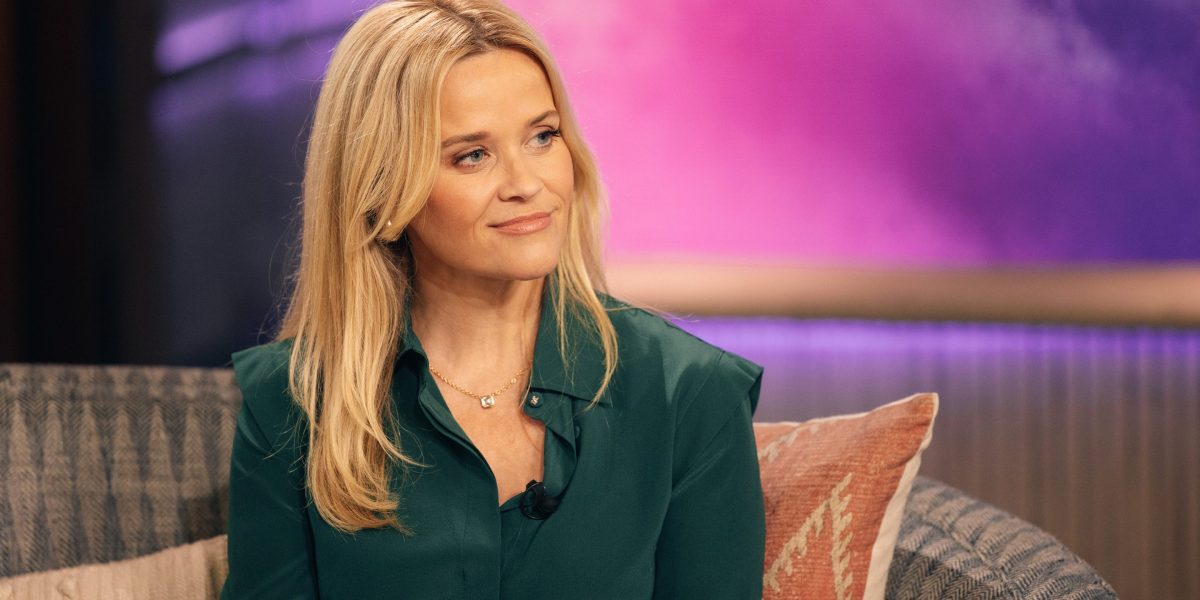
Reese Witherspoon says ‘I don’t think my career would be possible’ in the age of AI and social media: ‘It’s a different world’

Published

on


Reese Witherspoon’s big break came in 2001, when she was 25 years old, starring in Legally Blonde as the iconic Elle Woods. But the award-winning actress actually started modeling and doing local TV commercials when she was just 7 years old, and had her first major film role when she was just 14 years old, in 1991, for the coming-of-age drama The Man in the Moon.

Today, Witherspoon is the founder of media company Hello Sunshine, and is worth about $400 million. She sold her company in 2021 to two former Disney execs for $900 million, but she still oversees operations and remains on the company’s board. But she recently said if she had tried to come up as an actor today, she wouldn’t have had as much success. 

“I don’t think my career would be possible,” Witherspoon told Bloomberg’s Emily Chang. “It’s a different world.” Witherspoon’s response was to Chang’s question regarding how different Witherspoon’s career would have been if she had started her career during the age of AI and algorithms.

“I see young people and I have so much compassion for young performers and actors because they have to be the producer, the director, they have to shoot their own videos, they have to market themselves,” Witherspoon continued. “That’s not something that I understood when I was 20 years old.”

To be sure, Witherspoon also worked incredibly hard as an up-and-coming actress, even attributing her great success to anxiety. 

“I was probably successful because I had so much anxiety. They go hand in hand,” she recently told Harper’s Bazaar U.K. “I had pressured myself to extreme levels to show up at work in a perfect way.”

Witherspoon admits, though, that mentality isn’t one to keep.

“We all now know, perfect is not attainable. It’s not sustainable,” she said. “I stressed myself out in service of my job, and it got me really, really far. I’m rewarded for my anxiety and perfectionism.”

How AI has shaped acting careers

AI has undoubtedly come for white-collar jobs by replacing entry-level workers with tech-based workflows. But AI has also fundamentally changed the entertainment industry, too. Take Disney’s recent announcement of a $1 billion partnership with OpenAI’s Sora, as an example. 

Although some analysts say the OpenAI/Disney deal effectively ended the “war” between AI and Hollywood, the conflict between technology and acting has been waging on for years. The partnership allows for more than 200 Disney, Pixar, Marvel, and Star Wars characters to appear inside OpenAI’s Sora video-generation app, meaning more people can be creators.

AI has transformed acting through digital de-aging, voice cloning, performance alterations, reshaping faces, smoothing dialogue, and recreating deceased actors’ likenesses. Some have even called AI “enemy No. 1” in Hollywood, even though many award-winning films include the technology. 

This has also meant, though, the entertainment industry’s ethics and standards will continue to be called into question as consumers start to doubt the authenticity of content. 

“People are going to want to go outside and meet or go to the theater,” Nicholas Grous, director of research for consumer internet and fintech at Ark Invest, recently told Fortune’s Nick Lichtenberg. “Like, we’re not just going to want to be fed AI slop for 16 hours a day.”

And it also means actors will need to work harder than ever to prove their value. 

“It’s a different, challenging time,” Witherspoon said. “That said, the incredibly talented people will always rise, right? Even in a glut of information, real talent survives and thrives.”

This story was originally featured on Fortune.com


Source link

Continue Reading

Business

OpenAI releases new image model as it races to outpace Google’s Nano Banana amid company Code Red

Published

on


OpenAI released a new flagship image generation model today as it moves to counter recent concerns that it is slipping behind rivals in the race to capture both consumer and business mindshare.

The new image generation model allows for more precise image editing and can generate images up to four times faster than OpenAI’s previous image creation AI, the company said in a blog post. It said the new model, as well as a new images feature in ChatGPT are designed to make image generation “delightful.”

According to an OpenAI blog post, the new ChatGPT Images is rolling out to all ChatGPT users and API users globally today. The company said it works across models, so users don’t need to select a specific model in the drop-down menu in order to use it. 

“We believe we’re still at the beginning of what image generation can enable,” the company said in the blog post. “Today’s update is a meaningful step forward with more to come, from finer-grained edits to richer, more detailed outputs across languages.” 

While it may seem like a Christmas present for loyal ChatGPT users, OpenAI staffers have been the busy elves responding to Santa—er, CEO—Sam Altman’s post-Thanksgiving “Code Red” memo, which was meant to push the company to improve ChatGPT over the next eight weeks amid intense competition from rivals, most notably Google

Google’s Gemini model had been gaining steam after its image generation model, Nano Banana, was released in August. Google said monthly active users grew from 450 million in July to 650 million in October. 

The company’s latest version, Nano Banana Pro, went viral after its November 20 release, thanks to the model’s newfound ability to handle text in images cleanly (something that had been a thorny problem for years). Users were also wowed by Nano Banana Pro’s ability to produce diagrams and infographics that made sense, and the fact that it allowed people to edit their images rather than regenerating them from scratch. 

Last week, OpenAI released the latest version of its text model, GPT-5.2; since then, industry-watchers have waited to see if the company would release a new image model before the New Year. But will it be good enough to outpace Google? 

Fidji Simo, OpenAI’s CEO of applications, wrote in a Substack post that ChatGPT’s chat interface was not originally designed to go beyond text, so the new image model is accompanied by a “dedicated entrypoint” in ChatGPT for images that works more like a “creative studio,” available in the sidebar through the mobile app and on the web.

“The new image viewing and editing screens make it easier to create images that match your vision or get inspiration from trending prompts and preset filters,” she wrote. “On top of that, our new model is faster and better at following detailed instructions so you get more accurate edits and creative transformations.” The model can keep key elements like lighting, composition, and likeness consistent between what users input and what the model outputs, “so the results stay much closer to what you imagined,” she added. 

Still, Nano Banana Pro may still have an early mindshare advantage. In a recent interview with Fortune, Allie Miller, an AI advisor and investor, discussed how she recently attended a Shark Tank-type event hosted by Mark Cuban and was struck by what happened when Cuban said the words “Nano Banana.” 

She expected that the mention of Google’s whimsically-named AI image generator might cause confusion among the thousands of people in the audience, who Miller described as mostly new to AI. Instead, the crowd nodded in recognition.

Like ChatGPT itself, she explained, “there are certain AI tools or models that you just start hearing over and over and over again that gain such a big pop culture moment.” 

Whether OpenAI’s elves can make its new ChatGPT Images as irresistible as the most sought-after toys of the season remains to be seen. But the moment—coming amid the company’s Code Red—underscores a broader reality: While model quality still matters in the AI race, it’s increasingly a battle for consumer hearts and minds.


Source link

Continue Reading

Business

AWS CEO Matt Garman says AI displacing junior employees is bad for business

Published

on


Earlier this year, Garman said replacing junior software developers with AI was “one of the dumbest things I’ve ever heard,” and it’s a point he stands by. In an interview with WIRED published on Tuesday, Garman said displacing junior engineers and employees with new tech is a bad business move. 

Entry-level workers are usually paid the least, meaning getting rid of their positions first in favor of higher-paid senior talent is not a cost-effective strategy, he noted. Moreso, these fresh-faced young workers are likely recent college graduates with energy, excitement, and deep familiarity with AI tools. Eliminating them, in Garman’s eyes, would be myopic.

“At some point that whole thing explodes on itself,” Garman said. “If you have no talent pipeline that you’re building and no junior people that you’re mentoring and bringing up through the company, we often find that that’s where we get some of the best ideas.”

“You’ve gotta think longer term about the health of a company,” he added. “And just saying ‘OK great, we’re never going to hire junior people anymore,’ that’s just a nonstarter for anyone who’s trying to build a long-term company.”

A Stanford University study published in August suggested AI is already starting to have its way with entry-level workers. The research revealed that “the AI revolution” is having a “significant and disproportionate impact on entry-level workers in the U.S. labor market,” particularly 22- to 25-year-old software engineers and customer service agents.

AI’s workforce shakeups 

Despite Garman’s adamance on AI not replacing young workers, Amazon’s own automation advancements have coincided with the company laying off thousands of employees this fall. The tech giant announced in October it would slash 14,000 jobs, mostly middle management positions. Earlier this year, Amazon laid off a smaller portion of workers from divisions including AWS, its Wondery podcast division, and the consumer devices unit. 

Rather than attribute the axings to AI, Amazon instead said the layoffs were part of an effort to make the business more efficient after a period of growth, as well as resolve cultural mismatches that emerged in the workforce.

“The announcement that we made a few days ago was not really financially driven, and it’s not even really AI-driven, not right now at least,” CEO Andy Jassy said at the time. “It’s culture.”

Still, AI advancements are poised to impact Amazon’s workforce. The memo outlining the fall layoffs cites the transforming technology of AI as the impetus for improving workflows with leaner teams. A June memo from the company said AI efficiency gains will “reduce our total corporate workforce,” and a New York Times investigation published in October reported Amazon had a lofty goal to automate 75% of its work, translating to about 600,000 jobs the tech giant would not ultimately need to hire for.

AWS did not immediately respond to Fortune’s request for comment.

Garman isn’t naive to the workplace upheaval AI could bring. He predicted the technology will initially create a burst of new jobs, as well as reduce several roles, but he was certain that AI would ultimately transform the nature of work.

“One of the things that I tell our own employees is ‘Your job is going to change.’ There’s no two ways about it,” he told WIRED.

The 49-year-old AWS CEO said employees have the potential to have more impact and responsibilities as a result of AI, but it will require learning news skills, as well as organizing teams differently. While entry-level workers should not be the primary victims of AI’s workplace shake-ups, other jobs and industries will be impacted, Garman noticed.

“If they don’t, they’ll most likely get left behind by people who move faster and do change,” he said. “There is going to be some disruption in there for sure. Like there is no question in my mind.”


Source link

Continue Reading

Business

Elon Musk’s wealth has soared past $600 billion—he’s now worth double the next richest person alive, Google’s cofounder Larry Page

Published

on


Elon Musk just woke up $168 billion richer. Even as the wealthiest man in the world, he is still setting new records and raising the bar for what ultra-wealthy looks like.

The serial CEO’s net worth shot up to $638 billion on Monday, making him the first person estimated to be worth more than $600 billion by Bloomberg’s wealth index

The 54-year-old witnessed an unprecedented wealth surge after SpaceX, an aerospace company he founded and leads, hit a $800 billion market cap in an insider share sale. SpaceX subsequently became the most valuable private company in the world—and by holding a 42% stake in the business worth $317 billion, Musk’s fortune soared. 

In fact, his fortune has multiplied so much that fellow billionaires can’t keep up; Oracle cofounder Larry Ellison very briefly knocked him from the top spot earlier this year, but swiftly lost $34 billion

Even the wealth of Google cofounder and ex-CEO Larry Page, who is the second richest person alive, pales in comparison to Musk’s bank account. Page is worth $265 billion: less than half of what the SpaceX CEO sits atop. 

And with Musk’s $1 trillion Tesla pay package (effective since it was approved in November) trickling into his bank account over the next decade, he’s solidified his spot as the richest person in the world by a longshot. 

How Musk became the richest person in the world

When Musk was first added to Bloomberg’s index in 2013, he only held $4.8 billion in wealth—still an eye-watering figure, but a far cry from his 2025 fortune. His next milestone came in 2020, when he was calculated to be worth at least $100 billion thanks to a soaring Tesla valuation. And within the last five years, he’s managed to accrue six times as much wealth—adding around $100 billion every year—as his businesses thrived. 

But Musk was never a stranger to wealth. 

The entrepreneur spent his final high school years attending an affluent South African boys school—surrounded by peers who later became politicians and award-winning novelists—while the rest of the country reeled from apartheid. Later, he headed to his mother’s country, Canada, before moving to the U.S. in pursuit of success.

Musk experienced his first wealth breakthrough while he was still in his early twenties. In 1995 he co-founded software company Zip2, which helped newspapers bring city guides to the internet. The business sold to Compaq for $307 million just four years later. But his next venture solidified his footing in the corporate world; in 1999 Musk then co-founded X.com, an online payment company which later merged with PayPal’s parent company Cofinity. By 2002, eBay acquired PayPal for a whopping $1.5 billion. 

Instead of simply riding the high of newfound wealth, Musk used the money to found and invest in a slew of other lucrative companies. In 2002, he founded SpaceX—his current ticket to $638 billion wealth. He also joined Tesla as an investor in 2004, becoming CEO four years down the road. In 2016, he launched neurotech business Neuralink, the same year he founded The Boring Company. And in one of his most daring—and contentious—aquisitions yet, Musk bought Twitter (now X) for $44 billion in 2022. 

But the vast majority of Musk’s wealth comes from his 12% stake in EV car business Tesla, and 42% share of rocket company SpaceX. He also owns around 33% of XAI Holdings, valued at roughly $105 billion by Bloomberg, following a merger with X and AI startup xAI. And aside from his investments, Musk has locked down a compensation package that’s unheard of. This November, Tesla shareholders voted in favor of a nearly $1 trillion, 10-year pay plan for the Tesla CEO. 

Criticism around Musk’s $1 trillion pay package

The first-of-its-kind $1 trillion compensation strategy encompasses 12 tranches of shares to be granted if Tesla hits certain milestones over the next decade, giving Musk increased voting power over the company. His ownership of Tesla is estimated to swell from about 12% to 25%, tacking an additional 423 million shares to Musk’s current holdings.

It’s a record-breaking pay package that has drawn scrutiny from spectators and proxy advisors alike. Even Pope Leo XIV chimed in on the situation, warning of growing income inequality at the upper echelons of business. 

“CEOs that 60 years ago might have been making four to six times more than what the workers are receiving, the last figure I saw, it’s 600 times more than what average workers are receiving,” the Pope told Catholic news siteCrux in September.

“Yesterday, the news that Elon Musk is going to be the first trillionaire in the world: What does that mean and what’s that about? If that is the only thing that has value anymore, then we’re in big trouble.”


Source link

Continue Reading

Trending

Copyright © Miami Select.