
Politics
Redistricting is happening. But when will it finish and who will draw the maps?

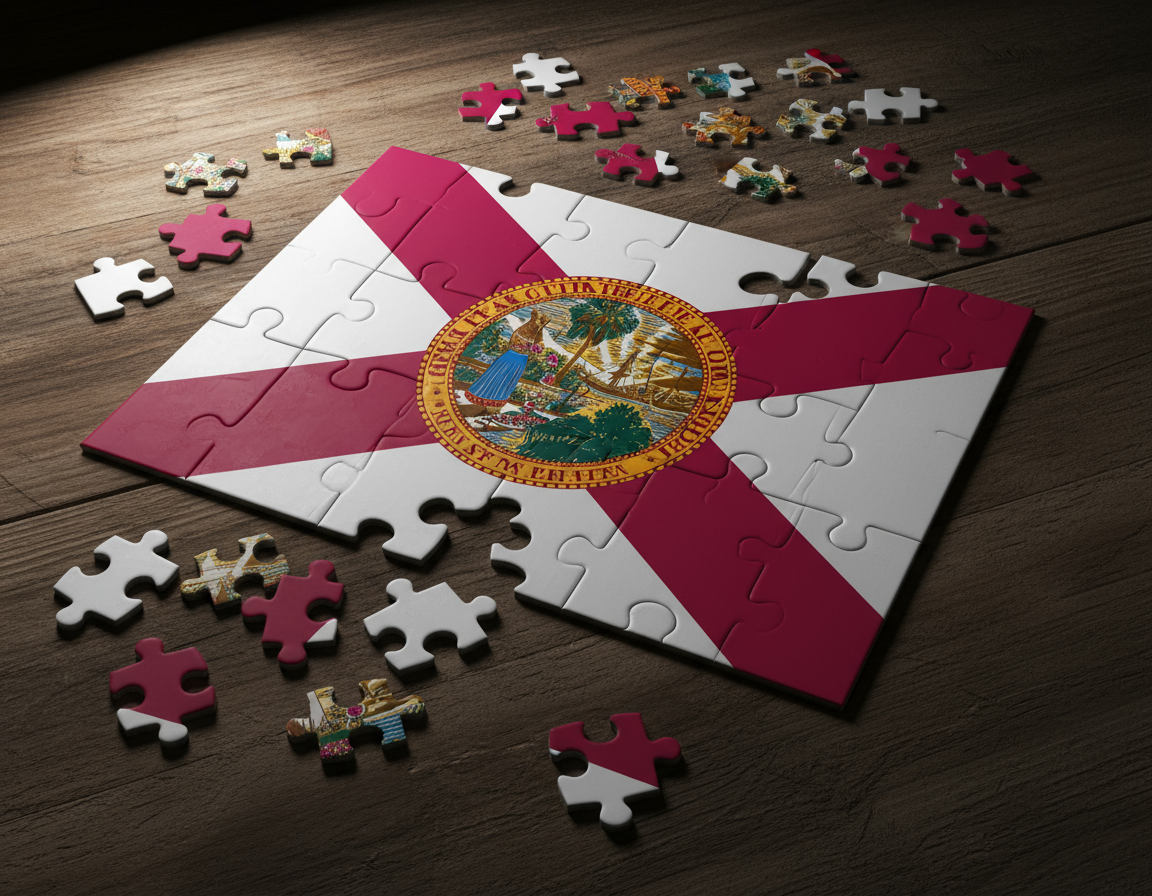
The drawing of political boundaries normally only takes place in the wake of the decennial census. But a half-dozen states drafted new congressional maps in 2025, and Florida leaders say the Sunshine State will follow suit this year.
That has political consultants and candidates for Congress in both parties anxious to see the new cartography. But House Speaker Daniel Perez appears at odds with both Gov. Ron DeSantis and Senate President Ben Albritton about when redistricting should occur.
DeSantis, days before the start of the Regular Session, called a Special Session on redistricting for April 20. That should allow time for the U.S. Supreme Court to reach a decision on Louisiana v. Callais, which could impact how racial demographics can be used to craft political boundaries.
The Fair Districts Amendment to Florida’s Constitution, passed by voters in 2010, prohibits the diminishment of voting power for racial minorities. But a high court ruling could determine if such a restriction means race would predominate the redistricting process.
“There’s a Supreme Court decision that’s going to affect the validity of some of these districts nationwide, including some of the districts in the state of Florida,” DeSantis said.
But Perez announced a redistricting committee last August. A committee named weeks later has already met twice ahead of the Regular Session, though no specific maps have been discussed. Perez has signaled a desire to complete the process during the Session.
“Members can expect the process will unfold thoughtfully, deliberately and transparently,” Perez said.
Albritton for his part appears to be taking the lead from DeSantis and said in a memo to all Senators that “no ongoing work regarding mid-decade redistricting taking place in the Senate at this time.”
Among the consulting class, that has created a certain amount of consternation. Terry Miller, a political consultant in Southwest Florida, said he appreciates the Governor’s logic, but that many campaigns are already underway.
“The Governor is right not to get too far out in front of things. I don’t want to waste money and time for something to not work in the court’s eyes and be back where we started,” Miller said. “But from a political point of view, I want certainty. I want to know who we’re campaigning to and messaging to.”

Miller, a Republican consultant, lives in Florida’s 19th Congressional District, currently the only open federal race in Florida due to U.S. Rep. Byron Donalds’ run for Governor. Miller is currently working with Jim Schwartzel’s campaign, one of 12 federal campaigns that were already up and running before the close of 2025.
Every other member of Florida’s congressional delegation intends to seek re-election. But speculation swirls around incumbents because of the looming redistricting process.
In Washington, D.C., rumors swirl around whether maps may thrust Democratic U.S. Reps. Jared Moskowitz and Debbie Wasserman Schultz to compete in South Florida, or for the same to happen to Democratic U.S. Reps. Maxwell Frost and Darren Soto in Central Florida.
But there are only eight Democrats among Florida’s 28-member U.S. House delegation. Any change in the lines would undoubtedly also impact the 19 Republican U.S. Representatives from Florida.
The very nature of the conversation, though, has fueled adamant objections from Democrats about the legality of embarking on redistricting this year at all. Florida House Democratic Leader Fentrice Driskell has said the only reason Republicans have even considered new cartography is because of pressure from President Donald Trump, who has publicly urged all Republican-controlled states to redistrict.
“Trump wants to rig the Midterm Elections to prevent the American people from holding his administration accountable,” she said.
State Rep. Bruce Antone, the ranking Democrat on the House Redistricting Committee, noted that Florida never embarked on off-year redistricting absent a court order, and he only knows of three times that happened. But he suspects that so much political pressure will come from Trump and DeSantis that lawmakers will redraw lines anyway.
“I think there is more of a push coming from Gov. DeSantis than the White House. But Speaker Perez is his own person. He is not easily pushed around,” Antone said.
“But I think this is something where he has to at least begin the process. I don’t sense an appetite from the Speaker or the Senate President that this is something they want to do, but they may not have a choice. Too many people across the nation are watching this, and it determines their future.”
Notably, Trump’s political team, immediately after Perez announced he would appoint a redistricting committee, was pushing the Speaker as a potential candidate for Attorney General. Perez has since said he won’t run for that job, and Trump then endorsed Attorney General James Uthmeier, whom DeSantis appointed to the Cabinet post last year.
But Antone said if Perez intends to run for any public office or seek an appointment in the future, he may need to play ball on redistricting.
That has left Democratic consultants suspicious of the entire process.
“We already know the GOP is looking to heavily redistrict and gerrymander areas across Florida in order to help Trump with the Midterms,” said Jeremy Rodriguez, an Orlando-based political consultant who worked on Soto’s last congressional campaign.
“This isn’t about representing the people of Florida, it’s about Trump maintaining control as democracy continues to erode and turn into authoritarianism.”
That said, Antone’s main question heading into Session is: Who will produce the maps lawmakers may have to consider? The FloridaRedistricting.gov site used in the 2022 decennial redistricting process has published no new maps since 2022.
“I’m wondering who is drawing the maps,” Antone said.
DeSantis already made clear who he wants as Florida’s cartographer. He said he would ask Commerce Secretary Alex Kelly to work again with the Governor’s Office for the redistricting process. Before his current role, Kelly worked as Deputy Chief of Staff to DeSantis and drew the controversial map the Governor strong-armed the Legislature into approving in 2022, after vetoing maps that originated in a traditional process.
Kelly also drew other maps approved by the Legislature, including one that the Florida Supreme Court in 2015 tossed for violating Fair Districts by allowing undue influence by partisan political players to shape lines.
But that 20-year-old ruling was legally undermined in July when the current Florida Supreme Court upheld the DeSantis-signed, and Kelly-drawn, map. That decision said the lines the prior court had put in place for the 2016 elections — which included a Tallahassee-to-Jacksonville district that elected Black Democrat Al Lawson to Congress for three election cycles — violated the U.S. Constitution’s equal protection clause by crafting a map predominantly based on race.
“The Legislature’s obligation to comply with the Equal Protection Clause is superior to its obligation to comply with the Non-Diminishment Clause as interpreted by our Court,” reads a majority opinion by Chief Justice Carlos Muñiz. “The plaintiffs did not prove the possibility of complying with both the Non-Diminishment Clause and the Equal Protection Clause in North Florida. Therefore, they did not meet their burden to prove the invalidity of the Enacted Plan.”
DeSantis and Perez have both cited the language of that ruling as placing urgency on redistricting now instead of after the 2030 census. While the 2022 fight centered around the Lawson district in North Florida, the Governor and Legislature decided to settle on lines crafted by legislative cartographers in South Florida, ones that left in place minority-empowering districts that historically have elected Black Democrats and Cuban American Republicans for decades.
The long-held belief in Tallahassee was that those districts are all protected by the Voting Rights Act approved by Congress in 1965. But a host of court rulings, the Muñiz opinion most recent among them, has eroded the federal direction over the last 10 years.
“Exploring these questions now, at the mid-decade point, would potentially allow us to seek legal guidance from our Supreme Court without the uncertainty associated with deferring those questions until after the next decennial census and reapportionment,” Perez wrote in a memo to Representatives when announcing the House Redistricting Committee.
Rep. Mike Redondo, a Miami Republican in line to become House Speaker in 2030, was named as Chair of the committee. He did not return calls to Florida Politics on the subject, but so far he has suggested urgency in crafting the lines.
“It would be irresponsible to delay the creation and passage of a new map, especially until after Session. It would also be irresponsible to any who are called to civil service,” Redondo said at the first meeting of the committee. “And most importantly, it would be irresponsible to the citizens of Florida.”
But through two meetings, there remain no maps for anyone to review, outside those produced by online activists eager to grow the number of seats in Florida. One frequently shared by pro-Trump accounts would leave Florida with 25 Republican-leaning seats and only three favoring Democrats.
“Democrats are going all-in on redistricting and stretching state laws to their limits wherever they can. We can’t afford to leave a single seat on the table in Florida,” posted X user Erickson with a copy of that map.
But of note, a provision of the Fair Districts Amendment unchallenged in Muñiz’s Summer ruling prohibits drawing districts intentionally to the benefit or detriment of a political party. Whether the Louisiana decision opens the door to openly partisan gerrymandering, as recently displayed in Texas, California and, before 2010, in Florida, remains uncertain. But in 2019, the U.S. Supreme Court held that questions about partisan gerrymandering were “not justiciable” in federal courts, leaving enforcement of any prohibitions to state courts.
Florida Politics reached out to a number of political consultants who did not return calls. But Republican leaders have hoped to see a new map this year, one even friendlier than the one DeSantis signed in 2022 that produced four Republican pickups in House seats in Florida that year.
When lawmakers last conducted redistricting, Florida Republicans had achieved a statewide advantage in voter registrations over Democrats only a few months before. But as of Nov. 30, there were more than 1.4 million more Republicans than Democrats in a state of about 13.5 million people.
Of course, there remain other guidelines on redistricting that court precedent requires lawmakers to consider when drawing any political boundaries. Geographic boundaries like water bodies, major roadways, and existing city limits and county lines all normally play varying levels of importance in the process.
Miller, for his part, has tried to stay out of conversations in light of his work on congressional campaigns. He did say that as a Lee County resident, he long has hoped the county would be wholly included in one congressional district.
Rodriguez, while he doesn’t feel like redistricting should happen, said the process will impact the entire landscape of Florida, so he will be paying close attention to the outcomes. But he also stressed that data changes significantly year to year. He also suggested that changing the lines won’t impact the political atmosphere of the Midterms.
“A critical demographic to focus on as well is the Latino community, which made a pronounced shift, particularly among men, toward Republican candidates in recent presidential cycles,” he said.
“However, this trend is not locked in. Current data suggests perspectives are shifting rapidly due to key issues like the affordability crisis, business concerns and immigration policy. It is crucial for candidates to focus on economic messaging and acknowledging the importance of the Latino community to gain their support.”
Politics
Richie Floyd seeks re-election to St. Pete City Council, pledging to fight corporate influence
Politics
Barbara Sharief bill to delay child separation in questionable abuse claims gets first Senate OK
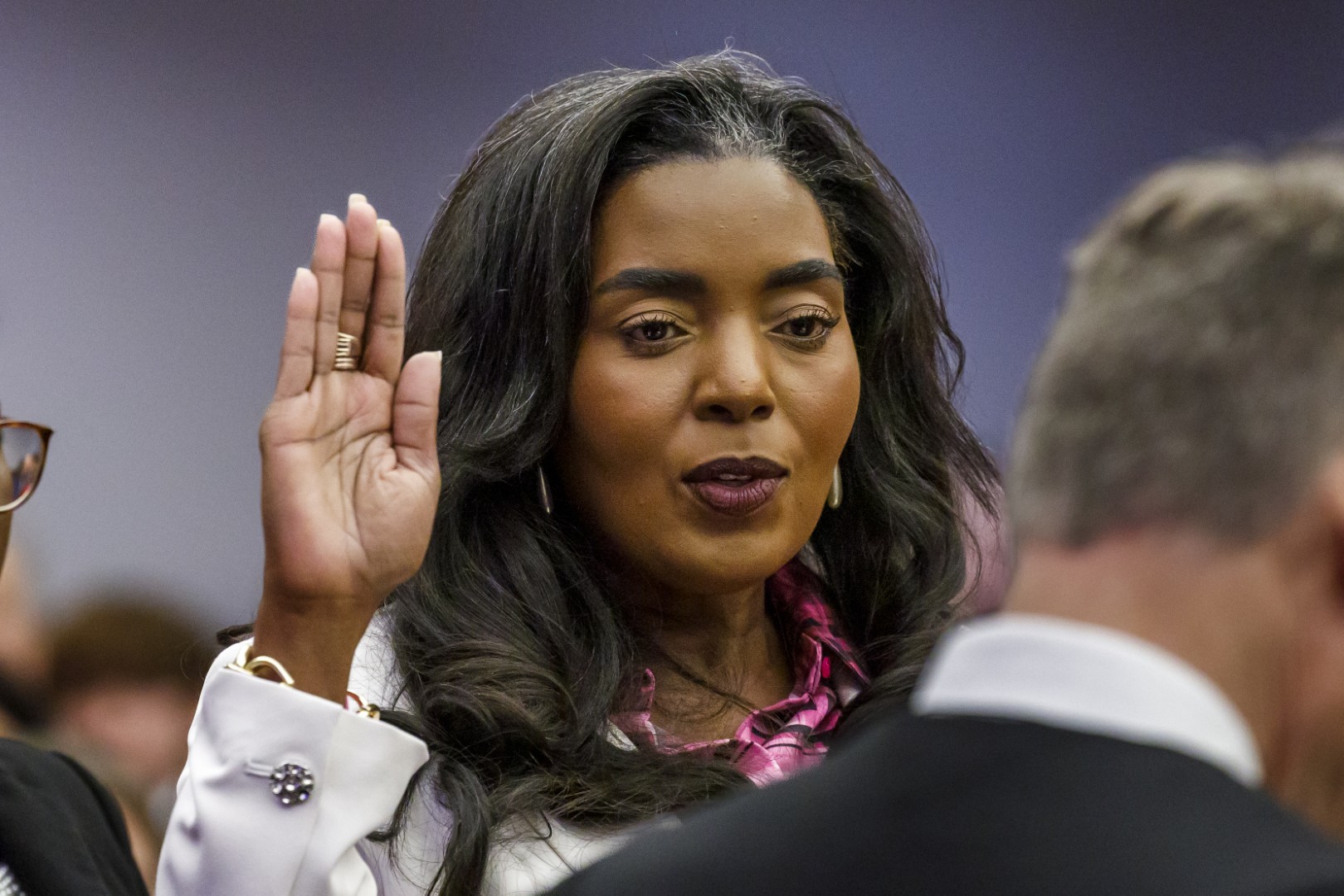
Legislation by Broward Democratic Sen. Barbara Sharief to prevent the state from tearing apart families on false child abuse claims is again advancing in the Senate after almost becoming law last year.
Members of the Senate Children, Families and Elder Affairs Committee voted unanimously for the measure (SB 42), which Sharief described as a “child safety and due process bill.”
“Under current law, certain complex medical conditions can be misinterpreted as signs of abuse and neglect, particularly in medically complex children,” Sharief said.
“When that happens, families can be subjected to unnecessary investigations, and children can be removed from their homes without the benefit of appropriate medical expertise.”
SB 42 would change child welfare investigations by allowing the Department of Children and Families (DCF) to delay referring allegations of child abuse to law enforcement when a parent reports a specified preexisting diagnosis or requests a medical examination.
It would also require Child Protection Teams to consult with qualified pediatric medical professionals when evaluating medically complex children or diagnoses that can mimic abuse, and gives parents limited rights to request additional examinations — at their own expense or through insurance — while barring second opinions on sexual abuse determinations.
The bill is dubbed “Patterson’s Law,” named after Michael and Tasha Patterson and their twin sons, whom the DCF took custody of in 2022 after broken bones the boys suffered raised alarms during an emergency room visit.
The couple took the matter to court, citing medical evidence showing that like their mother, the boys — who have still not been returned — have a rare genetic disorder called Ehlers-Danlos syndrome that causes fragile bones and easy bruising.
Sharief, a doctor of nursing practice and former Broward Mayor, said various preexisting genetic conditions like Ehlers-Danlos, rickets, osteogenesis imperfecta and vitamin D deficiency can lead to signs of bodily harm that aren’t due to physical abuse, but the state’s process for determining whether that’s the case is faulty, and it’s hurting families.
More than a dozen people who appeared at the Monday committee meeting backed up Sharief’s assertions along with several organizations — Disability Rights of Florida, the Florida Justice Association and Florida chapter of the American Academy of Pediatrics among them — that signaled support for SB 42.

Tasha Patterson called the current system “broken,” as it “chooses to defend (DCF’s) mistakes instead of (correcting) them.” She detailed how DCF did not consider input from 12 experts on medically complex children and has continued to ignore evidence of non-abuse, including how her boys sustained additional injuries even after the state stepped in and while neither parent was with them.
“This year will make it four years of litigation to bring our children home. We are yet in another appeal,” she said. “My hope is that the system can learn to prioritize accountability, transparency and fairness when new information emerges.”
Another parent, Diana Sullivan, shared a similar story of how she and her husband were “thrust into an investigation process that treated the unknown as guilt.” The state, she said, took away her newborn daughter and other children after her daughter began exhibiting symptoms of Ehlers-Danlos and osteogenesis imperfecta.
Maddeningly, she continued, the initial DCF report included rare health maladies as a possible cause for the infant’s injuries, but the state still chose to take the children rather than investigate those possibilities.
“Tests were ordered. Answers were possible. But the tests were never run. Eight of our doctors, for a second opinion, deemed her condition not (to be) abuse and explained why,” she said. “We’re not asking for special treatment. We’re asking for humanity, a system … that protects children without destroying the families who love them.”
Sharief, in her closing remarks on the bill, noted that none of the people who spoke in support of SB 42 stand to benefit from it.
“They are here purely to prevent future families from going through the same thing,” she said.
SB 42 will next go to the Senate Appropriations Committee on Health and Human Services, its second-to-last stop before reaching a floor vote. Its identical companion in the House (HB 47), sponsored by Weston Democratic Rep. Robin Bartleman and Shalimar Republican Rep. Patt Maney, awaits a first committee hearing.
The Senate passed “Patterson’s Law” last Session on a 37-0 vote. The bill then died in the House, where Bartleman and Maney’s version of the legislation was denied a hearing in its third and final committee stop.
Politics
Bill to rename Miami-Dade road after Charlie Kirk clears first Senate hurdle on party-line vote



Is Powell’s Fed head independence dead? It’s just one more diversionary Trump trick

Surgeon to Be Extradited to Ohio For Allegedly Murdering Ex-Wife, Husband

Sophie Fontanel receives Legion of Honor
-

 Politics8 years ago
Congress rolls out ‘Better Deal,’ new economic agenda
-
Entertainment8 years ago
New Season 8 Walking Dead trailer flashes forward in time
-
Politics8 years ago
Poll: Virginia governor’s race in dead heat
-
Politics8 years ago
Illinois’ financial crisis could bring the state to a halt
-
Entertainment8 years ago
The final 6 ‘Game of Thrones’ episodes might feel like a full season
-
Entertainment8 years ago
Meet Superman’s grandfather in new trailer for Krypton
-
Business8 years ago
6 Stunning new co-working spaces around the globe
-
Tech8 years ago
Hulu hires Google marketing veteran Kelly Campbell as CMO