Connect with us

Business

Red Lobster’s CEO on the risks and rewards of a turnaround role

Published

on


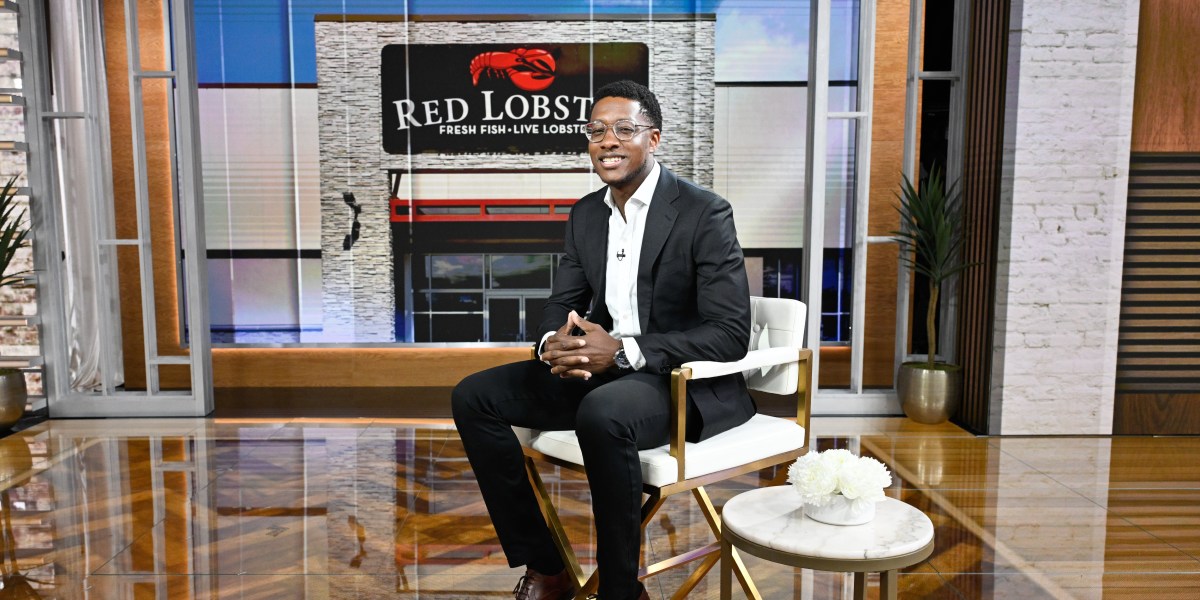
When Damola Adamolekun, 36, accepted the CEO role at Red Lobster, the nation’s largest casual dining seafood chain was in bankruptcy and weighed down by years of operational missteps. On paper, it was the kind of job most executives might politely decline: high risk, thin margin for error, and limited time to stabilize. For Adamolekun, though, it was an irresistible equation.

“I think this can be the greatest comeback in the history of the restaurant industry,” he told me in a wide-ranging interview for Fortune‘s newly-launched CEO Playbook vodcast. “To lead that would be a once-in-a-lifetime opportunity.”

For corner office aspirants, the decision framework Adamolekun describes offers a blueprint for assessing when to take on a transformational role. At the heart of it is risk-versus-return, akin to the calculus in investing, where Adamolekun began his career in finance before shifting to restaurant leadership: first as CEO of P.F. Changs, followed by Red Lobster. “Investing is the business of risk assessment, and I think you should manage your career the same way,” he says. “Risk on its own isn’t something to avoid. You just need adequate return.”

That “return” isn’t only financial. In Adamolekun’s case, it was the chance to make history by leading a legendary turnaround, backed by owners and a team he trusted. The potential downside, he says, was clear: the company could fail despite his efforts. But the upside—a revitalized Red Lobster and a career-defining achievement—was worth the gamble.

This kind of decision requires more than rational calculation. It also demands self-knowledge. “Some people don’t want to take any risk because they’re not comfortable in that environment,” he notes. “You need to know yourself as well, and the risk-reward tolerance is going to be different for every person.”

Ambition plays a role, too. Adamolekun says he has never shied away from setting daunting goals, even at the risk of publicly flopping. “Some people refuse to set ambitious goals because they’re terrified of failure,” he says. “I’m not afraid of that. I don’t mind setting really high goals, and I don’t mind going after difficult things. You do your best and try to win.”

When weighing whether to take on the helm of a company in crisis, aspiring CEOs should step back and interrogate three essential dimensions of the role:

  • What’s the actual upside? Look beyond financial incentives. Is the role a chance to redefine an industry, leave a legacy, or develop capabilities you can’t elsewhere?
  • Do you trust the backers? Turnarounds live or die on aligned stakeholders. Without supportive ownership, capital, and a resilient team, the odds of success diminish sharply.
  • What’s your risk appetite? Not every leader thrives in crisis. Assess honestly whether you’re comfortable betting your reputation—and perhaps your career—on a comeback.

For Adamolekun, his current ambition distills down to a single, audacious mandate: “To save Red Lobster. That’s enough.”

Have a CEO with must-hear views on leadership? Pitch them to ruth.umoh@fortune.com for Fortune’s CEO Playbook.

Ruth Umoh
ruth.umoh@fortune.com

Smarter in seconds

Wealth hacking. Gen Zer, who built multimillion-dollar companies, lists 5 ways to ‘optimize ruthlessly’ during peak years

Shale stability. Chevron’s president explains how the company transformed the historically boom-and-bust shale business into a steadily profitable enterprise

Talent grab. GM raided Silicon Valley to build its new AI team. Here’s what it’s doing.

Sleep optional. Inside billionaire Lucy Guo’s intense daily routine: 5:30 a.m. wake-ups, double gym sessions, and no lunch breaks

Leadership lesson

Damola Adamolekun on the cost of entry for a career win: If there’s a big opportunity that could change your life, but it’s risky… I’m willing to take those risks.”


News to know

Keurig Dr Pepper is reportedly nearing an $18 billion deal for JDE Peet’s that could ultimately split its coffee and beverage units. WSJ

Meet Trump’s crypto brain trust, which includes Eric, Don Jr., and an unconventional cast. Fortune

U.S. markets ticked higher Monday after a Friday rally fueled by the Fed Chair’s signal of a potential rate cut and news of Nvidia and AMD’s deal granting the U.S. government a 15% share of their China chip sales. Fortune

Fed officials sought to keep the focus on the economy at Jackson Hole, even as Trump’s push to oust a governor for lower rates loomed large. NYT

PE firms are struggling to raise funds amid a deepening sector downturn, even as they cut fees and offer discounts to lure investors. FT

This is the web version of the Fortune Next to Lead newsletter, which offers strategies on how to make it to the corner office. Sign up for free.


Source link

Continue Reading

Business

Robinhood launches staking for Ethereum and Solana in ongoing crypto expansion

Published

on


Robinhood is doubling down on crypto offerings. The trading app will launch staking for Ethereum and Solana in New York starting on Tuesday, according to the company, allowing customers to earn yield on cryptocurrency. 

The company will let customers stake in New York and plans to expand across the country. “We’re proud of the momentum we’ve seen with staking and especially excited that staking is now available to customers in New York, which has one of the most rigorous regulatory frameworks in the country,” wrote Johann Kerbrat, senior vice president and general manager of Robinhood Crypto, in a note to Fortune

Staking has been part of the crypto universe for nearly a decade, rewarding users who lock up a stash of tokens in order to help operate a blockchain network. But uncertainty over its legal status has meant it has been mostly experienced crypto users who have engaged in it using their own wallets.

In 2023, the exchange Kraken agreed to pay $30 million to settle allegations that it broke the Securities and Exchange Commission’s rules by offering staking. Robinhood’s launching of crypto stakes reflects a looser regulatory environment under President Donald Trump’s administration. 

“These crypto enhancements are strategic chess moves positioning Robinhood for the anticipated transformation of financial infrastructure through blockchain technology and tokenization—particularly with the regulatory clarity we expect under the current administration,” said Caydee Blankenship, senior equity research analyst at CFRA Research. 

Robinhood also announced a push into global crypto markets. In Europe, it will add perpetual futures contracts on several coins, and it will also enter the Indonesian market, as it agreed to buy a brokerage and crypto platform in the country. 

Robinhood is not new to crypto, as users on the platform have been able to trade Bitcoin and Ethereum since 2018. However, the company has beefed up its crypto arm this year. In June, Robinhood completed a $200 million acquisition of Bitstamp, the world’s longest-running crypto exchange. Crypto transactions accounted for more than 21% of the company’s revenue, as of last month’s earnings report. 

Robinhood’s expansion of their digital assets could help them challenge other crypto exchanges, according to Romeo Alvarez, research analyst at William O’Neil. “Robinhood is stepping up its efforts to compete on a global basis with larger trading platforms like Coinbase, Binance, OKX, and Kraken,” he said.  

The last few days have seen other big banks vie for staking. On Friday, BlackRock filed for a stake Ethereum ETF, the iShares Ethereum Staking Trust (ETHB). The Wall Street giant already has an Ethereum ETF (ETHA), but that one does not have staking components. 


Source link

Continue Reading

Business

Amazon robotaxi service Zoox to charge for rides in 2026, with ‘laser-focus’ on transporting people, not deliveries, says cofounder

Published

on


Amazon’s self-driving robotaxi subsidiary, Zoox, expects to start charging passengers for rides in Las Vegas in early 2026, with paid rides in the San Francisco Bay Area coming later next year, a company executive said Monday.

The move, which would represent a key milestone for Zoox as it seeks to catch up with Alphabet’s Waymo, depends on obtaining federal regulatory and state approvals, Zoox Co-founder and chief technology officer Jesse Levinson told the audience at Fortune’s Brainstorm AI event in San Francisco on Monday.

And while robotaxi rival Waymo recently partnered with DoorDash to test food deliveries with driverless cars, Levinson said that Zoox is “laser focused” on moving people around cities, an addressable market he sees as being “just profoundly huge.” That directive has come “all the way from the very top” at Amazon, he added, despite the retailer’s significant interest in driverless package delivery.

“It’s harder to move people around than packages in terms of what you have to do with your vehicle,” Levinson said. On the other hand, automating package delivery is rife with its own challenge because the boxes have to get in and out of the vehicle, which isn’t as straightforward as people who can move themselves, he added.

Zoox crossed the 1 million mile technical threshold for autonomous rides just last week, Levinson said. The company’s distinct, carriage-seated vehicles, which have no steering wheels or manual controls, currently provide rides to passengers free of charge in portions of Las Vegas and Zoox is slowly opening up the waitlist to use the service in San Francisco.

Despite the progress and the plans to start charging fares, Zoox won’t generate revenues that are meaningful to Amazon, its $2.4 trillion parent company, for at least several more years, Levinson said. 

“This is pretty expensive,” said Levinson. “Over the next few years, it will start to be a really interesting business because the revenue you can generate from the robotaxi is quite a bit more than the expense to run robotaxi.”

That’s the point at which the business will become more “financially interesting,” he added.

Building cars without human drivers in mind

While creating a driverless robotaxi service comes with various challenge, Levinson believes it will ultimately be a key method for moving people around dense urban areas.

“Our view is that people aren’t doing this, not because it’s not a good idea, but because it’s just really hard,” said Levinson. “It takes a lot of time, it’s very cross functional, and it’s expensive. But I do think over time this is going to be a much more popular way of human transportation”

One of the gaps between a driverless robotaxi service like Zoox and Waymo, said Levinson, is in the way the cars are built. Rather than retrofitted vehicles that were manufactured with a human driver in mind, Zoox cars were built to be driverless. Levinson said the four-passenger cabins have carriage seating, active suspension, individual screens for each seat, and four-zone climate control. 

“The cars that have been designed over the last 100 years are for humans,” Levinson said. “All the choices, their shape, their architecture, what components they have in them—they were all designed for human drivers.” Levinson said Zoox offers a more cushy, social rider experience that he thinks will be a differentiator among competitors like Waymo and potentially Tesla’s robotaxi fleet. 

Another competitive element for Zoox is its battery, said Levinson. The bigger battery is more environmentally and economically friendly because it requires less charging.

“The economic opportunity and the opportunity for customers [as we] create this whole new category of transportation is actually much more exciting and even more financially compelling than simply taking something they do today and saving a bit of money,” he said.


Source link

Continue Reading

Business

What’s the top concern among billionaires? Not a financial crash or debt crisis. It’s tariffs

Published

on


Money can’t buy you love, but surely billions of dollars ought to be enough to insulate you from global uncertainty and provide some peace of mind, right? Maybe not.

According to the latest UBS Billionaire Ambitions Report, which surveyed superrich clients around the world, only 1% said, “I am not worried about any economic, market, or policy factors negatively impacting the market environment over the next 12 months.”

Meanwhile, the most widely cited concern by billionaires was tariffs, with 66% saying it will most likely harm market conditions over the coming year. Close behind was “major geopolitical conflict” at 63% and policy uncertainty at 59%.

And while Wall Street is worried about soaring U.S. debt, other sovereign borrowers, and AI hyperscalers issuing more bonds, a comparatively low 34% of billionaires flagged a debt crisis as the biggest thing keeping them up at night.

Other risks that are top-of-mind elsewhere but were lower on the list for billionaires were global recession (27%), a financial market crisis (16%), and climate change (14%).

To be sure, UBS pointed out there are regional differences in what billionaires are worried about. For example, 75% of billionaires in the Asia-Pacific region cited tariffs, compared with 70% in the Americas citing higher inflation or major geopolitical conflict.

That’s as President Donald Trump’s trade war has hit China and Southeast Asia with steep duties, while Japan and South Korea face lower but still historically high tariffs.

On the other end of the trade war, importers in the U.S. are passing along some tariff costs to American consumers, who are increasingly anxious about high prices and affordability.

In fact, Trump’s tariffs may actually cool inflation for the rest of the global economy while keeping price pressures sticky at home.

The president and the White House insist costs are lower, but the consumer price index has seen its annual rate accelerate steadily since Trump’s “Liberation Day” shocker in April.

Of course, billionaires are not as bound by international borders as most, making any regional differences among them more fluid.

The UBS report found 36% have relocated at least once, with another 9% saying they are considering it. The top reasons given were seeking a better quality of life (36%), geopolitical concerns (36%), and the ability to organize tax affairs more efficiently (35%).


Source link

Continue Reading

Trending

Copyright © Miami Select.