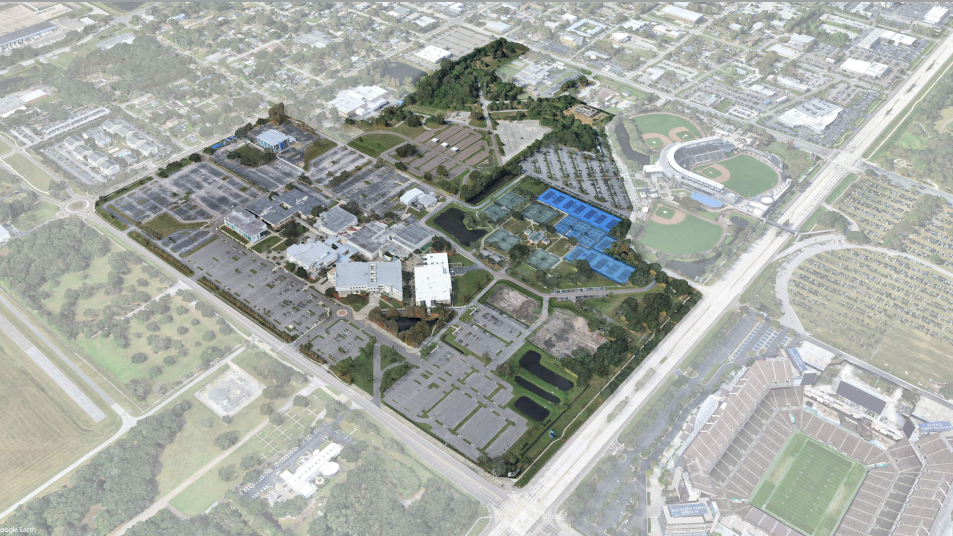
The Tampa Bay Rays are asking Hillsborough County to approve a transformative shift in how the county invests its half‑cent Community Investment Tax revenue. The team’s plan calls for redirecting about $467 million from the voter‑approved sales tax stream to fund a new Rays Park on Hillsborough College land. That facility would not just replace Tropicana Field but anchor a mixed‑use district that ties together entertainment, retail, housing, and public spaces, much like The Battery Atlanta has done for the Atlanta Braves and Cobb County.
ALL FLORIDA SPORTS ALL THE TIME – SPORTS TALK FLORIDA
The Rays argue that April 1, 2026, can be the launch date for a long‑term economic engine, not a one‑off stadium subsidy. By aligning the stadium timeline with a county commission vote on the CIT component, the club positions Rays Park as a catalyst for private investment, job creation, and recurring tax revenue that far exceeds the up‑front commitment.
Atlanta’s Battery model as a blueprint
The success of The Battery Atlanta offers a clear case for why Hillsborough County should back the Rays’ $467 million sales tax ask. Since the opening of Truist Park, the Braves’ mixed‑use campus has generated hundreds of millions in new sales tax, hotel, and property tax revenue for Cobb County and surrounding cities. The Battery has attracted major employers, restaurant chains, entertainment venues, and corporate headquarters, turning what was once suburban sprawl into a dense, walkable destination district.
Critics often focus on upfront public dollars and ignore the downstream revenue bounce. In Atlanta, the project has turned a relatively modest public contribution into a continuous stream of tax receipts that fund schools, infrastructure, and public services. The Battery’s success shows that when a ballclub, local government, and private developers align around a shared vision, the community can literally cash in on the stadium’s economic halo.
How Rays Park could replicate the Atlanta playbook
The Rays’ proposal for Hillsborough College mirrors the Atlanta model. Instead of a standalone ballpark, the team envisions Rays Park as the centerpiece of a surrounding district that includes retail, dining, office space, and residential units. The plan would leverage the existing CIT infrastructure not to replace other public services but to activate an underutilized corridor that has struggled to attract large‑scale development. By committing the $467 million in future CIT revenue, the county would secure a long‑term anchor tenant that drives foot traffic, spending, and job growth.
Backers point out that the Rays’ contribution of at least $737 million in public funding—$467 million from the CIT and roughly $270 million from tourist‑development tax receipts—pales beside the projected lifetime tax gains if the district performs like The Battery. The club’s private investment, which would cover at least half of the ballpark’s total cost, ensures that taxpayers do not shoulder the entire burden. The real value emerges in the years after opening, as new businesses, residents, and visitors pour into the area and spend locally.
April 1, 2026 as a vote for economic diversification
The April 1, 2026 vote gives Hillsborough County a chance to treat the Rays’ stadium plan as infrastructure that pays for itself over time. Supporters argue that the $467 million sales tax ask is not a giveaway but a strategic investment that aligns with the county’s goals of expanding its tax base, attracting higher‑wage jobs, and reducing reliance on a few dominant sectors. By tying the stadium to a mixed‑use district, the Rays’ plan elevates the conversation from “will the team move” to “how does this project position Tampa as a regional destination?”
Commissioners who worry about breaking earlier promises on the CIT can reframe the issue around growth. The Battery Atlanta demonstrates that stadium‑linked districts become self‑reinforcing engines of revenue that free up future budget dollars for other priorities. If Hillsborough approves the April 1 framework, the county can negotiate clear metrics, revenue triggers, and performance benchmarks that protect taxpayers while encouraging the kinds of private investment that turn Rays Park into a headline instead of a footnote.
Why now is the time to build Rays Park
The Rays’ push for April 1 coincides with broader shifts in Major League Baseball and the Tampa Bay region. The league encourages teams to invest in modern, mixed‑use ballparks that blend seamlessly with their communities. For Tampa, Rays Park offers a rare opportunity to claim a signature downtown‑adjacent destination that can compete with other major‑market districts for events, conventions, and visitors. The Atlanta experience shows that the initial political debate over public dollars fades once the streams of new tax revenue start to flow.
By embracing the $467 million sales tax component, Hillsborough County can position itself as a forward‑thinking partner in a project that will generate long‑term value. The Rays’ proposed stadium plan, modeled on the economic success of The Battery Atlanta, offers a compelling case for April 1: a vote not just for a ballpark, but for a generation of growth that Hillsborough can literally cash in on.