Connect with us

Business

Ray Dalio: ‘Most people are silent’ about US economy due to fear of speaking out

Published

on


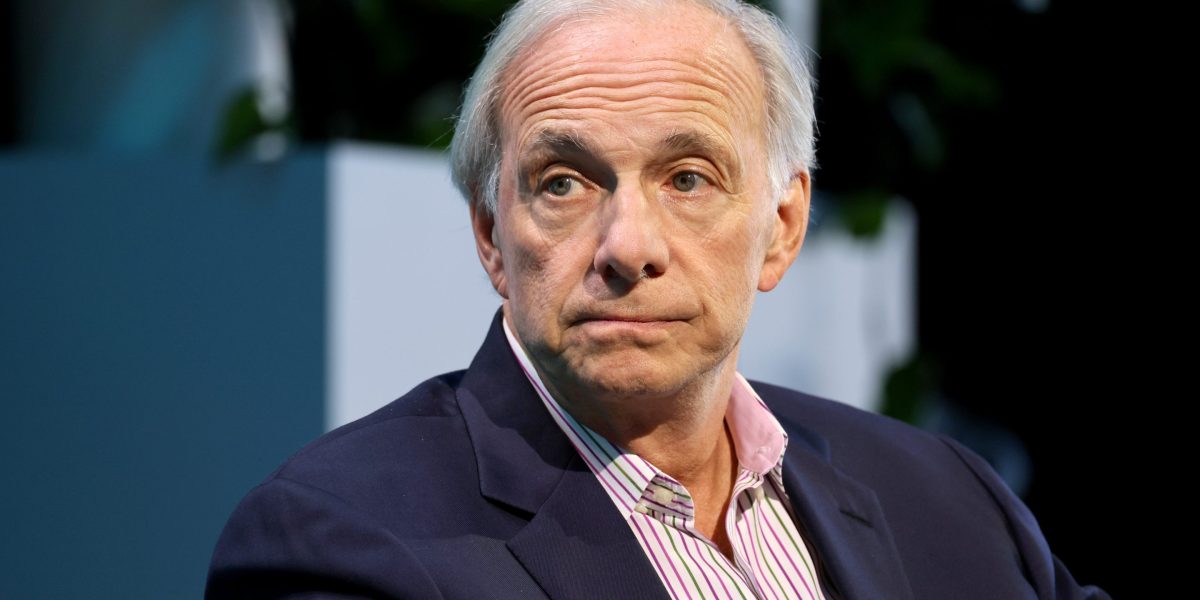
Billionaire investor Ray Dalio has delivered a stark warning about the state of American discourse around the nation’s economic challenges, saying fear of retaliation, particularly from the Trump administration, is keeping investors and business leaders from voicing critical concerns about the country’s fiscal trajectory.

The founder of Bridgewater Associates, the world’s largest hedge fund with approximately $130 billion under management, told the Financial Times the current political and economic environment resembles the troubling dynamics of the 1930s and 1940s. “Most people are silent because they are afraid of retaliation if they criticize,” Dalio said, highlighting what he sees as a dangerous suppression of economic debate at a critical juncture for the United States.

Dalio’s concerns carry significant weight in financial circles. The 76-year-old investor built Bridgewater from his two-bedroom Manhattan apartment in 1975, growing it into a financial powerhouse that manages money for institutional clients including foreign governments, central banks, pension funds, and university endowments. His investment philosophy, based on analyzing cause-and-effect relationships throughout economic history, has earned him recognition as one of the most successful hedge-fund managers ever.

The Harvard Business School graduate’s track record includes successfully navigating major economic crises, including turning a profit during the 1987 stock market crash. His books on economic principles and market cycles have become essential reading for institutional investors, lending credibility to his current warnings about America’s fiscal health.

The economic reality

Dalio’s alarm centers on what he describes as an impending “debt-induced heart attack in the relatively near future,” which he said could strike the U.S. economy within the next three years. The numbers support his concern: America’s national debt has reached a staggering $37 trillion as of August, representing approximately 124% of the nation’s gross domestic product—levels not seen since World War II. More troubling, the Congressional Budget Office projects the debt-to-GDP ratio will climb from 100% in 2025 to 156% by 2055 if current policies remain unchanged. Interest payments on this debt are consuming an increasingly large share of the federal budget, creating what Dalio likens to “a circulatory system riddled with plaque.”

Adding to Dalio’s concerns is the current administration’s approach to Federal Reserve independence. President Trump has openly criticized Fed Chair Jerome Powell and attempted to remove Governor Lisa Cook, moves that European Central Bank President Christine Lagarde recently warned could pose “very serious danger” to the global economy.

Dalio specifically cited the government’s decision to acquire a significant stake in chipmaker Intel as an example of increasing state intervention in the economy, describing it as part of “strong autocratic leadership” aimed at controlling financial circumstances. Such interventions, he argued, reflect a broader shift toward the kind of economic authoritarianism that characterized much of the world during the 1930s and 1940s.

The immediate economic landscape presents a complex picture that may be masking deeper structural problems. Inflation has moderated to 2.7% as of July, down from pandemic highs but still above the Federal Reserve’s 2% target. Unemployment remains relatively low at 4.2%, though recent job growth has slowed significantly with only 73,000 positions added in July—the weakest performance in months.

The Conference Board’s Leading Economic Index has declined for six consecutive months through July, signaling potential economic weakening ahead. Real GDP growth is projected at just 1.6% for 2025, slower than historical averages and reflecting the drag from higher interest rates and trade tensions.

The consequences of silence

Dalio’s warning about widespread silence among business leaders and investors reflects what many see as a chilling effect on economic discourse. The fear of political or economic retaliation, he suggests, is preventing the kind of frank discussion needed to address America’s fiscal challenges before they reach a crisis point.

This dynamic becomes particularly dangerous when considering that previous debt crises have often emerged suddenly when investor confidence erodes. Dalio pointed to the 2022 experience of British Prime Minister Liz Truss, whose unfunded tax cuts spooked markets so severely that the pound plummeted to historic lows against the dollar, forcing her resignation.

As the U.S. approaches what could be a critical period for its fiscal health, Dalio’s warnings serve as a reminder that economic stability often depends on the willingness of leaders—both political and financial—to engage in difficult conversations about unsustainable trends. Whether his prediction of a “debt-induced heart attack” proves accurate may ultimately depend on breaking through the silence he describes.

To be clear, Dalio isn’t the first prominent financial leader to warn about the silencing effects of the current political climate. In April, Citadel’s billionaire founder-CEO Ken Griffin said “shame on this administration” after Trump lashed out at Walmart after its CEO raised concerns about tariffs. Similarly, during an interview at the Economic Club of New York earlier this year, BlackRock CEO Larry Fink said most of the CEOs he meets with privately believe the U.S. is in a recession but won’t say so on the record, fearing political backlash and market repercussions.


Source link

Continue Reading

Business

Crypto market reels in face of tariff turmoil, Bitcoin falls below $90,000 as key legislation stalls

Published

on


If you don’t like the price of Bitcoin, wait five minutes, and it will change. The major cryptocurrency’s volatility has been on full display to start the year, this time dipping about 7% since last week to its current price of just under $90,000 as of mid-day Tuesday.

Other cryptocurrencies have also slid. Ethereum is down 11% in the last six days to its current price of about $3,000, and Solana is down about 14% during that time to its price of about $127. 

The dip comes as President Donald Trump threatened European nations with tariffs as they pushed back against his plans to take over Greenland, causing markets to scramble. Meanwhile, crypto markets faced an additional headwind as key legislation for the industry, known as the Clarity Act, became stalled after industry giant Coinbase unexpectedly withdrew its support late last week. 

“President Trump’s threat to impose tariffs on Europe has put Bitcoin under pressure,” said Russell Thompson, chief investment officer at Hilbert Group. “The postponement of the Clarity Act in the Senate committee mainly due to concerns from Coinbase eliminated a large amount of positive sentiment in the market.”

Coinbase CEO Brian Armstrong objected to the Clarity Act primarily on grounds that crypto owners would not be able to earn yield from stablecoins. The new uncertainty over the bill, which many assumed was on a smooth path towards a Presidential signature, has shaken the price not just of crypto assets but also the share price of companies exposed to digital assets. 

It’s uncertain whether the current headwinds will fade anytime soon. Trump has made his intentions of taking control of Greenland clear. When a group of European nations expressed solidarity with the Danish, he threatened those countries with tariffs, saying he would not back down until Greenland was purchased. Bitcoin and other risk assets subsequently fell, along with major stock indices, while the price of gold rose.

It’s not all gloom and doom for crypto, at least according to some analysts, who view Bitcoin’s correlation with macroeconomic forces as confirmation that digital assets have finally gone mainstream. 

“Bitcoin’s reactivity is another sign of its increasing integration with broader macroeconomic forces, signaling maturation rather than fragility, even as short-term volatility continues,” said Beto Aparicio, senior manager of strategic finance at Offchain Labs.

Join us at the Fortune Workplace Innovation Summit May 19–20, 2026, in Atlanta. The next era of workplace innovation is here—and the old playbook is being rewritten. At this exclusive, high-energy event, the world’s most innovative leaders will convene to explore how AI, humanity, and strategy converge to redefine, again, the future of work. Register now.


Source link

Continue Reading

Business

The 9 most disruptive deals of Trump’s first year back in the White House

Published

on


President Trump lives on deals: “That’s what I do—I do deals,” he once told Bob Woodward. On the one-year anniversary of his second presidency, he’s pushing hard to make his biggest, most disruptive deal ever, one that would bring Greenland under the control of the U.S.—and the global business community is still scrambling to adapt to his approach. Here are nine of Trump’s most unorthodox deals from the past year.

Nine deals that shook the business world

April 2, 2025: Reciprocal tariffs

Trump imposes “reciprocal tariffs” on 57 countries, with each tariff understood as an opening bid in a negotiation. Several countries have since made deals. The one-on-one negotiations, unlike the multilateral system of the past 80 years, can be chaotic for companies and economies

June 13: U.S. Steel “Golden Share”

In return for allowing Nippon Steel to buy U.S. Steel, Trump requires that the U.S. receive several powers over the company, including total power over all the board’s independent directors and vetoes over locations of offices and factories. 

July 10: MP Materials

The U.S. pays $400 million for a large equity share in MP and signs a contract to buy all of MP’s rare earth magnets for 10 years. The reason for the equity stake was not disclosed.

July 14: Nvidia, Part 1

JADE GAO—AFP/Getty Images

Trump reverses the U.S. ban on selling Nvidia H20 chips to China in exchange for Nvidia paying the U.S. 15% of the revenue.

July 23: Columbia University

LYA CATTEL/Getty Images

The Trump administration restores $400 million of canceled federal research funding for the university under an unprecedented multipoint deal. For example, Columbia must supply data to the federal government for all applicants, broken down by race, “color,” GPA, and standardized test performance. A few other schools later make similar deals.

August 6: Apple

Bonnie Cash—UPI/Bloomberg/Getty Images

At a public appearance with Trump, CEO Tim Cook announces Apple will invest an additional $100 billion in the U.S. over four years; Trump announces Apple will be exempt from a planned tariff on imported chips that would have doubled the price of iPhones in the U.S.

August 22: Intel

Justin Sullivan—Getty Images

Intel trades the U.S. government a 9.9% equity stake in exchange for $8.9 billion that might already be owed to Intel under the CHIPS and Science Act. The deal is unusual because the company was not in immediate danger or significantly affecting the economy.

December 8: Nvidia, Part 2:

Trump reverses the U.S. ban on selling powerful Nvidia H200 chips in exchange for Nvidia paying the U.S. 25% of the revenue. Both Nvidia deals are unusual because the payments to the U.S., based on exports, appear to be forbidden by the Constitution. 

December 19: Pharma

Alex Wong—Getty Images

Nine pharmaceutical companies make deals with Trump that are intended to lower drug prices. This is unusual because Trump negotiated separate deals with each company, and the terms have not been released.

All eyes this week will be watching President Trump at the World Economic Forum in Davos, where the president has hinted he’ll announce some high-stakes agreements. Expect the unexpected.

A version of this piece appears in the February/March 2026 issue of Fortune.


Source link

Continue Reading

Business

Microsoft CEO Satya Nadella’s biggest AI bubble warning yet is a challenge to the Fortune 500

Published

on


Microsoft CEO Satya Nadella has been leading the charge on artificial intelligence (AI) for years, owing to his long alliance with OpenAI’s Sam Altman and the groundbreaking work from his own AI CEO, Mustafa Suleyman, particularly with the Copilot tool. But Nadella has not spoken often about the fears that rattled Wall Street for much of the back half of 2025: whether AI is a bubble. 

At the World Economic Forum annual meeting in Davos, Switzerland, Nadella sat for a conversation with the Forum’s interim co-chair, BlackRock CEO Larry Fink, explaining that if AI growth spawns solely from investment, then that could be signs of a bubble. “A telltale sign of if it’s a bubble would be if all we are talking about are the tech firms,” Nadella said. “If all we talk about is what’s happening to the technology side then it’s just purely supply side.”

However, Nadella offers a fix to that productivity dilemma, calling on business leaders to adopt a new approach to knowledge work by shifting workflows to match the structural design of AI. “The mindset we as leaders should have is, we need to think about changing the work—the workflow—with the technology.”

Growing pains

This change is not wholly unprecedented, as Nadella pointed out, comparing the current moment to that of the 1980s, when computing revolutionized the workplace and opened up new opportunities for growth and productivity and created a new class of workers. “We invented this entire class of thing called knowledge work, where people started really using computers to amplify what we were trying to achieve using software,” he said. “I think in the context of AI, that same thing is going to happen.”

Nadella argues that AI creates a “complete inversion” of how information moves through a business, replacing slow, hierarchical processes with a view that forces leaders to rethink their organizational structures. “We have an organization, we have departments, we have these specializations, and the information trickles up,” Nadella said. “No, no, it’s actually it flattens the entire information flow. So once you start having that, you have to redesign structurally.”

That shift may be harder for some Fortune 500 companies as structural changes could be accompanied by uncomfortable growing pains. Nadella says that leaner companies will be able to more easily adopt AI because their organizational structures are fresher and more malleable. On the other hand, large companies could take time to adopt new workflows.

Despite widespread adoption of AI, the 29th edition of PwC’s global CEO survey found that only 10% to 12% of companies reported seeing benefits of the technology on the revenue or cost side, while 56% reported getting nothing out of it. It follows up on an even more pessimistic finding about AI returns from August 2025: that 95% of generative AI pilots were failing.

PwC Global Chairman Mohamed Kande spoke to Fortune’s Diane Brady in Davos about the finding that many CEOs are cautious and lack confidence at this stage of the AI adoption cycle. “Somehow AI moves so fast … that people forgot that the adoption of technology, you have to go to the basics,” he explained, with the survey finding that the companies seeing benefits from AI are “putting the foundations in place.” It’s about execution more than it is about technology, he argued, and good management and leadership are really going to matter going forward.

“For large organizations,” Nadella told Fink, “there’s a fundamental challenge: Unless and until your rate of change keeps up with what is possible, you’re going to get schooled by someone small being able to achieve scale because of these tools.”

New entrants have the advantage of “starting fresh” and constructing workflows around AI capabilities, while larger firms will have to contend with the flattening effect AI has on entire departments and specializations. 

To be sure, Nadella says that large organizations have kept an upper hand, especially when it comes to relationships, data, and know-how. However, he maintains that firms must understand how to use those resources to their advantage to change management style, then that could pose a major roadblock.

“The bottom line is, if you don’t translate that with a new production function, then you really will be stuck,” he said.


Source link

Continue Reading

Trending

Copyright © Miami Select.