Shares in Ray-Ban maker EssilorLuxottica rose 14% to hit an all-time high on Friday, adding nearly $20 billion in market value as investor enthusiasm for its AI-powered Ray-Ban Meta glasses gathered momentum.
Meta CEO Mark Zuckerberg wears the Meta Ray-Ban Display glasses, as he delivers a speech presenting the new line of smart glasses, during the Meta Connect event at the company’s headquarters in Menlo Park, California, US, September 17, 2025 – REUTERS/Carlos Barria TPX IMAGES OF THE DAY
The Paris-listed group, founded by late Italian entrepreneur Leonardo Del Vecchio and a possible contender in the race to buy fashion group Armani, reported on Thursday third-quarter sales growth of 11.7% from a year ago to 6.9 billion euros ($8.1 billion). The results beat expectations and marked the company’s best quarterly performance ever amid strong demand for wearable products such as the smart glasses it has been developing with Meta since before the pandemic.
Even though the smart glasses business has until now accounted for only a fraction of EssilorLuxottica’s total revenue, it has become a focal point for analysts and investors, as well as a catalyst for the company’s investments. Barclays analysts have predicted smart glasses could become the most disruptive innovation since mobile phones, forecasting 60 million units sold globally by 2035.
The AI-powered glasses contributed over four percentage points to sales growth, said chief financial officer Stefano Grassi, with demand prompting EssilorLuxottica to accelerate production capacity plans for the glasses ahead of schedule. “The exponential growth of wearables provided an extra-boost to the top line performance,” the company said in a statement on Thursday.
EssilorLuxottica’s shares were up 13.8% by 1400GMT, the biggest daily gain since 2008, lifting the company’s market capitalisation to 126.5 billion euros. The move drove the European luxury benchmark Stoxx Europe Luxury 10 up over 7% on the week, the index’s biggest weekly gain since January.
The latest Ray-Ban Meta models, priced from $379 to $799 for a new flagship version with built-in display, are currently sold in limited physical stores with expansion to Canada, France, Italy and Britain planned for early 2026.
The emerging success of Meta’s Ray-Ban smart glasses has reignited a long dead category of eyewear computers as Google and Microsoft had previously abandoned the market. By marrying upgraded cameras and generative AI features with Ray-Ban’s designs, Meta has lured big tech rivals back into the market. Google and Samsung are working on glasses based on the Android XR platform. Apple is reportedly working on smart glasses.
J.P. Morgan analysts said in a note to investors the smart glasses were now a “material growth driver” while the company’s core business remained resilient. Equita analysts upgraded their annual revenue forecast for wearables, and now expect an impact on the group’s sales of about one billion euro this year, according to a research note.
“The acceleration in third-quarter revenues and the level of confidence expressed on fourth-quarter and mid-term prospects are an important indicator of the success of the group’s strategic drivers,” they said.
There’s never a bad time to be the main choice as a fashion destination, but M&S has taken top-of-the-tree status this Christmas when it comes to AI gift inspiration. And in the Beauty category, Charlotte Tilbury has been mentioned more than any other cosmetics brand while Decathlon took top spot in the Sports category.
M&S
That’s all down to the ‘AI Christmas Nice List’ compiled by digital marketing and PR agency Tank, revealing which UK retailers AI favours for Christmas gifting by analysing hundreds of ChatGPT responses across 10 retail sectors, awarding a mention score based on how early products are recommended.
And of the top fashion searches, M&S achieved the highest mention score (21) in the category. And that was out of nearly 150 websites.
Following M&S, shoppers are more likely to see fashion picks from Next, Barbour and John Lewis, with mention scores of 20, 17 and 15, respectively.
Next, it has to be noted, also received three more total mentions than M&S, but “these were later in AI’s response and scored lower overall”, the report said.
High ratings for British heritage brand Barbour and John Lewis were helped by their annual Christmas ads bringing in press coverage and social media attention to drive holiday demand, with this year’s ad including Barbour’s retuned link-up with Shaun The Sheep.
Other big name fashion recommendations include Matalan at number five (14 mentions), followed by Sainsbury’s TU Clothing (11 mentions), Longchamp (10), accessories brand Fairfax & Favor and White Stuff (both 8 mentions).
John Lewis also showed up the most overall in ChatGPT, with 31 mentions across eight out of 10 sectors analysed including Home and Food & Drink categories.
Martin Harris, head of digital at Tank, commented on the research: “ChatGPT is used everyday for personal and commercial queries such as Christmas gift ideas, so if fashion brands aren’t appearing for the relevant results, they could be missing out on sales. AI search is important for retailers and while there is hesitancy around it, it is essential brands are discoverable where shoppers are searching for information.
“While some small retailers could struggle with being found in AI during peak seasons like Christmas, it presents an opportunity to improve visibility in their niche. Consumers can also use AI to find niche brands and products. That’s why it’s even more important retailers know what their customers want and have a strategy to appear in the relevant results.”
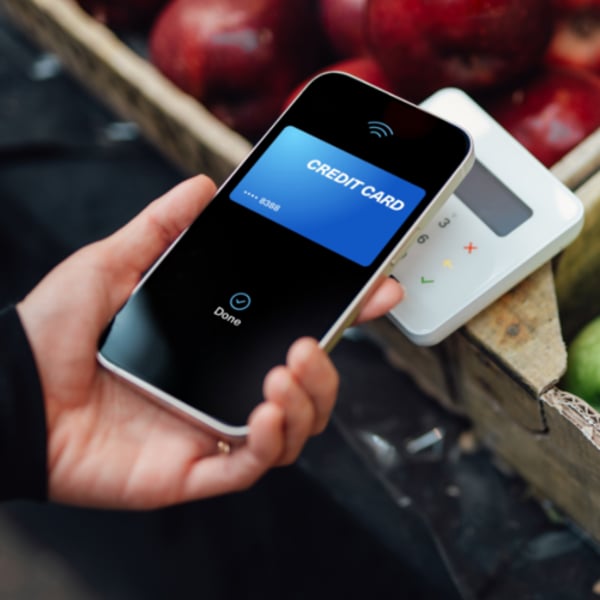
If you want to know how consumers are paying for their purchases, the BRC has just released its latest survey, saying that they swapped credit for debit cards and cash was used in just a fifth of transactions.
Barclays Payments
The BRC’s annual Payment Survey, based on data from last year, reveals a “significant decline” in the use of credit cards, from 14.2% of transactions to 12.6% as consumers turned to debit cards where usage increased from 62% to 64% of transactions.
However, despite their declining popularity, for larger transactions, consumers still preferred using credit cards overall, which offer additional protections for shoppers. Cards also beat cash, which accounted for just 19.2% of transactions.
“As the cost of living crisis eased, some customers returned to old habits. The weekly shop showed signs of a comeback with consumers making fewer but larger transactions”, the report highlighted, with the total number of transactions falling from 20.9 billion to 20.4 billion. Average transaction value rose across all payment types.
More shoppers have also been exploring less traditional payment methods than ever before, particularly for larger transactions. This included the use of gift vouchers, PayPal, and Buy Now Pay Later (BNPL), although no figures were given.
Chris Owen, Payments Policy Advisor at the British Retail Consortium said: “As interest rates peaked in 2024, the use of credit cards fell as customers switched to lower interest forms of payment. However, with cards still accounting for the vast majority of transactions and card fees now more than double the level they were six years ago, only a long-term cap on card fees would bring much needed relief to retailers.
He added: “Looking ahead, as the PSR transitions into the Financial Conduct Authority next year, it is vital that the FCA carries this work forward, delivering fairness and transparency in a market long hampered by competition issues and unjustified fee increases.”
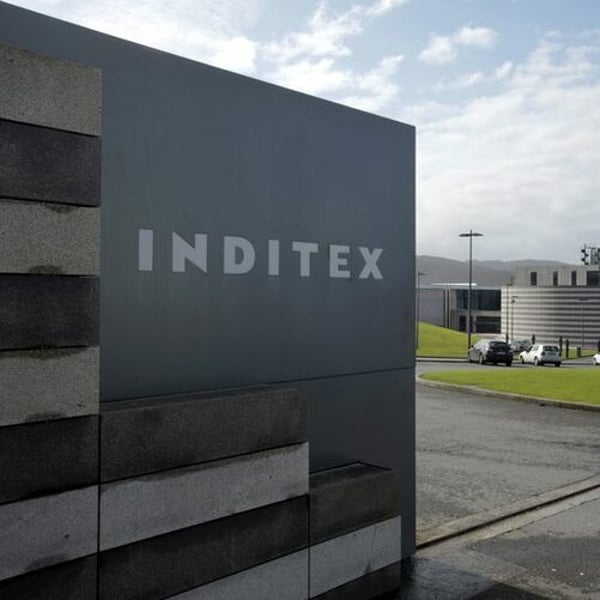
The shares of Inditex, the largest listed company on the Spanish stock exchange, rose 1.85% on the morning of Friday, December 12, to €56.1 per share, surpassing the record high set a year ago, when they fell just short of €56.
Inditex headquarters – Inditex
According to market data compiled by Europa Press, the textile conglomerate is up more than 12% in 2025 and now has a market capitalisation of over €174 billion.
That said, Inditex’s share price had been anaemic- if not negative- over the course of the year, as from mid-March to early this month the stock traded below 2024 closing levels and touched an August low of €40.8.
The rally of the past two weeks- which has propelled the new highs- is attributable to the company’s latest quarterly results, which beat market expectations across the board.
Specifically, on December 3, the conglomerate reported a record third quarter (August to October), with profit up 9% to €1.831 billion and sales up 4.9% to €9.814 billion.
Thus, Inditex recorded net profit of €4.622 billion during the first nine months of its 2025–2026 financial year (between February 1 and October 31), an increase of 3.9% year on year.
Since the day before these latest results were announced, Inditex has gained 14% on the stock market.
Moreover, this particular milestone for Inditex has coincided with a broader one for the Spanish stock market, as its benchmark index, the Ibex 35, surpassed 17,000 points on Friday for the first time in its history.
Analysts’ assessment
“Clear path ahead,” Bank of America analysts concluded two weeks ago following Inditex’s results presentation, after a year of doubts about the outlook for the apparel sector.
“The acceleration of growth bodes well for the first half of 2027 […] and should pave the way for improvements in earnings per share,” they said. They therefore reiterated their buy recommendation while raising their price target from €54 to €60.
eToro market analyst Javier Molina noted that Inditex beat market expectations and is consolidating its transition towards a more premium positioning at a time when the consumer cycle is showing signs of moderating.
“The third quarter was particularly solid and clearly exceeded consensus forecasts,” he said, while, in his view, the shift to the luxury segment is reflected in investment in flagship stores, the renovation of strategic locations and projects such as the new Zara building in Arteixo, focused on product and technology.
The company, according to Molina, shows a “remarkable ability to adapt” to consumer preferences, consolidating collections with higher perceived value.
“But this progress comes at a demanding moment in the cycle, and the market will be watching whether the company is capable of maintaining the level it has set for itself,” he warned.
For his part, IG analyst Sergio Ávila argued that in the short term these figures support Inditex maintaining a premium to the sector, although he also warned that the bar for expectations is “very high.”
“If the company continues to defend margins and control inventories, I see a higher likelihood of consolidation at elevated levels than of a deep correction,” he said.
The most optimistic firm on the Galician group is Citi, which raised its price target from €54 to €63, while other firms such as Berenberg lifted theirs from €52 to €62 and Santander increased its from €55 to €58.40.
This article is an automatic translation. Click here to read the original article.