Connect with us

Business

‘Rare earths are a very useful weapon for China’: Former Commerce Secretary Wilbur Ross on the big economic danger

Published

on


China’s tightening grip on the minerals that power America’s high-tech is no longer a distant geopolitical concern: it’s an economic threat already moving through U.S. supply chains.

That’s the warning from Wilbur Ross, former U.S. Secretary of Commerce under President Donald Trump, who says Beijing has learned how to use rare earth minerals as leverage over the United States, and may be preparing to weaponize supply chains even further.

“Rare earths are a very useful weapon for China,” the private equity mogul told Fortune in an interview. “For giving up a little bit of revenue, they are achieving a pretty good bang for the buck.”

China doesn’t control most of the world’s rare earth mines, but it does dominate the refining and processing systems where 90% of global capacity sits. These materials— about 17 obscured elements like neodymium and dysprosium—are essential inputs in electric vehicles, magnets, wind turbines, high-end semiconductors, F-35 fighter jets, and guided missiles. 

Ross says U.S. vulnerability has been building quietly for years, but only became visible after China introduced new export licensing requirements that he calls a “disguised rationing system.”

“They have imposed a registration process, which is just a way to mask the controls,” Ross said. “Who knows how deliberately slow they’ll make the approvals.”

 In other words, Ross thinks China can now ration supply to U.S. manufacturers, and do it without formally violating trade agreements.

 “It’s a very effective weapon … and it attacks our high-tech things and our national defense needs.”

Factory shutdowns now a real risk

Ross warned that supply strain may start hitting U.S. industry within six to 12 months unless trade tensions ease. Several automakers stockpiled rare earths at the start of the trade war, he said, but those reserves were only ever “a rounding error.”

“No one knows exactly how big the excess quantities of rare earths that American companies built up are,” he said. “But you probably would have some shutdowns if this standoff continues.”

Ford Motor Co. has already publicly warned it could be forced to idle at least one factory if rare earth supplies tighten further. And while that would represent only a small portion of U.S. capacity, Ross says it could mark the start of broader disruptions.

“Rare earths are used in fighter planes, rockets, all kinds of applications,” Ross said. “Basically anything that requires advanced semiconductors usually has some need for rare earths.”

Even small interruptions matter because of how heavily modern manufacturing depends on advanced chips. A typical U.S. vehicle now contains 400–500 semiconductors, and EVs require even more—making rare earths a single point of failure for both the clean energy transition and national defense.

Ross: China has ‘no incentive’ to negotiate

Asked whether a trade resolution with China is realistic, Ross was skeptical. 

“It’s not at all clear to me that China really wants a trade deal,” he said, adding that years of negotiations across both the Trump and Biden administrations have yielded “not a heck of a lot to show for it.”

Ross said Beijing sees no urgency to bargain. 

“[President] Xi [Jinping] can continue portraying this as something the evil U.S. is doing,” he said, explaining that China benefits politically from framing itself as the target of American aggression.

“So far, there hasn’t been enough pain inflicted on China for them to feel a need to get serious about negotiating.”

The next front may be even more volatile. Lawmakers in Washington have floated the idea of tightening advanced AI chip exports to China, but Ross warned that could set off a dramatic escalation.

“Putting an embargo is a pretty hard thing to do. That could very well be interpreted as an act of war,” he said. “If we did that, China might put a blockade on Taiwan.”

Such a move would cripple global technology markets overnight. Taiwan Semiconductor Manufacturing Co. (TSMC) makes more than 90% of the world’s most advanced chips, including those used in U.S. defense systems and cutting-edge AI. 

“That would be catastrophic,” Ross said.

Now, he believes the U.S. is still playing catch-up in a minerals conflict that China prepared for years ago. Domestic processing plants are being built in the U.S. and Europe, he said, but they won’t be operational fast enough to eliminate short-term supply risk.

“We have a timing disconnect,” he said. “China is acting now.”

Fortune Global Forum returns Oct. 26–27, 2025 in Riyadh. CEOs and global leaders will gather for a dynamic, invitation-only event shaping the future of business. Apply for an invitation.


Source link

Continue Reading

Business

BP names Meg O’Neill CEO, making her the first-ever woman CEO of a Big Oil giant

Published

on


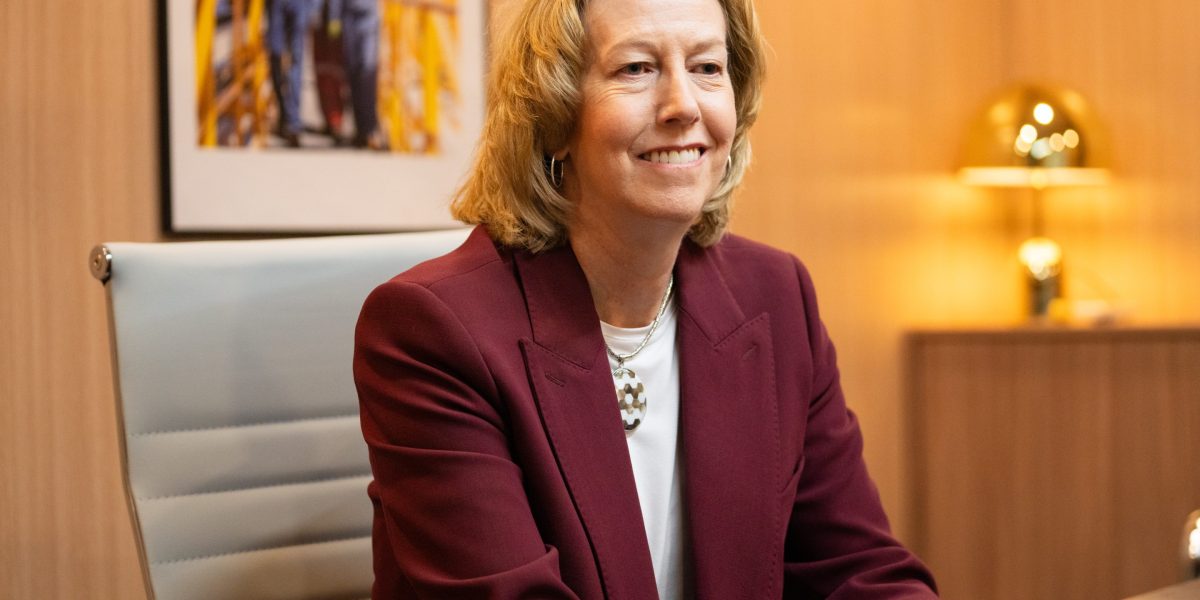
Embattled BP made a dramatic CEO change Wednesday as it hired Woodside Energy leader Meg O’Neill as the first-ever woman CEO of a Big Oil giant.

O’Neill is a Colorado native and Exxon Mobil veteran who grew Australia’s Woodside into a much bigger global natural gas player with expansions into the U.S. She is taking over the British energy behemoth at a time when it has fallen behind the other global oil and gas supermajors and was even a potential takeover target earlier this year by rival Shell.

Current BP CEO Murray Auchincloss is stepping down immediately on Thursday but will serve in an advisory role through all of 2026, BP announced. Auchincloss was hardly considered the top candidate to lead BP, but the former chief financial officer was thrust into the role in late 2023 when then-CEO Bernard Looney was abruptly forced to resign over relationships with colleagues.

Since then, Auchincloss has led a “hard reset” to cut costs, double down on fossil fuels, and take several steps back from its ambitious renewable energy goals. BP was targeted by activist investor Elliott Investment Management, which took a nearly 5% stake in the company early this year, as the Shell merger rumors escalated.

The writing may have been on the wall for Auchincloss when a new outsider chairman took over in the beginning of October, former CRH building materials leader Albert Manifold. And now there will be an outsider chief executive as well. Auchincloss confirmed as much in a statement: “When Albert became chair, I expressed my openness to step down were an appropriate leader identified who could accelerate delivery of BP’s strategy.”

O’Neill will take over as CEO on April 1. In the meantime, Carol Howle, current executive vice president of supply, trading, and shipping, will serve as interim CEO.

“Following a comprehensive succession planning process, the board believes this transition creates an opportunity to accelerate our strategic vision to become a simpler, leaner, and more profitable company,” Manifold said in a statement. “Progress has been made in recent years, but increased rigor and diligence are required to make the necessary transformative changes to maximize value for our shareholders.”

Translation: Auchincloss was making progress but not doing enough to truly turn the company around.

Manifold said O’Neill has a “proven track record of driving transformation, growth, and disciplined capital allocation [that] makes her the right leader for BP. Her relentless focus on business improvement and financial discipline gives us high confidence in her ability to shape this great company for its next phase of growth and pursue significant strategic and financial opportunities.”

O’Neill worked for more than two decades at Exxon Mobil, serving in various countries around the world and as executive advisor to former CEO Rex Tillerson. She left as a vice president in 2018 to become chief operating officer at Woodside, rising to CEO in 2021 coming out of the pandemic.

“With an extraordinary portfolio of assets, BP has significant potential to reestablish market leadership and grow shareholder value,” O’Neill said in a statement. “I look forward to working with the BP leadership team and colleagues worldwide to accelerate performance, advance safety, drive innovation and sustainability, and do our part to meet the world’s energy needs.”

At Woodside, she led the acquisition of Australia’s BHP Petroleum and, most recently, the purchase of Houston-based natural gas exporter Tellurian last year. Woodside is currently building a $17.5 billion export facility in Louisiana.

Earlier this year, when BP-Shell rumors escalated, Shell in June doubled down on its denials, even invoking a U.K. law that forbade it from bidding on BP for six months. That period expires in just a few days.

It turns out that Shell CEO Wael Sawan nixed any internal talks of buying BP, despite interest from Shell’s M&A team, the Financial Times reported this week. Sawan prefers focusing internally on improving Shell’s operations and financials and making smaller-scale acquisitions. Shell’s M&A chief left the company in September.

For its part, Woodside is naming Liz Westcott, executive vice president and COO Australia, as its interim CEO.


Source link

Continue Reading

Business

Mamdani gets 74,000 resumes in sign of New York City’s job-market misery

Published

on


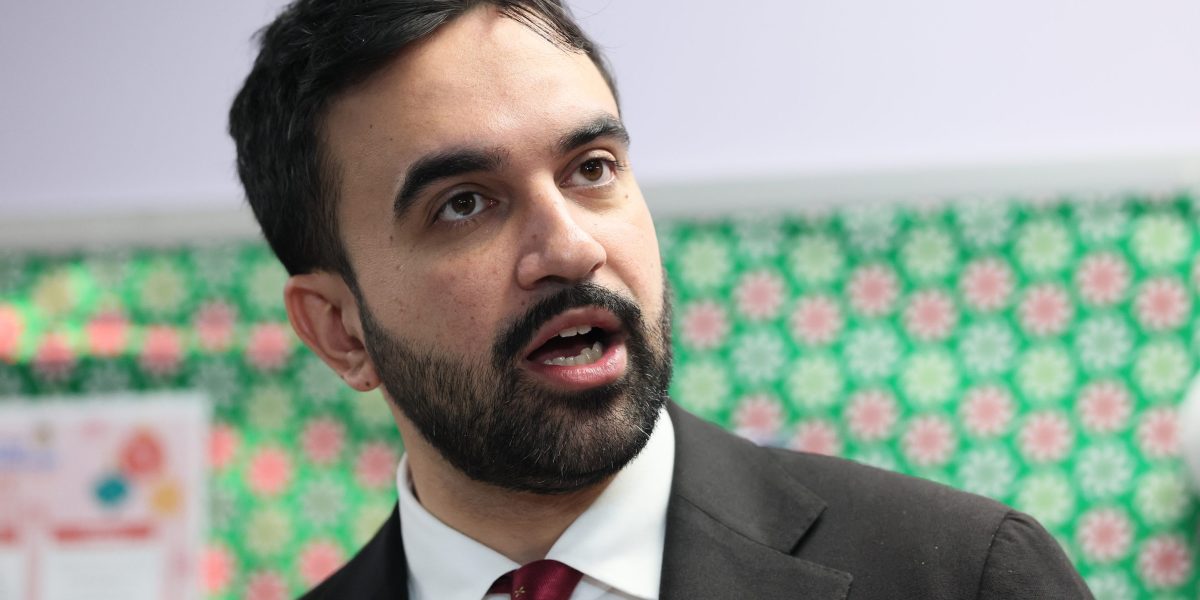
More than 74,000 people, with an average age of 28, have applied for roles in Zohran Mamdani’s new administration.  Those figures are both a measure of enthusiasm for New York City’s incoming mayor and a sign of how tough the job market is for young people in the five boroughs.

Young voters and volunteers fueled the 34-year-old Mamdani’s fast rise from a relatively unknown Queens assemblyman to mayor-elect of America’s largest city. A lot of them had time on their hands: New Yorkers aged 16 to 24 faced a 13.2% unemployment rate in 2024, 3.6 percentage points higher than in 2019, according to a May report from the New York state comptroller. 

New York City had a 5.8% unemployment rate overall in August, 1.3 percentage points above the US average. The city added roughly 25,000 jobs this year through September, compared with about 106,000 during the same period in 2024, according to city data.

Mamdani’s campaign pledge to lower the cost of living in New York resonated with voters struggling to find jobs and establish themselves at a time when rents have stayed high and income growth has slowed. Now he’s looking to hire an unspecified number of roles across 60 agencies, 95 mayoral offices and more than 250 boards and commissions, with senior roles a priority, according to his transition team.

The typical size of the New York City mayoral staff — commissioners, communications, operations and community affairs — is about 1,100, according Ana Champeny, vice president of research at the Citizens Budget Commission, a nonprofit finance watchdog. City government in total hired 39,455 people in 2024, according to New York City data.

Applications for roles in Mamdani’s administration have come from workers of all experience levels and from a wide range of backgrounds and industries, said Maria Torres-Springer, co-chair of the mayor-elect’s transition team. About 20,000 of the applicants came from out of state.

When Barack Obama was elected US president in 2008, workers submitted more than 300,000 job applications to his administration. Blair Levin, who co-led the technology transition team for Obama, said he received around 3,000 of those resumes. He whittled the pool down to 75, a relatively easy task because he needed applicants with specific tech and economics skills, he said.

Without invoking the term “AI,” Torres-Springer said the applications would be filtered using “the typical technology that any big corporation would have in an applicant-tracking system.” The resumes will then be sorted and matched to different agencies.

Mamdani’s avid use of social media, which helped him connect with young people during his campaign, has continued into his transition efforts, creating excitement — among young people especially — about the prospect of joining his administration.

“The average age does tell a particularly interesting story in two ways,” Torres-Springer said. “It might be because of volatility in the job market but it’s also because I think we are attracting, the administration is attracting, New Yorkers who may not have considered government in the past.”

Take David Kinchen, a 28-year-old data engineer who moved to New York from northern Virginia three years ago. Since getting laid off from a job in fraud detection at Capital One, he has applied for more than 1,000 roles and completed at least 75 interviews without an offer, he said. Kinchen volunteered for Mamdani’s campaign and applied to the administration, highlighting his tech credentials and a passion for photography. 

“I did data engineering, so I could help with database decisions. There was also a creative option on the application, since I could work as a staff photographer too,” Kinchen said. 

Another applicant, 22-year-old Aurisha Rahman, has struggled to find a job since graduating with a civil-engineering degree from Hofstra University on Long Island. 

“The job market is even worse than it was last fall,” Rahman said. Mamdani’s resume portal was one of the few places she found open to entry-level applicants.

Rahman, who was born and raised in Queens, said she wants to give back to the city where she was raised and wouldn’t be picky about a position. “Whatever they need, I’ll do it. I don’t care,” she said. “Right now, it’s better to be busy with something than nothing.”


Source link

Continue Reading

Business

Sweetgreen co-founder is stepping down from executive role

Published

on


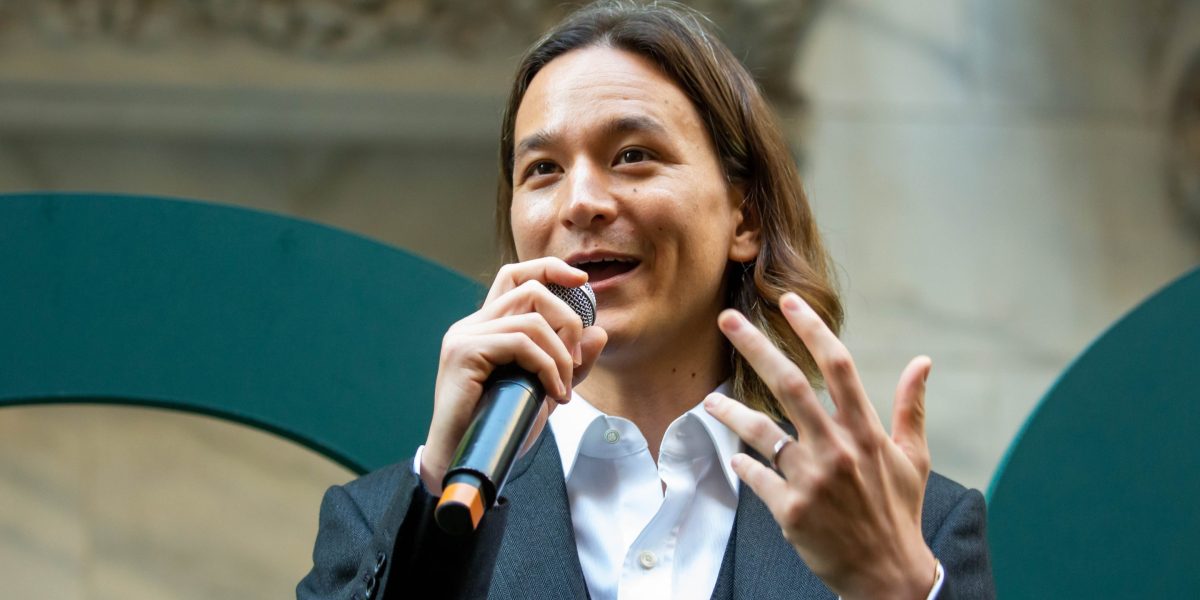
Sweetgreen Inc. co-founder Nathaniel Ru is leaving the struggling salad chain following a string of disappointing results and a precipitous decline in the company’s stock price. 

Ru, who has served as chief brand officer and been with the company for 20 years, is planning to retire on Jan. 1, according to a statement. He will continue to serve on the board. 

Sweetgreen’s share price has dropped nearly 80% since the start of 2025, while consumers have bristled at perceived high costs of the company’s food. Fast-casual chains have also broadly struggled in recent quarters. Operational stumbles, such as removing fries only months after they were introduced, have contributed to the market losing faith in Sweetgreen’s current management team.

Ru, who started the company alongside current Chief Executive Officer Jonathan Neman and Chief Concept Officer Nicolas Jammet, has overseen the company’s marketing and restaurant design. While Sweetgreen’s concept has been touted as innovative in the restaurant world, that creativity has sometimes hindered efficient operations.

The company has yet to turn a profit since going public in late 2021 and has amassed net losses totaling more than $500 million in the period. Despite this, the chain has continued to aggressively expand, with its store count growing 90% over the past four years.

The growth hasn’t led to better financial performance. Cava Group Inc., which sells Mediterranean-style bowls, has expanded more quickly than Sweetgreen while posting consistent quarterly profits.

Prioritizing branding and restaurant development has led to higher operating costs and hasn’t translated into increased foot traffic. Sales from existing restaurants has contracted three consecutive quarters, including a 9.4% drop most recently, the most since 2021. Analyst expect that trend to continue, and worsen, in the fourth period this year after the company warned weak traffic trends have continued.

In August, Neman said only one-third of locations were “consistently operating at or above standard,” while the remainder fell short on sourcing, cooking and uniformity.

This year, the company sold off its kitchen automation unit to Wonder Group Inc., generating $100 million in cash. That technology was supposed to help get restaurant unit economics under control and speed up service but was sacrificed to help shore up company finances. Sweetgreen will maintain a licensing agreement to use the tool.

In 2014, Ru told the business journal from the Wharton School of Business at the University of Pennsylvania that he and his partners started Sweetgreen with a single location in Washington DC. He said that the landlord initially hung up on him but eventually relented after months of pestering. He said the group came up with five business principles, including “win, win, win” and “keeping it real.”

In 2022, he told Marketing Brew that Sweetgreen seeks “intimacy at scale” as it expands while talking about the company’s collaborations with tennis player Naomi Osaka and NBA player Devin Booker.


Source link

Continue Reading

Trending

Copyright © Miami Select.