Connect with us

Fashion

Puma’s new boss takes helm trailing Adidas and a recovering Nike

Published

on


By

Bloomberg

Published


August 4, 2025

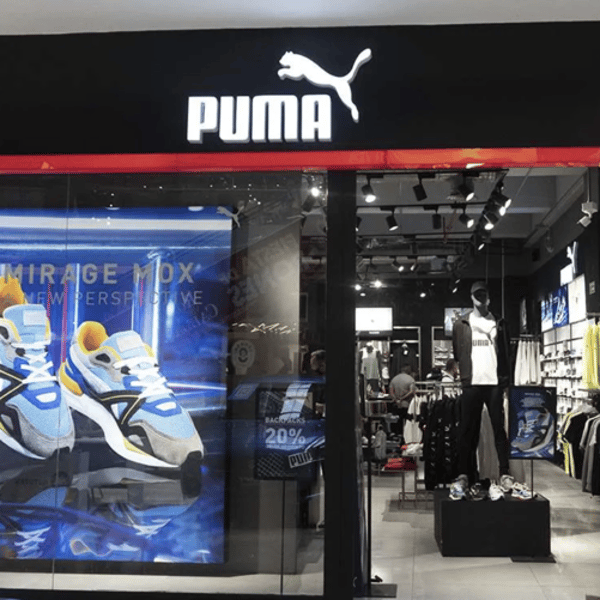
For more than two years, Puma SE’s top brass spoke of “elevating” the German brand and making its sneakers and apparel more aspirational. Since arriving last month, chief executive officer Arthur Hoeld has delivered a fairly blunt verdict: Puma, if anything, is now perceived as cheap.

Puma was founded in 1948 – Archivo

Hoeld, a decades-long veteran of cross-town rival Adidas AG, has the task of turning Puma around and charting a return to profit and growth. It’s not the first time the 77-year-old brand has needed a makeover, and former bosses like Jochen Zeitz, now head of Harley-Davidson Inc., and Bjorn Gulden, who became CEO of Adidas in 2023, both found ways to revitalise Puma’s leaping cat.

But Hoeld has significant hurdles to clear. Fast-growing brands like On Holding AG, New Balance and Hoka are winning customers and taking more shelf space at retailers. Adidas is still riding high on its retro Sambas, while industry leader Nike Inc. is bouncing back under company veteran Elliott Hill with products like the Vomero 18 running shoe, after a rare rough patch for the Swoosh.

Then there are challenges Puma can do little to control: a fast-appreciating euro and US President Donald Trump’s trade tariffs ramping up industry costs. Hoeld took the first step toward what looks like a textbook reset on July 24, delivering a brutal financial reappraisal that sees a 20% plunge in sales in the coming months and Puma losing money this year.

“That tells you that something is really quite wrong,” said Piral Dadhania, an analyst at RBC Capital Markets. “This is a fairly high-risk sort of turnaround. The execution becomes much more relevant in that situation.”

Hoeld first has to stop the bleeding. He is inheriting a growing pile of unsold sneakers and apparel in warehouses around the world that could take Puma more than a year to work through and to convince retailers to buy from the brand again, Deutsche Bank analyst Adam Cochrane said in a note.

“It’s pretty toxic,” said Ingo Speich, a portfolio manager with Deka Investment in Frankfurt, a major Puma shareholder. “If you produce more and more shoes and widen your product range — at the same time as you get less retail space because other brands are far stronger- then it gets difficult.”

After Puma’s profit warning, Hoeld linked the inventory challenge to big-picture questions that could take months to answer and even longer to execute on. “Do we have the right products for our consumers and our wholesale partners?” he asked. “If so, why is our brand not achieving the required visibility and engagement?” He promised to unveil his strategy in late October.

The slump is badly timed. The sneaker world has transformed in the past decade as Adidas and Nike pulled back from many retail partners, prioritizing direct-to-consumer sales channels in hopes of boosting profits. That approach backfired, with consumers embracing smaller brands like On, Hoka and New Balance that secured their products more space on retailers’ shelves.

Puma, though, failed to capitalize on Nike’s stumbles, while Adidas quickly reversed course under Gulden, winning back retailers who couldn’t get enough of the three-striped Sambas and similar models. Since Hill returned to Nike last fall, he’s been repairing relationships with retail partners including Amazon.com Inc., and the company appears set for a new era of growth.

For decades, Puma has occupied a tricky spot in the sporting goods world. Though it competes in everything from football and basketball to running, it’s much smaller than its main rivals Adidas and Nike in that multi-sport game. Its products typically command lower prices, though it’s had success when it carves out a niche, often as the underdog brand.

When Gulden arrived at Puma in 2013, he refocused the company on performance sports and leaned heavily on the brand’s one genuine superstar: sprinter Usain Bolt. The Jamaican inspired the slogan “Forever Faster” and featured on a TV ad frolicking with women in a hot tub. “Calling all troublemakers,” he said. “For danger, risk and potential fugitive status.”

Fast-forward just over a decade and there was little of that rebellious spirit in Puma’s “Go Wild” ad this spring, which was aimed at everyday runners looking for feel-good vibes. The campaign struggled to stand out against Adidas’s no-stress “You Got This” push, or On’s video featuring Sesame Street’s Elmo urging runners clad in the brand’s plushly cushioned trainers to not be so hard on themselves — because “soft wins.”

Yet it’s Puma’s Speedcat sneaker that typifies the brand’s turmoil. In 2023, Puma was slow to bring back its retro Palermo trainer to compete with Adidas’s Samba. At the time, Puma leaders said they would punch back by owning the likely follow-up trend for thin-soled, “low-profile” sneakers.

Their hopes were pinned on the ’90s-era Speedcat — originally a product of Zeitz’s push to get Puma into motorsports — becoming a blockbuster. Celebrities including Jennifer Lawrence began to wear them in 2024 and Puma finally scaled up production earlier this year, with ex-CEO Arne Freundt saying it could be one of the hottest shoes of the summer.

Puma now acknowledges the shoe simply hasn’t caught on. Adding insult to injury, Adidas swooped in with its similar Taekwondo franchise to capture post-Samba demand, and it’s now outperforming Puma’s Speedcat models on StockX, according to the resale platform.

The Speedcat was key to Puma’s strategy to elevate the brand and help it command higher prices for other products. Instead, some versions of the 110 euro (127 dollar) sneaker can be purchased for as low as 88 euros on its website. Versions of the 100 euro Palermo are discounted as much as 30%. Adidas sells some versions of its Samba for nearly twice as much.

Speich hopes Hoeld’s decades of sales experience at Adidas will help. He spent years overseeing its retro footwear and apparel business, and led the Europe, Middle East and Africa division. He was head of global sales until October.

If Puma can produce some hot new products, Hoeld may do a better job of getting them into the right stores in front of the right customers, according to Speich. It’s not a matter of turning the brand “upscale,” he added.

Hoeld singled out the running franchise as having immediate potential. In 2021, Puma reentered the sport with its “Nitro” foam shoes, winning praise from hardcore runners and professionals. But it was slow to target more casual buyers, and Puma is currently only available in 20 of running-chain Fleet Feet’s nearly 300 locations in the US, for instance.

“When we talk innovation in our industry, running is one of these sports that matters,” Hoeld told reporters. “We are going to make sure that Nitro is going to be seen globally as a key platform for future success of Puma.”


Source link

Continue Reading

Fashion

Brioni parts ways with design director Norbert Stumpfl

Published

on


Published


December 5, 2025

Another creative director departure at a major brand is shaking up the fashion industry. It is now the turn of Austrian designer Norbert Stumpfl to leave Brioni. The label has just confirmed the end of its collaboration with the designer in a statement. Stumpfl had designed Brioni’s collections for the past seven years.

Brioni – Spring-Summer 2026 – Menswear – Milan – ©Launchmetrics/spotlight

The fashion house founded in 1945, which in 1952 became the first menswear brand to stage a fashion show (in Florence’s legendary Sala Bianca), has expressed its “deep gratitude for the contribution he has made over the years. During his tenure at Brioni, Norbert interpreted with precision the concepts of lightness and discretion, contributing to the evolution of the men’s wardrobe with a modern approach that pays homage to tradition,” Brioni said.

Federico Arrigoni, CEO of Brioni, said, “Our journey continues, and the Maison will continue to consolidate its tradition- perfection of craftsmanship, exceptional materials, and innovation in tailoring techniques- to create true masterpieces, from formalwear to leisurewear and accessories. Brioni pursues its mission of defining the contemporary codes of Italian elegance, while elevating its mastery of high tailoring and bespoke craftsmanship for those who lead and accept nothing but the exceptional.”

Since 2011, Brioni has been part of the Paris-based French luxury group Kering. From 2018 until his departure, the brand’s collections were designed by Norbert Stumpfl, the acclaimed Austrian menswear couturier, celebrated for his blend of impeccable tailoring and cutting-edge fabrics- among his creations were dinner jackets woven with 24-carat gold threads and enzyme-treated silk-linen blends with a soft, distinctive handle. During his tenure, Brioni also expanded masterfully into womenswear, expressing discreet luxury with rare aplomb.

A pinnacle of Roman sartorial luxury, the Italian label marked its 80th anniversary in late November with an exhibition of its superb tailoring and a gala dinner at the Chiostro del Bramante in Rome.

This article is an automatic translation.
Click here to read the original article.

Copyright © 2025 FashionNetwork.com All rights reserved.


Source link

Continue Reading

Fashion

Another original Hermes Birkin bag sells for $2.86 million

Published

on


By

AFP

Published


December 5, 2025

An Hermes handbag that once belonged to Jane Birkin was sold for $2.86 million (2.45 million euros) at auction in Abu Dhabi on Friday, just months after the record-breaking sale of her first bag from the French brand, Sotheby’s said.

Jane Birkin with one of her signature Hermes bags – Sotheby’s

Hermes first created the design for the British singer and actress in 1984 and it has gone on to become a modern and highly prized classic, sought by fashionistas the world over. The first prototype was sold for 8.58 million euros ($10 million) at a Sotheby’s auction in Paris in July, smashing previous price records for a handbag.

The one sold on Friday was a ‘Birkin Voyageur,’ which was gifted to the former wife of French singing legend Serge Gainsbourg in 2003. The final sale price was around six times times higher than the estimated price range of $230,000-$430,000 given before the sale.

“Jane Birkin’s handbag legacy continues to captivate collectors,” Sotheby’s said in a statement sent to AFP, adding that bidding took place over 11 minutes between six collectors. The new owner was a phone buyer and has not been identified.

The handbag was one of four owned by the late celebrity, who used to sell them to raise money for charitable causes. It has a handwritten inscription in French inside from Birkin that reads: “My Birkin bag, my globetrotting companion.”

A third Hermes bag owned by Birkin is set to go under the hammer on December 15 at the Hotel Drouot auction house in Paris. It was entrusted by the late star to her friend and biographer Gabrielle Crawford, who is selling it to help fund the future Jane Birkin Foundation, Drouot said in a statement.

Produced in very limited numbers, the modern Birkin bag manufactured by Hermes has maintained an aura of exclusivity and is beloved by celebrities such as the Kardashians, Jennifer Lopez, and Victoria Beckham. The most expensive fashion item ever sold at auction was a pair of ruby red slippers worn by actor Judy Garland from The Wizard of Oz in 1939, which sold for $32.5 million in 2024 in Dallas, Texas, according to Sotheby’s.

Copyright © 2025 AFP. All rights reserved. All information displayed in this section (dispatches, photographs, logos) are protected by intellectual property rights owned by Agence France-Presse. As a consequence you may not copy, reproduce, modify, transmit, publish, display or in any way commercially exploit any of the contents of this section without the prior written consent of Agence France-Presses.


Source link

Continue Reading

Fashion

Mention Me launches AI tool to help brands reach consumers through generative AI search 

Published

on


Published


December 5, 2025

Artificial intelligence (AI) continues its march to transform businesses’/consumers’ lives with customer advocacy platform Mention Me launching ‘AI Discovery IQ’, a free-to-use tool that “helps brands reach target consumers in the new age of generative AI search”.   

Kirill KUDRYAVTSEV / AFP/Archives

It claims to allow brands to “instantly audit how discoverable they are within popular AI systems” such as ChatGPT, Claude, Gemini and Perplexity.  

According to Mention Me, 62% of UK consumers now turn to generative AI tools for product recommendations, brand discovery and comparisons, “bypassing traditional search engines entirely [so] businesses are under pressure to respond to this behaviour change,” said  the platform’s CEO Wojtek Kokoszka whose platform works with firms including Charlotte Tilbury, Huel and Puma, “helping marketing teams to boost consumer awareness and sales”.   

With AI, it says the modern customer journey, powered by natural language prompts instead of outdated keyword strings, means consumers are 4.4 times more likely to convert if they find a brand through a large language model (LLM). 

“The rise of ‘agent-mode’ assistants and AI-driven voice search has pushed brands into a new world of digital visibility. Despite this, most brands have little to no insight into how they appear in AI-generated answers”, said Kokoszka.  

AI Discoverability IQ claims to give brands an overall LLM discoverability score, specific details on areas such as technical website elements, content and structured data, and actionable recommendations to improve their AI discoverability.

Its tool generates “measurable, trackable outputs” like AI Visibility Score, brands’ prompt-based results, and a side-by-side comparisons with their competitive set. This means brands “can react quickly to improve their discoverability scores” with Mention Me’s wider suite of products and unique first-party data.  

It’s also “innovating and evolving” its platform to include more capabilities, such as the ability to benchmark against competitors, to drive further improvements for marketing leaders in the age of AI. 

Mention Me CMO Neha Mantri said: “AI Discoverability is not yet a named practice within most marketing teams; the same way SEO wasn’t in the early 2000s. But when up to 31% of consumers say they’re more likely to trust responses from generative AI than traditional search results, this needs to change. Mention Me is naming the problem and providing a solution at just the right time.”  

Copyright © 2025 FashionNetwork.com All rights reserved.


Source link

Continue Reading

Trending

Copyright © Miami Select.