Connect with us

Politics

Pro-bear nonprofit sues FWC to halt December hunt
Published

on


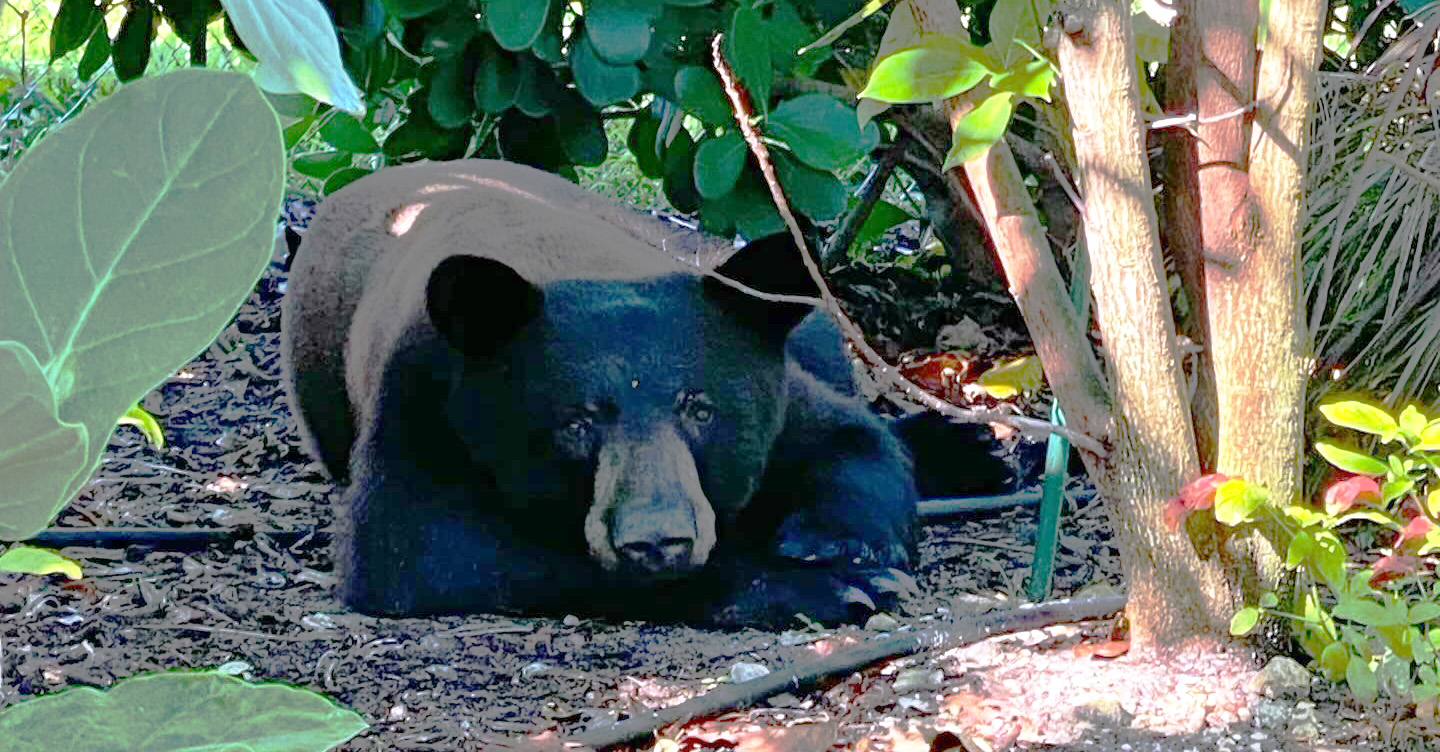
Opponents of Florida’s first sanctioned black bear hunt in a decade are suing to stop the planned killings, arguing the Florida Fish and Wildlife Conservation Commission (FWC) violated state law and relied on outdated science to justify the event.

Oviedo-based nonprofit Bear Warriors United has filed a petition seeking to invalidate FWC’s newly adopted rule authorizing the Dec. 6-28 hunt in four “bear management units.”

The plan allows up to 187 black bears to be killed by various means through a lottery-based permit system.

Bear Warriors is asking for a Judge to block FWC from issuing permits until the case is resolved and to declare the rule invalid. The group also seeks attorneys fees.

The complaint, filed Friday with the Division of Administrative Hearings, contends the rule improperly delegates decision-making powers from FWC’s seven constitutionally appointed Commissioners to the agency’s Director or designee.

Lawyers Thomas Crapps and Raquel Levy, representing Bear Warriors United, argue the change grants “unbridled authority to issue permits to kill bears annually without any guidance or scientific fact.”

To that end, they wrote, the decision to authorize the hunt is “based on stale facts from a 2014-2015 bear population study and is directly contrary to FWC’s own 2019 Bear Management Plan.”

FWC members voted unanimously Aug. 13 to authorize the hunt. It’s the first since 2015, when officials halted the hunt after 295 bears were killed in just two days. The FWC had expected it to take a week to reach that number.

This year’s hunt will see 187 permits distributed across four regions: 68 for the East Panhandle, 46 for North Florida, 18 for Central Florida, and 55 for South Florida. Residents will pay $100 per permit, while non-residents, capped at 10% of total permits, will pay $300.

FWC leaders said the hunt is intended to manage Florida’s estimated 4,000 black bears and reduce conflicts with humans. Reports of “nuisance” bear encounters, according to FWC data, climbed from 2,000 in 2016 to more than 6,000 in 2024.

In June 2024, Gov. Ron DeSantis signed legislation by Tallahassee Sen. Corey Simon and Port St. Joe Rep. Jason Shoaf that loosened restrictions on the use of lethal force during bear encounters. Proponents of the measure, like Liberty County Sheriff’s Deputy Dusty Arnold, cited a proliferation of the animals in his support of the change.

“If you’ve got a dog, they’re coming in, they’re tearing your pens up, getting the dog food. If you have a grill out and you don’t clean it properly, they’re coming onto your porches and they’re trying to tear your grill open,” he said. “We’re starting to see a lot more bears hit by cars, so we’re having a lot of property damage everywhere.”

Opponents, like Chuck O’Neil, President of the Speak Up Wekiva environmental group, called the measure “overly broad” and potentially devastating the state’s black bear population. He predicted ahead of the FWC’s vote last week that if approved, the hunt wouldn’t go forward easily.

“I think it’s going to end up in the court of public opinion,” he told the Fort Myers News-Press. “That’s where we’re going to fight this out and make it as politically unpopular as possible.”

In an email included in the petition, environmental lawyer Clay Henderson, who helped draft the 1998 constitutional amendment creating the FWC, criticized the agency for “flying blind” by relying on outdated population figures from 2017.

He agreed with the lawsuit’s central arguments: that the 187-bear quota relies on outdated estimates, which don’t account for population declines following the 2015 hunt, and that the FWC’s decision unlawfully delegates to the agency’s Executive Director nontransferable powers and responsibilities.

“The Legislature specifically reserved the assignment of duties and responsibilities necessary to develop ‘management techniques’ for ‘enhancement of animal populations’ to the Florida Fish and Wildlife Research Institute (the FWC’s research division) — and not the executive director,” he wrote. “Not only did the Legislature specifically reserve this assignment of duties to only the Florida Fish and Wildlife Research Institute, but it also mandated that FWC do so.”

Bear Warriors United said it was filing a lawsuit last week even before the hunt was approved, arguing the FWC improperly delisted black bears from its threatened species list.

The challenge comes after weeks of heated debate. Environmental groups, including Bear Warriors and Bear Defenders, organized protests in at least 11 cities last weekend and raised billboards, including one near the Governor’s Mansion in Tallahassee. An FWC survey of 13,000 Floridians found 75% opposed the hunt, while a separate Humane World for Animals poll put opposition at 81%.


Post Views: 0


Source link

Continue Reading

Politics

Gov. DeSantis proposes handing all USF Sarasota-Manatee facilities to New College of Florida

Published

on


Gov. Ron DeSantis is supporting a plan that boots the University of South Florida from its Sarasota-Manatee campus and shifts every building, dorm and facility to New College of Florida, which would mark a dramatic reshaping of Sarasota’s higher education landscape.

The measure, pitched as part of the Governor’s 2026-27 budget proposal, would create a new section of Florida law directing the two institutions to shift all real property, buildings, leaseholds and related liabilities associated with the Sarasota-Manatee campus from USF to New College.

The conforming bill specifies that no students, employees, fund balances, research contracts or grants would be part of the transfer, which applies only to real estate, fixed capital facilities, certain furnishings and any outstanding debts tied to those facilities. It would also guarantee that current USF Sarasota-Manatee students can continue finishing their degrees for up to four more years.

If approved, New College would be required to assume full legal and financial liability for the campus’s outstanding facility debt no later than Oct. 30, 2026. Until that assumption is complete, New College would make monthly payments of $166,617 to USF to cover the debt service. Failure by New College to make those payments would void the transfer and return the facilities to USF.

The real property transfer would need to be completed by July 1, 2026, with specific assets and liabilities identified in a joint agreement approved by both schools’ Boards of Trustees and submitted to the Board of Governors.

The bill includes guiding principles for determining what moves to New College and what remains with USF. Permanently affixed buildings and general classroom furnishings would transfer, while movable equipment, intellectual property, computers assigned to USF personnel, fund balances and items of historical significance to USF would remain with USF.

The bill also requires that existing residential contracts on the Sarasota-Manatee campus be honored by New College through at least Aug. 15, 2027. If the two universities disagree on any aspect of the transfer, the Board of Governors must resolve outstanding issues by Sept. 30, 2026.

The measure includes teach-out protections for USF students who enrolled before the bill takes effect. Those students must receive priority access to classroom and support space in the transferred facilities for up to four academic years to allow them to complete their degrees locally. New College would be required to make that space available to USF free of charge. USF would also be barred from assigning newly admitted students to the Sarasota-Manatee campus as their home campus going forward.

The bill provides civil immunity to both institutions, and their Trustees and employees, for actions taken to comply with the act.

Representatives from New College of Florida and University of South Florida Sarasota-Manatee did not immediately return requests for comment.


Source link

Continue Reading

Politics

Dean Black bill abolishing Nassau County board advances in House

Published

on


This could save the county money.

Nassau County’s government is about to become a bit more streamlined, as an appointed board dormant since 2002 is potentially subject to be wiped off the books completely.

Rep. Dean Black’s legislation (HB 4017) would terminate Nassau County Recreation & Water Conservation & Control Districts on the books since the 1960s, when the Legislature created them by a special act.

There is one such district in ordinance.

Though the board hasn’t done anything in 23 years, removing it from the books purportedly would reduce administrative costs, and would transfer all assets and liabilities of the district to the Nassau County Board of County Commissioners, and protect taxpayers.

“The county has established a municipal service benefit unit, or MSBU, to address drainage issues subsequently. Therefore, the district is no longer functioning or necessary. In a word, it is now obsolete,” Black said.

“The district does not own any land, the district does not have any assets. The district does not currently levy any taxes. It has been inactive since 2002. The repeal of this district would prevent a future board of county commissioners from levying millage rates for what is now a defunct and unnecessary district against the taxpayers of Nassau County.”

The State Affairs Committee is the final committee stop before the House floor.


Source link

Continue Reading

Politics

Gov. DeSantis prioritizes road projects, infrastructure improvements in budget plan

Published

on


Gov. Ron DeSantis is looking to prioritize road construction projects and beef up infrastructure in his 2026-27 budget proposal.

DeSantis is calling for $15.4 billion for the Florida Department of Transportation (FDOT) in addition to $14.3 billion for the State Transportation Work Program, which handles construction and maintenance of Florida’s roads, bridges, rails, seaports and other public transportation systems.

Speaking at a budget press conference in Orlando, DeSantis said his proposal provides “major support for infrastructure and transportation.”

“Over $14 billion for our state work program — that more than funds everything we need to do,” DeSantis said as he unveiled a $117 billion proposed spending plan ahead of the upcoming Legislative Session.

The fully released budget plan gives more detail on how DeSantis wants to carry out his priorities.

The Governor wants to allocate $4.9 billion for highway construction and maintenance. That entails constructing 181 new lane miles, $1.4 billion for resurfacing 2,622 lane miles, about $873 million for repairing 38 bridges and replacing 21 others. In addition, DeSantis wants to allocate about $204 million for community trail projects.

DeSantis is also pushing for investments to be made at the state’s airports and seaports.

Under DeSantis’ plan, aviation improvements would get nearly $389 million and seaports could receive nearly $156 million for infrastructure upgrades.

“I don’t think you’re going to find another state that’s doing more meaningful things on transportation” and other issues while also maintaining a “stable budget,” DeSantis said at his budget press conference.

The state’s growing space industry would also benefit from DeSantis’ budget proposal which allocates $93 million through the FDOT Spaceport Improvement Program and $10 million for the Aerospace Investment Fund to help recruit companies to the state.

“As Florida’s space industry continues to reach new heights, infrastructure needs along the Space Coast will continue to be a priority, which is why the budget includes $5 million in startup funding to Space Florida to work alongside state agencies to establish additional wastewater capacity for Florida’s commercial launch providers,” DeSantis’ budget proposal added.

“These proposed investments are in addition to the nearly $700 million in funding through the FDOT Work Program to improve community infrastructure in Brevard, Indian River, and Volusia counties.”


Source link

Continue Reading

Trending

Copyright © Miami Select.