
Politics
Pressure points ahead could bring a quicker end to the shutdown

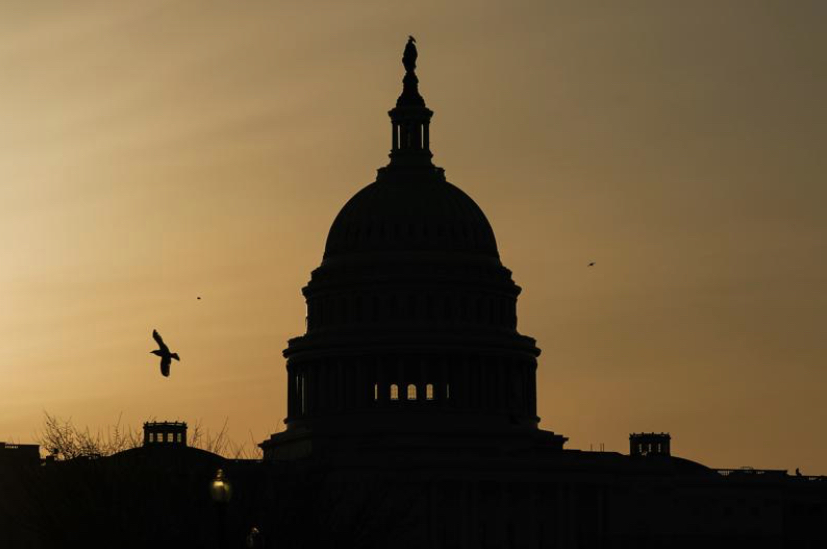
The first week is the easy one. The pressure to resolve the federal shutdown will gradually build as the shutdown enters its second week — and as government workers miss paychecks and important programs run out of money.
Here are some pressure points ahead that could have a big influence on resolving the shutdown.
Missed paychecks
The next payday for the nation’s military service members is Oct. 15. The U.S. has about 1.3 million active-duty service members, and the prospect of those troops going without pay is a big focal point when lawmakers on Capitol Hill discuss the shutdown’s negative impact.
“We have young airmen and soldiers deployed around the world right now defending our freedom and they’ve left their young families at home,” House Speaker Mike Johnson said. “They are dependent upon that check on October 15th.”
Paydays for civilian federal workers depend on the agency. The Bipartisan Policy Center, a non-partisan think tank, says a majority of civilian workers will see a partial paycheck arrive between Oct. 10-15, reflecting days worked before the shutdown began.
Civilians at the Department of Defense and Health and Human Services, along with a few other agencies, will experience their first entirely missed check on Oct. 24, while the majority of other federal workers will experience their first missed paycheck on Oct. 28. That includes air traffic controllers and Transportation Security Administration agents manning airport security checkpoints.
One paycheck missed will be a big deal. Two paychecks missed will bring the political pressure to a boil.
Air travel
For many Americans, the shutdown is a distant event that doesn’t impact them personally. But that can quickly change for the flying public.

The nation’s longest partial shutdown in President Donald Trump’s first term was resolved soon after flights were halted at LaGuardia and delayed at other major airports because of a shortage of unpaid air traffic controllers who called in sick.
There has already been a rash of delays at a number of airports across the country. Transportation Secretary Sean Duffy said there has been an uptick in air traffic controllers calling out sick since the shutdown began. The biggest problems so far have been at the smaller airports in Burbank, California, and Nashville, Tennessee, with delays stretching longer than two hours, but those didn’t create massive ripple effects nationwide.
But there have also been delays at the major hubs in Chicago, Newark, New Jersey, and Denver because of staffing problems, and more problems are possible because of the ongoing shortage of controllers. Even the absence of a handful of controllers in a key location could cause major disruptions. Earlier this year, the absence of just five controllers who took leave after a radar outage, snarled traffic in Newark.
“This is one that is just so intensely felt by travelers who might not even know about what the government shutdown is, or the mechanics or the politics surrounding it,” said Rachel Snyderman, Managing Director of Economic Policy for the Bipartisan Policy Center. “You can go and expect a 30-minute line at Transportation Security Administration and it turns into three hours.”
Duffy and the head of the union that represents controllers said the shutdown is adding significant worries for workers who already deal with stressful tasks.
“They are coming to work under an increasingly unsafe scenario because in safety we know the first rule is to remove all distractions in order to keep things safe,” said Sara Nelson, the President of the Association of Flight Attendants. “What could be more of a distraction than not getting a paycheck?”
Food assistance
The $8 billion Special Supplemental Nutrition Program for Women, Infants and Children, also known as WIC, provides vouchers to buy infant formula as well as fresh fruits and vegetables, low-fat milk and other healthy staples that are often out of financial reach for low-income households.
The program is being kept afloat by a $150 million contingency fund, but experts say it could run dry quickly.
After that, states could step in to pay for the program and seek reimbursement when funding finally passes, but not all states say they can afford to do so. Nearly 7 million women and young children rely on nutrition and health support through the program.
The White House said Tuesday it will use tariff revenue to bolster the program, but did not provide details on how such a transfer would work.
The National WIC Association, an advocacy group, said that any effort to keep WIC operational is welcome, but critical details remain unknown, including how much funding will be provided, when it will be distributed, and how long it will last.
“WIC needs full-year funding, not just temporary lifelines,” said Georgia Machell, the group’s President and CEO.
Meanwhile, the White House says SNAP benefits, also known as food stamps, will continue for the month of October, before the program’s funds, including contingency, are spent. About 41.7 million people per month, or some 12% of U.S. residents, participate in the program.
Tourism and parks
The Smithsonian Institution’s museums and the National Zoo remain open through Oct. 11. Afterward, they will close to the public. The shuttering will serve as a stark reminder of the shutdown’s impact on the thousands of daily visitors to the nation’s capital.
Meanwhile, the National Park Service says on its website that the parks “remain as accessible as possible during the federal government shutdown. However, some services may be limited or unavailable.”
More than a quarter of national park sites, many of them historical properties, are not accessible because they have gates that can be locked, while larger parks that don’t have gates remain effectively open to the public, said Kristen Brengel, Senior Vice President of the National Parks Conservation Association.
The U.S. Travel Association, a trade group, estimates that the shutdown has already cost the nation’s travel industry $1 billion in lost spending.
“The longer this drags on, the worse the cascade of damage will be — for local communities, for small businesses and for the country,” said Geoff Freeman, the group’s President and CEO.
Economic Damage
Shutdowns of the federal government usually don’t leave much economic damage. But this one could be different, in part because Trump is threatening to use the standoff to eliminate thousands of government jobs.
Ryan Sweet, chief U.S. economist at Oxford Economics, estimates that the shutdown and temporary loss of income for federal workers could shave 0.1 to 0.2 percentage points from the nation’s annual growth rate in the fourth quarter for each week the government is closed. Some of that will be recovered once it reopens.
The shutdown is also leading to pauses and delays in the collection of economic data, which makes things difficult for the Federal Reserve as it makes its next interest rate decision. The White House says the shutdown has implications for decision-making by businesses, as uncertainty tends to lead to lower business investment.
___
Republished with permission of The Associated Press.


For the first time in a decade, hunters armed with rifles and crossbows are fanning out across Florida’s swamps and flatwoods to legally hunt the Florida black bear, over the vocal opposition of critics.
The state-sanctioned hunt began Saturday, after drawing more than 160,000 applications for a far more limited number of hunting permits, including from opponents who are trying to reduce the number of bears killed in this year’s hunt, the state’s first since 2015.
The Florida Fish and Wildlife Conservation Commission awarded 172 bear hunt permits by random lottery for this year’s season, allowing hunters to kill one bear each in areas where the population is deemed large enough. At least 43 of the permits went to opponents of the hunt who never intend to use them, according to the Florida chapter of the Sierra Club, which encouraged critics to apply in the hopes of saving bears.
The Florida black bear population is considered one of the state’s conservation success stories, having grown from just several hundred bears in the 1970s to an estimated more than 4,000 today.
The 172 people who were awarded a permit through a random lottery will be able to kill one bear each during the 2025 season, which runs from Dec. 6 to Dec. 28. The permits are specific to one of the state’s four designated bear hunting zones, each of which have a hunting quota set by state officials based on the bear population in each region.
In order to participate, hunters must hold a valid hunting license and a bear harvest permit, which costs $100 for residents and $300 for nonresidents, plus fees. Applications for the permits cost $5 each.
The regulated hunt will help incentivize maintaining healthy bear populations, and help fund the work that is needed, according to Mark Barton of the Florida chapter of Backcountry Hunters and Anglers, an advocacy group that supported the hunt.
Having an annual hunt will help guarantee funding to “keep moving conservation for bears forward,” Barton said.
According to state wildlife officials, the bear population has grown enough to support a regulated hunt and warrant population management. The state agency sees hunting as an effective tool that is used to manage wildlife populations around the world, and allows the state to monetize conservation efforts through permit and application fees.
“While we have enough suitable bear habitat to support our current bear population levels, if the four largest subpopulations continue to grow at current rates, we will not have enough habitat at some point in the future,” reads a bear hunting guide published by the state wildlife commission.

___
Republished with permission of the Associated Press.


Tucker Wetmore’s Song ‘Proving Me Right’ is About Model Bryana Ferringer

‘Bachelor’ Winner Cassie Randolph Marries Brighton Reinhardt

Kanye West and Bianca Censori Travel to South Korea Together
-

 Politics8 years ago
Congress rolls out ‘Better Deal,’ new economic agenda
-
Entertainment8 years ago
New Season 8 Walking Dead trailer flashes forward in time
-
Politics8 years ago
Poll: Virginia governor’s race in dead heat
-
Entertainment8 years ago
The final 6 ‘Game of Thrones’ episodes might feel like a full season
-
Entertainment8 years ago
Meet Superman’s grandfather in new trailer for Krypton
-
Politics8 years ago
Illinois’ financial crisis could bring the state to a halt
-
Business8 years ago
6 Stunning new co-working spaces around the globe
-
Tech8 years ago
Hulu hires Google marketing veteran Kelly Campbell as CMO