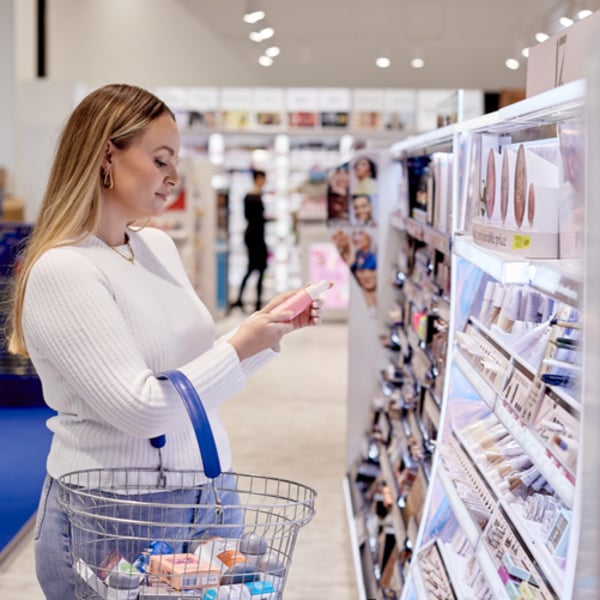
With the beauty sector having enjoyed a strong year and with the festive trading period in full swing, which brands are best positioned to dominate peak season? Big-spending Boots and Superdrug are the key players, but there’s more to it than just the Big Two.
Boots
A report by MediaVision reveals a wider picture and, for good measure, “uncovers a powerful cultural shift reshaping the industry”.
While Britain’s biggest beauty players continue to strengthen their hold on the market, “consumer behaviour is clearly evolving” as the latest report’s data shows customers are “moving away from traditional brand-led beauty shopping and towards a more product-first, skin-focused mindset”.
“The UK beauty landscape is evolving – fast, with [digital software tool Metis] data showing brand search is down 1.4% year-on-year, while non-brand, product-led search is up 3.28%,” according to MediaVision CEO Louis Venter.
“Consumers aren’t just searching for brands anymore – they’re far more product and trend-led. That shift presents a major opportunity for marketers who can react to emerging demand and capture growth as it happens.”
From LED face masks (+131%) to lip stains (+118%) and Korean skincare (+28%), “the data tells a clear story – innovation and self-care are driving discovery.”
The report notes the shift is magnified during the Christmas period, when shoppers are “prioritising meaningful, affordable gifts tied to wellness, routine and personal expression”.
Make-up gift sets and perfume remain popular, but skincare-led gifting – from serums to masks to tech devices – is rising faster, the report emphasises.
The reports notes the growing adoption of skin-first routines that mirror a broader cultural shift towards wellness, pointing to TikTok’s ‘high maintenance for low maintenance’ videos, the boom in Korean skincare in the UK, and the popularity of skincare tech tools speak to a consumer “who wants transformation, but through care rather than coverage”.
Of course, retailers remain the biggest beneficiaries of the shift to routine-based beauty, thanks to their breadth of category coverage and ability to serve multiple price points, with Boots leading the way on search, followed by Superdrug, with both having expanded their reach greatly in recent times.
According to MediaVision’s head of SEO Oliver Yee, Boots has cemented its leadership with a 37.5% share of brand search. This reflects the strength of its “omnichannel presence and enduring consumer trust”.
“With an extensive range that serves its customer base across various price points in its beauty collection, Boots looks set to win as we head into Black Friday and Christmas,” he said.
Superdrug follows with 12.3%, “driven by competitive pricing, social-led promotions, and more recently, its venture into Korean skincare”.
LookFantastic (4.5%) and Sephora (3.6%) are also key players in the online beauty space.
“LookFantastic continues to benefit from its broad product range and loyalty schemes, while (for better or worse) Sephora’s controversial collab with Mariah Carey looks set to supercharge its brand visibility through the holiday season.”
Moving on to the quarter’s “fastest-growing brands”, the report notes they all have one thing in common: “they understand the shift toward beauty as wellbeing, and they’ve built campaigns with emotional and cultural resonance”.
Annabelle Sacher, head of PR, explained: “The majority of the fastest growing beauty brands over the past quarter have one key strategy nailed: each has implemented multi-channel brand activations rooted in cultural relevance, innovation, and effective retail strategies.”
Retailer strategies
Boots’ 1.22% rise in share of brand search reflects its dual positioning across both healthcare and beauty while Space NK’s 0.5% increase in share of brand search has been driven by experiential retail, with its hyper-local store expansions, interactive events and curated brand collaborations.
Sephora’s uplift “has been supported by strong gifting activity, high-profile collaborations and socially driven product pushes”.
But the report added: “However, [Sephora’s] recent Christmas campaign featuring Mariah Carey, which contributed to an increase in search interest, also prompted criticism from consumers who felt the creative misjudged the mood during a challenging economic period.”
While the brand saw a modest 0.33% rise in share of search, the reaction highlights that not all visibility translates into positive sentiment, and cultural awareness remains essential”.
Sacher concluded: “These gains position the brands well for the critical Christmas period by amplifying brand desirability, driving online demand. For similar beauty brands, key takeaways include the effectiveness of integrated campaigns underpinned by culturally resonant storytelling that connects with consumer emotions, reinforcing brand visibility, authority and demand.
“Ultimately, the majority of this quarter’s fastest growing brands illustrate that well-rounded brand-building tactics – blending innovation, personalisation, and cultural relevance – translate into measurable growth and increase the likelihood of commercial impact.”
As for the future, the report said the sector “belongs to skin-centric, culture-led beauty”.
“As Christmas approaches, the brands best positioned to win are those who understand that beauty is no longer just about pigments, palettes and glam. Today’s consumers want skincare backed by science, make-up that feels like skincare and identity-driven expression”.
Jacky Lovato, head of Content at MediaVision concluded: “Consumers are blending technology, creativity and experimentation into their daily routines. The rise in skincare-led searches – from high-tech devices to gentle, skin-enhancing make-up – shows that wellness, individuality and daily rituals are driving demand. The glam-heavy ‘Brat Era’ is giving way to a softer, more expressive, skin-first aesthetic.
“This evolution is empowering retailers and brands that can respond quickly to real-time demand – especially those whose ranges span make-up, skincare and beauty tech.”