Portugal’s textile and clothing industry tries to broker deal with Trump administration to lower tariffs
Published
September 2, 2025
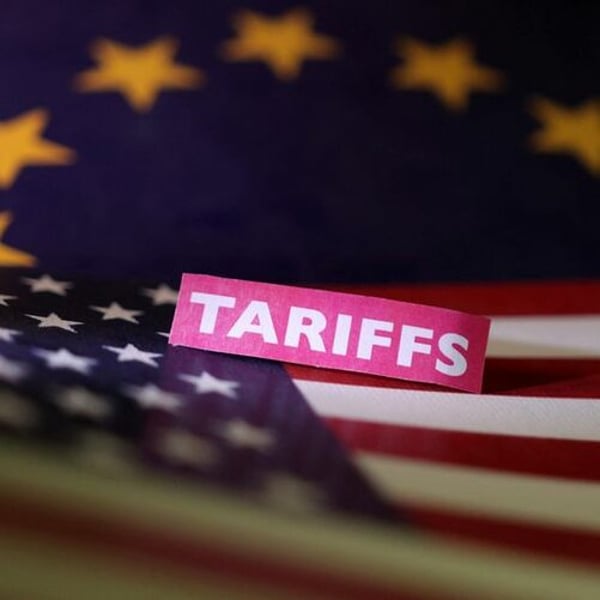
The United States’ new 15% tariffs on the European Union (EU) just came into force on September 1, and the textile and clothing sector is concerned, hoping that it will be able to amend this agreement with the U.S. to lower the products that will pay tariffs above 15%. This is because products that paid a lower rate than the one currently in force will now pay 15%, while items that paid higher rates will not stop paying them.
Reuters
According to the Director-General of the Textile Association of Portugal (ATP), Ana Dinis, “it’s been a difficult process,” she told ECO, assuring that “negotiations are still ongoing” and regretting that “today they say one thing and tomorrow they say another.” However, ATP is not giving up and “at any moment, for better or for worse, the sector could have news,” Dinis added.
The President of the National Association of Clothing and Apparel Industries (Anivec), César Araújo, who also owns Calvelex, explained to ECO that “there are various interpretations” and “it’s not certain that products that paid rates of more than 15% will pay more or remain the same.”
According to ATP data, Portugal exported 435 million euros in textile and clothing products to the U.S. in 2024, with the U.S. market accounting for 8% of the sector’s total exports and revenues of around 500 million euros.
ATP also reported that the U.S. tariffs could lead to the dismissal of 10,000 textile workers in Portugal, accounting for more than 6,000 companies in the textile and clothing sector throughout Portugal. For its part, SIC Notícias recalls that the Bank of Portugal indicated that two years ago the sector had a turnover of more than eight billion euros.
Nevertheless, Europe seems to be better positioned than its competitors, with only the United Kingdom benefiting from more favorable conditions. Japan will also face a 15% tariff; Indonesia and the Philippines, 19%; Vietnam, 20%; and countries like Canada, South Korea, Brazil, and Mexico, between 25% and 50%.
Finally, the world leader in commercial credit risk management, Coface, which helps 100,000 companies expand their business in around 200 international markets, argues that this 15% commitment avoids the threat of a double tariff (30%), which was initially put forward by the U.S. president, and still represents a significant increase on the 1.2% rate applied in 2024.
In addition, the EU has pledged to invest $600 billion in the U.S. and to purchase $750 billion in U.S. energy products over three years. These are commitments whose viability continues to be widely questioned by analysts and European leaders.
This article is an automatic translation. Click here to read the original article.