One brand, and designer, enjoying a renaissance at Pitti Uomo is Rag & Bone, where newly installed creative director Swaim Hutson showed his debut collection for the house.
Swaim Hutson – Courtesy
After several years where the brand seemed to stand still, there was plenty of fresh momentum at its stand inside Pitti. From fabric choices and color, to proportion and attitude.
“I don’t want to obviously steer away from the DNA of what Rag & Bone has stood for over the years and what Marcus and David started. It’s about keeping the DNA – starting with workwear, denim obviously and then tailoring,” said Hutson, referring to the brand’s two UK founders and cohort, Marcus Wainright and David Neville.
So, Hutson took those three categories “and just put them in a blender and mashed them up,” for fall 2026.
“That’s the way the modern man dresses, and definitely the way guys in New York are dressing now,” underlined Hutson, pointing to a smart blazer worn with rugby jersey and track pants.
Rag & Bone fall/winter 2026 – Courtesy
Much of Rag & Bone’s suiting is made in Portugal, like an increasing number of brands. Hutson comes from a more tailoring background, but was “determined not to be stuffy,” so he mixes lots of suiting separates with sportswear.
Asked what brief did he get when you got the job, he deadpans: “What did Mr. Andrew Rosen tell me? He told me a lot. Nothing major, just more of the history of the brand and that there were no restrictions,” said Swain referring to the famed New York fashion entrepreneur and brand’s de facto CEO.
Rag & Bone began life back in 2002 with a pair of raw denim jeans, and Hutson has gone back to a rawer denim aesthetic, with R&B Raw, proprietary to the brand. A new treatment where you wash jeans 20 times without destroying the raw aesthetic, while keeping the fabric soft and supple.
“So, it doesn’t feel like wearing sandpaper. It’s raw denim, but modernized for today’s work,” said Hutson.
Rag & Bone fall/winter 2026 – Courtesy
Swaim brings nearly two decades of experience in international menswear to the role. He first won attention by founding Obedient Sons in New York- going on to become a CFDA/Vogue Fashion Fund finalist. He then held creative director roles at 3.1 Phillip Lim, Club Monaco, and Generra. Before later launching The Academy New York, a label that has established itself within the fashion, art, and music communities.
His plan for mixing suiting, denim and outerwear at Rag & Bone led to pairing a denim shirt under a suit jacket, as opposed to wearing an Oxford shirt. The subtle change of style comes as Rag & Bone is upping its efforts in Europe. Today, Rag & Bone is controlled by the WHP Global group, which also includes Vera Wang, Isaac Mizrahi, G-Star and Joseph Abboud.
Hutson was born in North Carolina, making him, as they say, a Tarheeler, but now resides in the Brooklyn Navy Yard district.
This year, the brand will open a new boutique in Dubai, following on from a fresh store in Amsterdam, adding to one in Germany, and two in London, for a chain of some 30 boutiques. The brand remains primarily a wholesale business though, with over 700 doors and annual revenues hover around $300 million.
Rag & Bone fall/winter 2026 collection – Courtesy
Rag & Bone originally began as men’s brand, but today women’s wear accounts for 60% revenues, with menswear at 40%.
The brand’s other big focus is a project called “Miramar”, a fresh denim aesthetic that is very soft, almost like terry cloth, with lots of looks ideal for travel.
“We’ve opened a couple of small Miramar stores. One is about 600 square-foot inside Moynihan Train Hall, opposite Penn Station which is beautiful. And it’s done tremendous business,” he enthuses about the new Manhattan retail hub.
In Pitti, Hutson also showed some strong new colors with bold reds and plaids. Plus, he impressed with more probable proportions – from short, plaid shirt jackets to some really cool faded blue chalk stripe looks. Seen in deconstructed jackets and a natty urban redingote, finished with neat RB logo buttons.
Next up, one suspects is a return to the catwalk for Rag & Bone after a hiatus of several years.
“We’re talking about it. It wouldn’t hurt. It’s just about the leadership being confident in what designs we put out. I would love to do a show. I think New York deserves it, and we’re a New York brand, you know,” he concludes.
High-end department store conglomerate Saks Global filed for bankruptcy protection late on Tuesday in one of the largest retail collapses since the pandemic.
Saks
Saks Fifth Avenue, an affiliate of Saks Global, listed $1 billion to $10 billion in assets and liabilities, according to court documents filed in U.S. Bankruptcy Court in Houston, Texas.
Saks Global did not respond to a request for a further comment.
The move cast uncertainty over the future of U.S. luxury fashion barely a year after a takeover that brought Saks Fifth Avenue, Bergdorf Goodman and Neiman Marcus under the same roof.
A retailer long loved by the rich and famous, from Gary Cooper to Grace Kelly, Saks fell on hard times after the Covid pandemic, as competition from online outlets rose, and brands started more frequently selling items through their own stores.
Saks Global was close to finalizing a $1.75 billion financing package with creditors that would allow its stores to remain open, two people familiar with the negotiations told Reuters earlier on Tuesday.
The financing would provide an immediate cash infusion of $1 billion through a debtor-in-possession loan from an investor group led by Pentwater Capital Management in Naples, Florida, and Boston-based Bracebridge Capital, the people said.
An additional $250 million in financing would also be available through an asset-backed loan provided by the company’s banks, the people said. The luxury retailer would have access to another $500 million of financing from the investor group once it successfully exits bankruptcy protection, the sources added.
A host of luxury brands were among the unsecured creditors, led by Chanel and Gucci owner Kering at about $136 million and $60 million respectively, the court filing said.
The world’s biggest luxury conglomerate, LVMH, was listed as an unsecured creditor at $26 million. In total, Saks Global estimated there were between 10,001 and 25,000 creditors.
In 2024, parent company Hudson’s Bay had bet on scale by merging it with rival Neiman Marcus, creating the entity now known as Saks Global. The $2.7 billion deal was built on about $2 billion in debt financing and equity contributions from investors including Amazon, Salesforce, and Authentic Brands.
Amazon and Authentic Brands were listed in the court filing as equity investors.
Dice Kayek has announced the donation of several iconic pieces from its archive to major international museums, including the Denver Art Museum, The Museum at FIT in New York, the Palais Galliera, the Musée de la Mode de la Ville de Paris, and the Musée des Arts décoratifs.
Dice Kayek donates iconic designs to major international museums. – Dice Kayek
Curatorial teams from the Denver Art Museum, The Museum at FIT, the Palais Galliera, and the Musée des Arts décoratifs were invited to select works directly from the Dice Kayek archive, with each institution choosing pieces to support upcoming exhibitions and strengthen their permanent collections.
The donations build on Dice Kayek’s longstanding recognition by museum institutions, following previous acquisitions by London’s Victoria and Albert Museum and the Los Angeles County Museum of Art.
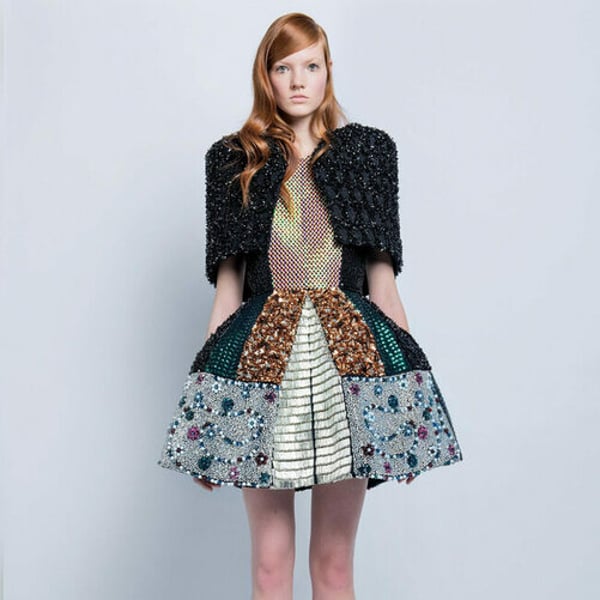
Launched by sisters Ece and Ayse Ege, the Dice Kayek brand has forged a reputation over the past two decades for its carefully crafted universe. Characteristic styles and techniques include handmade embroidery, the art of folding to create volume through construction, and a unique approach to contrasting fabrics.
“These are one-of-a-kind pieces, there are no others in the world, there aren’t even any patterns to reproduce them,” said Ece.
“When I create a dress from a dream, you really have to think, calculate and examine to turn the beauty of the impossible into reality. It’s not just textile, clothing, it’s something else, an art of transformation.” It’s very important for us to pass on these gifts,” added Ece.
“It’s our way of bearing witness to the whole creative process, so that future generations can discover these unique pieces.”
Notably, the Denver Art Museum selected four sculptural silhouettes from the acclaimed “Istanbul Contrast” collection that have been exhibited internationally and were notably shown at the Victoria and Albert Museum in 2013.
The Museum at FIT chose a look from the Spring-Summer 2015 collection, while the Palais Galliera selected six handmade silhouettes, including dresses, a coat dress, and a suit with matching shoes, drawn in part from “Istanbul Contrast,”. The Musée des Arts décoratifs also chose six silhouettes, including Turkish Delight I and Istanbul by Night II.
October’s Very Own (OVO) on Tuesday announced it has received capital investment from firm Applied Real Intelligence (A.R.I.), as the Canadian streetwear brand looks to increase its reach globally.
OVO
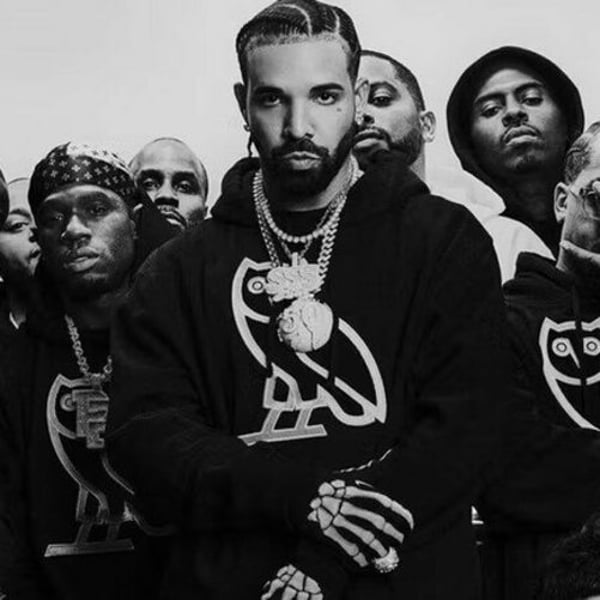
The U.S.-based investment firm highlighted the “demand for culturally authentic brands right now” adding that the “timing couldn’t be better for OVO,” a lifestyle brand founded by Aubrey “Drake” Graham, Oliver El-Khatib, and Noah “40” Shebib, in Toronto, in 2008.
“Recently, Human Made, the streetwear brand partially owned by Pharrell Williams, went public at nearly $500 million and was reportedly 60 times oversubscribed,” said Dr. Zack Ellison, A.R.I.’s founder and managing general partner.
“It’s a clear signal that investors see tremendous value in brands that blend creativity, community, and cultural credibility. OVO is uniquely positioned within that movement, combining global influence across fashion, music, sports, and a cultural and lifestyle presence that sets it apart.”
Since its inception nearly 20 years ago, OVO has evolved from a music collective into a fully-fledged lifestyle company with retail stores across Toronto, Mississauga, Ottawa, Calgary, and British Columbia, along with international locations in Los Angeles, New York, Las Vegas, and London.
Under the leadership of CEO Derek “Drex” Jancar, OVO will continue to scale its global e-commerce business, expand partnerships, and grow its physical retail footprint, with the help of the new A.R.I. funds, according to a press release.
“OVO represents the next generation of Canadian entrepreneurship,” said Dr. Ellison. “Drake, Oliver, and 40 created something culturally unparalleled, and Drex is now scaling that vision with remarkable discipline and strategic clarity. It’s a rare combination, and one that A.R.I. is proud to support.”
Financial terms of the investment were not disclosed.