Connect with us

Business

Ping An wants to turn China’s demographic crisis into an opportunity to showcase a ‘silver future’
Published

on


High up Shenzhen’s Ping An Finance Center—the world’s fifth-tallest skyscraper—is a modest one-bedroom demo apartment. It’s well-furnished, smartly designed, and wouldn’t be out of place in one of China’s top cities.

But the floor space and furnishings aren’t what’s most interesting about the flat. There are sensors in the ceiling, meant to automatically detect when an occupant has fallen. A display in the mirror shows vital signs recorded overnight. A touch screen provides a direct connection to a concierge, portrayed by an AI-generated avatar of a young woman.

The apartment is part of Ping An’s bid for the “silver economy,” focused on helping retirees looking for health care, education, and entertainment. The insurer is targeting China’s elderly, whose numbers will soon rival the entire U.S. population.

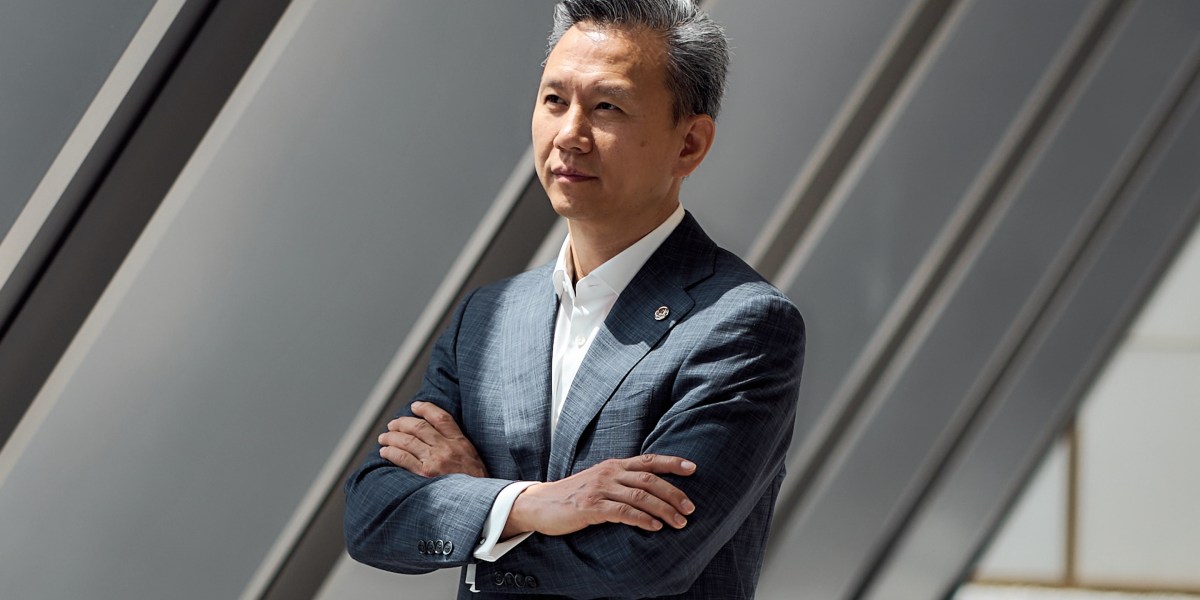
“People who don’t have sufficient financial resources can rely on the government. People who want a bit more can choose Ping An,” says Michael Guo, Ping An’s co-CEO and the man responsible for its health care and eldercare strategy.

One of China’s largest private companies, Ping An is making its bid for health care at an opportune time. China is rapidly aging as birth rates plummet. Two decades ago, China’s median age was 32; now, it’s just past 40. Most discussions of China’s demographic crisis focus on the downside: a steep decline in China’s working-age population, the source of the country’s manufacturing and economic boom.

But China’s demographic transition is only a crisis for some. The silver economy—centered on a fast-growing, newly wealthy, newly curious, and newly independent cohort over age 50—could be worth billions to companies like Ping An that are trying to combine technology and smart design to serve an aging society.

“If you didn’t adapt to the changing nature of your population, you’re going to be left behind,” says Stuart Gietel-Basten, a demography expert at the Hong Kong University of Science and Technology. “It’s a natural shift in the population structure, and if you kept doing everything the same, you’d be an idiot.”

As the rest of the world ages, Ping An’s—and China’s—experience could show how a silver future might work.


With 242 million retail customers, Ping An, founded in 1988, dwarfs the U.S.’s largest insurance company, UnitedHealth Group, and its 152 million clients. Most of Ping An’s business is insurance—property, auto, health, and so on—but it also owns one of the country’s largest banks, Ping An Bank, and a U.S.-listed fintech platform, OneConnect.

Ping An’s rise in revenue: 8%
Ping An Insurance brought in a reported $158.6 billion in revenue in 2024, helping it jump six spots to No. 47 on this year’s Global 500.

Ping An Insurance, the group’s publicly listed arm, reported $158.6 billion in revenue last year, a nearly 8.8% rise from the year before. That puts it at No. 47 on this year’s Global 500, jumping six spots from last year. Ping An is also the second-highest-ranked private Chinese company on the list, behind e-commerce giant JD.com but ahead of other household names like Alibaba and Tencent.

Guo joined Ping An in 2019 from Boston Consulting Group, where he was a managing director and partner. He served as Ping An’s chief human resources officer and headed up its property and casualty insurance business before rising to co-CEO in 2023, now working alongside co-CEO Xie Yonglin.

China has been a tricky place to do business since Guo joined six years ago. After COVID came a brief crackdown on China’s tech sector, and the collapse of the country’s property bubble dragged down both stock markets and household consumption. Ping An’s revenue declined by 9% in 2022, then by almost 20% the following year.

Still, Guo is optimistic that Ping An, and China, have turned a corner. “We’ve done a significant amount of work de-risking some of our portfolios related to the Chinese macroeconomy,” he said, pointing to Chinese stocks and property, adding that improving optimism over the Chinese economy thanks to strong stock market performance also helped.

U.S. President Donald Trump’s global trade war, which places 55% tariffs on China, threatens to complicate things again. Ping An generates almost all of its revenue in China, whether on the mainland or in the Chinese city of Hong Kong. Yet the company’s asset portfolio is global, meaning it’s exposed to global macroeconomic shifts. (For example: Ping An is one of HSBC’s largest shareholders.)

That means the trade war is a problem for Ping An. “When we invest overseas, we have to think about which countries and industries are going to perform in the next five to 10 years. When we invest domestically, we think about which industries or regions will be impacted by the tariffs,” Guo explains.

And if China’s economy does get dragged down by Trump’s tariffs, that will rebound on Ping An. “We rely on Chinese people to buy our insurance policies, to bank with us, to buy credit cards, and so on,” he adds. “If they don’t have stable jobs, they make less money or they’re more pessimistic about the future; that will impact how they interact with financial institutions.”


Guo is now in charge of Ping An’s “health care and elderly care” strategy and its technology endeavors, putting him at the forefront of what he calls the company’s “next phase of growth.”

Ping An’s health care business is small compared with the broader group, generating just $680 million in revenue last year. Senior care services delivered just $39 million in sales—and that’s after a 400% increase. But Ping An plans to leverage its broader customer base, funneling its millions of health insurance customers to its health care and eldercare services, supercharged by its decades-long investment in AI. It’s a lucrative opportunity, if it works.

China’s population has shrunk by about 4 million since 2021. The rates of new births and marriages have also plummeted. China’s Ministry of Civil Affairs estimates the country’s elderly population will grow by about 10 million a year over the next decade.

Beijing is scrambling: By 2021, it had removed all family planning restrictions, including the infamous “one child policy.” Local Chinese governments now offer cash incentives as high as $14,000 to encourage people to have children.

China’s social safety net is underdeveloped for its sizable economy. Just over a billion people are enrolled in a state-managed basic pension, yet payouts can be as little as under $25 a month.
Corporate pensions are rare, and private pension accounts are just getting off the ground. In 2019, the Chinese Academy of Social Sciences warned that China’s state pension fund risked running out of money by 2035.

Beijing is fiddling with policy on the older end of the age spectrum. Last year, it hiked the retirement age: 63 for men; 58 and 55 for women in white-collar and blue-collar jobs, respectively.

Businesses are already adapting to a China with fewer workers and more DINKs (double income, no kids). Some markets, like pet care, are booming, while others, like dairy, are looking at an uncertain future.

Part of that shift is the silver economy: goods and services targeting China’s growing elderly population, coupled with more opportunities to continue working into old age.

“The Chinese government is trying its very best to provide a layer ov social welfare and senior care facilities,” Guo says, adding that it doesn’t have the financial strength to make sure that coverage is deep enough. Instead, the government is focused on ensuring that everyone has at least some coverage.

“If you look at the 50-year-olds of today, they’re completely different from the 50-year-olds of 30 years go.”
STUART GIETEL-BASTEN, PROFESSOR OF SOCIAL SCIENCE AND PUBLIC POLICY, THE HONG KONG UNIVERSITY OF SCIENCE AND TECHNOLOGY

But that’s not good enough for China’s middle-class families, who have built up family wealth in the decades since the country opened up its economy. “There’s a mismatch between what’s available provided by the government and what’s demanded by middle-class consumers and families. And this is where we see opportunities for Ping An to bridge the gap,” Guo explains

It’s a lucrative gap: Chinese officials predict the silver economy could grow to 30 trillion yuan ($4.2 trillion) by 2035.

Gietel-Basten doesn’t think that China’s declining population necessarily spells doom. “If you look at the 50-year-olds of today, they’re completely different from the 50-yearolds of 30 years ago,” he explains. “This is what we call ‘demographic metabolism’ of populations: getting older and smaller, but also healthier, more educated, more skilled.”


Ping An isn’t the only insurer betting on a wave of elderly customers. AIA, No. 417 on the Global 500, is also bullish on the silver economy, building new products like wealth management, wellness programs, and home care for it.

Li Dou, who heads Ping An Health, explains that there’s a “90-7-3” distribution when it comes to aging in China: 90% age at home, 7% get community-based care, and 3% go to dedicated senior care facilities.

Even better with age: Chief of Ping An Health Li Dou sees opportunity
in China’s rapidly aging
population.

Qilai Shen/Panos Pictures for Fortune

He points to a few distinct customer segments—those who live alone in China’s second or third-tier cities, after their children moved to more economically vibrant cities; “early seniors” in early retirement now free to travel and seek out new experiences; and the 80-plus crowd who need more constant care.

Thanks to its insurance business, Ping An already has access to a vast network of hospitals, pharmacies, and home care groups. But the insurance giant now owns several dozen health institutions throughout the country as well, including six tertiary hospitals. It’s also building out several “alliances” beyond just medical services to support the silver economy.

For example, Ping An now collaborates with universities to offer educational lectures to its customers who, Li says, lacked opportunities for a high-quality education in their youth. It’s also setting up package tours with cultural itineraries, health-conscious meals, and hotels designed specifically for older travelers.

This focus on entertainment suits the next generation who, thanks to having smaller families, have far more wealth to spend on themselves. “The next silver generation don’t have grandchildren, don’t have children— they’ll put more resources into themselves and look for opportunities to learn things, volunteer, and even get back to work,” says Dicky Chow, head of health care at think tank Our Hong Kong Foundation.

Still, health is an expensive business. Ping An Health made a slim $12 million profit last year, its first since being established in 2014. The company lost $46 million in 2023.

“It requires a lot of capital to acquire health care and senior care providers. You need to build senior care communities, and it’s very time-consuming to complete such projects and build up a brand in the health and senior care business,” explains Iris Tan, an analyst at Morningstar.

But Ping An’s bid for the silver economy is underpinned by a decade-long bet on AI, which it’s poured billions of dollars into, even before OpenAI’s ChatGPT forced every company to adopt the new technology.

Its AI technologies include a fraud detection tool and software that can generate an artificial voice from just a few real-world samples. Others are more spiritual, like a Buddhist chatbot accessible to Ping An employees, “which can talk to you just like a monk,” says Xiao Jing, Ping An’s chief scientist. “It’s highly dependable.”

Aging with AI: Ping An is leaning into AI for the elderly with the help of chief scientist Xiao Jing.

Anthony Kwan for Fortune

And Ping An is leaning into AI for the elderly. Xiao suggests that AI is better suited for middle-aged and older users, who might appreciate the choice of AI-generated voices and avatars, whether it’s a voice and appearance that reminds them of their grandchild or an avatar resembling their professor.

And the next generation of elderly people won’t be strangers to digital technology, Chow says: “In the next 10 to 20 years, there’s going to be a drastic shift [in digital literacy].”


Beijing isn’t the only government grappling with a demographic crisis. Japan’s population has been shrinking since 2010, forcing the government to consider robotics and automation as a way to look after its aging population. South Korea has the world’s lowest fertility rate, leading local governments to consider drastic measures like government-endorsed matchmaking services.

The U.S., too, will have its own aging problems. The U.S.’s total fertility rate is at 1.6, a record low,
and hasn’t been above 2.1, the so-called replacement rate, since the early ’90s. The Population Reference Bureau projects that 82 million Americans will be over the age of 65 by 2050, nearly a quarter of the population.

China’s demographic decline is often presented as a long-term risk, but might it instead prove an opportunity? If China— which is facing a much larger elderly population with far fewer resources— can grow a vibrant silver economy, could other countries do the same?

The world’s second-largest economy is barreling ahead on automation, applying industrial robots to its manufacturing sector to make up for scarcer, more expensive—and soon rarer—workers. AI, too, might help provide care for seniors without dedicating masses of people to run health concierges and administer tests.

In that case, China’s demographic crisis may prove to be more opportunity than crisis.

This article appears in the August/September 2025: Asia issue of Fortune with the headline “Ping An’s next frontier: China’s ‘Silver Economy.’”


Source link

Continue Reading

Business

A ‘new era’ in the housing market is about to begin as affordability finally improves

Published

on


Next year should mark a shift in the housing market after years of largely being frozen in place, according to Mike Simonsen, chief economist at top residential real estate brokerage Compass.

Home sales flatlined amid unaffordable conditions after rising demand collided with tepid supply growth, pushing up home prices. Would-be buyers became so discouraged that demand cooled and remains slow.

Prices are now becoming more favorable for house hunters, a trend that should continue in 2026 and change the narrative in the housing market.

“In the next era, that story flips. So sales are starting to move higher, but prices are capped or maybe down. Incomes are rising faster than prices, and so affordability improves for the first time in a bunch of years,” Simonsen told CNBC on Friday. “It’s not a dramatic improvement, but it’s the start of the new era.” 

His view echoes a recent report from Redfin, which also cited stronger income and weaker homes prices as it predicted a “Great Housing Reset” in 2026.

In addition to potential buyers giving up on finding an affordable home, sellers have been giving up on finding someone willing to buy at the price they want.

As a result, the number of homes that were withdrawn from the market jumped this year. In June, these so-called delistings shot up 47% from a year earlier.

Simonsen said listing withdrawals tend to be owner-occupied homes, meaning they could be latent demand as well as supply. That’s because two transactions would be needed: owners want to buy a new home but must sell their current one.

“In an environment where conditions improve a little bit, we actually estimate that that’s a representation of shadow demand—people that want to move, people that have delayed moves for maybe four years now,” he said, adding that there are about 150,000 such homeowners.

His housing market outlook for a new era of improving affordability doesn’t depend on a steep drop in mortgage rates. In fact, a plunge might spur so much demand that prices would overheat.

Simonsen expects rates to stay in the low-6% range, allowing sales to grow while also keeping home prices in check as more inventory comes on the market.

The price environment is already showing auspicious signs for prospective buyers. More than half of U.S. homes have dropped in value over the last year, but homeowners can still sell with a net gain as values are up a median 67% since their home’s last sale, accordion to data from Zillow.

And a separate report fromZillow found that homebuyers are getting record-high discounts. While the typical individual discount remains $10,000, desperate sellers are increasingly offering multiple reductions as muted demand leaves homes on the market for longer. As a result, the cumulative price cut in October hit $25,000.

“Most homeowners have seen their home values soar over the past several years, which gives them the flexibility for a price cut or two while still walking away with a profit,” Zillow Senior Economist Kara Ng said in a statement last month. “These discounts are bringing more listings in line with buyers’ budgets, and helping fuel the most active fall housing market in three years. Patient buyers are reaping the rewards as the market continues to rebalance.”


Source link

Continue Reading

Business

Attacker who killed US troops in Syria was a recent recruit to security forces

Published

on


A man who carried out an attack in Syria that killed three U.S. citizens had joined Syria’s internal security forces as a base security guard two months earlier and was recently reassigned amid suspicions that he might be affiliated with the Islamic State group, a Syrian official told The Associated Press Sunday.

The attack Saturday in the Syrian desert near the historic city of Palmyra killed two U.S. service members and one American civilian and wounded three others. It also wounded three members of the Syrian security forces who clashed with the gunman, interior ministry spokesperson Nour al-Din al-Baba said.

Al-Baba said that Syria’s new authorities had faced shortages in security personnel and had to recruit rapidly after the unexpected success of a rebel offensive last year that intended to capture the northern city of Aleppo but ended up overthrowing the government of former President Bashar Assad.

“We were shocked that in 11 days we took all of Syria and that put a huge responsibility in front of us from the security and administration sides,” he said.

The attacker was among 5,000 members who recently joined a new division in the internal security forces formed in the desert region known as the Badiya, one of the places where remnants of the Islamic State extremist group have remained active.

Attacker had raised suspicions

Al-Baba said the internal security forces’ leadership had recently become suspicious that there was an infiltrator leaking information to IS and began evaluating all members in the Badiya area.

The probe raised suspicions last week about the man who later carried out the attack, but officials decided to continue monitoring him for a few days to try to determine if he was an active member of IS and to identify the network he was communicating with if so, al-Baba said. He did not name the attacker.

At the same time, as a “precautionary measure,” he said, the man was reassigned to guard equipment at the base at a location where he would be farther from the leadership and from any patrols by U.S.-led coalition forces.

On Saturday, the man stormed a meeting between U.S. and Syrian security officials who were having lunch together and opened fire after clashing with Syrian guards, al-Baba said. The attacker was shot and killed at the scene.

Al-Baba acknowledged that the incident was “a major security breach” but said that in the year since Assad’s fall “there have been many more successes than failures” by security forces.

In the wake of the shooting, he said, the Syrian army and internal security forces “launched wide-ranging sweeps of the Badiya region” and broke up a number of alleged IS cells. The interior ministry said in a statement later that five suspects were arrested in the city of Palmyra.

A delicate partnership

The incident comes at a delicate time as the U.S. military is expanding its cooperation with Syrian security forces.

The U.S. has had forces on the ground in Syria for over a decade, with a stated mission of fighting IS, with about 900 troops present there today.

Before Assad’s ouster, Washington had no diplomatic relations with Damascus and the U.S. military did not work directly with the Syrian army. Its main partner at the time was the Kurdish-led Syrian Democratic Forces in the country’s northeast.

That has changed over the past year. Ties have warmed between the administrations of U.S. President Donald Trump and Syrian interim President Ahmad al-Sharaa, the former leader of an Islamist insurgent group Hayat Tahrir al-Sham that used to be listed by Washington as a terrorist organization.

In November, al-Sharaa became the first Syrian president to visit Washington since the country’s independence in 1946. During his visit, Syria announced its entry into the global coalition against the Islamic State, joining 89 other countries that have committed to combating the group.

U.S. officials have vowed retaliation against IS for the attack but have not publicly commented on the fact that the shooter was a member of the Syrian security forces.

Critics of the new Syrian authorities have pointed to Saturday’s attack as evidence that the security forces are deeply infiltrated by IS and are an unreliable partner.

Mouaz Moustafa, executive director of the Syrian Emergency Task Force, an advocacy group that seeks to build closer relations between Washington and Damascus, said that is unfair.

Despite both having Islamist roots, HTS and IS were enemies and often clashed over the past decade.

Among former members of HTS and allied groups, Moustafa, said, “It’s a fact that even those who carry the most fundamentalist of beliefs, the most conservative within the fighters, have a vehement hatred of ISIS.”

“The coalition between the United States and Syria is the most important partnership in the global fight against ISIS because only Syria has the expertise and experience to deal with this,” he said.

Later Sunday, Syria’s state-run news agency SANA reported that four members of the internal security forces were killed and a fifth was wounded after gunmen opened fire on them in the city of Maarat al-Numan in Idlib province.

It was not immediately clear who the gunmen were or whether the attack was linked to the Saturday’s shooting.


Source link

Continue Reading

Business

AIIB’s first president defends China as ‘responsible stakeholder’ in less multilateral world

Published

on


When China wanted to set up its answer to the World Bank, it picked Jin Liqun—a veteran financier with experience at the World Bank, the Asian Development Bank, China’s ministry of finance and the China Investment Corporation, the country’s sovereign wealth fund—to design it. Since 2014, Jin has been the force behind the Asian Infrastructure Investment Bank, including a decade as its first president, starting in 2016. 

Jin’s decade-long tenure comes to an end on January 16, when he will hand over the president’s chair to Zou Jiayi, a former vice minister of finance. When Jin took over the AIIB ten years ago, the world was still mostly on a path to further globalization and economic integration, and the U.S. and China were competitors, not rivals. The world is different now: Protectionism is back, countries are ditching multilateralism, and the U.S. and China are at loggerheads. 

The AIIB has largely managed to keep its over-100 members, which includes many countries that are either close allies to the U.S.—like Germany, France and the U.K.—or have longstanding tensions with Beijing, like India and the Philippines.

But can the AIIB—which boasts China as its largest shareholder, and is closely tied to Beijing’s drive to be seen as a “responsible stakeholder”—remain neutral in a more polarized international environment? And can multilateralism survive with an “America First” administration in Washington?

After his decades working for multilateral organizations—the World Bank, the ADB, and now the AIIB—Jin remains a fan of multilateralism and is bullish on the prospects for global governance.

“I find it very hard to understand that you can go alone,” Jin tells Fortune in an interview. “If one of those countries is going to work with China, and then China would have negotiations with this country on trade, cross-border investment, and so on—how can they negotiate something without understanding the basics, without following the generally accepted rules?”

“Multilateralism is something you could never escape.”

Why did China set up the AIIB?

Beijing set up the Asian Infrastructure Investment Bank almost a decade ago, on Jan. 16, 2016. The bank grew from the aftermath of the Global Financial Crisis, when Chinese officials considered how best to use the country’s growing foreign exchange reserves. Beijing was also grumbling about its perceived lack of influence in major global economic institutions, like the International Monetary Fund and the World Bank, despite becoming one of the world’s most important economies.

With $66 billion in assets (according to its most recent financial statements), the Asian Infrastructure Investment Bank is smaller than its U.S.-led peers, the World Bank (with $411 billion in assets) and the Asian Development Bank (with $130 billion). But the AIIB was designed to be China’s first to design its own institutions for global governance and mark its name as a leader in development finance.

Negotiations to establish the bank started in earnest in 2014, as several Asian economies like India and Indonesia chose to join the new institution as members. Then, in early 2015, the U.K. made the shocking decision to join the AIIB as well; several other Western countries, like France, Germany, Australia, and Canada, followed suit.

Two major economies stood out in abstaining. The U.S., then under the Obama administration, chose not to join the AIIB, citing concerns about its ability to meet “high standards” around governance and environmental safeguards. Japan, the U.S.’s closest security ally in East Asia, also declined, ostensibly due to concerns about human rights, environmental protection, and debt.

“They chose not to join, but we don’t mind.” Jin says. “We still keep a very close working relationship with U.S. financial institutions and regulatory bodies, as well as Japanese companies.” He sees this relationship as proof of the AIIB’s neutral and apolitical nature.

Still, Beijing set up the AIIB after years of being lobbied by U.S. officials to become a “responsible stakeholder,” when then-U.S. Secretary of State Robert Zoellick defined in 2005 as countries that “recognize that the international system sustains their peaceful prosperity, so they work to sustain that system.”

Two decades later, U.S. officials see China’s presence in global governance as a threat, fearing that Beijing is now trying to twist international institutions to suit its own interests. 

Jin shrugs off these criticisms. “China is now, I think, the No. 2 contributor to the United Nations, and one of the biggest contributors to the World Bank and the Asian Development Bank” (ADB), Jin says. “Yet the per capita GDP for China is still quite lower than a number of countries. That, in my view, is an indication of its assumption of responsibility.”

And now, with several countries withdrawing from global governance, Jin thinks those lecturing China on being responsible are being hypocritical. “When anybody tells someone else ‘you should be a responsible member’, you should ask yourself whether I am, myself, a responsible man. You can’t say, ‘you’ve got to be a good guy.’ Do you think you are a good guy yourself?” he says, chuckling.

Why does China care about infrastructure?

From its inception, Beijing tried to differentiate the AIIB from the World Bank and the ADB through its focus on infrastructure. Jin credits infrastructure investment for laying part of the groundwork for China’s later economic boom.

“In 1980, China didn’t have any expressways, no electrified railways, no modern airports, nothing in terms of so-called modern infrastructure,” Jin says. “Yet by 1995, China’s economy started to take off. From 1995, other sectors—manufacturing, processing—mushroomed because of basic infrastructure.”

Still, Jin doesn’t see the AIIB as a competitor to the World Bank and the ADB, saying he’s “deeply attached” to both banks due to his time serving in both. “Those two institutions have been tremendous for Asian countries and many others around the world. But time moves forward, and we need something new to deal with new challenges, do projects more cost-effectively, and be more responsive.”

Jin is particularly eager to defend one particular institutional choice: the AIIB’s decision to have a non-resident board, with directors who don’t reside in the bank’s headquarters of Beijing. (Commentators, at the time of the bank’s inception, were concerned that a non-resident board would reduce transparency, and limit the ability of board directors to stay informed.)

“In order for management to be held accountable, in order for the board to have the real authoritative power to supervise and guide the management, the board should be hands-off. If the board makes decisions on policies and approves specific projects, the management will have no responsibility,” he says.

Jin says it was a lesson learned from the private sector. “The real owners, the board members, understand they should not interfere with the routine management of the institution, because only in so doing can they hold management responsible.”

“If the CEO is doing a good job, they can go on. If they are not doing a good job, kick them out.”

What does Jin Liqun plan to do next?

Jin Liqun was born in 1949, just a few months before the official establishment of the People’s Republic of China. He was sent to the countryside during the Cultural Revolution, and spent a decade first as a farmer, and eventually a teacher. He returned to higher education in 1978, getting a master’s in English Literature from Beijing Foreign Studies University.

From there, he made his way through an array of Chinese and international financial institutions: the World Bank, the Asian Development Bank, China’s Ministry of Finance, the China International Capital Corporation, and, eventually, the China Investment Corporation, the country’s sovereign wealth fund.

In 2014, Jin was put in charge of the body set up to create the AIIB. Then, in 2016, he was elected the AIIB’s first-ever president.

“Geopolitical tensions are just like the wind or the waves on the ocean. They’ll push you a little bit here and there,” Jin says. “But we have to navigate this rough and tumble in a way where we wouldn’t deviate from our neutrality and apolitical nature.” 

He admits “the sea was never calm” in his decade in office. U.S. President Donald Trump’s election in 2016 intensified U.S.-China competition, with Washington now seeing China’s involvement in global governance as a threat to U.S. power. 

Other countries have also rethought their membership in the AIIB: Canada suspended its membership in 2023 after a former Canadian AIIB director raised allegations of Chinese Communist Party influence among leadership. (The AIIB called the accusations “baseless and disappointing”). China is also the AIIB’s largest shareholder, holding around 26% of voting shares; by comparison, the U.S. holds about 16% of the World Bank’s voting shares.

Still, several countries that have tense relations with China, like India and the Philippines, have maintained their ties with the AIIB. “We managed to overcome a lot of difficulty which arose from disputes between some of our members, and we managed to overcome some difficulty arising from conflicts around the world,” he said.

“Staff of different nationalities did not become enemies because their governments were having problems with each other. We never had this kind of problem.”


Source link

Continue Reading

Trending

Copyright © Miami Select.