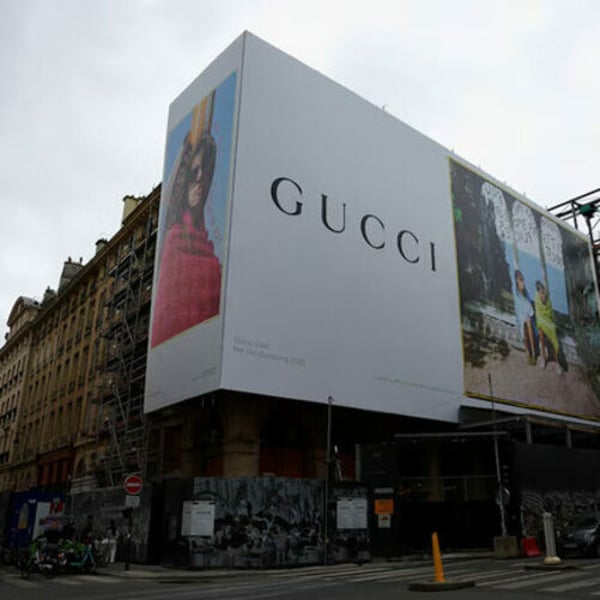
Artemis, the Pinault family holding company that controls Gucci-owner Kering, has dismissed liquidity concerns tied to a recent rise in debt, calling the spike “temporary” and unrelated to lower dividends from Kering and other assets.
Gucci slowdown adds strain, but Artemis says finances are stable – Reuters
The privately held investment group also clarified that its borrowing terms contain no financial covenants tied to Kering’s share price, countering speculation among some investors.
Chaired by outgoing Kering CEO François-Henri Pinault, Artemis holds a 43% stake in the French fashion and leather goods group and controls it through a majority of voting rights. The company has drawn growing investor scrutiny following reports of elevated debt levels across its portfolio, part of an effort to diversify holdings.
Some analysts have raised concerns that Artemis’ high debt burden may limit Kering’s ability to turn around its struggling flagship label Gucci, particularly as rivals like LVMH are making aggressive brand investments.
“We have no liquidity problems,” Artemis said in a statement to Reuters. The company added that it has less than 500 million euros ($577 million) of debt maturing in the next two years, and more than one billion euros in available cash.
Debts and dividends
Artemis, which also owns 54% of Hollywood talent agency CAA and 29% of Puma, has historically kept a low profile with both the media and investors. However, annual accounts released alongside a recent bond issue provide a rare glimpse into its financials.
At the end of 2024, Artemis’ consolidated group debt stood at 26.7 billion euros—nearly double the amount from two years earlier. Kering, the largest asset consolidated in the group’s books, held 14 billion euros in debt by the end of 2024, largely accrued through acquisitions led by Pinault to counter Gucci’s slowdown.
On a standalone basis—excluding operating companies like Kering—Artemis held 7.1 billion euros in debt as of May 31, the company revealed in a bond filing last month. In 2024, Artemis paid 227 million euros in net interest charges, up sharply from 60 million euros the year prior.
The group attributed the debt increase to its 2023 acquisition of CAA, describing it as a “temporary spike” linked to a strategy aimed at expanding beyond Europe and the luxury sector.
Artemis’ 2023 financial statements valued its majority stake in CAA at $3.7 billion, with the agency—whose clients include the Obamas and Scarlett Johansson—estimated at $7 billion in total.
While debt servicing costs rise, dividend income is falling. Kering, which accounted for more than 80% of Artemis’ financial income over the past two years, cut its 2024 dividend to 739 million euros from 1.7 billion euros the previous year, following multiple profit warnings.
Barclays analysts forecast that Kering’s dividend payout could fall further to 364 million euros in 2026 due to continued underperformance. Artemis holds roughly 43% of Kering shares.
Kering declined to comment.
Puma, which contributed 35 million euros to Artemis’ dividend income over the past two years, also cut its 2025 dividend by about one-third and warned of a potential full-year loss.
Covering needs
Kering downturn prompts Artemis to defend financial position – Reuters
“It is incorrect to assume that we are dependent on Kering’s dividend flows to finance the company. In fact, other companies in the Group pay regular and significant dividends which cover most of our debt servicing needs,” Artemis said, without elaborating.
In addition to its holdings in Kering, Puma and CAA, Artemis owns auction house Christie’s, several premium wineries, and a polar cruise operator—all unlisted businesses.
Without Kering, Artemis posted a recurring operating profit of 48.9 million euros in 2024, reversing a 115-million-euro loss the year prior, according to its financial filings.
Over the past two years, Kering’s share price has dropped by nearly 60%, while Puma shares are down 66%.
In a recent note focusing on Artemis’ finances, BofA analysts said some investors expressed concern that its debt may contain covenants tied to Kering’s stock price. Artemis dismissed those concerns, stating: “The Group has no financial covenants linked to Kering’s share price.”
The company also said its June bond issue—worth 400 million euros and tied to Kering’s share performance—was used to refinance an earlier bond linked to Puma’s stock and was oversubscribed.
The demerger of Unilever‘s ice cream division, to be named ‘The Magnum Ice Cream Company,’ which had been delayed in recent months by the US government shutdown, will finally go ahead on Saturday, the British group announced.
Reuters
Unilever said in a statement on Friday that the admission of the new entity’s shares to listing and trading in Amsterdam, London, and New York, as well as the commencement of trading… is expected to take place on Monday, December 8.
The longest federal government shutdown in US history, from October 1 to November 12, fully or partially affected many parts of the federal government, including the securities regulator, after weeks without an agreement between Donald Trump‘s Republicans and the Democratic opposition.
Unilever, which had previously aimed to complete the demerger by mid-November, warned in October that the US securities regulator (SEC) was “not in a position to declare effective” the registration of the new company’s shares. However, the group said it was “determined to implement in 2025” the separation of a division that also includes the Ben & Jerry’s and Cornetto brands, and which will have its primary listing in Amsterdam.
“The registration statement” for the shares in the US “became effective on Thursday, December 4,” Unilever said in its statement. Known for Dove soaps, Axe deodorants and Knorr soups, the group reported a slight decline in third-quarter sales at the end of October, but beat market expectations.
Under pressure from investors, including the activist fund Trian of US billionaire Nelson Peltz, to improve performance, the group last year unveiled a strategic plan to focus on 30 power brands. It then announced the demerger of its ice cream division and, to boost margins, launched a cost-saving plan involving 7,500 job cuts, nearly 6% of the workforce. Unilever’s shares on the London Stock Exchange were steady on Friday shortly after the market opened, at 4,429 pence.
This article is an automatic translation. Click here to read the original article.
Burberry has named a new chief operating and supply chain officer as well as a new chief customer officer. They’re both key roles at the recovering luxury giant and both are being promoted from within.
Matteo Calonaci becomes chief operating and supply chain officer, moving from his role as senior vice-president of strategy and transformation at the firm.
In his new role, he’ll be oversee supply chain and planning, strategy and transformation, and data and analytics. He succeeds Klaus Bierbrauer, who’s currently Burberry supply chain and industrial officer. Bierbrauer will be leaving the company following its winter show and a transition period.
Matteo Calonaci – Burberry
Meanwhile, Johnattan Leon steps up as chief customer officer. He’s currently currently Burberry’s senior vice-president of commercial and chief of staff. In his new role he’ll be leading Burberry’s customer, client engagement, customer service and retail excellence teams, while also overseeing its digital, outlet and commercial operations.
Both Calonaci and Leon will join the executive committee, reporting to Company CEO Joshua Schulman.
JohnattanLeon – Burberry
Schulman said of the two execs that the appointments “reflect the exceptional talent and leadership we have at Burberry. Both Matteo and Johnattan have been instrumental in strengthening our focus on executional excellence and elevating our customer experience. Their deep understanding of our business, our people, and our customers gives me full confidence that their leadership will help drive [our strategy] Burberry Forward”.
Traditional and occasion wear designer Puneet Gupta has stepped into the world of fine jewellery with the launch of ‘Deco Luméaura,’ a collection designed to blend heritage and contemporary aesthetics while taking inspiration from the dramatic landscapes of Ladakh.
Hints of Ladakh’s heritage can be seen in this sculptural evening bag – Puneet Gupta
“For me, Deco Luméaura is an exploration of transformation- of material, of story, of self,” said Puneet Gupta in a press release. “True luxury isn’t perfect; it is intentional. Every piece is crafted to be lived with and passed on.”
The jewellery collection features cocktail rings, bangles, chokers, necklaces, and statement evening bags made in recycled brass and finished with 24 carat gold. The stones used have been kept natural to highlight their imperfect and unique forms and each piece in the collection has been hammered, polished, and engraved by hand.
An eclectic mix of jewels from the collection – Puneet Gupta
Designed to function as wearable art pieces, the colourful jewellery echoes the geometry of Art Deco while incorporating distinctly South Asian imagery such as camels, butterflies, and tassels. Gupta divides his time between his stores in Hyderabad and Delhi and aims to bring Indian artistry to a global audience while crafting a dialogue between designer and artisan.