Connect with us

Business

Pika, a new TikTok-like AI app, makes playful, creative short videos from just a few words

Published

on


Welcome to Eye on AI, with AI reporter Sharon Goldman. In this edition…a TikTok-like AI video app that is built for Gen Z…Challenges renting San Francisco apartments during the AI boom…TSMC profit surges 39% to hit yet another record on AI chip demand…Spotify partners with Sony, Universal, Warner and more to develop AI music products. 

Demi Guo, the 26-year-old founder of AI video company Pika, holds degrees in mathematics and computer science. But she’s also always had a creative streak, including writing poetry, and she loves showing off on social media with image and video tools.

That’s why she dropped out of her Stanford Ph.D program and co-founded Pika in April 2023 with aspiring animator and fellow Ph.D student Chenlin Meng. Just as AI video companies like Runway were starting to get hot, the duo, after experimenting with making long-form generative AI films, decided to create an easier-to-use AI video generator—sparking interest from top Silicon Valley investors like Nat Friedman. 

Now, has Pika has raised about $135 million at a $470 million valuation and boasts 14.5 million users across several creative apps. It recently launched a new TikTok-like AI video app, also called Pika, that is already trending, and last week it debuted a new feature in that app called Predictive Video. Unlike other video tools which require long prompts to generate good results, Predictive Video allows users to upload a selfie and say something simple, like “make me a rock star,” or “I’m giving a TED Talk,” or “make me sing in Japanese”; the tool then infers your intent, delivering a complete video with a script, music and dance moves, background, lighting, and camera angles and visual effects.

Instead of just producing a standalone video clip, Pika can anticipate motion and interaction, producing a sort of mixed reality by allowing users to weave themselves or real-world elements into AI-generated scenes—something that traditionally would take significant animation skills and production time.

All of it is tailor-made for Gen Z and Gen Alpha, cohorts which have grown up on short-form video and uses online platforms to express themselves and share their thoughts, Guo explained. “Most nonprofessionals will never try to create a film using generative AI, but lots of people like to make short videos,” she said. “It’s really about self-expression.” 

That, she insists, is the opposite of what has become a catch-all tool for AI video: Slop. There may be artificial content at scale, but Pika is meant to, ironically, use generative AI tohelp people get more real, she says. 

“We really believe it is not meaningless content,” she emphasized. “It’s about self-expression, the personality is actually real behind it. So a person who is funny will post funny videos, or a person that is very egocentric will post egocentric videos.” Some people like to use one visual effect, or create a video that captures a vibe or a mood, or simply use the tool to do what they wish they could do in real life, she added. 

“It helps you achieve that in some sense,” she said. “Maybe you are a really bad singer, but in AI, you can sing very well, like a pop star.” 

Pika is stepping into a competitive landscape dominated by giants like OpenAI’s Sora and Meta’s new Vibes, but it’s carving out a very different niche. Sora is focused on cinematic, photorealistic text-to-video generation, and Vibes is about bringing AI-generated video feeds into Meta’s massive ecosystem. But Pika positions itself closer to the ground-level habits of Gen Z and Gen Alpha: It’s less about polished productions at scale, and more aboutemotion, creativity and interaction for everyday storytelling.

With that, here’s more AI news.

Sharon Goldman
sharon.goldman@fortune.com
@sharongoldman

FORTUNE ON AI

Don’t fear the AI bubble, it’s about to unlock an $8 trillion opportunity according to Goldman Sachs – by Jim Edwards

BlackRock’s $40 billion deal highlights the unstoppable AI data center gold rush, as CEO Larry Fink pushes back on AI bubble fears – by Sharon Goldman

Want to build your own chatbot for $100? A glimpse into AI’s small, cheap, DIY future – by Sharon Goldman

Amazon is planning a new wave of layoffs, sources say – by Jason Del Rey

AI IN THE NEWS

Challenges renting San Francisco apartments during the AI boom. According to the New York Times, a surge of AI start-ups is reshaping San Francisco’s housing market, driving up demand and prices and intensifying competition for apartments. After his company Cluely raised $5.3 million, 22-year-old founder Roy Lee leased eight luxury apartments just steps from the office to foster a “frat house” work culture—emblematic of how tech firms are reshaping city living. Fueled by growth from companies like OpenAI and Anthropic, San Francisco rents have risen 6% in the past year, more than double New York City’s rate, with neighborhoods near A.I. hubs like Mission Bay seeing 13% spikes. The scramble for housing has led renters to tour dozens of units, face same-day rejections, and even bring cash to viewings, raising new concerns about affordability and displacement in one of America’s most expensive cities.

TSMC profit surges 39% to beat estimates and hit yet another record on AI chip demand. CNBC reported that Taiwan Semiconductor Manufacturing Co. (TSMC) posted record third-quarter results as surging demand for artificial intelligence chips fueled a 39.1% jump in profit from a year earlier, beating analyst estimates. Revenue climbed 30.3% to NT$989.92 billion ($33.1 billion), while net income rose to NT$452.3 billion. CEO C.C. Wei said growing consumer adoption of AI models is strengthening the company’s conviction in the “AI megatrend,” prompting TSMC to raise its 2025 revenue growth forecast to the mid-30% range and boost planned capacity investments to at least $40 billion. High-performance computing, including AI and 5G chips, accounted for 57% of revenue, and advanced 7-nanometer-and-smaller chips made up 74% of wafer sales, underscoring TSMC’s central role in supplying cutting-edge processors to clients like Nvidia and Apple.

Spotify partners with Sony, Universal, Warner and more to develop AI music products. Variety reported that Spotify is teaming up with major music industry players—including Sony, Universal, Warner, Merlin, and Believe—to develop “responsible” AI products aimed at empowering artists and songwriters, marking one of the first large-scale collaborations between streaming and music rights holders on AI. As part of a broader push to invest heavily in AI research and product development, Spotify plans to build a generative AI lab and product team focused on four key goals: creating tools through up-front agreements with labels and publishers; allowing artists and rights holders to opt in to generative music technologies; opening new revenue streams; and strengthening artist-fan connections. The initiative reflects a growing effort across the music industry to shape how AI is integrated into creative and commercial practices.

AI CALENDAR

Oct. 21-22: TedAI San Francisco. 

Nov. 10-13: Web Summit, Lisbon. 

Nov. 26-27: World AI Congress, London.

Dec. 2-7: NeurIPS, San Diego

Dec. 8-9: Fortune Brainstorm AI San Francisco. Apply to attend here.

EYE ON AI NUMBERS

26%

That’s how many Americans are familiar with AI mental health tools, according to a new YouGov survey that highlights just how far such tools have to go to win over the public. A mere 11% say they’d consider using one, and trust is even lower—just 8% say they trust AI in this space, while 40% explicitly don’t. The top reasons for skepticism: concerns about lack of human nuance (53%), harmful or inaccurate advice (50%), and data privacy (49%). And despite the flood of startups and investment in AI therapy apps, only 4% of Americans have ever tried one.



Source link

Continue Reading

Business

Borrowing by AI companies represents a ‘mounting potential threat to the financial system’: Zandi

Published

on


Tech companies are issuing more debt now than before the dot-com crash as a rapid infrastructure buildout unfolds in the AI boom, Moody’s Analytics Chief Economist Mark Zandi said in a LinkedInpost on Sunday.

Even after adjusting for inflation, big tech companies are issuing more bonds than during the late 1990s. And the companies aren’t just refinancing existing debt—they’re taking on additional debt.

“While the increasingly aggressive (and creative) borrowing by AI companies won’t be their downfall, if they do fall short of investors’ expectations and their stock prices suffer, their debts could quickly become a problem,” Zandi wrote. 

“Borrowing by AI companies should be on the radar screen as a mounting potential threat to the financial system and broader economy.”

The 10 largest AI companies, including Meta, Amazon, Nvidia and Alphabet, will issue more than $120 billion this year, Zandi said in a LinkedIn analysis last week.

And this time is different from dot-com era debt issuance, as internet companies back then didn’t have a lot of debt, he pointed out. Instead, they were funded by stocks and venture capital.

“That’s not the case with the AI boom,” Zandi added.

Even though hyperscalers like Amazon, Google, Meta, and Microsoft could pay for the AI buildout with their profits, bond issuance is the “cheapest and cleanest” way to finance an infrastructure buildout of this scale, which will likely last more than a decade and be worth trillions of dollars, Shay Boloor, chief market strategist at Futurum Equities, told Fortune.

“These companies are a lot more comfortable issuing 10- to 40-year papers, for example, at very low spreads, because the market now views them as quasi-utility names—because they’re building all this infrastructure—not just a pure tech company anymore,” Boloor said.

He added that in the previous six months, tech companies have shown “proof in the pudding” that future demand for AI is booming.

Despite AI bubble concerns, Nvidia delivered a strong earnings report for its third quarter last month, saying its AI data center revenue increased by 66% from last year. 

Still, critics warn that the buildout may not keep up with how rapidly AI is developing.

Computer hardware, which makes up most AI data centers’ cost, may be more susceptible to becoming obsolete and replaced by more advanced technology during the AI boom as opposed to wireless and internet buildouts, much of which still runs today, George Calhoun, professor and director of the Hanlon Financial Systems Center at Stevens Institute of Technology, told Fortune.

“The cycle of innovation in the chip industry is much faster than for wireless technology or fiber optics,” he said explained. “There is a real risk that much of that hardware may become competitively disadvantaged by newer technologies in a much shorter timeframe,” before being fully paid off.

At the same time, big players in the AI boom—namely OpenAI—do not have the profits currently to cushion their massive investments at the moment, increasing their risk, Calhoun said.

“If OpenAI fails, the snowball effect of that is gonna be substantial,” Futuruum Equities’ Boloor said. Though larger tech companies won’t likely be impacted much by a potential OpenAI bust, companies that largely rely on its business like Oracle could, he added.

Still, Boloor is optimistic about the AI buildout, saying the main bottleneck for its success is U.S. energy capacity.

“I think that the risk is that trillions of dollars of AI capacity gets built faster than the North American grid can support it, which could slow realization,” he warned. 


Source link

Continue Reading

Business

International deals race forward to end China’s hold on critical minerals since US can’t do it alone

Published

on


Pini Althaus saw the signs. In 2023, he left the company he founded, USA Rare Earth, to develop critical minerals mining and processing projects in central Asia, after realizing that the U.S. will need all the international help it can get to end China’s supply chain dominance.

“I realized we only have a handful of large critical minerals projects that were going into production between now and 2030,” Althaus, chairman and CEO of Cove Capital, told Fortune. “I understood that we’re going to have to supplement the United States critical minerals supply chain with materials coming in from our allied and friendly countries.”

Over a series of decades, China built up its stranglehold on much of the world’s critical minerals supply chains, including the 17 rare earths, used to make virtually all kinds of high-performance magnets and parts for vehicles, computers, power generation, military defense, and more. The rest of the world deferred to Beijing in exchange for cheap prices.

Amid an ongoing tariff war with the U.S.—and a temporary truce—the Trump administration is racing to build up domestic mining and processing capabilities, while also developing the global partnerships necessary to eventually undermine China, which controls 90% of the world’s rare earths refining.

In October, Trump inked a deal with Australia for both countries to invest $3 billion in critical minerals projects by mid-2026. Australia is home to the largest publicly traded critical minerals miner in the world, Lynas Rare Earths. Trump then signed a series of bilateral critical minerals deals in eastern and southeastern Asia, including Japan, Malaysia, Thailand, Indonesia, and Cambodia. The U.S. also has new deals with Ukraine, Argentina, the Democratic Republic of Congo, Rwanda, Kazakhstan, and more.

Althaus is specifically developing mining and processing facilities for tungsten—a heat-resistant metal used in electronics and military equipment—and rare earths in Kazakhstan and Uzbekistan. He sees the most potential in former Soviet Union nations in central Asia.

“The Soviets spent many decades exploring and developing mines. Many of their databases have been left and are quite meticulous,” Althaus said. “This gives companies looking to develop projects in central Asia a jumpstart compared to what would be here in the United States, where most of the opportunities are greenfield—very early stages, very high risk, and very little appetite for investment.”

In November, the Ex-Im Bank offered Cove Capital a $900 million financing letter of interest for the $1.1 billion Kazakh tungsten projects. A separate letter of interest was received from the U.S. International Development Finance Corporation.

Jeff Dickerson, principal advisor for Rystad Energy research firm, said only a long-term, coordinated effort—essentially a “wartime” approach—both domestically and with international partnerships can lead to success. But it cannot be done without new projects with foreign allies. “The challenge is that the U.S. doesn’t have a strong pipeline of mature mineral projects that are shovel ready,” he said. 

“The cycle of China extracting concessions on the back of mineral geopolitics and weakening the U.S. strategic negotiating position will likely continue without a coordinated, long-term response during the current moment of heightened attention to critical minerals,” Dickerson said, questioning whether the U.S. will maintain a concerted focus for years to come.

New emphasis

The Trump administration is increasingly making financial partnerships with critical minerals developers—even becoming a majority shareholder of U.S. rare earths miner MP Materials—and offering deals for floor-pricing mechanisms to offset China’s recurring dumping practices that aim to eliminate competition.

A native Australian turned New Yorker, Althaus is, naturally, a big fan of this approach. Chinese price dumping has crippled global competition and scared away potential investors, he said.

“By providing a price floor, it removes the question marks; it removes the instability; it removes the most significant risk in funding a project that’s about to go into production,” Althaus said. “It creates a predictability where you can take geology all the way through to profitability. I think there should be a global effort to create transparent markets and prices for the key critical minerals.”

Critical minerals are increasingly included in U.S. negotiations for all foreign deals. In the tariff agreement with Indonesia, for instance, the Asian nation agreed to lift export bans on nickel. The White House leveraged its military support for Ukraine by demanding the rights to its critical minerals in return. And the recent U.S. bailout of Argentina included a partnership on critical minerals mining.

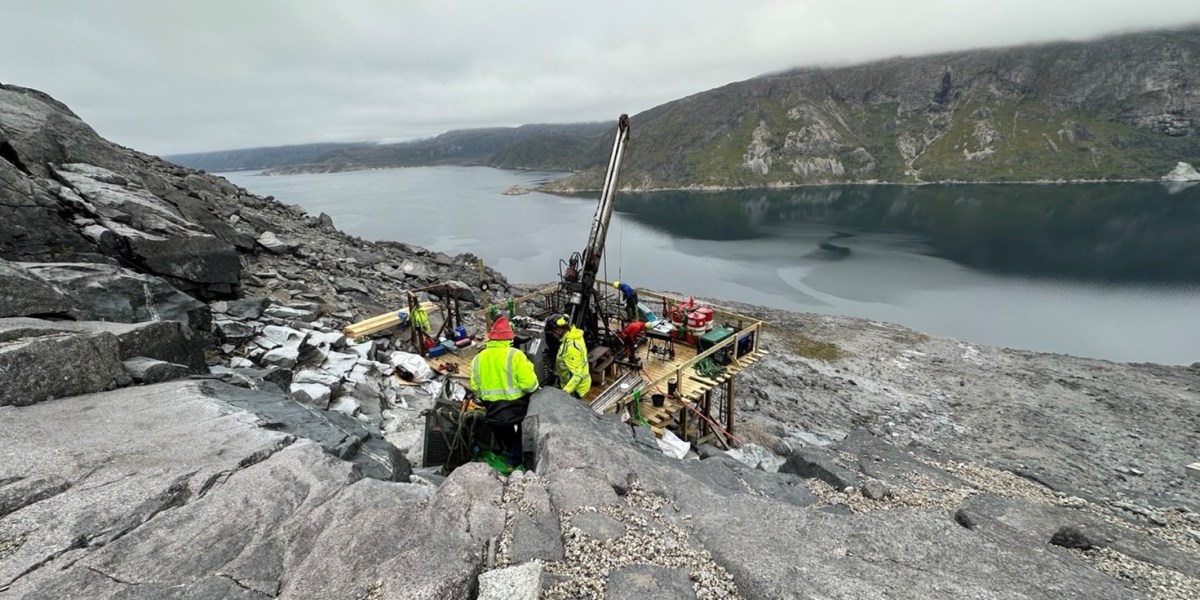
In addition to its strategic defense location, rare earths are even a reason Trump continues to show interest in annexing Greenland from Denmark.

Veteran geologist Greg Barnes, who founded the massive Tanbreez mining project, which remains in development, briefed Trump at the White House during his first presidential term. This year, Critical Metals acquired 92.5% ownership of the Tanbreez project.

Critical Metals CEO Tony Sage is keen to supply the U.S. with desired rare earths, and the company recently received a letter of intent for a $120 million Ex-Im Bank loan. The goal is to start construction by the end of 2026.

“There’s an absolute need to make sure that more than 50% of the supply of these heavy rare earths come from outside of China—mined and processed outside of China,” Sage told Fortune.

Regardless of any long-shot annexation bids, Sage said Greenland can and should be a key ally to the U.S. for critical minerals. “They definitely don’t want to be part of the U.S., but I think they’ll be pro-U.S.,” he said.

For his part, Althaus said he sees all the international deals as progress, and not as competition for his Cove Capital.

“I think it’s a positive, and I think we’ll start to see a lot more happen in the coming months in terms of the U.S. and collaboration with other countries.”


Source link

Continue Reading

Business

Amazon’s new Alexa aims to detangle chaos in the household, like whether someone fed the dog

Published

on


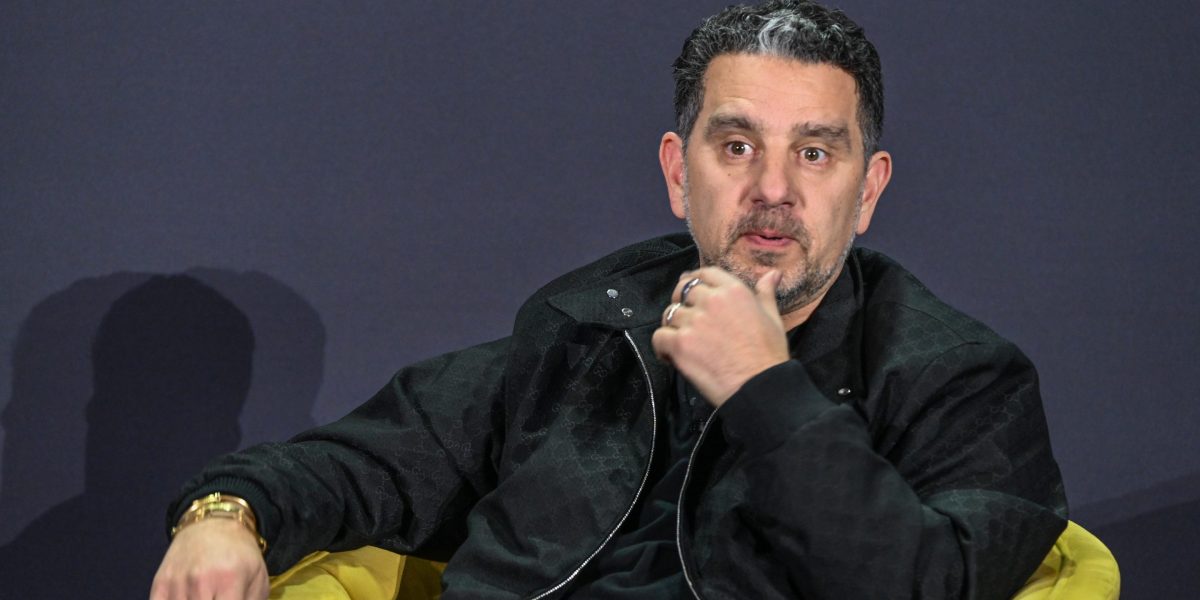
It’s 10 p.m. after a long day when you walk in the door and wonder aloud: “Did anyone feed the dog? Who fed the dog,” Panos Panay says he calls out to his family of six.

Turns out, nobody fed the dog and so all the kids “scatter to their corners,” he told Fortune’s Brainstorm AI audience in San Francisco on Monday. 

The senior vice president of devices and services at Amazon says the new generative AI-powered Alexa+, which runs on Echo hardware and can integrate with other devices like Amazon’s Ring security cameras, aims to ease the constant mental load in a household: remembering whether the pets ate, restaurants each family member pitched and saw vetoed, and regular grocery orders. The idea is to have “ambient” artificial intelligence around your house so that devices can assist in tasks, chores, and other household command center issues, said Panay.

The new Alexa+ is much more conversational, Panay said, and you no longer have to pronounce everything perfectly and discretely in order for it (or her, as Panay refers to the virtual assistant) to understand you.

“She’s the best DJ on the planet, in my opinion,” said Panay. “You have a personal shopper, you have a butler, you have a personal assistant, you have your home manager. Different people use Alexa for different things, and now she’s pretty much supercharged,” Panay said.

In addition to confirming that the dogs have not been fed, Panay said he used Alexa+ on Sunday night to head off another age-old debate: where the family should go for dinner. Both dinner decisions and pet chores are “classic fight[s] in my house,” Panay told the Brainstorm AI audience.

His youngest had previously suggested a few restaurants she wanted to visit for a quick bite and hadn’t yet been to, and Panay asked Alexa to remind them which ones his daughter suggested specifically. It was a sushi joint and she enjoyed it, Panay said. That type of ambient listening and assistance with debate is the point, he said, and stops people needing to pull out their phones and start typing and scrolling for information.   

From there, Panay said Alexa can also take more concrete actions like making a reservation on dining platform OpenTable, ordering delivery on nights in, getting an Uber, and handling home issues such as telling you how many packages were delivered or the number of guests who stopped by. Panay said Amazon has more than 150 partners to aid in these integrations, although there is work ahead to get more partners on board, he added.  

Thus far, Alexa+ has been rolled out to early-access users and this week the product is available to those on a lengthy waitlist, said Panay, and it’s been boosted by Amazon’s advertising. This week, the product is being released to anyone with an Echo device. The business monetization model involves “flywheels” from Amazon’s $2.4 trillion retail ecosystem, particularly around shopping for clothes, groceries, and other consumer items. “If you’re shopping on the grocery list and order groceries often enough, Alexa knows what you’re doing, and ultimately, can just order ahead of time for you moving forward,” he said.

Ultimately, Panay envisions users wanting “your assistant everywhere you go” because “the more it understands about you, the more informed it is, the better it can serve your needs.” And while Panay said there will be continued innovation from Amazon in this space, he refused to reveal any specific products. He said Amazon has a “lab full of ideas,” but most won’t make it out of that lab. 


Source link

Continue Reading

Trending

Copyright © Miami Select.