Connect with us

Business

PepsiCo taps Walmart veteran as CFO, bets big on beverage revamp

Published

on


Good morning. PepsiCo is overhauling its beverage portfolio—refueling interest in drinks like Gatorade—and named a new finance chief.

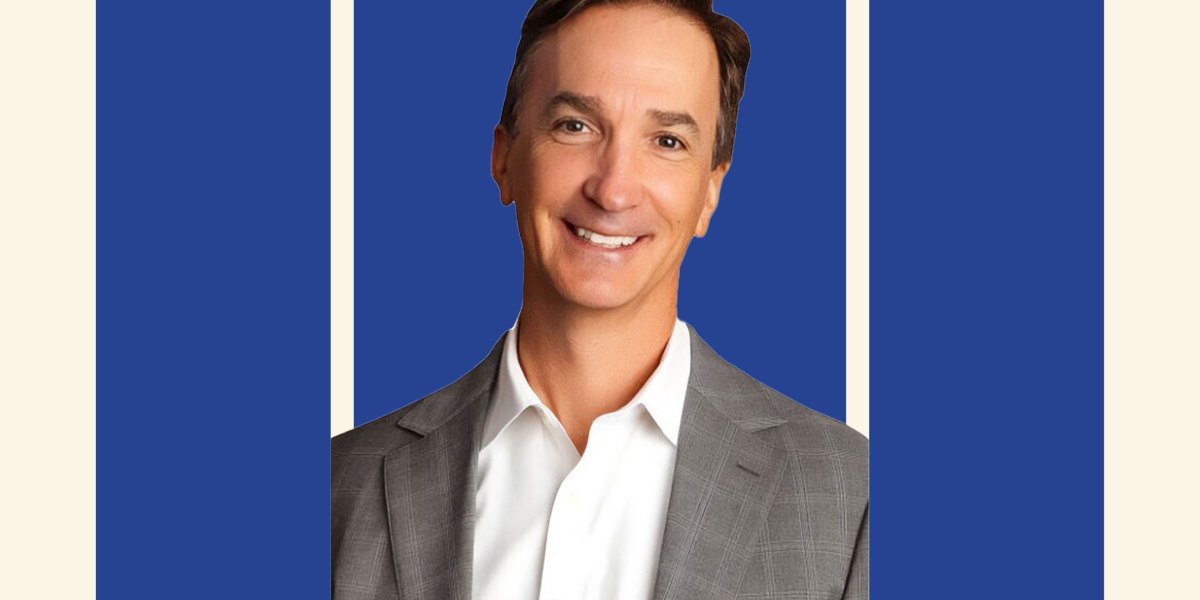
On Thursday, the beverage giant (No. 45 on the Fortune 500) announced that Steve Schmitt will join as EVP and CFO effective Nov. 10. Schmitt, a Walmart veteran, currently serves as EVP and CFO for Walmart U.S., overseeing the finance function for its multibillion-dollar omnichannel organization. Schmitt joins at a trying time with activist investor Elliott Management pushing for major change within the company.

Schmitt joined Walmart in 2016, holding leadership positions across e-commerce, club, and mass businesses, and previously worked at Yum! Brands and UPS. At PepsiCo, Schmitt succeeds Jamie Caulfield, who will retire next year after more than 30 years at PepsiCo, but will stay on as an advisor through May 15.

PepsiCo CEO Ramon Laguarta highlighted Schmitt’s expertise in complex supply chains, adapting to omnichannel consumers, and delivering operational excellence at scale as “impactful” for PepsiCo’s growth strategy.

PepsiCo beat Q3 earnings expectations on both revenue and adjusted profit. However, Schmitt joins the company amid growing activist pressure. In September, Elliott Management disclosed a $4 billion stake in PepsiCo, labeling it a “dramatic underperformer” and urging a strategic turnaround to boost growth and profitability.

Elliott criticized PepsiCo’s North America beverage business for lagging behind peers in growth and margins, and argued that the company’s proliferation of brands and SKUs has impaired focus and execution. In response, PepsiCo stated that it values shareholder feedback, is reviewing Elliott’s perspectives, and remains confident in its current strategy around innovation, portfolio transformation, and productivity.

In a new feature article, my Fortune colleague Phil Wahba takes a deep dive into PepsiCo’s beverage overhaul, which includes a Gatorade reboot. Ram Krishnan, the CEO of PepsiCo’s U.S. beverages division, has taken the reins of a years-long effort to return Gatorade, the original bright-colored sugary sports drink, to growth. 

“The stakes are high for PepsiCo. With $29 billion a year in revenue, North America Beverages is the food-and-beverage giant’s single biggest division,” Wahba writes. 

Gatorade’s revamp includes new protein-focused products and expanded offerings like powdered mixes. Its newest release, Gatorade Lower Sugar—which contains 75% less sugar than the original and no artificial flavors or sweeteners—will arrive in stores in early 2026.

But Krishnan is facing intense pressure to make bold changes not just at Gatorade but across the beverage portfolio. “Other moves by Krishnan include the nearly $2 billion purchase in May of prebiotic soda Poppi and in late summer, PepsiCo’s increased stake in Celsius Holdings, making the brand its leader energy drink and one popular with millennial and Gen Z gym-goers and other active people,” Wahba writes. (You can read the complete article and more about Krishnan’s strategy at PepsiCo here.)

The months ahead will reveal whether a new CFO and a bold beverage play can satisfy investors and spark lasting growth.

Have a good weekend.

Sheryl Estrada
sheryl.estrada@fortune.com

Leaderboard

Fortune 500 Power Moves

Todd Cunfer was appointed EVP and CFO of The Campbell’s Company (No. 425), effective Oct. 20. Cunfer succeeds Carrie Anderson, who is leaving the company to pursue new opportunities. Cunfer brings over 25 years of experience. He joins Campbell’s from Freshpet, where he served as CFO since 2022. Before that, he was CFO at Simply Good Foods Company, a nutritional foods and snacking products company. Previously, Cunfer spent over 20 years in senior finance roles at The Hershey Company, including VP of international finance, VP of global supply chain finance and VP of North America finance.

Every Friday morning, the weekly Fortune 500 Power Moves column tracks Fortune 500 company C-suite shifts—see the most recent edition

More notable moves this week:

Anthony Armstrong has been appointed CFO of xAI, Elon Musk’s artificial intelligence group, the Financial Times reports. Armstrong will replace Mike Liberatore, who left the startup this year for OpenAI after three months in the role. Armstrong will reportedly oversee the finance function for both xAI and the social media platform X. Musk merged X and xAI in March, valuing the combined group at $113 billion. Formerly the head of global technology mergers and acquisitions at Morgan Stanley, Armstrong was part of the team hired by Musk to facilitate the acquisition of X, then known as Twitter. Most recently, Armstrong worked for the Trump administration as a senior adviser to the Office of Personnel Management.

Marshall Witt was appointed senior vice president and chief financial officer of FedEx Freight, effective Oct. 15. Witt’s appointment completes FedEx Freight’s executive leadership team, joining the previously announced leadership roles. FedEx Corp. (NYSE: FDX) is preparing for the separation of FedEx Freight into an independent company. Witt is the former CFO of TD SYNNEX, a global IT distributor and solutions provider. Before that, he spent 15 years at FedEx, primarily within the FedEx Freight finance organization, where he most recently served as senior vice president of finance and controller.

Mary Holt was appointed CFO of CompoSecure, Inc. (NYSE: CMPO), a designer and manufacturer of metal payment cards. Holt succeeds Tim Fitzsimmons, who is retiring. Holt brings more than three decades of experience. Most recently, she served as SVP of finance operations, utilities and power SBG at Warren Equity Partners. Before that, she spent over 17 years at Honeywell, advancing through a series of increasingly senior roles, including VP of business analysis and planning/corporate finance; CFO of productivity solutions and services; and CFO for corporate entities and functions.

Brent Wahl, CFO of NextDecade Corporation (Nasdaq: NEXT), has resigned from his position, effective Oct. 20. The company has appointed Mike Mott, SVP of enterprise transformation, as interim CFO. Wahl is leaving NextDecade to join a digital infrastructure company, and he has agreed to serve in a consultant capacity through Dec. 31, 2025. The company will initiate a search process to find a permanent successor.

Anthony Coletta was appointed CFO of Sprinklr (NYSE: CXM), a customer experience management platform. Coletta has more than 20 years of experience. Most recently, he served as chief investor relations officer at SAP SE. Before this, Coletta served as CFO for SAP North America. 

Gibb Witham was appointed president and CFO of Hack The Box (HTB), a cybersecurity training and upskilling platform. Witham brings two decades of experience at the intersection of finance, strategy, and cybersecurity. He joins HTB from Paladin Capital Group, a cybersecurity-focused investment firm and early investor in HTB. 

Big Deal

Grant Thornton has released the third installment of its Digital Transformation survey, which examines executives’ perspectives on the role of governance and compliance in technology use and how these factors support resilience. Sixty percent of executives identified structured frameworks and specialized tools designed to manage rules, identify risks, and ensure compliance with regulations as essential tactics for making their technology use safer and more resilient.

Respondents were asked to rank the top priorities for their organizations’ technology enhancements; 57% chose cybersecurity and risk management as one of their top technology objectives. The findings are based on a survey of more than 550 cross-functional senior executives across industries.

Risk assessments are the foundation of strong resilience, according to Derek Han, cybersecurity and privacy leader for the firm’s risk advisory practice. Where these processes were once performed manually with the help of workflow tools, companies are now implementing AI to assist in the process. However, Han notes the importance of humans collaborating with AI.

“If we start using AI to simply replace humans to monitor, respond to, and mitigate security risks, the human foundation for cybersecurity could be diminished,” Han said in a statement. “It’s important to strike a balance between the use of AI tools and continuing to develop the expertise and critical thinking of the human security team.”

Going deeper

Here are four Fortune weekend reads:

Wells Fargo was reeling from scandal. Jamie Dimon protégé Charlie Scharf bet his career on saving the 173-year-old bank” by Shawn Tully

Exclusive: Coinbase and Mastercard have both held advanced talks to buy stablecoin startup BVNK for around $2 billion” by Ben Weiss and Leo Schwartz

California’s ‘impossible’ dream of ending fossil fuels isn’t working, and now it’s looking at price spikes and shortages” by Jordan Blum

You’re 10 times more likely to have a flight delay during the government shutdown, Transportation Secretary says: ‘These controllers are stressed out’” by Sydney Lake

Overheard

“In finance, as in life, the scariest things happen when the lights go out. Whether the rules change or not, what really matters is what investors demand — and what markets are willing to tolerate.”

—Richard Torrenzano, CEO of The Torrenzano Group, writes in a Fortune opinion piece titled, “Fewer earnings reports, more regret: The high cost of going quiet.” Torrenzano weighs in on the debate on whether public companies should end quarterly earnings and move to semiannual disclosures. For nearly a decade, he was a member of the New York Stock Exchange management and executive committees. 


Source link

Continue Reading

Business

MAGA’s ‘MyPillow Guy,’ Mike Lindell, challenges Tim Walz in run for Minnesota governor

Published

on


Mike Lindell, the fervent supporter of President Donald Trump known to TV viewers as the “MyPillow Guy,” officially entered the race for Minnesota governor Thursday in hopes of winning the Republican nomination to challenge Democratic Gov. Tim Walz.

“I’ll leave no town unturned in Minnesota,” Lindell told The Associated Press in an interview ahead of a news conference set for Thursday.

He said he has a record of solving problems and personal experiences that will help businesses and fight addiction and homelessness as well as fraud in government programs. The fraud issue has particularly dogged Walz, who announced in September that he’s seeking a third term in the 2026 election.

A TV pitchman and election denier

Lindell, 64, founded his pillow company in Minnesota in 2009 and became its public face through infomercials that became ubiquitous on late-night television. But he and his company faced a string of legal and financial setbacks after he became a leading amplifier of Trump’s false claims that the 2020 election was stolen. He said he has overcome them.

“Not only have I built businesses, you look at problem solution,” Lindell said in his trademark rapid-fire style. “I was able to make it through the biggest attack on a company, and a person, probably other than Donald Trump, in the history of our media … lawfare and everything.”

While no Republican has won statewide office in Minnesota since 2006, the state’s voters have a history of making unconventional choices. They shocked the world by electing former professional wrestler Jesse Ventura as governor in 1998. And they picked a veteran TV pitchman in 1978 when they elected home improvement company owner Rudy Boschwitz as a U.S. senator.

Lindell has frequently talked about how he overcame a crack cocaine addiction with a religious conversion in 2009 as MyPillow was getting going. His life took another turn in 2016 when he met the future president during Trump’s first campaign. He served as a warm-up speaker at dozens of Trump rallies and co-chaired Trump’s campaign in Minnesota.

Trump’s endorsement could be the key to which of several candidates wins the GOP nomination to challenge Walz. But Lindell said he doesn’t know what Trump will do, even though they’re friends, and said his campaign isn’t contingent on the president’s support.

His Lindell TV streaming platform was in the news in November when it became one of several conservative news outlets that became credentialed to cover the Pentagon after agreeing to a restrictive new press policy rejected by virtually all legacy media organizations.

Lindell has weathered a series of storms

Lindell’s outspoken support for Trump’s false claims that the 2020 election was stolen triggered a backlash as major retailers discontinued MyPillow products. By his own admission, revenue slumped and lines of credit dried up, costing him millions. Several vendors sued MyPillow over billing disputes. Fox News stopped running his commercials. Lawyers quit on him.

Lindell has been sued twice for defamation over his claims that voting machines were manipulated to deprive Trump of a victory.

A federal judge in Minnesota ruled in September that Lindell defamed Smartmatic with 51 false statements. But the judge deferred the question of whether Lindell acted with the “actual malice” that Smartmatic must prove to collect. Smartmatic says it’s seeking “nine-figure damages.”

Colorado jury in June found that Lindell defamed a former Dominion Voting Systems executive by calling him a traitor, and awarded $2.3 million in damages.

But Lindell won a victory in July when a federal appeals court overturned a judge’s decision that affirmed a $5 million arbitration award to a software engineer who disputed data that Lindell claimed proved Chinese interference in the 2020 election. The engineer had accepted Lindell’s “Prove Mike Wrong Challenge,” which he launched as part of his 2021 “Cyber Symposium” in South Dakota, where he promised to expose election fraud.

The campaign ahead

Lindell said his crusade against electronic voting machines will just be part of his platform. While Minnesota uses paper ballots, it also uses electronic tabulators to count them. Lindell wants them hand-counted, even though many election officials say machine counting is more accurate.

Some Republicans in the race include Minnesota House Speaker Lisa Demuth, of Cold Spring; Dr. Scott Jensen, a former state senator from Chaska who was the party’s 2022 candidate; state Rep. Kristin Robbins, of Maple Grove; defense lawyer and former federal prosecutor Chris Madel; and former executive Kendall Qualls.

“These guys haven’t lived what I live,” Lindell said.

Lindell wouldn’t commit to abiding by the Minnesota GOP endorsement and forgoing the primary if he loses it, expressing confidence that he’ll win. He also said he’ll rely on his supporters to finance his campaign because his own finances are drained. “I don’t have the money,” he acknowledged.

But he added that ever since word got out last week that he had filed the paperwork to run, “I’ve had thousands upon thousands of people text and call, saying from all around the country … ‘Hey, I’ll donate.’”


Source link

Continue Reading

Business

Apple’s Steve Jobs told students to never ‘settle’ in their careers: ‘If you haven’t found it yet, keep looking’

Published

on


Forty-five years after Apple’s IPO, the company is now worth $4.1 trillion—but its rise was anything but smooth. Steve Jobs weathered near-bankruptcy and was even ousted from the company he had built, before returning and setting the stage for Apple’s resurgence. But what kept him going, he once told students, was a simple career lesson: Doing the work you love.

“Your work is going to fill a large part of your life, and the only way to be truly satisfied is to do what you believe is great work. And the only way to do great work is to love what you do,” Jobs said during his 2005 Stanford Commencement speech

“If you haven’t found it yet, keep looking—and don’t settle. As with all matters of the heart, you’ll know when you find it.”

Many Gen Zers are apprehensive about what career to choose. Some are taking whatever gig they can get in today’s labor market, as roles are quickly being disrupted by AI, and once-lucrative jobs have fallen out of favor. But Jobs’ story is a reminder to young professionals that chasing a long, passionate career in what they love is the recipe for sustainable success. After all, they have a nearly 50-year career ahead of them.

The many jobs that Steve Jobs had and loved

Jobs’ has a diverse lineup of successful ventures under his belt—including Pixar Animation Studios, and software company NeXT—but Apple was his ultimate brainchild. Leading the company through its many iterations, Jobs helmed the creation of generation-defining products for decades. Baby boomers waited in line to snag the Apple II computer back in 1977; by 2001, millennials were flooding their music collections onto the iPod classic; and all throughout the 2010s, Gen Zers were gifted their first iPhones.

Apple may seem like an unmovable force today, sitting at number four on the Fortune 500 and having sold more than three billion iPhones. But its come-up was anything but sunshines and rainbows; despite cofounding the titan of industry, Jobs was forced out by then-CEO John Sculley in 1985, throwing his career into flux. 

The entrepreneur recalled making the most of the bad situation, entering one of the “most creative periods” of his life by launching NeXT and revamping Pixar Studios. But even he couldn’t resist the gravitational pull back to the “best thing that ever happened to [him],” Apple. He returned to the fledgling company as CEO in 1997, and remained in the role until just two months before his passing in October 2011. 

“Sometimes life hits you in the head with a brick. Don’t lose faith,” Jobs said. “I’m convinced that the only thing that kept me going was that I loved what I did. You’ve got to find what you love.”

Jobs’ love for his work turned him into a billionaire

Despite leaving behind a fortune estimated to be worth $10.2 billion at the time of his passing, Jobs made it clear that his ambitions weren’t tied to his bank account. A part of why Apple became a trillion-dollar innovator may be thanks to his devotion for the products—a life-long love for technology he first discovered as an eager tween, hungry for opportunity. 

“I was worth about over $1 million when I was 23, and over $10 million when I was 24, and over $100 million when I was 25,” Jobs told PBS in 1996. “And it wasn’t that important, because I never did it for the money.”

The iPhones sitting in millions of back pockets and MacBooks scattered across swaths of desks may not even exist if it weren’t for Jobs’ devotion to the craft. At just 12 years old, he took a leap of faith to put his passion into action; Jobs hunted down the phone number of the founder of Hewlett Packard (HP) cofounder Bill Hewlett’s in the yellow pages, and called him up for a favor. The tween needed spare parts needed to build a frequency counter, but he got far more than some nuts and bolts. 

Hewlett offered Jobs a gig at the iconic tech company—a launchpad for his future successes dominating the same industry. Jobs set himself on the path for greatness, all because he mustered the courage to try. 

“I never found anybody that didn’t want to help me if I asked them for help. I always call them up,” Jobs said in a 1994 interview, archived by the Silicon Valley Historical Association. “I’ve never found anyone who says ‘no,’ or hung up the phone when I called. I just asked.”

“Most people never pick up the phone and call. Most people never ask…You’ve got to be willing to crash and burn with people on the phone, with starting a company, with whatever. If you’re afraid of failing, you won’t get very far.”


Source link

Continue Reading

Business

Billionaire Palantir cofounder Joe Lonsdale calls elite college undergrads a ‘loser generation’ as data reveals rise in students seeking support for disabilities

Published

on


That reality is showing up on a campus. A growing share of college students are seeking medical evaluations for ADHD, anxiety, and depression—and requesting academic accommodations such as extended time on exams and papers. At some of the country’s selective universities, the numbers are striking: more than 20% of undergraduates at Brown and Harvard are registered as disabled. At UMass Amherst, it’s 34%; Stanford, 38%, according to data analyzed by The Atlantic.

While it’s clear that many students requesting accommodations do so for legitimate medical reasons and that increased diagnoses may reflect greater mental-health awareness, some experts have raised concerns about overdiagnosis and whether universities are making it too easy for students to qualify. And the debate has set off a wildfire on social media this week, catching the attention of high-profile business leaders, including Joe Lonsdale, the billionaire venture capitalist and Palantir cofounder.

Lonsdale’s response offered no sympathy. “Loser generation,” he wrote in reaction to a graph showing the rising number of undergraduate students reporting disabilities.

“At Stanford it’s a hack for housing though and at some point I get it, even if it’s not my personal ethics. Terrible leadership from the university.”

He argued that families have been slowly using disability accommodations to give their children an academic advantage—when they might not actually need it.

“Claiming your child has a disability to give them a leg up became an obvious dominant game theoretic strategy for parents without honor in the 2010’s,” Lonsdale wrote earlier this month on X. “Great signal to avoid a family / not do business with parents who act this way.”

And while it’s unclear how many students, if any, are trying to game the system, Lonsdale has made his broader view clear: he doesn’t think universities are preparing young people—or evaluating them—in ways that matter.

“No great companies are interested in the BS games played by universities,” he added.

Fortune reached out to Lonsdale for further comment.

Lonsdale’s complicated history with higher education

Though a Stanford alum himself, Lonsdale has a complicated history with the institution and higher education more broadly.

In the early 2010s, while serving as a mentor in a Stanford tech entrepreneurship course, Lonsdale was accused of sexual assault by a student—and banned from mentoring undergraduates for 10 years and from campus entirely. The assault charges were later dropped, but Lonsdale acknowledged violating a rule prohibiting consensual relationships between mentors and students.

Less than a decade later, in 2021, Lonsdale cofounded his own school—the University of Austin—with Niall Ferguson, Bari Weiss, and others. The institution prides itself on freedom of speech and overcoming the “mediocrity” of traditional higher education. It welcomed its first group of undergraduates last fall and remains unaccredited.

The school has drawn support from Lonsdale’s fellow Palantir cofounder and Stanford alum Alex Karp, who has also criticized the college system.

“Everything you learned at your school and college about how the world works is intellectually incorrect,” Karp, Palantir’s CEO, told CNBC earlier this year.

Instead, the 58-year-old said Palantir is building a new credential “separate from class or background,” that is the “best credential in tech.”

“If you did not go to school, or you went to a school that’s not that great, or you went to Harvard or Princeton or Yale, once you come to Palantir, you’re a Palantirian,” Karp said during an earnings call earlier this year. “No one cares about the other stuff.”


Source link

Continue Reading

Trending

Copyright © Miami Select.