Japan has long gone its own way on technology, even inspiring its own term, “Galapagos syndrome,” for products and services that thrive at home yet go nowhere abroad. Now, the country’s corporate giants are worried they’re about to miss another technology wave, and are writing big checks to make sure they don’t.
On Tuesday, Pegasus Tech Ventures, a Silicon Valley-based investor, said it will quadruple the corporate venture fund it manages for Japanet, one of Japan’s largest mail-order and television shopping networks, to $200 million. That follows an earlier decision by auto supplier Aisin to double its Pegasus-managed fund to $100 million.
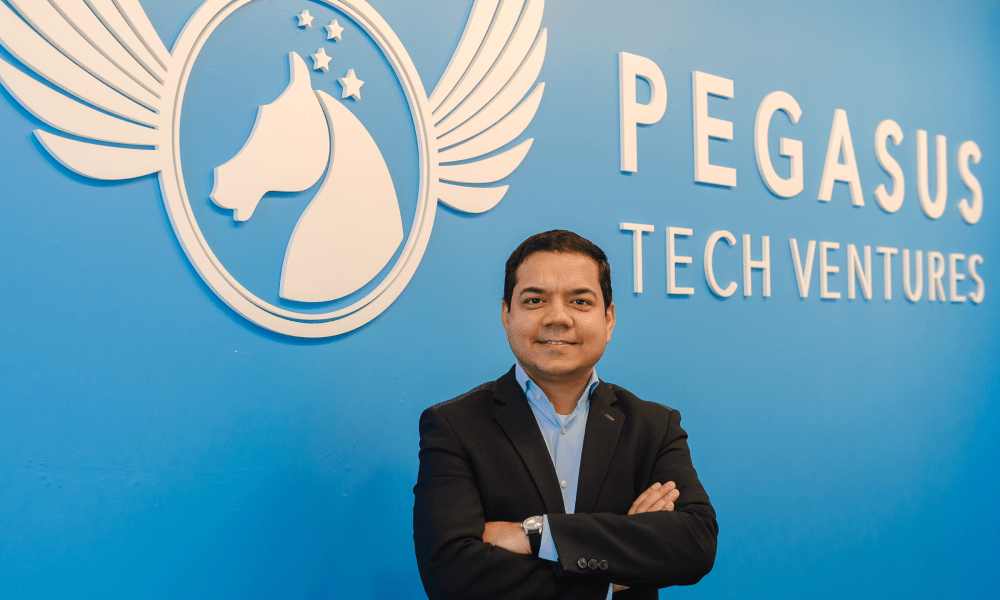
It’s the latest sign that legacy Japanese companies, long stereotyped as laggards in digital transformation, are racing to tap the AI boom. “They’re sweating,” Anis Uzzaman, the founder and CEO of Pegasus, tells Fortune. “They know the AI revolution is happening. They’re behind the U.S. and the Europeans when it comes to adoption.”
Pegasus offers what it calls “venture-capital-as-a-service,” administering corporate venture capital for large companies, primarily in Asia, and connecting them to startups its clients would struggle to reach on their own.
“Companies are getting slowed down by their current R&D, and they’re looking for ways they can innovate faster to keep up with the rest of the world,” Uzzaman says. “One way to do that is to partner with good startups, but they don’t know how to get hold of them.” Then there’s the language barrier: Most Japanese companies operate in the local language, which can isolate them from English-based materials in Silicon Valley.
Japan’s AI infrastructure spending is expected to surpass $5.5 billion this year, according to a forecast from the International Data Corporation. And more investments are coming: Microsoft on April 3 pledged to spend another $10 billion on Japan’s AI infrastructure over the next four years.
From a Nagasaki stadium to OpenAI
Japanet, founded in 1986, is one of Japan’s largest mail-order shopping networks, similar to QVC in the U.S. The company has also recently embarked on an ambitious diversification program, adding a travel and cruise business, as well as professional sports teams.
Initially, Japanet was looking for technology to bring back to its home base of Nagasaki, to be used in the city’s new soccer stadium.
“When they said, ‘we need a security system for the stadium,’ we looked at every relevant security‑system startup and found the ones that would fit their stadium,” Uzzaman says. “They were able to have good faith in this company, made some investments, and then integrated the technology into the stadium.”
That initial success pushed Japanet to consider more frontier ventures, toward companies like SpaceX, OpenAI, and Anthropic. “These companies are growing at a speed we have never experienced in the venture capital industry,” Uzzaman says.
“We are excited to continue leveraging this fund to seek out the world’s latest technologies and create new value that brings more joy and enrichment to our customers’ everyday lives,” Akito Takata, president of Japanet Group, said in a statement announcing the expansion of the fund.
CVCs on the rise in Japan
Corporate venture capital is now a key part of the startup economy, with company funds participating in a large share of global funding rounds.
Pegasus, founded in 2011, has invested in nearly 300 startups with 76 exits, including 25 IPOs. It manages about $2 billion in assets. Its client roster spans video-game publishers Sega and Bandai Namco; Taiwanese PC maker Asus; Japanese trading house Sojitz; U.S. refiner Marathon Petroleum; and snack maker Calbee. Companies provide most of the capital; Pegasus contributes a nominal share for compliance reasons and manages the investments.
Japan’s outsized footprint among Pegasus’s customer base is partly due to Uzzaman’s own background in the country, having grown up and gone to school there.
But there’s structural reasons too, like Japan’s demographic decline and a shrinking working-age population. “A lot of Japanese corporations come to us and say they don’t have enough people working in manufacturing or in factories. So they’re asking for physical AI, robotics, automation solutions,” Uzzaman explains.
Still, much of the interesting innovation, at least according to Pegasus, is happening in the U.S. Uzzaman says roughly 70% of Pegasus’s investment goes to U.S. and European startups.