
Politics
Payless — generics — reciprocal — subsidies — SNAP


Payday goes away
The federal shutdown hit an ominous milestone for government employees. Today marks the first time workers, whether on Capitol Hill or in offices across the country, will miss a whole paycheck.
Already, many of the staff aren’t working or being paid, including all interns and part-time personnel in D.C. legislative offices. A number of federal offices providing services across the country went dark for most of October as employees stayed home without pay. According to the Bipartisan Policy Center, more than 700,000 federal employees.
But around the same number continue to work, even though they have no money coming their way until Congress reaches a deal to fund the government. May had Oct. 10 paychecks impacted, but the Oct. 24 pay period will mean no money regardless of whether workers, including air traffic controllers and transportation security officers, are clocking in for their 40-hour workweek.
Even as Democrats blame Republicans for remaining intractable on health care and Republicans point fingers at Senate Minority Leader Chuck Schumer for continued votes to keep the government closed, members of the legislative delegation cheered the professionalism of workers.
“I stopped by (Northwest Florida Beaches International Airport) last week to thank TSOs who continue to show up to work every day despite not receiving a paycheck during the Schumer Shutdown,” posted Rep. Neal Dunn, a Panama City Republican. “Their professionalism and dedication to keeping our skies safe is appreciated — they deserve better than this.”
But Democrats noted that, despite lawmakers being among those who will still receive pay, most representatives on the House side are not required to even come to Washington for their jobs.
“House Republicans are refusing to even come to work,” Rep. Debbie Wasserman Schultz, a Weston Democrat, told Forbes. “How do you resolve a problem, how do you come to a compromise, if one side isn’t even coming to work?”
Some Republicans have said that lawmakers shouldn’t be paid while their staff dips into savings. Rep. Scott Franklin, a Lakeland Republican, announced on Thursday evening that he will refuse to accept a paycheck until federal employees receive one.
“While my team and I continue serving our constituents throughout this ordeal, I will not accept pay when our troops, federal workers, and my own teammates are providing essential government services without compensation,” he said.
The House has done its duty by passing a clean continuing resolution to keep the government open. Meanwhile, Senate Democrats and every Democrat in the Florida delegation are willing to let Americans suffer, using them as leverage for political gain. We cannot afford to play these games with the livelihoods of hardworking Americans.”
At a virtual town hall, Rep. Lois Frankel, a West Palm Beach Democrat, suggested it’s not that simple, and that Republicans must be willing to pass a bipartisan budget. “The reason the budget has not passed yet is because it would strip millions of Americans of health care,” she said.
But in an interview with ABC 7, Rep. Vern Buchanan, a Longboat Key Republican, said the economic problems directly resulting from the shutdown are severely impacting the state.
“A lot of our [federal] employees — across the state, 155,000 are furloughed — if they’re not getting paid, they’ve got to worry, our members shouldn’t get paid either,” he said. “We need to have them step up. As Republicans, we have voted to open the government. On the other side, we’ve got five or six Senators holding it up, Democratic Senators.”
Drug dependency
Just 37% of medicines consumed in the U.S. last year came from American manufacturers, down from 83% as recently as 2002. That’s according to a new report from the Senate Special Committee on Aging, chaired by Sen. Rick Scott.
“The United States’ overreliance on foreign-made generic drugs, especially those made in adversarial nations, is a very real threat to all Americans, but especially our aging population,” the Naples Republican said.

“Not only have we had many recorded cases of these imported, generic drugs being contaminated and causing death and injury, if Communist China, our adversary, or India shut off the flow of these essential drugs, the U.S. would only have months of prescription drug supply, forcing us to begin rationing drugs and turning away all but the most in need within a matter of weeks.”
Scott released the bipartisan report along with Committee Ranking Member Kirsten Gillibrand, a New York Democrat. Both agreed that steps must be taken to ensure a supply line for drugs that is firmly grounded in the U.S.
“In the richest country in the world, our constituents shouldn’t have to worry about the safety and availability of the drugs they need to fight devastating diseases like cancer,” Gillibrand said.
Scott said it was particularly alarming to see China produce such a high percentage of certain generic drugs, including 95% of ibuprofen, 70% of acetaminophen and 45% penicillin imports and 90% of active pharmaceutical ingredients originating from China.
“Our seniors deserve better, and this report is just the beginning as we expose this national security and public health crisis and how to fix it by increasing Food and Drug Administration oversight and bringing generic drug production back to America,” Scott said.
“Congress has to work with the Trump administration and act now to make sure that Americans have safe and high-quality drugs and to secure the prescription drug supply chain.”

Reciprocity shot
Sen. Ashley Moody joined an effort to allow gun owners to carry concealed weapons in other states.
The Plant City co-sponsored the Constitutional Concealed Reciprocity Act, a bill from Texas Republican Sen. John Cornyn that would make a gun owner’s rights in one state “reciprocal” in any other state that also permits the carrying of concealed firearms.

“It makes no sense that we allow state lines to infringe on citizens’ rights to bear arms,” Moody said. “I’m proud to co-sponsor the Constitutional Concealed Carry Reciprocity Act and ensure individuals with concealed carry privileges can exercise those rights across state lines. This common sense legislation will cut down arbitrary barriers and uphold Americans’ rights to keep and bear arms.”
Proposed bills in the Senate and House both seek to establish what is considered a “qualified individual” who can carry a concealed firearm. There are some technical differences in that definition in the bills being considered in each chamber.
Moody said she likes the Senate measure, though, which has several key stipulations, including: allowing individuals with concealed carry privileges in their home state to exercise those rights in any other state with concealed carry laws; treating state-issued concealed carry permits like driver’s licenses, where an individual can use their home-state license to drive in another state, but must abide by that other state’s speed limit or road laws; and protecting state sovereignty by not establishing a national standard for concealed carry.
Paying the difference
For those worried about Affordable Care Act subsidies, Scott offered an alternative solution.
He said it’s easier to send money to people currently benefiting from the subsidies.
“We could fix health care pretty simple. Let’s just say: let people buy what they want. If you’re entitled to a subsidy under the original Obamacare, give it to you in cash so you’re a buyer of health care,” Scott said on “Mornings with Maria.”
The Senator believes people “can buy health care cheaper many times if you just go buy it yourself, rather than go through an insurance plan.”

It’s uncertain whether Scott believes people should simply go to cash pay rather than have plans, or whether this fix would lead to socialized health savings accounts. But odds are these concepts wouldn’t have a path to become reality before new health plans take effect in January.
Scott’s constituents face uncertainty and grim choices amid the federal shutdown, with the option to go without health insurance looming.
Alexis Bakofsky, the Deputy Commissioner of Life and Health Insurance for Florida’s Office of Insurance Regulation, said enrollment could be lowered by 25% to 30% if subsidies are terminated, as Republicans prefer.
Currently, 4.7 million Floridians have Affordable Care Act individual insurance, meaning 1.4 million people who have insurance this year could be uninsured in 2026.

SNAP stopgap
If a government shutdown continues into November, it could mean money stops flowing for the Supplemental Nutrition Assistance Program (SNAP), including for some 3 million Florida recipients.
Rep. Maxwell Frost, an Orlando Democrat, sent a letter to Gov. Ron DeSantis and leaders of the Florida Legislature urging them to step in and address the matter.
“Floridians are already dealing with worsening unemployment and soaring grocery prices. Food banks in Central Florida have already been reporting a record number of neighbors in need and strained resources,” Frost wrote.

“For the millions of Floridians who rely on SNAP, the Republican government shutdown makes worse the result of President Trump’s so-called ‘One Big Beautiful Bill,’ which will cut off an estimated 180,000 Floridians from SNAP because expanded, irrational and cruel new work requirements now include people over 60, young people leaving foster care and veterans. Because of Florida’s high error rate, come 2027, Florida will have to find an estimated $340 million to fund the state’s cost share of SNAP under the new law as well.”
He urged Florida leaders to call a Special Session and address the funding lapse.
“But our residents deserve a plan in the case that President Trump lacks the willingness to deliver,” Frost wrote. “Please respond to this letter, not in writing, but in action, by holding a Special Session and funding SNAP for Florida.”
Detained in Israel
A Florida teenager has remained in Israeli military custody since February, and Democrats in the Florida delegation say the State Department needs to apply pressure on its government.
Reps. Kathy Castor, a Tampa Democrat, and Frost co-led a letter to Secretary of State Marco Rubio and Ambassador to Israel Mike Huckabee regarding the continued detention of 16-year-old Mohammed Zaher Ibrahim.

“His family has received updates from U.S. embassy staff and former detainees who described his alarming weight loss, deteriorating health, and signs of torture as his court hearings continue to be routinely postponed. His family reports that Mohammed has lost nearly a quarter of his body weight and contracted scabies after being detained in Megiddo Prison and now in Ofer Prison,” the letter states.
It noted that both Frost and Castor met with the boy’s family. Ibrahim’s mother told The Washington Post she had hoped her son would be released to the family’s West Bank home as part of a prisoner exchange during the recent ceasefire negotiated between Israel and Hamas.
Israel first detained Ibrahim on accusations that he threw rocks at settlers. Still, the Democrats’ letter called the charges into question, saying that officials presented no evidence to support them.
“Palestinians are subject to military law in the West Bank and are tried in military courts where there have been well-documented concerns about Palestinians not receiving fair due process,” the letter reads. “Mohammed is also the first cousin of Saifullah Kamel Musallet, the 20-year-old U.S. citizen who was reportedly beaten to death by Israeli settlers in July 2025. To date, no one has been arrested (in connection with) his killing.”
A State Department spokesperson said the administration is working on the matter.
“Whenever a U.S. citizen is detained abroad, the Department works to provide all appropriate consular assistance,” the official said. “The State Department is tracking Mr. Ibrahim’s case closely and working with the government of Israel on this case. We take seriously our commitment to assist U.S. citizens abroad and are providing consular assistance to Mr. Ibrahim and his family.”

Sanctioning Putin
The Trump administration this week unveiled a series of new sanctions on Russia as it pressures the superpower to end its war with Ukraine.
Rep. Brian Mast, a Stuart Republican who chairs the House Foreign Affairs Committee, said that was an appropriate use of economic tools. While it has led to a rise in oil prices, Mast said the measures put the onus on Russian President Vladimir Putin to end the conflict. And Putin deserves the scorn he has received from around the globe, he added, suggesting that other nations follow Trump’s lead.
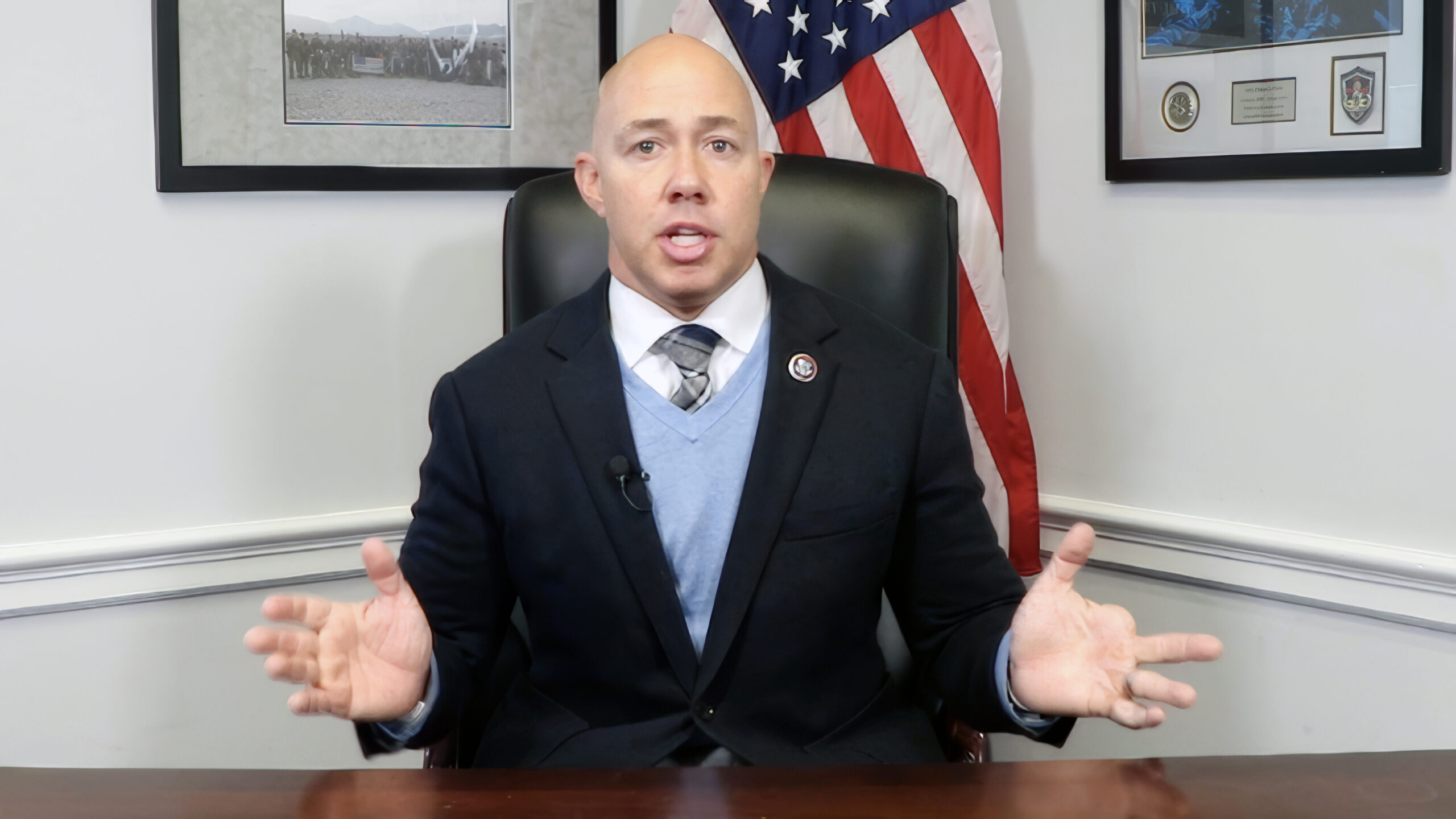
“Not only is Putin’s daily choice not peace or reconciliation, it is instead bombing kindergartens,” Mast said. “A nation buying oil from Russia funded that attack. There will now be a steep cost to financing Russian attacks.”
Honoring hostages
U.S. hostages, or their remains, were released by Hamas as part of the recent ceasefire deal. But legislation filed this week by Rep. Jared Moskowitz reminds many Americans that many remain politically imprisoned around the world, and several died before ever seeing freedom again.
The Parkland Democrat co-sponsored the Remembering American Hostages Act with Rep. Tom Kean, a New Jersey Republican. The bill calls for the Hostage and Wrongful Detainee flag, initially championed by the Bring Out Families Home campaign, to be flown on several dates.

Those include: Nov. 4 and Jan. 20, the start and end dates in the Iranian hostage crisis from 1979 to 1981; Aug. 19, the date of freelance journalist James Foley’s murder by ISIS in 2012; and Oct. 7, the date of the 2023 Hamas terror attacks, where hundreds were taken hostage.
“Each day we fly this flag is a reminder of those who have been unjustly taken hostage and a reminder to the world that America doesn’t forget its own,” Moskowitz said. “This bipartisan effort will ensure that the Hostage and Wrongful Detainee flag remains a visible symbol of our nation’s commitment to bring Americans home and to honor those who never made it back.”

Education funding fight
Every Democrat in Florida’s congressional delegation joined together to demand that the Education Department rescind a threat to withhold funding for the Latinos In Action program.
Wasserman Schultz, Democratic co-chair of the Florida Congressional Delegation, led a letter to Education Secretary Linda McMahon and to Kimberly Richey, Assistant Secretary for Civil Rights for the Education Department. All eight House Democrats from Florida co-signed the message.

“We write in strong opposition to the Department of Education’s letter on Sept. 24, 2025, that threatened to withhold $30 million in federal magnet school funding from Broward County Public Schools (BCPS) over an alleged Title VI compliance violation regarding their Latinos in Action curriculum,” the letter reads.
“The withholding of funds is based on incomplete or erroneous information, and documentary evidence indicates this decision is based on a grossly inadequate and incomplete investigation conducted by the Department’s Office for Civil Rights. We urge the Department to rescind this decision and afford BCPS the opportunity to prove their partnership with Latinos in Action is in compliance with Title VI.”
Wasserman Schultz called the decision wrong on numerous levels.
“It’s clear the Trump administration targeted this highly successful program based on inaccurate information as part of its drive to attack any effort aimed at giving all students a chance to excel and succeed,” the Weston Democrat said.
“The Education Department, or what’s left of it, clearly acted prematurely by threatening to withhold funding from our local schools, and it all appears to be based on erroneous information, an incomplete investigation, and a purely political agenda. Latinos in Action has, for nearly a decade, helped all our students grow as scholars and leaders. This baseless decision by the Department is an attack on our students’ educational opportunities.”

Public transit push
South Florida lawmakers cheered the arrival of rapid-transit buses in Miami-Dade County. Rep. Carlos Giménez, who originally launched the push for the Miami-Dade County Metro Express Bus Rapid Transit System while serving as county Mayor, joined with officials to inaugurate the system. He said the project, funded in part with $109.4 million in federal funding, had the potential to revolutionize public transit in the region.
He praised Rep. Mario Díaz-Balart, a Hialeah Republican on the House Appropriations Committee, for securing the needed funding for the project. Díaz-Balart also attended the ribbon-cutting event.

Another roughly $100 million in state funding came in for the project, with the county paying the extra $100 million to bring the system online.
Giménez said many ask why the county didn’t pursue a rail project, but that officials would first need to demonstrate the ridership exists for such an endeavor. Those who want trains in Miami-Dade, he said, need to prove it by riding the high-speed bus routes.
“This is as close to a rail system as you’re going to get,” the Miami-Dade Republican said. “You go into a nice, air-conditioned space. You wait for your ride. The ride comes in, you go in. You’re prepaid. You don’t have to worry about fares, etc. You go on each intersection. You get, you know, preferred access, in other words, that you know. You don’t get red lights for the most part. And you have a nice, clean, smooth ride, quiet, because these are all electric.”

On this day
Oct. 24, 1945 — “United Nations forms” via the United Nations — As World War II was about to end, nations were in ruins, and the world wanted peace. Representatives from 50 countries gathered at the United Nations Conference on International Organization and drafted and signed the U.N. Charter. Four months after the San Francisco Conference ended, the United Nations officially began when it came into existence after its Charter had been ratified by China, France, the Soviet Union, the United Kingdom, the United States and by a majority of other signatories.
Oct. 24, 1973 — “Richard Nixon vetoes war powers resolution” via History.com — President Nixon vetoes a resolution that would limit presidential power to commit armed forces abroad without Congressional approval. The bill, introduced by Sen. Jacob K. Javits of New York, required the President to report to Congress within 48 hours after the commitment of armed forces to foreign combat and limited the time they could remain there to 60 days without Congressional approval. The legislation was an attempt by Congress to regain control of the power to make war. Nixon claimed that the bill imposed “unconstitutional and dangerous restrictions” on presidential authority. Nevertheless, Congress passed the law over Nixon’s veto.
___
Peter Schorsch publishes Delegation, compiled by Jacob Ogles, edited and assembled by Phil Ammann and Ryan Nicol, with contributions by Drew Dixon and A.G. Gancarski.
Politics
South Florida home sales show upbeat increases for Palm Beach and Broward counties, Miami-Dade still struggling




The Los Angeles Browns Almost Came To Life 84 Years Ago Today

Trump says Netflix-Warner Bros. deal ‘could be a problem’

Donald Trump, Sylvester Stallone Lead Star Arrivals at 48th Kennedy Center Honors
-

 Politics8 years ago
Congress rolls out ‘Better Deal,’ new economic agenda
-
Entertainment8 years ago
New Season 8 Walking Dead trailer flashes forward in time
-
Politics8 years ago
Poll: Virginia governor’s race in dead heat
-
Entertainment8 years ago
The final 6 ‘Game of Thrones’ episodes might feel like a full season
-
Entertainment8 years ago
Meet Superman’s grandfather in new trailer for Krypton
-
Politics8 years ago
Illinois’ financial crisis could bring the state to a halt
-
Business8 years ago
6 Stunning new co-working spaces around the globe
-
Tech8 years ago
Hulu hires Google marketing veteran Kelly Campbell as CMO