Connect with us

Politics

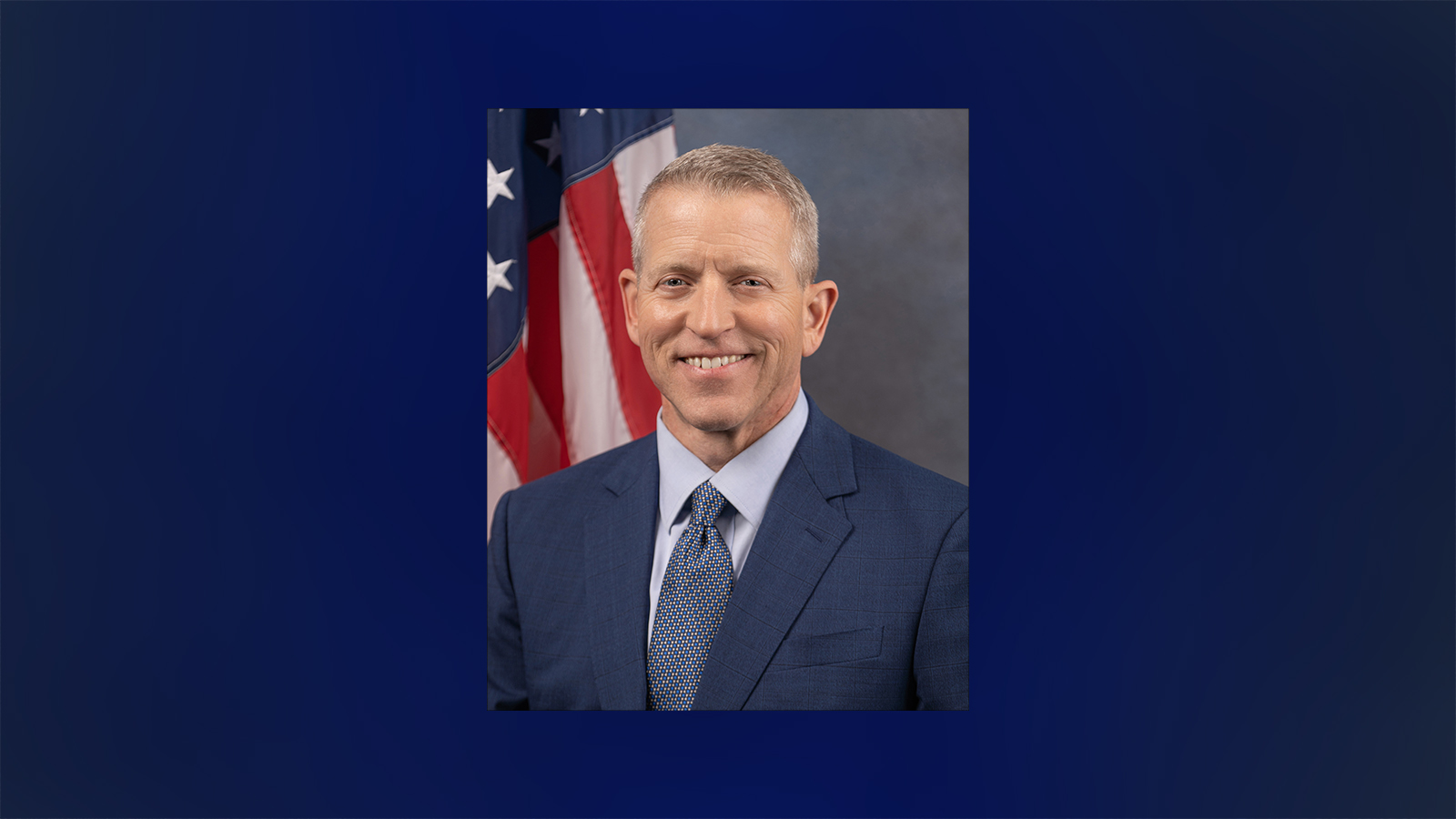
Paul Renner rebukes rumor of UNF presidency interest
Published

on


Don’t expect a former House Speaker and current candidate for Governor to swoop in as President of the University of North Florida.

“Running for Governor. Period. Full stop. Some politicians run for one office to land in another. Our next Governor must put Florida First and that will remain my sole focus,” Paul Renner told Florida Politics.

UNF’s President Moez Limayem is the sole candidate in the running for the presidency of the University of South Florida, creating a likely opening at the Jacksonville school and stoking speculation about whether Renner might want the job.

Renner’s interest in being President of the University of Florida was revealed earlier this year at a meeting of the Board of Governors, to which he was appointed by Gov. Ron DeSantis.

But apparently that interest doesn’t extend to leading UNF in the event the current president leaves.

There is precedent for a candidate for Governor leaving the race for a political appointment from the winner.

Back in 2018, Richard Corcoran, a former House Speaker like Renner, briefly ran for the GOP nomination for Governor before leaving the race and backing Adam Putnam against DeSantis.

Though Corcoran made the wrong bet then, it paid off.

He was appointed Education Commissioner, then became President of New College.

However, it doesn’t appear Renner is inclined to follow Corcoran’s path.

Polling from the conservative James Madison Institute shows Renner has ground to make up if he wants the nomination. He trails U.S. Rep. Byron Donalds 29% to 9%, with 62% undecided.

Pollsters also considered what the race may look like if other major Republicans throw their hats in the ring.

When given a list of options that includes the First Lady, Lt. Gov. Jay Collins and Agriculture Commissioner Wilton Simpson, pollsters find Casey DeSantis with a lead of 26%, while Donalds takes just 23%. With that crowded field in play, Renner would win 7% while Collins and Simpson each receive 2% support.

Either Donalds or Renner would have an edge on David Jolly, a former Republican Congressman-turned-MSNBC commentator and the only major candidate currently seeking the Democratic nomination for Governor.

The poll shows 36% of registered voters would support Donalds over Jolly, who would win 32%, while independent Jason Pizzo would receive 4%. Renner, the poll shows, would take 34% of the vote to Jolly’s 33% and Pizzo’s 5%.

Gov. DeSantis, who looks likely to back Collins or his wife, says Renner’s decision to get in the race was “ill-advised.”

But Renner said it didn’t faze him.

“What I know is that the Governor wants what’s best for the state and I’m confident that we’ll have his support if I’m the nominee,” Renner said.

What’s clear from Renner’s comments Tuesday is that even the promise of a university presidency won’t stop him from testing that thesis and his viability with voters.

___

Jacob Ogles of Florida Politics contributed to this report.


Source link

Continue Reading

Politics

Supporters rally behind Ken Welch as re-election bid looms

Published

on


As St. Petersburg Mayor Ken Welch prepares to seek a second term, some political observers have questioned whether his first four years delivered enough progress to merit re-election.

Longtime community leaders like Rep. Michele Rayner, Pinellas County Commissioner Rene Flowers and Rev. J.C. Pritchett say the answer is already clear: No other candidate brings the same mix of lived experience, policy acumen and unshakable commitment to the city’s underserved neighborhoods as Welch.

Elected in 2021 as the city’s first Black Mayor, Welch came into office with a sweeping promise to build an inclusive St. Pete. His agenda emphasized affordable housing, equity and the long-delayed redevelopment of the Historic Gas Plant District — the once-thriving Black neighborhood razed in the 1980s to make way for Tropicana Field

The symbolism of Welch — whose family lost their lumberyard business in that very neighborhood — taking the lead on its reimagining is not lost on his supporters.

“The Gas Plant is in his fingernails,” said Pritchett, a longtime pastor and civic leader. “He realizes how sacred that is and how important that is. He has heard the stories, from his family and from residents, about what it was like to be displaced from your home and be promised for almost 50 years an answer and it not be delivered.”

While some recent coverage has spotlighted perceived stumbles — including storm recovery challenges, City Hall turnover, and the Tampa Bay Rays’ withdrawal from the redevelopment deal — Welch’s allies say the record tells a different story: a leader navigating complex crises with pragmatism, restraint and a steady hand.

Pritchett, whose ministerial alliance endorsed Welch in 2021, said the Mayor remains the right leader for a city on the edge of transformation.

“I think he ought to be able to have the opportunity to really lean into the work that he started,” he said.

Already, City Council member Brandi Gabbard has announced she will run against Welch. A well-known Realtor and moderate Democrat, Gabbard is considered a credible contender with appeal across ideological lines. She may not be the only challenger; former Governor and U.S. Rep. Charlie Crist is also reportedly weighing a bid for the office.

Rayner, who has known Welch for much of her life, said he is uniquely suited to carry forward the Gas Plant vision because of his roots in the community.

“He understands the nuances of what this means, not only for St. Pete at large but for Black people who did not get what was owed to them,” Rayner said. “He’s able to navigate the sensitivities around that issue in a way no one else can.”

Under Welch’s leadership, the city launched an ambitious redevelopment plan with the Tampa Bay Rays and Hines to transform the 86-acre site into a new neighborhood featuring affordable housing, a ballpark and cultural amenities honoring the displaced Gas Plant community.

But after hurricanes battered the city last year, causing widespread damage, the Rays pulled out of the agreement in early 2025 following Pinellas County and City Council’s decision to slightly delay bond votes.

Critics have seized on the collapse as a political liability, but supporters argue the narrative is misplaced. They say the Rays walked away from a handshake deal, not the other way around.

“When the vote happened and we thought we had a deal, Stu (Sternberg), the Mayor, and Brian Auld and others went out to celebrate, and we hugged and we shook hands,” Pritchett said. “Only to find that in March the Rays walked away from the handshake and from the covenant and from the deal.”

“It left the residents hanging, and our community is still healing from that,” he added. “They left hurt and a void and an ‘I told you so’ that has existed since 1978. This Mayor did not pause, this Mayor was not caught like a deer in the headlights. This Mayor said, ‘let’s pivot and find a solution to deliver to the residents a development for the future.’”

Flowers, a longtime Welch ally and successor after his time on the County Commission, rejected claims that storm damage or financing delays doomed the deal as “hogwash.” Her family lost a dry-cleaning business at the Gas Plant District, and she praised Welch’s efforts to revive the community’s vision for the district.

“When the deal fell through with the Rays, and of course the Gas Plant District was a part of that, initially I was very angry,” Flowers said. “I cannot tell you the number of hours and the amount of time, the amount of documents that we had to peruse through, meetings to attend and briefings for almost two years. The amount of money that’s put out on the front end with bond counsel, legal counsel, the Sports Authority.” 

Flowers maintains that damage to Tropicana Field’s roof and facilities was out of anybody’s control, and while the timing was unfortunate, the situation did not delay plans for a new state-of-the-art facility.

“That facility would have had to come down anyway, No. 1,” Flowers said. “And No. 2, the city had insurance on the facility. So it would have had to have been repaired in order for them to finish out playing in 2026, which is what is happening right now.”

“I’m sorry, I’m just calling it hogwash,” she said. “That was hogwash to say, you know, costs went up and this and that and the other. But they could never show us on paper where their contractor and their developer said it went from this many million to this much. They couldn’t show it because it didn’t exist.”

With development rights now back in the city’s hands, Welch is pushing forward. He’s prioritized building affordable senior housing, expanding the Woodson African American Museum, and exploring new convention and mixed-use options. 

A new request for proposals is expected to be finalized early next year after the City Council requested additional time for potential developers and pumped the brakes on a more aggressive timeline set by Welch this year.

“He’s going to make a decision sometime in January or early February,” Flowers said. “But that’s on those 86 acres, we can move forward with that, we don’t have to wait and see what’s going to happen with the Rays.”

“We don’t have to focus on Tropicana Field until the new owners make their play,” she said. “That’s up to them. But what we can focus on is the Gas Plant district. They’re going to be playing in that dome, we know that, through 2026. They may have to play there a little longer because wherever they decide to build they’ve got to build it before they can go.”

Beyond the Gas Plant, Welch’s administration has advanced several measurable goals. In 2024 alone, the city supported 281 new affordable housing units, helped 193 homeowners with essential repairs and assisted 87 first-time buyers with down payments. His team launched a $3 million utility relief program that served more than 7,600 renter households and invested $1.5 million into minority- and women-owned small businesses through the South St. Pete CRA.

When Hurricanes Helene and Milton hit within weeks of each other last year, Welch led a cleanup effort that cleared more than 2 million cubic yards of debris in under 90 days and secured $159 million in federal recovery funds. Critics were quick to criticize the speed of the cleanup, they even labeled the debris “Welch piles,” but progress reports show the city met or exceeded its benchmarks, a point his supporters say speaks to his quiet effectiveness.

“Besides ambition, I would like to see opposing candidates point to the issues that would make one decide that he should not be re-elected for another four years,” Pritchett said. “If you want to say it’s hurricane debris, so be it, but every time there’s a challenge he’s delivered.”

Welch has also been criticized for complying with a state order to remove intersection murals featuring racial justice and Pride themes, a decision that drew accusations of cowardice from some activists. Supporters say that view ignores his duty to protect the city from multimillion-dollar funding cuts threatened by the Florida Department of Transportation for noncompliance.

“Activists and community leaders have the privilege of breaking the law and challenging Tallahassee’s decisions,” Pritchett said. “The Mayor has taken an oath to follow the law and to be an example of civic responsibility. It’s performative political rhetoric to suggest the Mayor would break the law and lay over the murals to protect them temporarily from being removed.”

Rayner agreed, describing Welch’s approach as “principled and pragmatic.” His creation of the Office of Equity and Inclusion, and continued support for leadership positions like the city’s LGBTQ+ Liaison reflects his commitment to inclusion despite popular rhetoric trumpeted by right-wing politicians. Those efforts have helped the city maintain a perfect score on the Human Rights Campaign’s Municipal Equality Index.

“He’s not kowtowing to bullying out of Tallahassee,” Rayner said. “He is answering the call of the people that elected him and not answering the call of some performance politics of the state legislature. What I appreciate about Mayor Welch is he doesn’t say what is politically advantageous or expedient. He is very principled and character-driven. And I think that’s why you see him do the things that he does.”

Welch’s allies also reject claims of a toxic workplace culture at City Hall, citing the Mayor’s adherence to process. He placed his former Deputy Mayor Stephanie Owens on leave during an internal investigation, prompting her to resign amid bullying allegations. Former Communications Director Janelle Irwin Taylor, who is now a senior staff member for Florida Politics, leveled the allegations against Owens.

Former Managing Director of Economic and Workforce Development Brian Caper, one of the city leaders behind work to redevelop the Historic Gas Plant District and on the canceled deal with the Tampa Bay Rays, also resigned his position after findings that he sexually harassed a subordinate in his department.

“Public service is like any other sector,” Pritchett said. “When a complaint is filed the HR department investigates and interviews. Unions and contracts are not controlled by the Mayor. Following the advice of legal and following proper procedures is the responsibility of the Mayor for the hundreds of employees of the city.”

As Welch positions himself for re-election, his campaign is expected to emphasize results over rhetoric: a city that has rebuilt from two major storms, launched major equity and resilience initiatives, and remained on strong fiscal footing amid statewide political turbulence.

“He measures twice and cuts once; he really wants to make sure he’s getting things right for the people,” Rayner said.


Source link

Continue Reading

Politics

Roger Chapin, Mira Tanna battle in Orlando City Council runoff election

Published

on


Roger Chapin and Mira Tanna are going head-to-head in Tuesday’s Orlando City Council runoff after a margin of only 14 votes separated them in last month’s crowded General Election.

Chapin holds the big fundraising edge and the advantage of having name recognition as the son of former Orange County Mayor Linda Chapin. He also carries the support of the establishment, including Orlando Mayor Buddy Dyer and incumbent City Commissioner Robert Stuart, who didn’t seek re-election.

Tanna’s strengths are her grassroots campaign and the endorsements of popular Orlando Democrats like U.S. Rep. Maxwell Frost and state Rep. Anna Eskamani, who are lending their support to help her knock on doors and engage with voters.

Early voting at the Supervisor of Elections office, 119 W. Kaley St., runs 9 a.m. to 3 p.m. on Saturday and 11 a.m. to 3 p.m. on Sunday. Election Day precinct polls are open 7 a.m. to 7 p.m. Tuesday.

Chapin and Tanna are both Democrats, and the winner will be the first new City Commissioner to represent District 3 in 20 years. The four-year term currently pays $79,343 annually for the nonpartisan seat. District 3 spans College Park, Audubon Park, Baldwin Park, Coytown and other downtown area neighborhoods north of Colonial Drive.

Tanna works as the Orlando city grants manager. She commutes to work on the bus, and is focused on fixing Central Florida’s public transit.

Chapin is a public affairs and public relations consultant. He said his biggest client is Mears Transportation, his former employer. His priorities include the Main Street Districts on Ivanhoe Boulevard and Edgewater and Corrine drives.

In making his case to voters, Chapin pointed to his long résumé of public service. After a failed bid for Orlando City Council in 2002, he got involved on the Municipal Planning Board, Downtown Development Board, Orlando Utilities Commission and more.

Chapin argues he is the most experienced candidate in the race and would “govern from the middle” to work with both Republicans and Democrats, citing Dyer as an example of a politician who can work both sides of the aisle to get things done.

Tanna’s supporters say she is the right fit and has the vision to help make changes as Orlando faces big challenges in a lack of affordable housing and congested traffic. They also say bus routes and SunRail don’t meet enough people’s needs. Tanna also pointed to her city career, saying she knows City Hall and is ready to jump in on Day 1.

Tanna’s endorsements include the Young Democrats of Orange County, Ruth’s List, the Sierra Club, the Orange County Classroom Teachers Association and Ruth’s List Florida. Endorsements also include state Sens. LaVon Bracy Davis and Carlos Guillermo Smith, as well as state Reps. Johanna López, Rita Harris, RaShon Young. Orange County Commissioners Nichole Wilson and Mike Scott and Orange-Osceola State Attorney Monique Worrell are also backing Tanna.

Chapin won endorsements from the Orlando Sentinel, the Central Florida Hotel and Lodging Association, the Orlando Regional Realtor Association and unions representing police and fire. Orange County Sheriff John Mina also is backing Chapin.

Chris Durant, who placed third, just out of reach in the Nov. 4 General Election, has endorsed Chapin and is being paid $1,500 to join him on the campaign trail.


Source link

Continue Reading

Politics

Governor’s budget will propose state replacing property tax revenue for rural counties

Published

on


One man’s tax cut is another man’s socialism.

Gov. Ron DeSantis is embracing wealth redistribution as part of his final budget proposal as a way of sweetening his pitch to eliminate homestead property taxes.

He justifies it by saying he’s got the money to spend to help “rural counties” by paying to make up those lost tax revenues.

“We have 32 fiscally constrained counties. You know, Miami-Dade, Palm Beach, these are powerhouses. I’m putting in my budget the revenue to totally backfill every one of those rural counties. So they’re not going to miss a single thing,” the Governor said on “Fox & Friends.”

“I’ve got a big surplus. Why would I not do that to be able to help them?”

The Governor’s budget tease is intended to support his proposal — which, so far, is only in words — to put a constitutional amendment on the ballot next year to let voters get rid of the tax on homesteaded, owner-occupied houses and condos.

It comes as four separate tax abatement proposals are moving in the House.

One measure (HJR 201) would eliminate all non-school property taxes for residents with homestead exemptions.

Another (HJR 211) would allow homeowners to transfer their accumulated Save Our Homes benefits to a new primary residence, without portability caps or restrictions on home values.

Another proposal (HJR 205) would exempt Florida residents 65 and older from paying non-school homestead property taxes. In its current form, the measure has no long-term residency requirements for beneficiaries and no income threshold.

There’s also HJR 209, which would grant an additional $200,000 non-school homestead exemption to those who maintain multiperil property insurance, a provision that proponents say will link relief to insured, more resilient homes.

The Governor and his allies are decrying the House push, saying multiple ballot items would only confuse voters.

DeSantis’ suggestion that Miami-Dade and Palm Beach should shoulder burdens for towns like Melrose and Palatka is particularly provocative given that his appointed Chief Financial Officer Blaise Ingoglia has traveled to both big counties and alleged wasteful spending.

The executive branch budget proposal is always significantly modified in the legislative process, of course. But this pitch will force urban and suburban GOP lawmakers to decide whether their constituents should pay even more of the bills for parts of the state that haven’t figured out how to sustain themselves without state help, setting up a conflict between them and a lame-duck chief executive.


Source link

Continue Reading

Trending

Copyright © Miami Select.