Connect with us

Sports

Paul Hunter at the Masters: three titles and a legacy that endures

Published

on


Paul Hunter

Twenty years on from his final Masters appearance, and almost two decades after his death, it’s not the trophy that bears his name that keeps Paul Hunter’s legacy alive

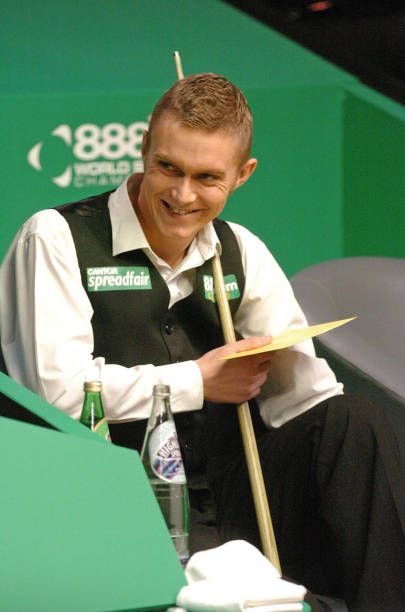
Paul Hunter arrived in snooker clearly cut from a different cloth. With his distinctive hair and quiet sense of style, he stood apart in a sport defined by a more conservative style. While others moved through the game with steady precision, Hunter carried a presence that suggested the game might just bend to him – that behind the measured shots there was rhythm, confidence, and an unmistakable individuality.

But Hunter was more than style and presence. Behind the flair lay a player determined to be the best in his own way. Not even six months into his professional career, he had reached a ranking semi-final at just 17, at the Welsh Open. Two years later, he would claim the very same title, producing a nerveless dismantling of John Higgins in the final – a remarkable feat considering Higgins would go on to win his first world title just over three months later.

But despite all this early success, and the admiration it earned from fellow players, pundits, and fans alike, it was at the Masters that the precocious Yorkshireman would truly cement his legacy.

When the Masters was his: Hunter and four years of dominance

Like most players, Hunter longed for a world championship title. He never quite reached it, cruelly undone by Ken Doherty in the 2003 semi-final when two frames from the final, having led 15–9. But if the Crucible remained just out of reach, it was at the Masters that Hunter found his true Triple Crown authority.

From 2001 to 2004, he won three titles and reached a further semi-final. Even more remarkable was the manner of those victories, with each title secured in a deciding frame after overturning significant deficits.

2001 Final: Hunter 10 – 9 Fergal O’Brien

In 2001, he trailed 6–2 after the opening session of the final, played in a first-to-10-frames format. When play resumed in the evening, Hunter produced a remarkable turnaround, compiling four century breaks on his way to victory in a deciding frame. The achievement gained an extra layer of notoriety when Hunter later revealed that, in an effort to relieve tension between sessions, he had briefly escaped to unwind with his then girlfriend.

After the victory, Hunter spoke to the press, describing the unorthodox method – one he jokingly referred to as “Plan B.”

“Sex was the last thing on my mind. I just wasn’t in the mood. But I had to do something to break the tension. It was a quick session – around 10 minutes or so – but I felt great afterwards. She jumped in the bath, I had a kip and then played like a dream. I reeled off four centuries in six frames. I won easily.”

2002 Final: Hunter 10 – 9 Mark Williams

The following year, Hunter returned as top seed but again had to go through the mill to reach a second successive final, edging through both his quarter-final and semi-final in deciding frames before facing Welsh firebrand Mark Williams in the championship match.

If the 2001 final had offered little margin for error, this one was even more unforgiving. He fell behind 5–0 but refused to let the match go, halting the slide by taking the sixth frame before digging in as the contest became scrappy. From there, he fought back to level matters and close it out, becoming only the third player to win back-to-back Masters titles.

2004 Final: Hunter 10 – 9 Ronnie O’Sullivan

After falling at the semi-final stage in 2003, Hunter returned to the final once more, this time facing Ronnie O’Sullivan, who had one Masters title at the time but has since gone on to hold the outright record with eight.

Any hope of an easier passage to victory was short-lived as O’Sullivan burst out of the blocks, leaving Hunter reeling. He ended the first session 6–2 behind once again, with the eight frames taking just under 100 minutes to complete.

Hunter’s ability to turn potential scar tissue into triumphs again served him well as he stayed strong despite trailing 2–7, 6–8 and then 7–9. He responded with a stunning 100 clearance, his fifth century of the final, and it proved the catalyst as he took the last two frames to become a three-time Masters champion.

Final Masters bow and the tragedy that led to a lasting legacy

Just a year after his final Masters title, Hunter was diagnosed with malignant neuroendocrine tumours and began chemotherapy. He competed at the 2006 Masters, which would prove to be his final appearance at the tournament, but lost 6–3 to Mark Williams in the first round.

His final professional match came in a first-round defeat to Neil Robertson at the World Snooker Championship in 2006. Admitting that he was in constant pain, Hunter chose to sit out the 2006–07 season to focus fully on treatment.

Sadly, he lost his battle with cancer and died on October 9, 2006, just days short of his 28th birthday.

It was a tragic loss to the sport, and players soon called for the Masters trophy to be renamed in his honour. In a widely criticised delay, World Snooker Tour did not make the change until 2017, when it was finally renamed the Paul Hunter Trophy.

But Hunter never needed his name on the trophy to be remembered. His affable nature, obvious talent and flair for dramatic comebacks had already etched his name into the minds of players and fans alike. It was a legacy built on brilliance and, though all too brief, one that will endure.



Source link

Continue Reading

Sports

Aqueduct Race 6: Let ’em Run Play of the Day

Published

on


Aqueduct race track

Let ’em Run launches new Play of the Day

Let ‘em Run is rolling out another way to stay connected with our followers and viewers by delivering more frequent horse racing insight during the week. This new approach is simple and focused. One race. One day. Lock it down. The idea is to cut through the noise, isolate a single betting opportunity, and break it down with clarity and purpose. We’ll be dropping these spot plays two to three times during the week, while still keeping our primary attention on the Late P5 every Saturday, wherever that trail takes myself and John Kostin.

For today’s edition, we head to Aqueduct and zero in on Race 6, a welcome sight for bettors at The Big A with a potential field of eight runners. That’s a solid group by recent Aqueduct standards and one that gives us both pace and value to work with. Let’s dig into the race on paper before you check out the attached clip.

Aqueduct Race 6

Race 6 goes at approximately 3:40 EST and is a one-turn mile on dirt for optional claimers at the OC50K/SAL40K level. On first glance, the pace scenario jumps off the page. There is plenty of early speed signed on, but one runner looks like he may control the race if allowed to dictate terms.

The speed of the speed appears to be the #4 Ridgewood Runner at 5-1. Jockey Chris Elliot sticks around for trainer Michelle Nevin, a barn that is quietly heating up at Aqueduct. Ridgewood Runner has posted four steady and purposeful workouts coming into this spot, signaling fitness and intent. Over the summer at Saratoga, he faced significantly tougher company and held his own, experience that should serve him well against this group. If he clears early and gets comfortable on the front end, he becomes very dangerous.

The plan is straightforward and disciplined. We’re backing our opinion without overcomplicating things.

Betting strategy
$20 Win on #4
$2 Exacta 4/All = $14
Total investment = $34

As always, bet smart, cheer hard, and remember that fast horses equal serious fun.

Until next time, Let ‘em Run.


Source link

Continue Reading

Sports

Trump and Roberston complete the round of 6-2: 2026 Masters day four summary

Published

on


Judd Trump

Judd Trump and Neil Robertson both emerged victorious in results that came as little surprise to anyone watching the 2026 Masters, winning 6–2 in a bizarre last-16 stage where all eight matches finished with the same scoreline.

Trump blew away Ding Junhui in the afternoon session, while Robertson claimed victory in the evening, ousting Chris Wakelin, who had come in as a last-minute replacement for Ronnie O’Sullivan.

The tournament itself has yet to fully ignite, but the fact that all eight matches finished with the same scoreline will go down in snooker legend. Had anyone put a single dollar on it happening, they would have walked away a millionaire.

Trump shows title pedigree with statement victory

Judd Trump 6 – 2 Ding Junhui (best of 11 frames)

Judd Trump underlined his status as one of the favourites for the Masters with a scintillating 6–2 victory over China’s Ding Junhui.

The world number one powered into a 3–0 lead over the 2011 champion, helped by breaks of 116 and 69 and some nervous play from his opponent.

Though Ding took a frame either side of the mid-session interval, it proved only brief relief as Trump produced a majestic run of three frames to seal the win, finishing with breaks of 88, 117 and 109.

Judd Trump will face Northern Ireland’s Mark Allen in the quarter-finals.

Robertson grinds past Wakelin to complete the 6-2 show

Neil Robertson 6 – 2 Chris Wakelin (best of 11 frames)

Neil Robertson did his part to keep the new status quo by defeating Chris Wakelin 6-2 in the final match in the round of 16.

The match opened with both players cueing freely and playing positively, and when they went into the interval locked at 2–2 it appeared this could be the contest to break the run of repeat scorelines.

Neil Robertson had other ideas, returning after the interval in blistering form, firing three centuries (116, 135 and 102) in four frames to claim the final quarter-final place.

Masters quarter-final line-up

All times are in GMT
  • Thursday 13:00 – John Higgins v Zhao Xintong
  • Thursday 19:00 – Judd Trump v Mark Allen
  • Friday 13:00 – Wu Yize v Xiao Guodong
  • Friday 19:00 – Neil Robertson v Kyren Wilson


Source link

Continue Reading

Sports

Lombardi Did Not Want Any Part Of The First Big Game In 1967

Published

on


Vince Lombardi would have rather been in Wisconsin than coaching his team in what is now called Super Bowl I

Lombardi would have rather have been at home in Wisconsin

Vince Lombardi wanted absolutely nothing to do with the first American Football League-National Football League World’s Championship Game. It is very ironic since the league’s championship trophy is named after him. Lombardi thought the NFL title game was the be-all, end-all NFL event. He would have rather been in Wisconsin in the middle of January, 1967 but he had a football game to coach.

Back in 1967, it was just called the “World Championship Game, AFL vs. NFL.” The game was held in the 94,000 seat Los Angeles Coliseum. The ticket prices were $12, $10 and $6 (about $116, $97 and $58 today). There were 33,000 empty seats. It was the last time a Super Bowl or the World Championship Game was not a sellout.

The first game was played on January 15th, 1967 just 26 days after the final approval of the merger between the National Football League and the American Football League. CBS and NBC televised it using the same television feed but with different announcers. The networks charged $42,000 (about $408,000 today) for a 30 second commercial. The two leagues had to put together a game in a hurry.

The two networks paid $9.5 million ($92 million today) to televise the game.

The leagues couldn’t even agree on which ball to use, so they compromised. When Green Bay was on offense, they used the Wilson “Duke” football. When Kansas City had the ball, they used the AFL sanctioned Spalding J5-V.

In 1967, the American Football League and the Kansas City Chiefs were considered to be part of a “Mickey Mouse league” by Lombardi and the NFL. Lombardi was among those thinkers who felt that “Mickey Mouse” was a putdown.

Mickey Mouse launched the Disney empire and the trademark is worth billions globally. There is some irony in that the Walt Disney Company’s ABC- TV division had the rights to broadcast the Super Bowl along with NBC, FOX and CBS under one of the past NFL-network television agreements.

Adding injury to insult, Lombardi and his Packers team practiced in Southern California before the 1967 championship game not far from Disneyland because the NFL felt that was the best way to sell tickets to the contest The AFL was the Mickey Mouse league and not worthy of being on the same field as the NFL..

“He got a lot of pressure put on him by the other owners of the National Football League. That was a bitter relationship with the AFL and NFL,”  Jerry Kramer, one of the 1967 Lombardi’s Packers offensive linemen recalled in the 1980s. “I’m not sure there still aren’t still some rivalries in that situation.

“Lombardi got calls from virtually everyone in the NFL saying we were representing the NFL and the pride of the NFL and we couldn’t be beaten.”

Lombardi even had to deal with CBS Television Network Chairman and founder and NFL partner. Lombardi was playing for the pride of CBS including Walter Cronkite, Ed Sullivan, Lucy and Red Skelton.

“I was talking to Frank Gifford years ago and he mentioned that he announced that first Super Bowl,” Kramer continued. “Gifford said he was fairly cool, fairly calm and relaxed and we went over to put his arm on Vince’s shoulder and Lombardi was shaking like a leaf.

“Gifford said that really made me nervous.”

Gifford, of course, was the CBS announcer who played under Lombardi when Lombardi was the New York Giants offensive coach (in 2026 parlance, an offensive coordinator) in the 1950s and represented the NFL. Gifford was Lombardi favorite player.

Neither CBS nor NBC bothered to keep a video of the game. Green Bay won the matchup and Lombardi was able to exhale. He did what was necessary.

Lombardi’s teams won the 1967 and 1968 contests but Lombardi didn’t get to touch the Vince Lombardi Trophy given to the Super Bowl winner. The Super Bowl became the Super Bowl in 1969 and the championship trophy was named for Lombardi following his death in 1970.

In the decades following his Lombardi’s passing, the Super Bowl became a uniquely American quasi-celebration/holiday. The Fourth of July is America’s Birthday Party but the Super Bowl is American’s excuse for a party. Supermarkets have Super sales for countless Super parties, but it wasn’t always like this.

Today there is still that one TV feed, but the game is internationally televised. Cities bid for Super Bowls years in advance. Networks put up big money for regular season games so they could get the Super Bowl once every three years.

It’s no longer NFL vs. AFL, NFL advertisers vs. AFL advertisers. CBS vs. NBC.

There were no parties, no weeklong football orgies. In fact, it wasn’t until January 1973 when Super Bowl parties took on a different life. The Commissioner’s Party was held on the Queen Mary in Long Beach, California. In 1967, no one could imagine how big the Super Bowl would become and that included Lombardi who would have rather have been relaxing in Wisconsin then coaching a game.

An excerpt from the ebook: America’s Passion: How a Coal Miner’s Game Became the NFL in the 20th Century

Evan Weiner’s books are available at iTunes – https://books.apple.com/us/author/evan-weiner/id595575191

Evan can be reached at evan_weiner@hotmail.com

Vince Lombardi


Source link

Continue Reading

Trending

Copyright © Miami Select.