
Fashion
Paris is torn between Elie Saab’s working girl and the whimsical creations of Japanese designers

Published
October 5, 2025
Japan’s leading fashion houses once again made a major splash at Paris Fashion Week on Saturday, as evidenced on the sixth day of the women’s ready-to-wear shows for spring-summer 2026 by three of the country’s most emblematic labels: Junya Watanabe, Noir by designer Kei Ninomiya, and Comme des Garçons. On the same day, Elie Saab sent his army of power women down the catwalk.
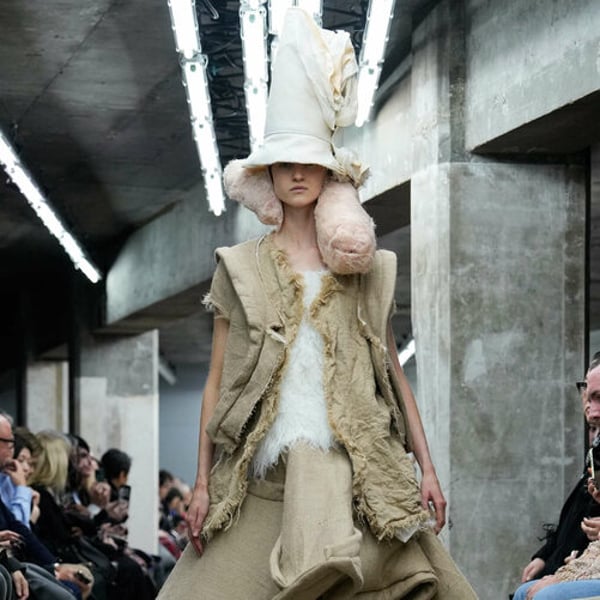
As so often, it was Rei Kawakubo‘s show for Comme des Garçons that moved us most and left the deepest impression. In today’s chaotic world, where catastrophes and human tragedies follow one after another, the designer seemed intent on returning to origins, reconnecting with the values of the Earth. Folk songs and traditional tunes accompanied the show.
A procession of amorphous, swollen silhouettes advanced, draped in great swathes of burlap, hemp or linen, hastily knotted, or in old lace sheets, curtains and bedspreads. Some jackets appeared to be cut directly from the large beige canvas sacks used to store potatoes and other produce from the land. A waistcoat and goat-hair coats completed this rustic look.
These sculptural garments, generated by the play of layering, volume and padding techniques, lent a sense of solemnity to the whole. Topped with battered top hats and cotton-wool hair in pastel shades, the models evoked rag dolls or cloth puppets—old crones or witches—burned in the countryside in January in antiquity to lay the past year to rest and celebrate a richer, more auspicious new season.

This season, Junya Watanabe pushed the boundaries further in his experimental exploration of clothing, delivering a breathtaking collection in which constructions were constantly reinvented, with unexpected intrusions along the way. The Japanese designer folded, with complete ease, the ordinary elements of the textile universe and everyday life into his creations—objects and accessories that usually pass unnoticed.
The result was at once surreal and playful. Old white lace parasols unfurled like a corolla at the hem of a summer dress, while a flock of straw hats created a ruffled volume at the collar and across the shoulders of a long evening gown in nude-coloured guipure lace.
Bright red pumps adorned the shoulders of a black sheath. A cascade of metallic cutlery formed the sleeves of a crinkled silver nylon T-shirt. Rendered in gold, knives and forks compose intriguing sculptures on a shoulder or a flank. The emblematic coat hanger completed this kind of “prévert inventory”: trench coats, shirt dresses and polka-dot dresses were threaded onto it two or three at a time, then secured to either side of the body.

At Noir, Kei Ninomiya continued to explore three-dimensional structures through a mathematical approach. By infinitely multiplying elements as modules—flowers, stars or metal cones, for example—he created fairytale, sculptural ensembles. The show opened with a series of white tulle petticoats paired with sparkling, silver, carapace-like tunics.
The models’ faces were masked or hidden by bulky headdresses, reminiscent of aggregates of quartz crystals or other organic forms. In black and white, they also appeared in unexpected fluorescent hues (pink, orange, and yellow). Paradoxically, behind this whimsical appearance lies a rather classic, even retro wardrobe, composed of prim white blouses, black balloon or pleated skirts, and suits with gathered ruffles. Not forgetting platform moccasins set on a platform and fitted with a small stiletto heel.
These outfits were enhanced by harnesses or cage tunics slipped over the garments, to which all manner of spectacular structures were attached: a giant star covered in precious stones, a basket-dress-shaped grid formed by a Meccano-like chain, clouds of tulle, glittering garlands and other fabric petals.

A change of register at Elie Saab. The mood evoked the electric air of the great metropolises. In the darkness, the sound of heels echoed on the pavement. Suddenly, silhouettes emerged in a fog bathed in a ruddy glow. The first model cut across the catwalk. The tone is set—a little like “Bright Lights, Big City”.
The look was that of the working girl: a chic, tailored suit; a pencil skirt with a back slit; a silk blouse with a plunging neckline; or little polka-dot tops. She’s as at ease in pleat-front trousers as in a strapless python-skin dress, and has never looked more elegant than simply wearing a flowing camel trench that slips over her skin, or a jacket and T-shirt with those sensual, floaty silk trousers with a denim effect.
Her favourite game? Mix & match. She happily pairs Prince of Wales check with polka dots, a leather skirt with a metallic-fringed tank top, a worn leather jacket with an openwork sequinned skirt. For evening, the Elie Saab woman pulls out all the stops with glittering draped maxi dresses or shorter dresses with long trains.
This article is an automatic translation.
Click here to read the original article.
Copyright © 2025 FashionNetwork.com All rights reserved.
Fashion
GoldenTree to buy about $200 million of Saks Global bankruptcy financing, Bloomberg News reports
Published
January 21, 2026
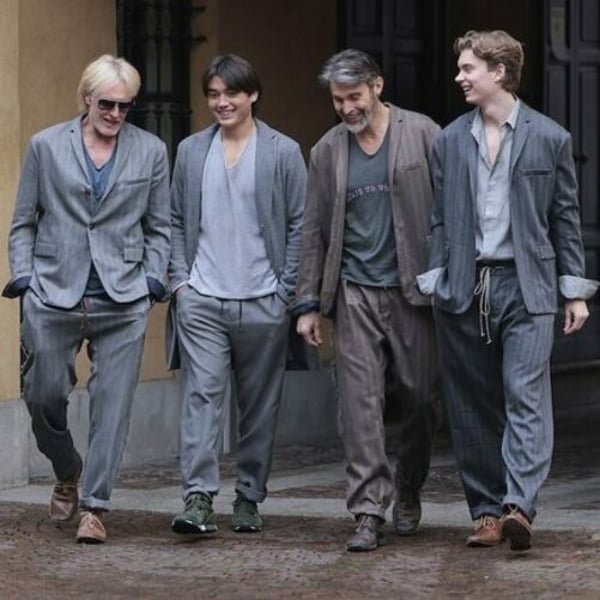
Warped, a proudly Australian menswear brand, made its debut at the recent Pitti Uomo 109, unveiling its first-ever collection for Autumn–Winter 2026/27. Warped channels a strong, functional and authentic masculinity, free of artifice: a man capable of moving with equal ease through the Australian outback or a metropolis, without ever betraying himself. This vision translates into a collection that combines ready-to-wear, streetwear and active-functional pieces, underpinned by rigorous material research, responsible production, and a strong connection to Australia’s history and identity.
The brand is so steeped in the free-spirited, authentic ethos of Mitch “Crocodile” Dundee, a cult figure of 1980s cinema who helped shape the image abroad of the no-nonsense Australian, that even the founder- who arrived in Milan with his two sons, aged 18 and 15, already active in the company- looks like the very character created by Paul Hogan.
“Crocodile Dundee is not just a film to us; it’s a way of being in the world. It’s about a man who hunts crocodiles with his bare hands in the outback and stays true to himself even under the dazzling lights of the metropolis,” Warped founder Jack Cassidy Williams explained to FashionNetwork.com. “It’s the story of a man who enters a sophisticated system without changing who he is. Functional, direct, honest. This is who we are. We’re not here to bend to fashion’s unwritten rules, but to bring our own way of doing things: less artifice, more reality.”

“Everything in the collection is handmade by my family. We design it, select the fabrics, create the patterns, and develop everything together- my children and I- in Australia. Traditional garments with modern finishes, in terms of handle and functionality; we even offer waterproof clothing, such as GOTS-certified waterproof cotton. Then there’s denim. All the fabrics are 100% made in Italy,” Cassidy Williams continues. At the heart of the collection is extensive fabric research: 100% RWS wool; high-stretch scuba fabrics and bi-stretch wool; cotton denim with a 3D weave effect; water-repellent cottons, viscose and viscose/linen blends for suits, jackets and trousers; high-performance, ultra-comfortable fabrics; and kangaroo-leather laces- a material five times as strong as cowhide- hand-finished with raw edges and authentic details.
“The collection is, in a way, a tribute to America, because the theme is the so-called ramblin’ man, or the free man; it’s basically about my whole life,” says the Australian entrepreneur. “All those people who decided to forge their own journey, to walk the path of life without following someone else. Like Hank Williams, Jack Kerouac, Duke Ellington, Bird, Muddy Waters, Pinetop, or Woody Guthrie- men who honoured life. Nowadays it’s so difficult to be free that freedom really is a state of mind. It’s our first collection through and through; we practically finished it before boarding the plane,” Cassidy Williams laughs heartily, then slips on a floppy wide-brimmed hat, slings a kangaroo hide over his shoulder and, as he pretends to crack a whip in the air, looks even more like Mitch Dundee- all after letting us taste a kangaroo salami and crocodile snacks…

“Our family has a textile tradition of great depth- more than sixty years- so Warped also works with the best global manufacturers in the mid-luxury segment: lace from France, fabrics from Italy, and other high-quality materials sourced from factories in Turkey, Japan and Korea,” Jack Cassidy Williams continues. “These factories were chosen not for trend’s sake, but because they’re unique- each one different from the next.”
Warped’s menswear collection for Autumn–Winter 2026/27 comprises around 40 looks spanning ready-to-wear, streetwear, and active-functional pieces. Jackets, suits, trousers, shorts, shirts, and T-shirts sit alongside a street and sportswear offer that includes hoodies, joggers and technical garments, all designed to be comfortable, durable, easy to care for, and genuinely wearable day to day.
Alongside the Warped men’s line, the company presented the Golden Age Sportswear (G.A.S) label in Milan, while the Warped Woman, and G.A.S Woman’s Street collections will debut in Italy from next Spring/Summer.
This article is an automatic translation.
Click here to read the original article.
Copyright © 2026 FashionNetwork.com All rights reserved.
Published
January 21, 2026
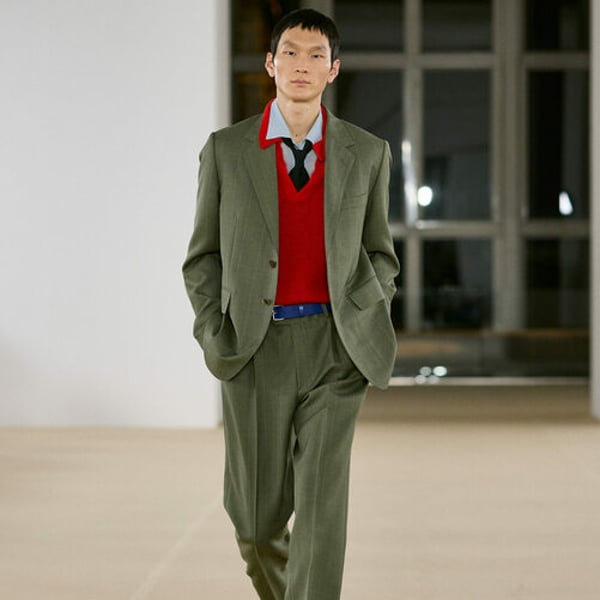
Two indie fashion brands, Auralee from Japan and Études Studio from France, staged highly contrasting collections on Tuesday, the opening day of Paris Fashion Week Men, testifying to the dynamism of the season in the French capital.
Auralee: Purist fashion with polish
A moment of grace on Tuesday evening at Auralee, where Ryota Iwai’s deceptively understated designs never fail to impress.
Staged in the Musée de l’Homme facing an illuminated Eiffel Tower, the show was the latest pure statement by a designer whose clothes blend subtlety with refinement.
Whatever fabric Iwai plays with always seems just right: whether speckled Donegal tweeds seen in brown knit pants for guys, or a frayed hem skirt for girls in this co-ed show. Leather or lambskin jerkins and baseball jackets, all were ideal.
Semi-transparent nylon splash vests or wispy trenches had real cool. While Iwai’s detailing was also very natty- like the flight jacket trimmed with fur.

He is also a great colourist- from the washed-out sea green of a canvas ranger’s jacket to the moody Mediterranean blue of a caban. Though his finale featured a quintet of looks in black. Most charmingly a languid, deconstructed double-breasted cashmere coat worn on a shirtless model- the picture of perfection.
There were perhaps not that many sartorial fireworks in the show, but there didn’t need to be. This was a purist fashion statement of polish and precision that this audience could only admire.
Backed up by a great soundtrack – Sounding Line 6 by Moritz. Von Oswald or the cutely named Autumn Sweater by Yo La Tengo- the whole display won Ryota a loud and long ovation. Fully deserved too.
Études Studio: Resonating in IRCAM
Études Studio certainly know how to stage a show. The design duo invited guests into the bowels of the Institute for Research and Coordination in Acoustics/Music, or IRCAM a unique French concept dedicated to experimental sounds.

Which we enjoyed a lot of thanks to Darren J. Cunningham, a British electronic musician known professionally as Actress. It made for a dramatic mood, as keys and chords swelled and raged throughout this show.
As a result, the design duo of Aurélien Arbet and Jérémie Egry titled this Autumn/Winter 2027 collection ‘Résonances.’ Terming it in their program: “A medley bringing into dialogue the minimalist experiments rooted in John Cage’s philosophy with the emergence of intelligent Dance Music in the early 1990s.”
The result was a rather moody series of clothes, made in a sombre palette of muddy brown, dark purple, black, black, and even more black.

What stood out were the bulbous, off-the-shoulder puffers, worn over corduroy shirts or roll-necks- topped by some great rancher hats courtesy of Lambert. One could also admire sleek raingear; cool cocoon shaped jerkins and fuzzy mohair sweaters. And appreciate a sleek A-Line coat and zippered knit safari jacket in a rare women’s look in this show.
Photoshopped faces in black and white scarves all looked very appealing, as did the brand’s debut bag, a satchel in tough canvas. And one had to applaud one great dull gold, wildly deconstructed puffer.
That said, the collection lacked proper kick and rarely resonated as the show title suggested it would. A decent statement about the mode, but far from a fashion moment.
Copyright © 2026 FashionNetwork.com All rights reserved.


GoldenTree to buy about $200 million of Saks Global bankruptcy financing, Bloomberg News reports

Morocco’s world-class hosting reaffirms AFCON as one of football’s greatest tournaments

Hotels allege predatory pricing, forced exclusivity in Trip.com antitrust probe
-

 Politics8 years ago
Congress rolls out ‘Better Deal,’ new economic agenda
-
Entertainment9 years ago
New Season 8 Walking Dead trailer flashes forward in time
-
Politics9 years ago
Poll: Virginia governor’s race in dead heat
-
Politics8 years ago
Illinois’ financial crisis could bring the state to a halt
-
Entertainment9 years ago
The final 6 ‘Game of Thrones’ episodes might feel like a full season
-
Entertainment9 years ago
Meet Superman’s grandfather in new trailer for Krypton
-
Business9 years ago
6 Stunning new co-working spaces around the globe
-
Tech8 years ago
Hulu hires Google marketing veteran Kelly Campbell as CMO