Connect with us

Business

Paramount rips Warner’s sale ‘process’ as it reveals 2-year-long pursuit and escalating bids before going hostile

Published

on


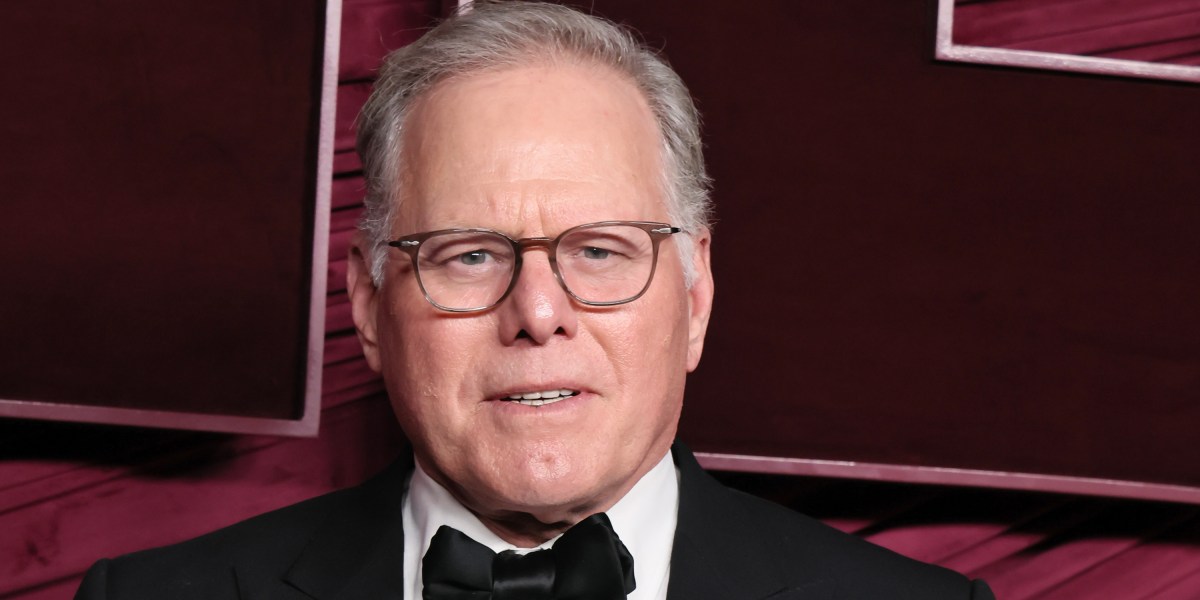
Paramount Skydance’s tender offer for Warner Bros. Discovery emerged from months of fitful courtship, a shifting media landscape, and a high‑stakes bidding war that ultimately pitted the studio behind “Top Gun: Maverick” against streaming giant Netflix for control of one of Hollywood’s crown jewels. The company’s tender offer regulatory filing with the Securities and Exchange Commission, filed hours after Paramount launched a hostile bid worth $108 billion (or $77.9 billion in equity), laid out a detailed chronology in which Paramount repeatedly tried to lure Warner Bros., to no avail. Netflix and Warner Bros. agreed a deal worth nearly $83 billion ($72 billion in equity) on Friday.

The filing revealed Paramount CEO’s last-ditch text message to WBD counterpart David Zaslav at roughly 4pm ET on December 4, the day before Netflix ultimately announced its deal, as previously reported by the Financial Times. Daivd [sic], I appreciate you’re underwater today so I wanted to send you a quick text. Please note when you next meet as a board we wanted to offer you a package that addressed all of the issues you discussed we [sic] me,” David Ellison wrote as he apparently felt his target slipping away.

“Also please know despite the noise of the last 24 hours I have nothing but respect and admiration for you and the company,” Ellison added. “It would be the honor of a lifetime to be your partner and to be the owner of these iconic assets. If we have the privilege to work together you will see that my father and I are the people you had dinner with. We are always loyal and honorable to our partners and hope we have the opportunity to prove that to you. Best, David.” Later that day, Paramount sent Zaslav a letter criticizing a “tainted” sale process.

Paramount told investors today that it continued to believe it was never taken seriously. “During the entirety of the sale ‘process’ undertaken by the Warner Bros. Board, representatives of Warner Bros. did not provide a single markup of a single transaction document, have a single meeting to go page-by-page through the documents, or engage in a ‘real time’ back-and-forth negotiation with Paramount or its advisors.”

Early outreach in 2023

In 2023 and 2024, Paramount’s predecessor, Paramount Global, and Warner Bros. held intermittent talks about a possible merger, but those conversations ended without a deal as Paramount Global moved instead to merge with Skydance, under the control of current CEO Ellison. After that transaction closed in August 2025, Paramount’s new leadership revisited the idea of combining with Warner Bros., concluding that a tie‑up could create a stronger, scaled competitor to streaming platforms and big technology companies, according to the SEC filing.​

The urgency increased in June 2025 when Warner Bros. publicly unveiled plans to split itself in two, targeting completion by mid‑2026, a strategy it continued to defend through early autumn. Paramount believed this breakup would destroy value and make any future full-company acquisition far harder, so it decided to move quickly, seeing a narrow window to buy all of Warner Bros. before the separation took effect.​

Paramount’s escalating proposals

By early September 2025, the filing noted, media reports surfaced that Paramount was preparing an offer, helping push Warner Bros.’ share price sharply higher from a pre‑rumor closing price of $12.54—it was trading at $19.46 by September 15, the day after Paramount offered $19 per share in cash and stock.​ (The New York Times reported on the secret bids from Paramount in October.)

Warner Bros. rejected that approach within days, saying the bid undervalued the company and that its own breakup plan promised better long‑term value. Paramount responded on September 30 with an improved offer worth $22 a share, primarily in cash, and went further on deal protections, including a $2 billion termination fee and a commitment to litigate to secure antitrust clearance, while also dangling roles for Zaslav as co-CEO and co-Chairman of the board of the combined company.​

Warner Bros. rebuffed this proposal as well, again calling it inadequate and insisting its planned separation remained superior, a stance that only hardened Paramount’s view that the board was underestimating the industrial logic of a combination. In October, Warner Bros. publicly announced a wider review of “strategic alternatives,” signaling that it would run a formal sale process and had received interest from multiple parties in both the whole company and specific assets such as its streaming arm.​

Paramount attempted to enter that process on more favorable terms, pushing back on an initial Warner Bros. confidentiality agreement that included a lengthy standstill, tight controls on financing contacts and waivers of potential legal claims about the sale. Its advisers negotiated for a shorter standstill, “most‑favored‑nation” treatment versus other bidders, and freedom to challenge the process if Warner Bros. ultimately retreated to its separation plan, underscoring deep mistrust over how the auction might be run.​

Due diligence and financing ramp-up

As the process unfolded, Paramount was granted limited access to a virtual data room, which it viewed as “sparsely populated” given the size and complexity of a potential deal. In mid‑November, Warner Bros. hosted an in‑person management presentation in California, while antitrust lawyers for both sides met to assess regulatory risks and lay out arguments that a Paramount–Warner Bros. merger would be pro‑competitive in a market dominated by tech‑backed streaming giants.​

Parallel to those talks, Paramount’s board set up a special committee of independent directors to vet a large equity infusion from the Ellison family and private‑equity firm RedBird. Paramount also locked in a $54 billion senior secured bridge facility led by Wall Street banks.

A bidding war with Netflix

On November 20, Paramount submitted another improved proposal, lifting its implied offer to $25.50 a share, heavily weighted to cash and backed by signed debt commitments and promised equity. That bid included a $5 billion regulatory reverse breakup fee and more aggressive litigation undertakings, signaling Paramount’s willingness to fight regulators if required to close the transaction.​ (Netflix committed to a $5.8 billion breakup fee in its winning bid, which Bloomberg reported is among the highest of all time.)

Even as Paramount sweetened its terms, public commentary suggested some influential Warner Bros. figures saw Netflix as a more attractive partner, particularly for its pure‑play streaming focus and global reach. During a particular November 13 interview on CNBC, WBD chairman emeritus John Malone questioned Paramount’s intervention and discussed the merits of a Netflix deal, adding to market speculation that Warner Bros. leadership might prefer a streaming‑first tie‑up over a legacy‑studio merger.​

Netflix deal and Paramount’s pivot to a tender

The process culminated on December 4, 2025, when Warner Bros. signed a merger agreement with Netflix that would see Netflix acquire Warner Bros.’ streaming businesses after a complicated internal reorganization and spin‑off of other assets. That deal offered cash and Netflix stock with headline value of about $27.75 per share but included adjustments tied to spin‑off net debt and a 21‑month outer closing date.​

Paramount responded the same day with what it calls its “Prior Proposal,” a merger agreement valuing Warner Bros. at $30 a share in straight cash, with what it argues are stronger regulatory commitments, a shorter outside date and no price haircut tied to balance‑sheet mechanics. When Warner Bros. nevertheless chose the Netflix deal, Paramount concluded that the board had opted for an “obviously financially inferior transaction with extraordinary regulatory risk and a longer timeline to a possible closing,” and decided its only route was to go directly to shareholders.​

Calls to Paramount, WBD, and Netflix to comment on the events as laid out in the filing were not immediately returned. We will update this post with any response.

Editor’s note: the author worked for Netflix from June 2024 through July 2025.

For this story, Fortune journalists used generative AI as a research tool. An editor verified the accuracy of the information before publishing.


Source link

Continue Reading

Business

RFK Jr. and Sean Duffy had pull-up competition to announce a $1B plan for healthy airport upgrades

Published

on


As if dragging a three-wheeled carry-on across the mileage of an international airport isn’t enough, the government wants you panting before your flight. This week, Transportation Secretary Sean Duffy and Health Secretary Robert F. Kennedy Jr. had a pull-up competition in the middle of Reagan National Airport’s Terminal 2 (not a metaphor) to announce the $1 billion in grants the administration plans to allocate toward healthy airport upgrades.

  • Officials were vague about what these upgrades could include, but mentioned projects like dedicated play areas for kids, more lactation pods, and mini-gyms for travelers.
  • The funding will come from former President Biden’s 2021 Infrastructure Investment and Jobs Act and is part of the current administration’s “Make Travel Family Friendly Again” initiative.

But…over 30 major US airport hubs already have children’s play areas, and most airports have been required to provide private lactation areas since FY2021. And 68% of passengers said their top priority for air travel changes is lower prices, according to a 2025 Ipsos poll for Airlines for America.

Big picture: The administration has been pushing initiatives to make flying more pleasant. Last month, Duffy encouraged travelers to dress up for flights and act right, which some travelers responded to by…wearing pajamas to the airport to troll the secretary.—MM

This report was originally published by Morning Brew.

Join us at the Fortune Workplace Innovation Summit May 19–20, 2026, in Atlanta. The next era of workplace innovation is here—and the old playbook is being rewritten. At this exclusive, high-energy event, the world’s most innovative leaders will convene to explore how AI, humanity, and strategy converge to redefine, again, the future of work. Register now.


Source link

Continue Reading

Business

MAGA’s ‘MyPillow Guy,’ Mike Lindell, challenges Tim Walz in run for Minnesota governor

Published

on


Mike Lindell, the fervent supporter of President Donald Trump known to TV viewers as the “MyPillow Guy,” officially entered the race for Minnesota governor Thursday in hopes of winning the Republican nomination to challenge Democratic Gov. Tim Walz.

“I’ll leave no town unturned in Minnesota,” Lindell told The Associated Press in an interview ahead of a news conference set for Thursday.

He said he has a record of solving problems and personal experiences that will help businesses and fight addiction and homelessness as well as fraud in government programs. The fraud issue has particularly dogged Walz, who announced in September that he’s seeking a third term in the 2026 election.

A TV pitchman and election denier

Lindell, 64, founded his pillow company in Minnesota in 2009 and became its public face through infomercials that became ubiquitous on late-night television. But he and his company faced a string of legal and financial setbacks after he became a leading amplifier of Trump’s false claims that the 2020 election was stolen. He said he has overcome them.

“Not only have I built businesses, you look at problem solution,” Lindell said in his trademark rapid-fire style. “I was able to make it through the biggest attack on a company, and a person, probably other than Donald Trump, in the history of our media … lawfare and everything.”

While no Republican has won statewide office in Minnesota since 2006, the state’s voters have a history of making unconventional choices. They shocked the world by electing former professional wrestler Jesse Ventura as governor in 1998. And they picked a veteran TV pitchman in 1978 when they elected home improvement company owner Rudy Boschwitz as a U.S. senator.

Lindell has frequently talked about how he overcame a crack cocaine addiction with a religious conversion in 2009 as MyPillow was getting going. His life took another turn in 2016 when he met the future president during Trump’s first campaign. He served as a warm-up speaker at dozens of Trump rallies and co-chaired Trump’s campaign in Minnesota.

Trump’s endorsement could be the key to which of several candidates wins the GOP nomination to challenge Walz. But Lindell said he doesn’t know what Trump will do, even though they’re friends, and said his campaign isn’t contingent on the president’s support.

His Lindell TV streaming platform was in the news in November when it became one of several conservative news outlets that became credentialed to cover the Pentagon after agreeing to a restrictive new press policy rejected by virtually all legacy media organizations.

Lindell has weathered a series of storms

Lindell’s outspoken support for Trump’s false claims that the 2020 election was stolen triggered a backlash as major retailers discontinued MyPillow products. By his own admission, revenue slumped and lines of credit dried up, costing him millions. Several vendors sued MyPillow over billing disputes. Fox News stopped running his commercials. Lawyers quit on him.

Lindell has been sued twice for defamation over his claims that voting machines were manipulated to deprive Trump of a victory.

A federal judge in Minnesota ruled in September that Lindell defamed Smartmatic with 51 false statements. But the judge deferred the question of whether Lindell acted with the “actual malice” that Smartmatic must prove to collect. Smartmatic says it’s seeking “nine-figure damages.”

Colorado jury in June found that Lindell defamed a former Dominion Voting Systems executive by calling him a traitor, and awarded $2.3 million in damages.

But Lindell won a victory in July when a federal appeals court overturned a judge’s decision that affirmed a $5 million arbitration award to a software engineer who disputed data that Lindell claimed proved Chinese interference in the 2020 election. The engineer had accepted Lindell’s “Prove Mike Wrong Challenge,” which he launched as part of his 2021 “Cyber Symposium” in South Dakota, where he promised to expose election fraud.

The campaign ahead

Lindell said his crusade against electronic voting machines will just be part of his platform. While Minnesota uses paper ballots, it also uses electronic tabulators to count them. Lindell wants them hand-counted, even though many election officials say machine counting is more accurate.

Some Republicans in the race include Minnesota House Speaker Lisa Demuth, of Cold Spring; Dr. Scott Jensen, a former state senator from Chaska who was the party’s 2022 candidate; state Rep. Kristin Robbins, of Maple Grove; defense lawyer and former federal prosecutor Chris Madel; and former executive Kendall Qualls.

“These guys haven’t lived what I live,” Lindell said.

Lindell wouldn’t commit to abiding by the Minnesota GOP endorsement and forgoing the primary if he loses it, expressing confidence that he’ll win. He also said he’ll rely on his supporters to finance his campaign because his own finances are drained. “I don’t have the money,” he acknowledged.

But he added that ever since word got out last week that he had filed the paperwork to run, “I’ve had thousands upon thousands of people text and call, saying from all around the country … ‘Hey, I’ll donate.’”


Source link

Continue Reading

Business

Apple’s Steve Jobs told students to never ‘settle’ in their careers: ‘If you haven’t found it yet, keep looking’

Published

on


Forty-five years after Apple’s IPO, the company is now worth $4.1 trillion—but its rise was anything but smooth. Steve Jobs weathered near-bankruptcy and was even ousted from the company he had built, before returning and setting the stage for Apple’s resurgence. But what kept him going, he once told students, was a simple career lesson: Doing the work you love.

“Your work is going to fill a large part of your life, and the only way to be truly satisfied is to do what you believe is great work. And the only way to do great work is to love what you do,” Jobs said during his 2005 Stanford Commencement speech

“If you haven’t found it yet, keep looking—and don’t settle. As with all matters of the heart, you’ll know when you find it.”

Many Gen Zers are apprehensive about what career to choose. Some are taking whatever gig they can get in today’s labor market, as roles are quickly being disrupted by AI, and once-lucrative jobs have fallen out of favor. But Jobs’ story is a reminder to young professionals that chasing a long, passionate career in what they love is the recipe for sustainable success. After all, they have a nearly 50-year career ahead of them.

The many jobs that Steve Jobs had and loved

Jobs’ has a diverse lineup of successful ventures under his belt—including Pixar Animation Studios, and software company NeXT—but Apple was his ultimate brainchild. Leading the company through its many iterations, Jobs helmed the creation of generation-defining products for decades. Baby boomers waited in line to snag the Apple II computer back in 1977; by 2001, millennials were flooding their music collections onto the iPod classic; and all throughout the 2010s, Gen Zers were gifted their first iPhones.

Apple may seem like an unmovable force today, sitting at number four on the Fortune 500 and having sold more than three billion iPhones. But its come-up was anything but sunshines and rainbows; despite cofounding the titan of industry, Jobs was forced out by then-CEO John Sculley in 1985, throwing his career into flux. 

The entrepreneur recalled making the most of the bad situation, entering one of the “most creative periods” of his life by launching NeXT and revamping Pixar Studios. But even he couldn’t resist the gravitational pull back to the “best thing that ever happened to [him],” Apple. He returned to the fledgling company as CEO in 1997, and remained in the role until just two months before his passing in October 2011. 

“Sometimes life hits you in the head with a brick. Don’t lose faith,” Jobs said. “I’m convinced that the only thing that kept me going was that I loved what I did. You’ve got to find what you love.”

Jobs’ love for his work turned him into a billionaire

Despite leaving behind a fortune estimated to be worth $10.2 billion at the time of his passing, Jobs made it clear that his ambitions weren’t tied to his bank account. A part of why Apple became a trillion-dollar innovator may be thanks to his devotion for the products—a life-long love for technology he first discovered as an eager tween, hungry for opportunity. 

“I was worth about over $1 million when I was 23, and over $10 million when I was 24, and over $100 million when I was 25,” Jobs told PBS in 1996. “And it wasn’t that important, because I never did it for the money.”

The iPhones sitting in millions of back pockets and MacBooks scattered across swaths of desks may not even exist if it weren’t for Jobs’ devotion to the craft. At just 12 years old, he took a leap of faith to put his passion into action; Jobs hunted down the phone number of the founder of Hewlett Packard (HP) cofounder Bill Hewlett’s in the yellow pages, and called him up for a favor. The tween needed spare parts needed to build a frequency counter, but he got far more than some nuts and bolts. 

Hewlett offered Jobs a gig at the iconic tech company—a launchpad for his future successes dominating the same industry. Jobs set himself on the path for greatness, all because he mustered the courage to try. 

“I never found anybody that didn’t want to help me if I asked them for help. I always call them up,” Jobs said in a 1994 interview, archived by the Silicon Valley Historical Association. “I’ve never found anyone who says ‘no,’ or hung up the phone when I called. I just asked.”

“Most people never pick up the phone and call. Most people never ask…You’ve got to be willing to crash and burn with people on the phone, with starting a company, with whatever. If you’re afraid of failing, you won’t get very far.”


Source link

Continue Reading

Trending

Copyright © Miami Select.