Only The Brave reaffirms its long-term commitment to China with three initiatives that underscore the importance of the Chinese market for the international fashion and luxury group, which brings together the brands Diesel, Jil Sander, Maison Margiela, Marni, Viktor&Rolf, and the companies Staff International and Brave Kid, and holds a stake in the Amiri brand. In addition, founder Renzo Rosso says he will invest further in China.
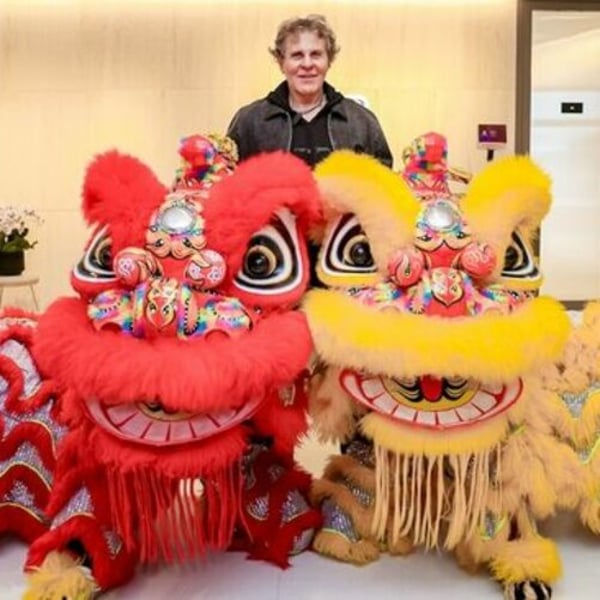
Renzo Rosso in Shanghai for Diesel’s 20 years in China – OTB
The first initiative is the official opening of its new APAC headquarters in Shanghai, a region where OTB now has 900 employees and around 100 stores, spread across China, Hong Kong, and Macao. Attending the inauguration ceremony, alongside the group’s founder, Renzo Rosso, were the Consul General of Italy in Shanghai Tiziana D’Angelo and Shanghai’s Jing’an District authorities.
The new headquarters boasts double the space of its previous address and is located in the Lee Gardens building. Nestled in the heart of the city’s Jing’an District, it overlooks the scenic Suzhou Creek. According to a statement, the location and expansion of the offices reflect the group’s desire to strengthen its roots in China, as well as to offer the team increasingly modern and functional workspaces and to consolidate relationships with local partners.
The second initiative during Renzo Rosso’s visit to China was a talk for students at Donghua University, one of Asia’s most prestigious design and fashion universities, organised under the patronage of the Consulate General of Italy, Camera Nazionale della Moda Italiana, Altagamma, the Italian Trade Agency, and the Italian Cultural Institute.
A moment from Rosso’s lecture at Donghua University – OTB
For its third initiative, as 2025 marks the 20th anniversary of Diesel’s presence in China, where the brand has built a recognisable and coherent presence, an event was organised at the Fosun Foundation in Shanghai. The highlight of the event was the launch of a capsule collection titled “Diesel China 20th Anniversary”, designed by Creative Director Glenn Martens.
“China is a country with a unique energy; every time I come back here I am fascinated by its pace, creativity and speed,” said Renzo Rosso. “For our group, China is not only a strategic market, but an inexhaustible source of inspiration. Over the past two decades, we have expanded the presence of our brands and built an authentic dialogue with new generations who share the values of our brands. Our philosophy is to collaborate with local communities to merge brand know-how with the local mindset. The opening of the new Shanghai headquarters, meeting with young talent at Donghua University, and the celebrations of Diesel’s 20th anniversary represent a special moment for me and for the OTB Group […] We will continue to invest in China in the future.”
Shortly before the evening event in Shanghai, Rosso told Reuters that these investments in China will be made by his group despite the decline in the local market, and will take the form of a reorganisation of OTB’s retail presence. The entrepreneur revealed that some stores will be closed, but others will be opened in new and better locations.
Rosso with staff at OTB Group’s new APAC headquarters in Shanghai – OTB
“I am optimistic. I think that if the Chinese market continues to proceed in this way, it could represent an opportunity, because we will be able to have better spaces at better prices, which wasn’t the case before,” Rosso told Reuters. “My current vision is to invest in the country. I believe in China; it’s so big, so important. We are doing well this year compared to the market,” he added. “Everyone is in decline; we have some growth, so we are quite satisfied.”
Over the years, the Veneto-based group has supported numerous initiatives and collaborations in China that have connected the creativity and values of its brands with designers, artists and local communities. Notable among these are the “Marni Miao” project, which celebrated the elegance and complexity of embroidery by reinterpreting the codes of the Miao minority through a contemporary lens, as well as the various capsule collections that Diesel has created in collaboration with Chinese designers such as Xander Zhou and Pronounce and celebrities such as William Chan and Chris Lee, along with events and music tours with local artists.
In addition, Maison Margiela has brought its experimental vision into dialogue with the country’s contemporary art and culture through new retail formats, pop-ups, installations and initiatives in different cities, while MM6 Maison Margiela has collaborated with designer Chen Peng.
Renzo Rosso – OTB
In addition, OTB has long supported the new generation of Chinese talent. Renzo Rosso has in fact served on the jury of the BoF China Prize in 2019 and supported the launch of the Yu Prize competition, providing mentorship and coaching to support and develop the country’s young designers.
This article is an automatic translation. Click here to read the original article.
There’s never a bad time to be the main choice as a fashion destination, but M&S has taken top-of-the-tree status this Christmas when it comes to AI gift inspiration. And in the Beauty category, Charlotte Tilbury has been mentioned more than any other cosmetics brand while Decathlon took top spot in the Sports category.
M&S
That’s all down to the ‘AI Christmas Nice List’ compiled by digital marketing and PR agency Tank, revealing which UK retailers AI favours for Christmas gifting by analysing hundreds of ChatGPT responses across 10 retail sectors, awarding a mention score based on how early products are recommended.
And of the top fashion searches, M&S achieved the highest mention score (21) in the category. And that was out of nearly 150 websites.
Following M&S, shoppers are more likely to see fashion picks from Next, Barbour and John Lewis, with mention scores of 20, 17 and 15, respectively.
Next, it has to be noted, also received three more total mentions than M&S, but “these were later in AI’s response and scored lower overall”, the report said.
High ratings for British heritage brand Barbour and John Lewis were helped by their annual Christmas ads bringing in press coverage and social media attention to drive holiday demand, with this year’s ad including Barbour’s retuned link-up with Shaun The Sheep.
Other big name fashion recommendations include Matalan at number five (14 mentions), followed by Sainsbury’s TU Clothing (11 mentions), Longchamp (10), accessories brand Fairfax & Favor and White Stuff (both 8 mentions).
John Lewis also showed up the most overall in ChatGPT, with 31 mentions across eight out of 10 sectors analysed including Home and Food & Drink categories.
Martin Harris, head of digital at Tank, commented on the research: “ChatGPT is used everyday for personal and commercial queries such as Christmas gift ideas, so if fashion brands aren’t appearing for the relevant results, they could be missing out on sales. AI search is important for retailers and while there is hesitancy around it, it is essential brands are discoverable where shoppers are searching for information.
“While some small retailers could struggle with being found in AI during peak seasons like Christmas, it presents an opportunity to improve visibility in their niche. Consumers can also use AI to find niche brands and products. That’s why it’s even more important retailers know what their customers want and have a strategy to appear in the relevant results.”
If you want to know how consumers are paying for their purchases, the BRC has just released its latest survey, saying that they swapped credit for debit cards and cash was used in just a fifth of transactions.
Barclays Payments
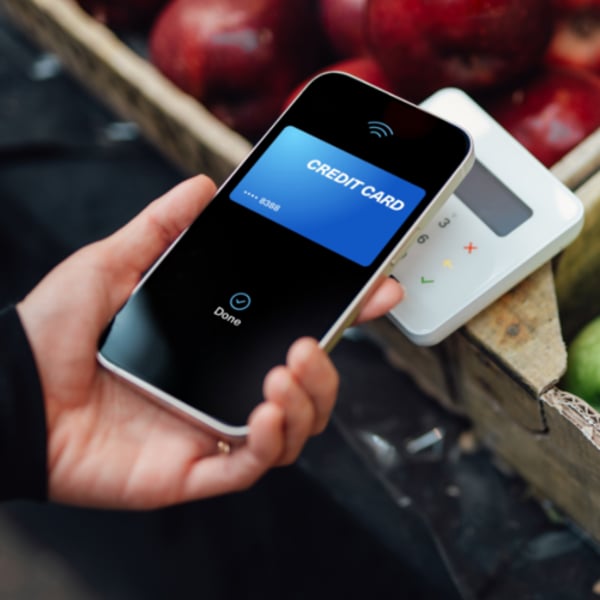
The BRC’s annual Payment Survey, based on data from last year, reveals a “significant decline” in the use of credit cards, from 14.2% of transactions to 12.6% as consumers turned to debit cards where usage increased from 62% to 64% of transactions.
However, despite their declining popularity, for larger transactions, consumers still preferred using credit cards overall, which offer additional protections for shoppers. Cards also beat cash, which accounted for just 19.2% of transactions.
“As the cost of living crisis eased, some customers returned to old habits. The weekly shop showed signs of a comeback with consumers making fewer but larger transactions”, the report highlighted, with the total number of transactions falling from 20.9 billion to 20.4 billion. Average transaction value rose across all payment types.
More shoppers have also been exploring less traditional payment methods than ever before, particularly for larger transactions. This included the use of gift vouchers, PayPal, and Buy Now Pay Later (BNPL), although no figures were given.
Chris Owen, Payments Policy Advisor at the British Retail Consortium said: “As interest rates peaked in 2024, the use of credit cards fell as customers switched to lower interest forms of payment. However, with cards still accounting for the vast majority of transactions and card fees now more than double the level they were six years ago, only a long-term cap on card fees would bring much needed relief to retailers.
He added: “Looking ahead, as the PSR transitions into the Financial Conduct Authority next year, it is vital that the FCA carries this work forward, delivering fairness and transparency in a market long hampered by competition issues and unjustified fee increases.”
The shares of Inditex, the largest listed company on the Spanish stock exchange, rose 1.85% on the morning of Friday, December 12, to €56.1 per share, surpassing the record high set a year ago, when they fell just short of €56.
Inditex headquarters – Inditex
According to market data compiled by Europa Press, the textile conglomerate is up more than 12% in 2025 and now has a market capitalisation of over €174 billion.
That said, Inditex’s share price had been anaemic- if not negative- over the course of the year, as from mid-March to early this month the stock traded below 2024 closing levels and touched an August low of €40.8.
The rally of the past two weeks- which has propelled the new highs- is attributable to the company’s latest quarterly results, which beat market expectations across the board.
Specifically, on December 3, the conglomerate reported a record third quarter (August to October), with profit up 9% to €1.831 billion and sales up 4.9% to €9.814 billion.
Thus, Inditex recorded net profit of €4.622 billion during the first nine months of its 2025–2026 financial year (between February 1 and October 31), an increase of 3.9% year on year.
Since the day before these latest results were announced, Inditex has gained 14% on the stock market.
Moreover, this particular milestone for Inditex has coincided with a broader one for the Spanish stock market, as its benchmark index, the Ibex 35, surpassed 17,000 points on Friday for the first time in its history.
Analysts’ assessment
“Clear path ahead,” Bank of America analysts concluded two weeks ago following Inditex’s results presentation, after a year of doubts about the outlook for the apparel sector.
“The acceleration of growth bodes well for the first half of 2027 […] and should pave the way for improvements in earnings per share,” they said. They therefore reiterated their buy recommendation while raising their price target from €54 to €60.
eToro market analyst Javier Molina noted that Inditex beat market expectations and is consolidating its transition towards a more premium positioning at a time when the consumer cycle is showing signs of moderating.
“The third quarter was particularly solid and clearly exceeded consensus forecasts,” he said, while, in his view, the shift to the luxury segment is reflected in investment in flagship stores, the renovation of strategic locations and projects such as the new Zara building in Arteixo, focused on product and technology.
The company, according to Molina, shows a “remarkable ability to adapt” to consumer preferences, consolidating collections with higher perceived value.
“But this progress comes at a demanding moment in the cycle, and the market will be watching whether the company is capable of maintaining the level it has set for itself,” he warned.
For his part, IG analyst Sergio Ávila argued that in the short term these figures support Inditex maintaining a premium to the sector, although he also warned that the bar for expectations is “very high.”
“If the company continues to defend margins and control inventories, I see a higher likelihood of consolidation at elevated levels than of a deep correction,” he said.
The most optimistic firm on the Galician group is Citi, which raised its price target from €54 to €63, while other firms such as Berenberg lifted theirs from €52 to €62 and Santander increased its from €55 to €58.40.
This article is an automatic translation. Click here to read the original article.