
Politics
Orange County is helping people plan their wills and get out of medical debt


For the first time, Orange County government is offering free estate planning for residents who don’t have wills. Meanwhile, 49,000 more residents in the county will discover their combined $49 million in medical debt is cleared.
Orange County gave an update on how it is spending grant funding and federal COVID stimulus money to help people.
“Orange County takes pride in being the first local government in Florida to establish a Financial Empowerment Center, endeavoring in new and exciting ways to aid local residents grow, prosper and find financial stability,” said Lavon Williams, deputy director for Orange County Community and Family Services.
“The addition of the new legacy planning service shows our county’s ongoing and dedicated commitment to helping area residents, and future generations to come, realize the American dream.”
Since launching last year, the Financial Empowerment Center already helped people create budgets and get out of debt. But now professional financial counselors will take in-person and virtual appointments for one-on-one sessions to plan wills, which most Americans don’t have. The services are paid for by an existing grant of $300,000 from the Cities for Financial Empowerment Fund, according to the county.
“With the addition of legacy planning services, counselors also can help Orange County residents protect and preserve those assets for future generations,” said Jonathan Mintz, President and CEO of the Cities for Financial Empowerment Fund.
“We are thrilled to partner with Orange County to provide these crucial services and ensure that legacy planning is available for everyone.”
Meanwhile, Orange County has spent federal COVID stimulus funds to wipe away medical debt for residents already living in poverty.
In 2024, the county gave a $4.5 million contract to Undue Medical Debt, a nonprofit that analyzes and buys medical debt at a fraction of the cost from both local hospital systems and third-party debt collection agencies.
“To date, the County has eliminated over $515 million of medical debt for more than 302,000 residents. Approximately $3.94 million has been used from the program’s budget,” the county said in an update this week, announcing that a new round of $49 million in medical debt had been paid.

One Orange County resident whose $7,000 bill was paid this year was grateful for the help.
“Medical debt is more than a financial burden, it is an emotional weight,” Sheila Santiago said in a statement.
Orange County residents who are being helped meet the economic guidelines by either living in households with an income at or below 400% of the federal poverty level, or their medical debt equaled or exceeded 5% of their total household income, according to the county.

Early voting is underway in Hialeah as two Council runoff contests will decide who rounds out a markedly different dais at City Hall.
The Group 3 and Group 4 races — featuring Jessica Castillo versus Gelien Perez and William “Willy” Marrero versus Javier Morejon, respectively — also stand to determine whether new Mayor Bryan Calvo gains early influence over the Council.
Perez and Castillo advanced to the Group 3 runoff in last month’s General Election with 40.5% and 36% of the vote, respectively, leaving one third-place candidate behind.
In Group 4, Marrero narrowly led the field with 24.8%, followed by Morejon at 23.3%. They outpaced three others in the contest.
To win outright, a candidate had to capture more than half the vote in their respective races.
The runoffs present one of the first real tests of how much sway Calvo, who made history last month as the youngest person ever elected Hialeah Mayor, will have as he prepares to take office.
He has endorsed Perez and Marrero — a strategic pairing that blends rival factions from the mayoral contest into his new governing coalition. Both ran with political slates opposing him. He told the Miami Herald last month that he’s aiming to create “a coalition to approve the agenda,” without an expectation that Perez and Matteo “will vote with (him) 100% of the time.”
If both candidates win, Calvo could enter January with a working majority on the seven-member Council and greater control over the upcoming appointment to fill Jesus Tundidor’s soon-to-be-vacant seat. Tundidor ran unsuccessfully for Mayor.
In Group 3, Perez, 35, a former city Human Resources Director and one-time mayoral aide, has campaigned on supporting first responders and small businesses, improving infrastructure and parks, expanding senior services and rejecting millage rate increases.
But her tenure as HR director drew scrutiny: a two-year Miami-Dade ethics investigation found employees under her influence received sizable raises while she acted as their real estate agent. She has not publicly responded to inquiries about the probe.
Castillo, 37, has run as an independent voice focused on transparency, accountability, traffic relief, infrastructure upgrades and lower taxes. She has kept her campaign largely offline, with no website and minimal social media activity.
In Group 4, Marrero, 23, a Florida International University public administration student and former Council aide, has emphasized affordability, issues facing working families and seniors, and support for first responders.
Earlier this year, three Council members attempted to appoint him to the same seat he now seeks, but opposition from others blocked the move.

Morejon, 34, a land-use specialist with an extensive volunteer résumé, is running on infrastructure repairs, government transparency, beautification and reducing the cost of city services.
Election Day is Monday, Dec. 9. Because Hialeah elects Council members at-large, all voters can cast ballots in both races.
Politics
Soon no Pearl Harbor survivors will be alive. People turn to other ways to learn about the bombing



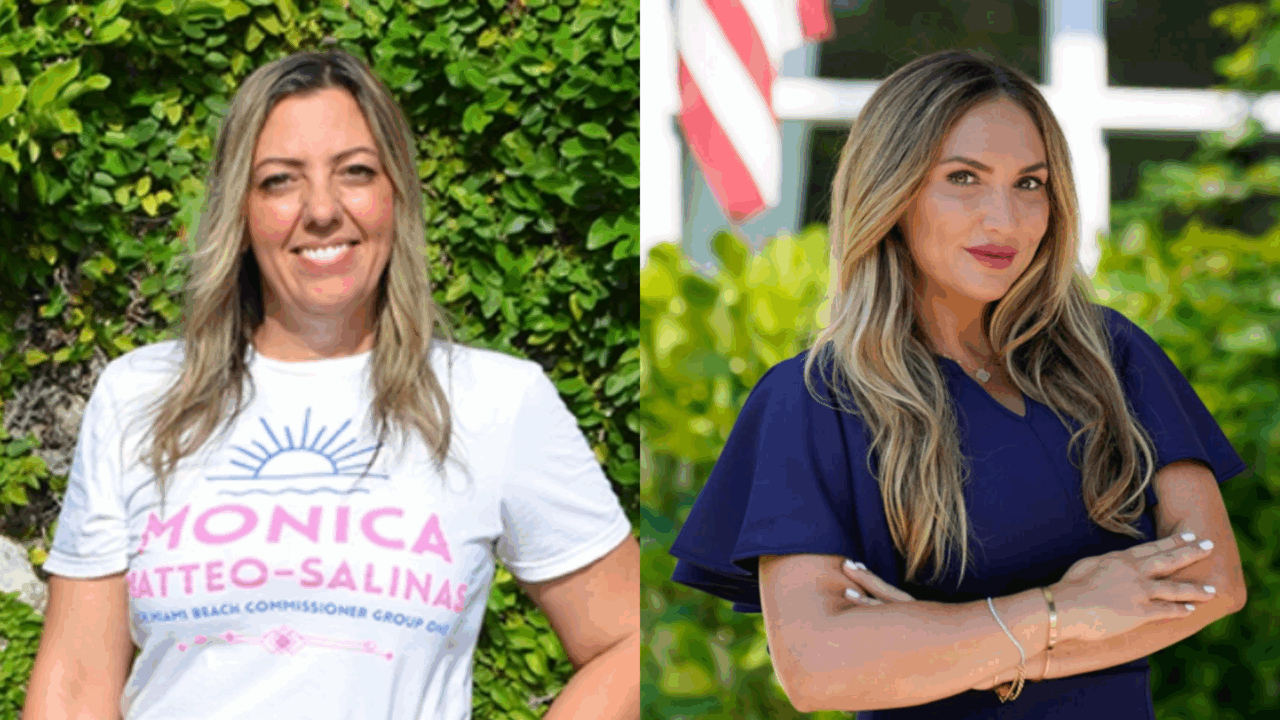
Monica Matteo-Salinas, Monique Pardo Pope square off in Miami Beach Commission runoff

Inside the Fortune 500 CEO pressure cooker: Surviving harder than ever and requires an ‘odd combination’

Marciano Brunette Posts About ‘Getting Even’ After Suing Demi Engemann
-

 Politics8 years ago
Congress rolls out ‘Better Deal,’ new economic agenda
-
Entertainment8 years ago
New Season 8 Walking Dead trailer flashes forward in time
-
Politics8 years ago
Poll: Virginia governor’s race in dead heat
-
Entertainment8 years ago
The final 6 ‘Game of Thrones’ episodes might feel like a full season
-
Entertainment8 years ago
Meet Superman’s grandfather in new trailer for Krypton
-
Politics8 years ago
Illinois’ financial crisis could bring the state to a halt
-
Business8 years ago
6 Stunning new co-working spaces around the globe
-
Tech8 years ago
Hulu hires Google marketing veteran Kelly Campbell as CMO