Connect with us

Business

OpenAI says prompt injections that can trick AI browsers may never be fully ‘solved’

Published

on


OpenAI has said that some attack methods against AI browsers like ChatGPT Atlas are likely here to stay, raising questions about whether AI agents can ever safely operate across the open web. 

The main issue is a type of attack called “prompt injection,” where hackers hide malicious instructions in websites, documents, or emails that can trick the AI agent into doing something harmful. For example, an attacker could embed hidden commands in a webpage—perhaps in text that is invisible to the human eye but looks legitimate to an AI—that override a user’s instructions and tell an agent to share a user’s emails, or drain someone’s bank account.

Following the launch of OpenAI’s ChatGPT Atlas browser in October, several security researchers demonstrated how a few words hidden in a Google Doc or clipboard link could manipulate the AI agent’s behavior. Brave, an open-source browser company that previously disclosed a flaw in Perplexity’s Comet browser, also published research warning that all AI-powered browsers are vulnerable to attacks like indirect prompt injection.

“Prompt injection, much like scams and social engineering on the web, is unlikely to ever be fully ‘solved,’” OpenAI wrote in a blog post Monday, adding that “agent mode” in ChatGPT Atlas “expands the security threat surface.”

OpenAI said that the aim was for users to “be able to trust a ChatGPT agent,” with Chief Information Security Officer Dane Stuckey adding that the way the company hopes to get there is by “investing heavily in automated red teaming, reinforcement learning, and rapid response loops to stay ahead of our adversaries.”

“We’re optimistic that a proactive, highly responsive rapid response loop can continue to materially reduce real-world risk over time,” the company said.

Fighting AI with AI

OpenAI’s approach to the problem is to use an AI-powered attacker of its own—essentially a bot trained through reinforcement learning to act like a hacker seeking ways to sneak malicious instructions to AI agents. The bot can test attacks in simulation, observe how the target AI would respond, then refine its approach and try again repeatedly.

“Our [reinforcement learning]-trained attacker can steer an agent into executing sophisticated, long-horizon harmful workflows that unfold over tens (or even hundreds) of steps,” OpenAI wrote. “We also observed novel attack strategies that did not appear in our human red teaming campaign or external reports.”

However, some cybersecurity experts are skeptical that OpenAI’s approach can address the fundamental problem. 

“What concerns me is that we’re trying to retrofit one of the most security-sensitive pieces of consumer software with a technology that’s still probabilistic, opaque, and easy to steer in subtle ways,” Charlie Eriksen, a security researcher at Aikido Security, told Fortune.

“Red-teaming and AI-based vulnerability hunting can catch obvious failures, but they don’t change the underlying dynamic. Until we have much clearer boundaries around what these systems are allowed to do and whose instructions they should listen to, it’s reasonable to be skeptical that the tradeoff makes sense for everyday users right now,” he said. “I think prompt injection will remain a long-term problem … You could even argue that this is a feature, not a bug.”

A cat-and-mouse game

Security researchers also previously told Fortune that while a lot of cybersecurity risks were essentially a continuous cat-and-mouse game, the deep access that AI agents need—such as users’ passwords and permission to take actions on a user’s behalf—posed such a vulnerable threat opportunity it was unclear if their advantages were worth the risk. 

George Chalhoub, assistant professor at UCL Interaction Centre, said that the risk is severe because prompt injection “collapses the boundary between the data and the instructions,” potentially turning an AI agent “from a helpful tool to a potential attack vector against the user” that could extract emails, steal personal data, or access passwords.

“That’s what makes AI browsers fundamentally risky,” Eriksen said. “We’re delegating authority to a system that wasn’t designed with strong isolation or a clear permission model. Traditional browsers treat the web as untrusted by default. Agentic browsers blur that line by allowing content to shape behavior, not just be displayed.”

OpenAI recommends users give agents specific instructions rather than providing broad access with vague directions like “take whatever action is needed.” The browser also has extra security features such as “logged out mode”— which allow a users to use it without sharing passwords— and “Watch mode”—which is a security feature that requires a user to explicitly confirm sensitive actions such as sending messages or making payments.  

“Wide latitude makes it easier for hidden or malicious content to influence the agent, even when safeguards are in place,” OpenAI said in the blogpost.


Source link

Continue Reading

Business

Move over caviar, the hottest luxury ingredient is crab

Published

on


It’s a perplexing time in the world of luxury ingredients. Prestigious products have become inextricably tied to fast food. Caviar now adorns chicken nuggets; truffle features in supermarket hummus and Starbucks egg bites; wagyu beef is getting smashed into burgers and has made the menu at Burger King in the UK. Even lobster—bright red and festive—has gone from attention-getting centerpiece to mac-and-cheese mix-in. 

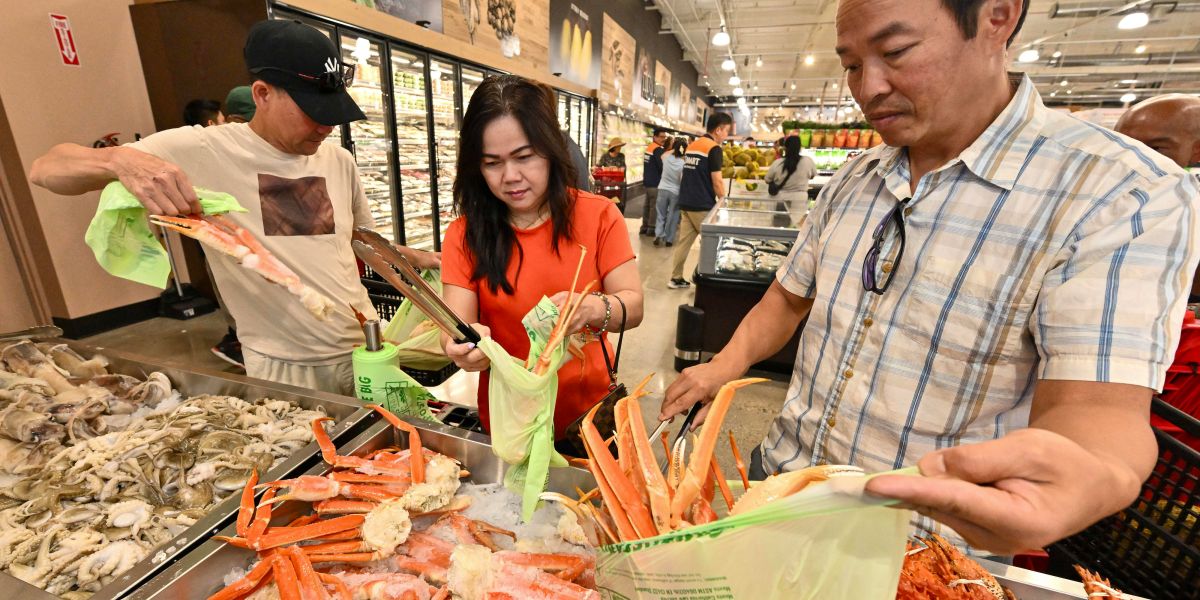
Yet crab retains its mystique. It’s beloved for its delicately flavored, finely textured meat—and for its fatty, rich roe and tomalley, culinary categories unto themselves. Now large, live specimens from the far corners of the world, like snow crab from Japan and red king crab from Norway, are this season’s luxury signifiers.

“Even the cheapest crab that we sell is typically double the price of what Maine or Nova Scotia lobster costs,” says Ian Purkayastha, founder of Regalis Foods. “King crab pricing is definitely at an all-time high.” Because their stocks and availability have been harshly affected by political and ecological upheavals, the crustaceans now wholesale for $70 to $85 a pound, he said. Retail consumers could spend upward of $1,200 to have a single, live 10-pound Norwegian red king crab delivered to their homes from Regalis. That, believe it or not, is the good news, he adds: “It’s just going to continue to go up and up and up in price. It’s not like you can farm a king crab.” He won’t be surprised if wholesale king crab prices top $100 a pound within five years.

The $888 Menu 

Take stock of current splurge-worthy dishes and dinners, and you’ll see: American diners and restaurant operators are embracing the luxury of crab. With the explosion of omakase-style dining, quality is trumping quantity more than ever. Take, for instance, Sushidokoro Mekumi. Newly opened in New York’s Hudson Square, this outpost of a two-Michelin-star restaurant in Kanazawa, on Japan’s west coast, offers a crab-centric omakase dinner for $888 per person, excluding drinks, for a few weeks this winter.

The meal’s current star is male snow crab, transported from Kanaiwa, a port town in Ishikawa prefecture, to New York in two days, at a wholesale cost of as much as $675 each. Three are needed for each evening’s seating of eight people. All December seatings are sold out, but January spots are available.

Mekumi’s chef Hajime Kumabe keeps it simple to convey just how good the ingredient is: “We almost never add anything else—just a little salt as seasoning.” Among the 18 to 20 courses are kani gayu, a delicate rice porridge made only from crab, crab broth, rice and salt; mokuzugani, or Japanese mitten crab, simply grilled over binchotan charcoal; and kobako gani, a female snow crab boiled immediately after it’s caught by fishermen in Japan, trained to do it to the restaurant’s specifications. Its meat is arranged with both its internal and external roe and served in its shell.

(An even more precious, and expensive, crab will splash into New York at the end of the year. Taiza gani, a snow crab from the cold waters off Kyoto is so rare that even in Japan it’s known as the “phantom crab.” Only five boats are permitted to fish it. It will be served for two nights at the new Tribeca kaiseki restaurant Muku; the $1,295 menus quickly sold out.)

Crab’s preciousness doesn’t just stem from its pristine state or the distance it’s traveled; it’s also in the labor it takes to bring it to the plate. At Yamada, the New York kaiseki restaurant that just scored four stars from the New York Times, it can take chefs 45 minutes of concentrated work to extract the meat from just one 2-pound kegani, or horsehair crab—just one of the crustaceans likely to appear in its $295, 10-course early winter menu. You might also find Hokkaido snow crab on the chawanmushi, a savory egg custard, and Dungeness crab in the closing donabe course.

The $100 Rice 

Outside New York, crab features at the twice-a-week kaiseki-inspired Crab Experience at Kinkan, a Thai-Japanese restaurant in Los Angeles. “Crab is my favorite thing,” says chef-owner Nan Yimcharoen, who grew up cooking and eating it with her grandmother in Bangkok. Over the course of the 11-course, $250 dinner, she serves dishes like sake steamed live Hanasaki gani—a spiny king crab from Hokkaido—and open-face scallop-shrimp shumai, topped with snow crab and sawagani, a tiny Japanese river crab, fried and eaten whole. 

At Angler, the live-fire seafood restaurant on San Francisco’s Embarcadero, savvy diners know to order the $100 off-menu crab rice. The course is composed of two dishes; a crab shell filled with the meat covered in Angler’s XO sauce, and koshihikari seaweed rice with crab butter, sake-cured salmon roe and crispy garlic chips. The crab variety changes seasonally and with the day’s catch: King crab is on the horizon; box and Dungeness crabs have featured recently. (If they can’t get good ones from California’s waters, the dish just isn’t available.) 

Dungeness, which James Beard called “a meal that the gods intended only for the pure in palate,” is also a marquee attraction (and the highest priced menu item) at two of the country’s notable regional Indian restaurants. At Unapologetic Foods’ Semma in New York’s West Village, diners are advised to preorder the $145 Kanyakumari Nandu Masala for two, which features a 1- to 1.5-pound crab cooked with cumin, black pepper, coriander seeds “and other spices too numerous to mention,” says chef Vijay Kumar.

The crab comes with coconut rice and crisp-edged parotta, for sauce sopping and textural contrast to the silky crabmeat. (Crab is an obsession across Unapologetic Foods’ restaurants.) Meanwhile at Nadu, chef Sujan Sarkar’s new Chicago restaurant, about 15 diners per week order the Keralan Crab Milagu Fry, available in big and bigger sizes for $135 and $185. For it, a whole Dungeness crab is cooked with Tellicherry peppercorn-tomato sauce and served with ghee rice.

The $2,000 Crab Deal

And then there’s the ceremony around live king crab. This fall at Octo, a Korean-Chinese restaurant in midtown New York, Steve and Christina Jang (owners of nearby Koreatown stalwart New Wonjo BBQ) began offering a feast featuring the creature in three parts: steamed with butter, garlic, soy sauce, cabbage and mushrooms over vermicelli noodles; dry-fried Sichuan style; and as fried rice, with the tomalley. An 8-pound crab, enough for five or six people, recently went for $850, they said, adding that they’re keeping the price low while they get the word out. 

At Carbone Riviera, which opened in the Bellagio, Las Vegas, in November, food has to work overtime to compete with flash: along with artworks by Miró, Picasso and Renoir, the restaurant has Fortuna, a 33-foot-long Riva yacht to give select guests a better view of the hotel’s famous fountains.

The restaurant’s king crab might just be the crustacean for the job. It comes prepared “Mulberry Style,” to reflect the abundant Italian and Chinese flavors on Mulberry Street, running through New York’s Little Italy and Chinatown. Priced from $175 to $200 per pound, a large one could tip the scales at upwards of $2,000. It is, potentially, the most expensive item at a place that is, for many people, what luxury is all about.



Source link

Continue Reading

Business

Down Arrow Button Icon

Published

on


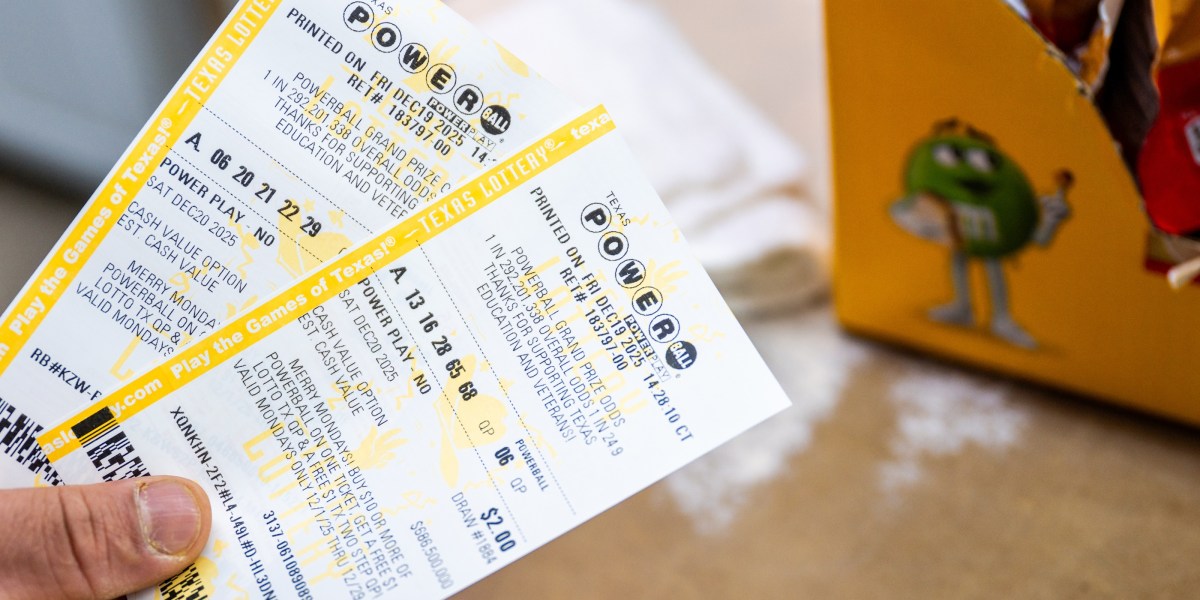
Powerball’s $1.7 billion jackpot may create a new ultrarich winner, but financial planners say what happens after the drawing can matter more than the winning numbers. They describe a consistent set of mistakes that can quietly turn a once‑in‑a‑lifetime windfall into a long, public mess.

Rushing big decisions

Many experts warn that acting too quickly—quitting a job, claiming the prize immediately, or committing to big purchases—is one of the most damaging errors. Articles in outlets including CNBC, NerdWallet, and USA Today emphasize slowing down, taking time to process the shock, and making no irreversible decisions until a plan is in place.

A related misstep is choosing between the lump sum and annuity on instinct instead of analysis, even though that decision locks in tax timing, investment options, and how long the money is likely to last. Financial writers note that many winners default to the lump sum without modeling scenarios with professionals and understanding that, after taxes, the headline $1.7 billion quickly shrinks.

Going public and losing privacy

Coverage in CNBC highlights that bragging about your win on social media or talking openly about it can invite lawsuits, scams, and constant money requests. Advisors repeatedly stress “keep it quiet” and, where allowed, explore ways to claim through a trust or remain anonymous to avoid becoming a target.​​

Experts also point out that winners often underestimate the emotional toll of overnight fame, which can strain marriages, friendships, and even personal safety if boundaries are not set early.

Skipping a professional team

A recurring theme across NerdWallet, Business Insider, and other outlets is that trying to DIY a nine‑ or 10‑figure fortune is a costly mistake. Financial planners urge winners to assemble a small, vetted team—typically an attorney, a tax professional, and a fiduciary advisor with experience in sudden wealth—before claiming the prize.

Winners also get into trouble when they rely on friends or relatives who “know about money” instead of credentialed experts, a pattern cited in guidance from Northwestern Mutual and others on working with lottery clients.

Overspending and assuming the money is infinite

Business Insider’s reporting on advisors who work with lottery winners notes that many clients behave as if the balance can’t be depleted, only to burn through wealth with multiple mansions, jets, and speculative investments. Experts describe unchecked lifestyle inflation and “spend, spend, spend” behavior as one of the most common paths to regret, especially for lump‑sum recipients.

Financial outlets also emphasize that winners often fail to set a sustainable withdrawal rate or diversify, ignoring the reality that the money is finite and that even ultra‑large fortunes can erode through taxes, market volatility, and ongoing costs like property taxes and maintenance.

Poor boundaries with family, friends, and causes

Advisors interviewed by Northwestern Mutual and others say another frequent mistake is giving without a plan: ad hoc loans, endless gifts, and open‑ended promises that create resentment when the answer finally becomes “no.” They suggest that winners instead define a clear gifting and philanthropy framework upfront—including who gets what and how much is reserved for charity—to avoid both over‑giving and relationship damage.

Experts further warn that feeling obligated to become a one‑person safety net or charity can derail long‑term goals and quickly consume capital, especially when requests are amplified by public attention.

Neglecting long‑term planning and purpose

Guides from major financial firms emphasize that many winners focus on immediate fantasies—houses, cars, travel—and neglect estate planning, debt strategy, and long‑term investing. Advisors recommend tackling basics like wills, trusts, and tax‑efficient structures early, so the windfall will benefit multiple generations, if desired.

Several profiles of past winners also point to a subtler mistake: not thinking about life after the headlines, which can leave people isolated, directionless, or vulnerable to bad ideas when the novelty fades. For the future holder of the $1.7 billion ticket, experts suggest that pairing technical planning with a clear sense of purpose could be the difference between a brief lucky streak and durable, generational wealth.

For this story, Fortune journalists used generative AI as a research tool. An editor verified the accuracy of the information before publishing. 


Source link

Continue Reading

Business

Advocacy group slams Trump’s plan to garnish wages of student loan borrowers in default

Published

on


The Trump administration said on Tuesday that it will begin garnishing the wages of student loan borrowers who are in default early next year.

The department said it will send notices to approximately 1,000 borrowers the week of January 7, with more notices to come at an increasing scale each month.

Millions of borrowers are considered in default, meaning they are 270 days past due on their payments. The department must give borrowers 30 days notice before their wages can be garnished.

The department said it will begin collection activities, “only after student and parent borrowers have been provided sufficient notice and opportunity to repay their loans.”

In May, the Trump administration ended the pandemic-era pause on student loan payments, beginning to collect on defaulted debt through withholding tax refunds and other federal payments to borrowers.

The move ended a period of leniency for student loan borrowers. Payments restarted in October of 2023, but the Biden administration extended a grace period of one year. Since March 2020, no federal student loans had been referred for collection, including those in default, until the Trump administration’s changes earlier this year.

The Biden administration tried multiple times to give broad forgiveness to student loans, but those efforts were eventually stopped by courts.

Persis Yu, deputy executive director for the Student Borrower Protection Center, criticized the decision to begin garnishing wages, and said the department had failed to sufficiently help borrowers find affordable payment options.

“At a time when families across the country are struggling with stagnant wages and an affordability crisis, this administration’s decision to garnish wages from defaulted student loan borrowers is cruel, unnecessary, and irresponsible,” Yu said in a statement. “As millions of borrowers sit on the precipice of default, this Administration is using its self-inflicted limited resources to seize borrowers’ wages instead of defending borrowers’ right to affordable payments.”


The Associated Press’ education coverage receives financial support from multiple private foundations. AP is solely responsible for all content. Find AP’s standards for working with philanthropies, a list of supporters and funded coverage areas at AP.org.


Source link

Continue Reading

Trending

Copyright © Miami Select.