Connect with us

Business

OpenAI debuts GPT-5.2 in effort to silence concerns it is falling behind its rivals

Published

on


OpenAI, under increasing competitive pressure from Google and Anthropic, has debuted a new AI model, GPT-5.2, that it says beats all existing models by a substantial margin across a wide range of tasks.

The new model, which is being released less than a month after OpenAI debuted its predecessor, GPT-5.1, performed particularly well on a benchmark of complicated professional tasks across a range of “knowledge work”—from law to accounting to finance—as well as on evaluations involving coding and mathematical reasoning, according to data OpenAI released.

Fidji Simo, the former InstaCart CEO who now serves as OpenAI’s CEO of applications, told reporters that the model should not been seen as a direct response to Google’s Gemini 3 Pro AI model, which was released last month. That release prompted OpenAI CEO Sam Altman to issue a “code red,” delaying the rollout of several initiatives in order to focus more staff and computing resources on improving its core product, ChatGPT.

“I would say that [the Code Red] helps with the release of this model, but that’s not the reason it is coming out this week in particular, it has been in the works for a while,” she said.

She said the company had been building GPT-5.2 “for many months.” “We don’t turn around these models in just a week. It’s the result of a lot of work,” she said. The model had been known internally by the code name “Garlic,” according to a story in The Information. The day before the model’s release Altman teased its imminent rollout by posting to social media a video clip of him cooking a dish with a large amount of garlic.

OpenAI executives said that the model had been in the hands of “Alpha customers” who help test its performance for “several weeks”—a time period that would mean the model was completed prior to Altman’s “code red” declaration.

These testers included legal AI startup Harvey, note-taking app Notion, and file-management software company Box, as well as Shopify and Zoom.

OpenAI said these customers found GPT-5.2 demonstrated a “state of the art” ability to use other software tools to complete tasks, as well as excelling at writing and debugging code.

Coding has become one of the most competitive use cases for AI model deployment within companies. Although OpenAI had an early lead in the space, Anthropic’s Claude model has proved especially popular among enterprises, exceeding OpenAI’s marketshare according to some figures. OpenAI is no doubt hoping to convince customers to turn back to its models for coding with GPT-5.2.

Simo said the “Code Red” was helping OpenAI focus on improving ChatGPT. “Code Red is really a signal to the company that we want to marshal resources in one particular area, and that’s a way to really define priorities and define things that can be deprioritized,” she said. “So we have had an increase in resources focused on ChatGPT in general.”

The company also said its new model is better than the company’s earlier ones at providing “safe completions”—which it defines as providing users with helpful answers while not saying things that might contribute to or worsen mental health crises.

“On the safety side, as you saw through the benchmarks, we are improving on pretty much every dimension of safety, whether that’s self harm, whether that’s different types of mental health, whether that’s emotional reliance,” Simo said. “We’re very proud of the work that we’re doing here. It is a top priority for us, and we only release models when we’re confident that the safety protocols have been followed, and we feel proud of our work.”

The release of the new model came on the same day a new lawsuit was filed against the company alleging that ChatGPT’s interactions with a psychologically troubled user had contributed to a murder-suicide in Connecticut. The company also faces several other lawsuits alleging ChatGPT contributed to people’s suicides. The company called the Connecticut murder-suicide “incredibly heartbreaking” and said it is continuing to improve “ChatGPT’s training to recognize and respond to signs of mental or emotional distress, de-escalate conversations and guide people toward real-world support.” 

GPT-5.2 showed a large jump in performance across several benchmark tests of interest to enterprise customers. It met or exceeded human expert performance on a wide range of difficult professional tasks, as measured by OpenAI’s GDPval benchmark, 70.9% of the time. That compares to just 38.8% of the time for GPT-5, a model that OpenAI released in August; 59.6% for Anthropic’s Claude Opus 4.5; and 53.3% for Google’s Gemini 3 Pro.

On the software development benchmark, SWE-Bench Pro, GPT-5.2 scored 55.6%, which was almost 5 percentage points better than its predecessor, GPT-5.1, and more than 12% better than Gemini 3 Pro.

OpenAI’s Aidan Clark, vice president of research (training), declined to answer questions about exactly what training methods had been used to upgrade GPT-5.2’s performance, although he said that the company had made improvements across the board, including in pretraining, the initial step in creating an AI model.

When Google released its Gemini 3 Pro model last month, its researchers also said the company had made improvements in pretraining as well as post-training. This surprised some in the field who believed that AI companies had largely exhausted the ability to wring substantial improvements out of the pretraining stage of model building, and it was speculated that OpenAI may have been caught off guard by Google’s progress in this area.


Source link

Continue Reading

Business

Down Arrow Button Icon

Published

on


Dealmakers are heading into the final weeks of 2025 on a $100 billion cliffhanger.

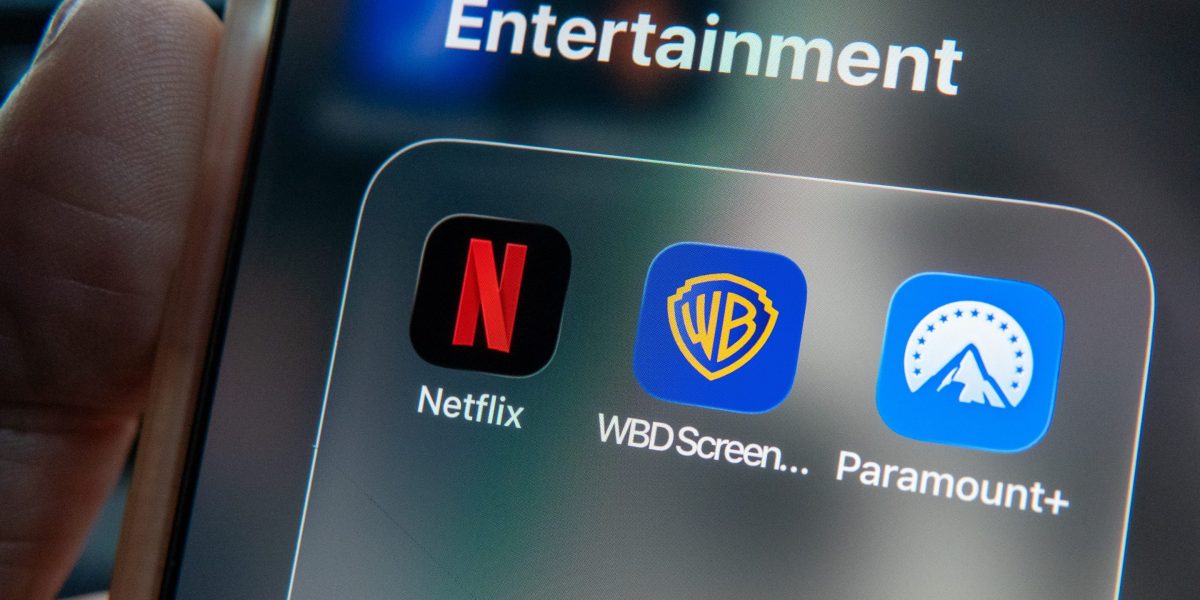
Paramount Skydance Corp.’s hostile bid to snatch Warner Bros. Discovery Inc. from under the nose of Netflix Inc. encapsulates the themes that have shaped a banner year for mergers and acquisitions: renewed desire for transformative tie-ups, massive checks from Wall Street, the flow of Middle East money and US President Donald Trump’s role as both disruptor and dealmaker.

Global transaction values have risen around 40% to about $4.5 trillion this year, data compiled by Bloomberg show, as companies chase ultra-ambitious combinations, emboldened by friendlier regulators. That’s the second-highest tally on record and includes the biggest haul of deals valued at $30 billion or more.

“There’s a sentiment in boardrooms and among CEOs that this is a potential multi-year window where it’s possible to dream big,” said Ben Wallace, co-head of Americas M&A at Goldman Sachs Group Inc. “We’re at the beginning of a rate-cutting cycle so there’s anticipation that there will be more liquidity.”

Beyond Netflix’s purchase of Warner Bros., this year’s blockbusters include Union Pacific Corp.’s acquisition of rival railroad operator Norfolk Southern Corp. for more than $80 billion including debt, the record leveraged buyout of video game maker Electronic Arts Inc., and Anglo American Plc’s takeover of Teck Resources Ltd. to reshape global mining. 

“When you look around and you see your peers doing these big deals and taking advantage of the tailwinds, you don’t want to be left out,” said Maggie Flores, partner at law firm Kirkland & Ellis LLP in New York. “The regulatory environment is in a position that is very conducive to dealmaking and people are taking advantage of it.”

The tally also shows a level of exuberance in certain pockets that some advisers and analysts worry is unsustainable. Global trade tensions are ongoing, and market observers are increasingly warning of a selloff in the white-hot equity markets that have underpinned the M&A resurgence.

Top executives at Goldman Sachs, JPMorgan Chase & Co. and Morgan Stanley have all flagged the risk of a correction in the months ahead, in part tied to concerns about an overheated artificial intelligence ecosystem, where huge amounts of investment have juiced technology stocks.

“These equity returns are really coming out of AI, and AI spend is not sustainable,” said Charlie Dupree, global chair of investment banking at JPMorgan. “If that pulls back, then you are going to see a broader market that isn’t really advancing.”

The AI buzz led to some the year’s standout transactions. Sam Altman’s OpenAI took in major investments from the likes of SoftBank Group Corp., Nvidia Corp. and Walt Disney Co., and a consortium led by BlackRock Inc.’s Global Infrastructure Partners agreed to pay $40 billion for Aligned Data Centers. In March, Google parent Alphabet Inc. framed its $32 billion acquisition of cybersecurity startup Wiz Inc. as a way to provide customers with new safeguards in the AI era.

“Everyone needs to be an AI banker now,” said Wally Cheng, head of global technology M&A at Morgan Stanley. “Just as software began eating the world 15years ago, AI is now eating software. You have to be conversant in AI and understand how it will affect every company.”

The technology sector more broadly has already notched a record year for deals, thanks to a series of big-ticket takeovers across public and private markets. The trend extended to the White House over the summer, when the US government took a roughly 10% stake in Intel Corp. in an unconventional move aimed at reinvigorating the company and boosting domestic chip manufacturing.

It was one of the clearest indications of Trump’s willingness to blur the lines between state and industry and insert himself into M&A situations during his second term, particularly in sectors deemed mission critical. His administration also acquired a stake in rare-earth producer MP Materials Corp. and Commerce Secretary Howard Lutnick has hinted at similar deals in the defense sector.

Trump has separately been positioning himself as kingmaker on high-profile transactions. The government secured a so-called golden share in United States Steel Corp. as a condition for approving its takeover by Japan’s Nippon Steel Corp., and the president recently signaled he’ll oppose any acquisition of Warner Bros. that doesn’t include new ownership of CNN.

“The Trump administration’s approach to merger regulation today is markedly different compared to the first time around,” said Brian Quinn, a professor at Boston College Law School. Quinn said he couldn’t think of a member of the Republican Party from 15 to 20 years ago who would now believe the US government “is involved in the business of picking winners.”

To be sure, bankers will be wondering if they could have achieved more in 2025 had it not been for the chaotic period earlier in the year, when deals were put on hold after Trump’s trade war hobbled markets. And in a sign that persistent economic challenges are still impacting some parts of M&A, the number of deals being announced globally remains flat.

Many small and mid-cap companies have lagged the broader stock market and are opting to pursue their own strategic plans instead of weighing inorganic options, according to Jake Henry, global co-leader of the M&A practice at consultancy McKinsey & Co.

“They’re thinking ‘I’m better off just operating my business and getting there.’ It has to be an explosive offer for them to come to the table,” he said.

Meanwhile, private equity firms, whose buying and selling is a key barometer for M&A, are still having a harder time offloading certain assets because of valuation gaps with buyers. This has had a knock-on effect on their ability to raise funds and spend on new acquisitions. But bankers are starting to see a recovery here too as interest rates come down and bring more potential acquirers to the table.

“What’s motivating sponsors more than anything is their need to return cash to investors,” said Saba Nazar, chair of global financial sponsors at Bank of America Corp. “We have been in bake-off frenzy for the last couple of months.”

Road to Record

Dealmakers began the year whispering of M&A records under Trump’s pro-business administration. While they will just miss out on the milestone in 2025, there is a strong sense on Wall Street that those early bumps only delayed the inevitable. 

Brian Link, co-head of North America M&A at Citigroup Inc., said that after ‘Liberation Day’ in April, he expected to spend more time figuring out the impact of tariffs on different business and how to adjust around that. 

“That has not been the case,” he said. “Unless fear creeps back into the market, there doesn’t seem to be anything in the near term that’s going to change the dynamic here.”


Source link

Continue Reading

Business

New York City is officially getting 3 Las Vegas-style casinos

Published

on


The New York Mets’ ballpark in Queens. A Bronx golf course once operated by President Donald Trump ’s company. A slot parlor on a horse racing track near John F. Kennedy International Airport.

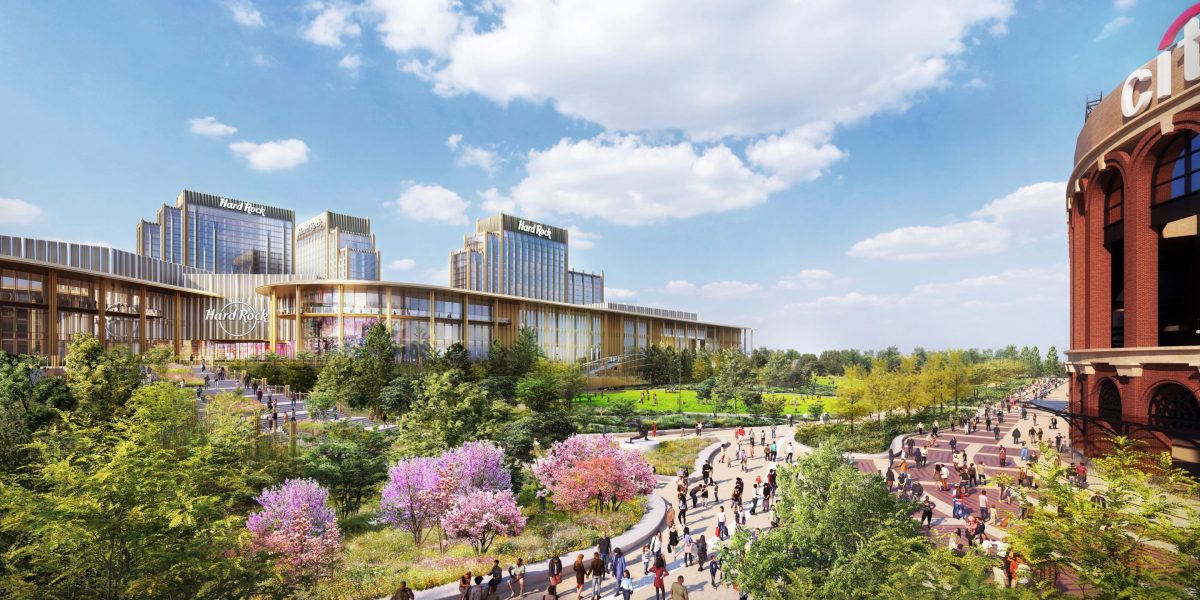
The three disparate sites, located far from the tourist hub of Manhattan, will become the future homes of New York City’s first Las Vegas-style resort casinos.

The state Gaming Commission on Monday awarded the three projects licenses to operate in the lucrative metropolitan-area market during a meeting at a riverside park in upper Manhattan.

The panel approved the licenses with the condition that the companies each appoint an outside monitor that would report regularly to the commission to ensure they meet their financial and legal obligations, as well as the promised investments they made to local communities.

Brian O’Dwyer, the commission’s chair, said the state looked forward to the promise of jobs, infrastructure improvements and gaming revenue being realized.

“You all have an important charge ahead of you, and you can be assured that this commission takes our responsibility to keep your feet to the fire with great respect,” he said to the project representatives in attendance.

Democratic New York Gov. Kathy Hochul said in a statement the projects would pump billions of dollars into the state’s transit and education systems and create tens of thousands of jobs.

But a handful of protesters opposed to billionaire Mets owner Steve Cohen’s Hard Rock plan vowed to continue their fight in court. They and other casino opponents worry the projects will only increase gambling addiction.

“You picked a billionaire over New Yorkers! Shame on you!” the group shouted as they walked out of the meeting.

Cohen and Hard Rock’s proposal calls for an $8.1 billion casino complex on a parking lot next to the Mets’ Citi Field that would include a performance venue, hotel and retail space.

Bally’s has proposed a roughly $4 billion casino at the Ferry Point golf course in the Bronx that would include a hotel, event center, meeting spaces, restaurants and other amenities.

And Resorts World has proposed investing more than $5 billion to expand its slots parlor at Aqueduct Race Track in Queens into a full casino with a hotel, dining and entertainment options.

The projects bested several other proposals that fell by the wayside during the high-stakes competition.

Among them were three casinos proposed for Manhattan that were rejected by local boards, including a Caesars Palace in the heart of Times Square backed by rapper Jay-Z. A plan for a resort on Coney Island’s iconic boardwalk in Brooklyn was also defeated by local opposition, and MGM abruptly pulled out of the once-crowded sweepstakes, despite local support.

The state gaming commission was authorized to license up to three casinos in the New York City area after voters approved a referendum in 2013 opening the door to casino gambling statewide.

Four full casinos, all upstate, now offer table games. The state also runs nine gambling halls without live table games, many of them also miles away from Manhattan.

Monday’s decision, in some ways, was largely a formality. Millions of dollars in gambling revenues are already factored into the state budget.

A state panel charged with vetting the proposals for the commission also recommended awarding a license to all three remaining proposals earlier this month.

The Gaming Facility Location Board, in its written decision, argued that the region’s dense and relatively affluent population, combined with high tourism, would be able to support all three plans, despite their relative proximity to each other.

The panel said its consultants conservatively estimated the casinos would generate a combined $7 billion in gambling tax revenues from 2027 to 2036, plus $1.5 billion in licensing fees and nearly $6 billion in state and local taxes.

Monday’s decision also means Trump could stand to claim a substantial prize. When Bally’s purchased operating rights for the city-owned Ferry Point golf course from the Trump Organization in 2023, it agreed to pony up an additional $115 million if it won a casino license.

Spokespersons for the Trump Organization didn’t respond to an email seeking comment Monday on the expected windfall.


Source link

Continue Reading

Business

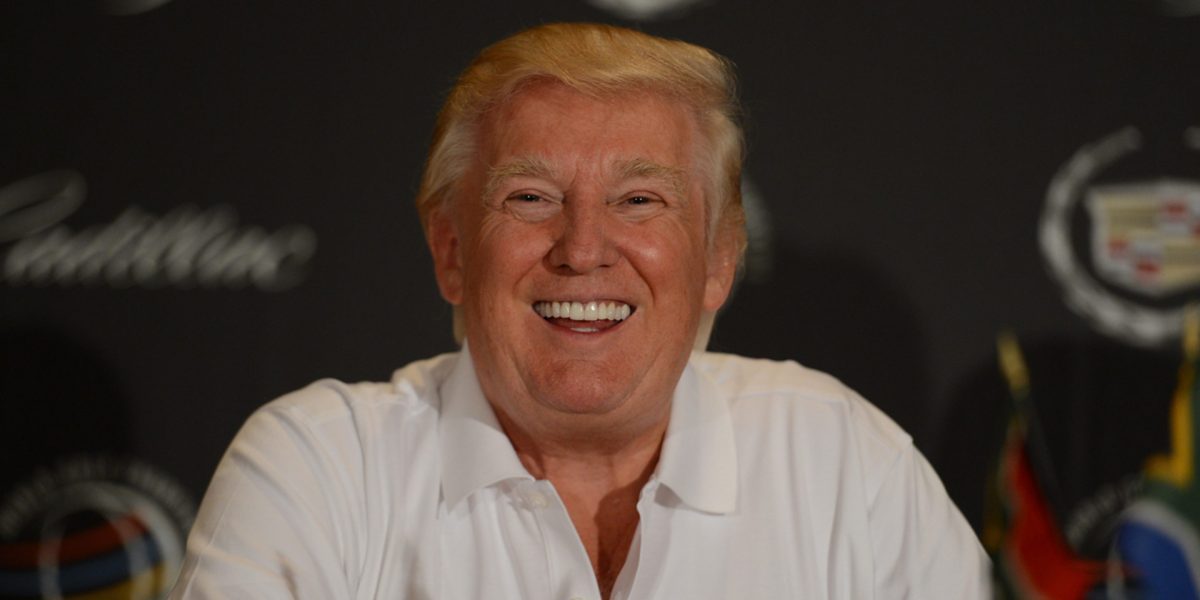
Cadillac returns as sponsor for PGA tour event at Trump National Doral

Published

on


Cadillac is returning as the title sponsor of a lucrative PGA Tour event held at Trump National Doral, which will hold one of the $20 million signature events in 2026.

The Cadillac Championship will be held the first weekend in May on the course once dubbed the “Blue Monster.” Doral first became part of the PGA Tour schedule in 1962, and it was held each year through 2016 until becoming a World Golf Championship under various names.

Brian Rolapp, the CEO of the PGA Tour, referred to Trump National Doral as a “legacy venue on our schedule.”

“We appreciate the support of Cadillac as we bring a new era of the PGA Tour to our fans in Miami,” Rolapp said in a statement.

Cadillac was the title sponsor of the WGC at Trump National Doral from 2011 through 2016. But the automaker chose not to renew its contract, the PGA Tour could not find a replacement sponsor for Doral in 2016 when President Donald Trump was the presumptive Republican nominee and the WGC event was moved to Mexico City.

Doral is among eight courses that has held a regular PGA Tour event for at least 50 years — the others are Riviera, Pebble Beach and Torrey Pines in California; Colonial (Texas), Waialae (Hawaii), Harbour Town (South Caroline) and Muirfield Village (Ohio).

It returned to the golf landscape in 2022 by hosting a LIV Golf event each of the last four years until returning to the PGA Tour schedule for 2026. The tour designated Trump National Doral a signature event before it signed Cadillac as the title sponsor.

This story was originally featured on Fortune.com


Source link

Continue Reading

Trending

Copyright © Miami Select.