Connect with us

Business

OpenAI COO Brad Lightcap on what history teaches us about AI and the enterprise race

Published

on


While OpenAI focused on the future during its DevDay event this week, I was especially curious about what OpenAI COO Brad Lightcap had to say about the past. 

Lightcap—who joined OpenAI from Y Combinator in 2018—double-majored in economics and history in college. I’m a big believer that we all, deep down, remain who we were and that, to understand moments of massive change, looking back is a helpful way to look forward. When I interviewed Lightcap for the Term Sheet Podcast and asked him what history could tell us about AI today, his answer surprised me.

“There are some things that rhyme [with previous technological cycles],” he said. “But in many ways, also, AI is weird…The reason I say that is because, if you look at past technological cycles, there’s almost always been one kind of innovation, right? Sometimes people call it the J-curve.” 

This is a paradigm, he said, that academic Carlota Perez talks about in her book, Technological Revolutions and Financial Capital: The Dynamics of Bubbles and Golden Ages. (He says it’s good, for anyone looking for reading material.)

“Her point, basically, is that these [transformations] have actually played out very consistently, and that you can understand these things as a repeatable phenomenon,” Lightcap said. “AI is different because the substrate is in a constant state of evolution. So, if you think about this as a road map from where we are to something akin to general intelligence, superintelligence, or whatever you want to call it—the path is exponential but it’s also ongoing.”

This rapid rate of change, he told Fortune, makes it a great time for startups.

“When the game board is getting shaken up like that, every day there’s opportunity,” said Lightcap, who also leads the OpenAI Startup Fund. “Anyone that can figure out how to really live in that disruption, live right at that frontier, and really just continue to move with the cresting wave as this continues—I think you’re in a great place.”

This ultimately aligns with Lightcap’s take on the enterprise AI race. Like any sector of tech, there’s pressure to innovate, of course. But when it comes to AI and the enterprise, Lightcap says, everything is still new and evolving in real time.  

“These transformations don’t happen overnight,” Lightcap said. “Enterprises are gigantic, complex organisms. When we think about how we progress our research roadmap, we actually think along the lines of AI that’s capable of impacting a large organization. We’re not there yet. We’re still in this era where you’re just starting to have models that can use tools, take actions. They know how to intelligently solve problems and can correct their own problem-solving, in some sense. But there’s still a lot that has to get built.”

Reflecting on how early it is in the enterprise AI story (but also in a statement that perhaps applies to AI overall), Lightcap put it simply: “We’re four seconds in this entire shift.”

See you Monday,

Allie Garfinkle
X:
@agarfinks
Email: alexandra.garfinkle@fortune.com
Submit a deal for the Term Sheet newsletter here.

Joey Abrams curated the deals section of today’s newsletter. Subscribe here.

Venture Deals

Reflection, a Brooklyn, N.Y.-based open-source superintelligence lab, raised $2 billion in Series B funding from Nvidia, Disruptive, B Capital, Citi, and others.

Expedition Therapeutics, a San Francisco-based developer of therapies for novel inflammatory and respiratory diseases, raised $165 million in Series A funding. Sofinnova Investments and Novo Holdings led the round and were joined by Forbion, Dawn Biopharma, and others.

Yendo, a Dallas, Texas-based developer of a vehicle-secured credit card, raised $50 million in Series B funding from Spice Expeditions, Autotech Ventures, FPV Ventures, Pelion Venture Partners, and others.

Sensi.AI, an Austin, Texas-based AI-powered copilot for senior care, raised $45 million in Series C funding. Qumra Capital led the round and was joined by Insight Partners, Zeev Ventures, Entrée Capital, Flint Capital, and Jibe Ventures.

Routefusion, an Austin, Texas-based financial infrastructure provider, raised $26.5 million in Series A funding. PeakScan Capital led the round and was joined by Silverton Partners.

Foundation Health, a San Francisco-based developer of AI technology for pharmacy operations, care coordination, and direct-to-patient delivery, raised $20 million in Series A funding. Define Ventures led the round and was joined by Vanderbilt University, Intermountain Ventures, and existing investors.

CipherOwl, a San Francisco-based institutional cryptocurrency compliance platform, raised $15 million in seed funding. General Catalyst and Flourish Ventures led the round and were joined by Coinbase Ventures, Sancus Ventures, Enlight Capital, and others.

HiOctave, a San Francisco-based provider of AI technology to help small and medium-sized businesses automate and personalize customer experiences, raised $15 million in funding. Vinod Khosla and Khosla Ventures led the round and were joined by Celesta Capital, Anthology Fund, and others.

AnyTeam, a San Francisco-based AI-powered sales operating system, raised $10 million in seed funding. SignalFire and Crosslink Capital led the round and were joined by angel investors.

Knapsack, a Portland, Ore.-based AI-powered digital product creation, raised $10 million in Series A funding. Builders VC led the round and was joined by Crosslink Capital, Epic Ventures, and others.

Sitehop, a London, U.K.-based encryption platform designed for defense against quantum-powered cyber attacks, raised £7.5 million ($10 million) in funding. Northern Gritstone led the round and was joined by Amadeus Capital Partners, Manta Ray, and others.

Akua, a Dover, Del. and Bogotá, Colombia-based operating system for payments in emerging markets, raised $8.5 million in seed funding. Flourish Ventures and Cathay Latam led the round and were joined by Atlantico and others.

Smallest.ai, a San Francisco-based platform for building AI voice agents, raised $8 million in seed funding. Sierra Ventures led the round and was joined by 3one4 Capital and Better Capital.

Onos Health, a San Francisco-based behavioral health platform, raised $6 million in seed funding. Haystack and Pathlight Ventures led the round and were joined by Bertelsmann Healthcare Investments and Nebular.

bondu, a San Francisco-based AI-powered toy for kids, raised $5.3 million in seed funding. Makers Fund led the round and was joined by Samsung Ventures, Boost VC, and Founders Inc.

PAVUS AI, a Santa Clara, Calif.-based platform designed to help procurement teams manage their data, raised $5.3 million in funding. Sentinel Global led the round.

Previvor Edge, a New York City-based cancer prevention and early detection platform, raised $3.3 million in pre-seed funding. CoFound Partners and Max Ventures led the round and were joined by Humbition Capital, Red Swan Ventures, and Designer Fund.

Oasiz, a San Francisco-based social platform for playable content, raised $2.5 million in seed funding. a16z Speedrun and The Venture Reality Fund led the round and were joined by others.

Parallel, a Lehi, Utah-based AI-powered finance platform for startups, raised $2.3 million in seed funding. Night Capital and Tokyo Black led the round and were joined by Penny Jar Capital, Background VC, and others.

Private Equity

Systems Planning & Analysis, a portfolio company of Arlington Capital Partners, acquired Group W, a Vienna and Dumfries, Va.-based data science and defense analytics company. Financial terms were not disclosed.

Funds + Funds of Funds

Ecosystem Investment Partners, a Baltimore, M.D. and San Francisco-based private equity firm, raised $400 million for its fifth fund focused on large-scale wetland, stream, water quality, biodiversity and habitat mitigation and restoration projects.

People

Halifax Group, a Washington, D.C.-based private equity firm, promoted Jamie Cavanaugh to managing director.



Source link

Continue Reading

Business

Co-working provider JustCo CEO sees commonalities with hotels: ‘It’s a hospitality business’

Published

on


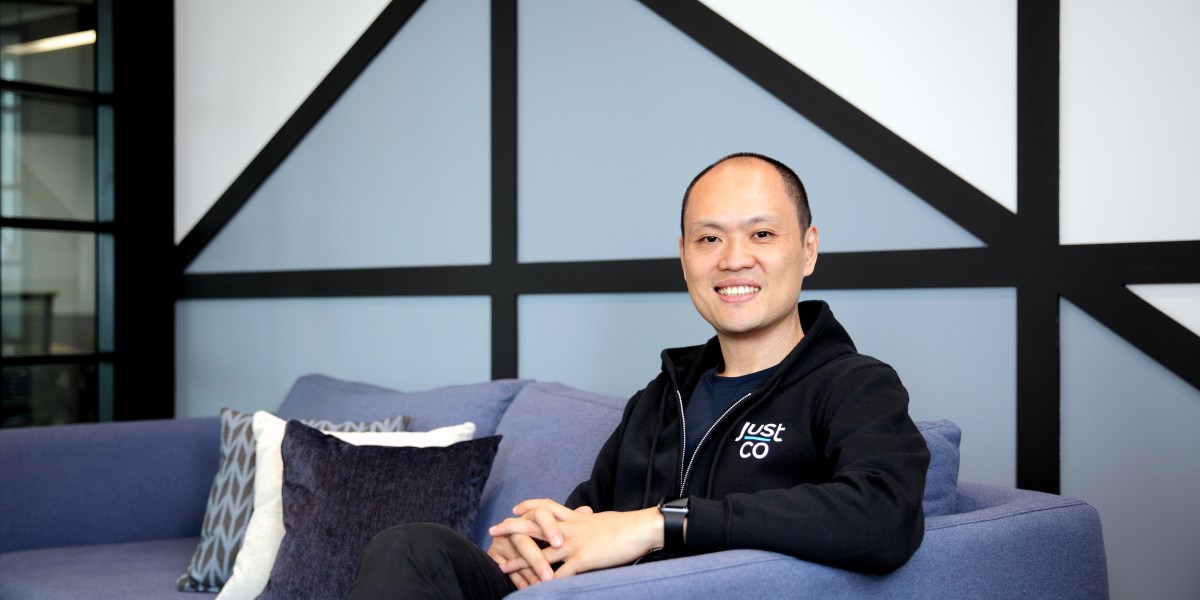
Kong Wan Sing, the founder and CEO of JustCo, one of Asia’s largest co-working space providers, doesn’t quite think of himself as leading an office company. Instead, he sees parallels with a different property business: Hotels.

“It’s a hospitality business. People come to us not just for the network, but also for the hospitality,” he told Fortune. “You need to serve them. You have to take care of their needs, like serving the customers who are coming to look for them in the office.”

Kong and JustCo are expanding their presence in Asia even as employers and employees continue to fight a battle about flexible work and returning to the office. Globally, corporate giants ranging from Amazon to JPMorgan have called workers back to the office full-time. But employees tout the benefits of working from home and hybrid work, forcing employers and office designers to get creative in how they bring people back. 

The company is also expanding into new markets regionally, including Malaysia and India. In the longer run, they’re also looking to move into countries in North Asia and the Middle East.

“After entering all these markets, we will be truly covering all the key cities in Asia-Pacific,” says Kong. He’s even considering returning to mainland China, after JustCo exited the market in 2022 due to tight social distancing regulations during the COVID pandemic.

JustCo just entered the Vietnam market with a new office along Ho Chi Minh City’s waterfront. The Vietnamese city is the tenth urban market in Asia for JustCo. It’s also a return of sorts for Kong, who was first exposed to the idea of a flexi-office in Ho Chi Minh City several decades ago. 

JustCo’s story

Kong Wan Sing founded JustCo in Singapore in 2011. Following a regional expansion drive in 2015, it now operates 48 offices across Asia-Pacific, including in major cities like Seoul, Bangkok, Taipei, Melbourne, and Sydney. Kong himself hails from a family of entrepreneurs; his parents operate garment factories in nearby Malaysia. “There’s genes inside me to build a business,” he says. 

In the early 2000s, Kong was an employee of Singaporean real estate investment company Mapletree, working out of a flexi-office in Vietnam’s Ho Chi Minh City. (A flexi-office is a modern workspace where employees don’t have assigned desks, but instead choose from various work zones including hot desks, quiet pods, and collaborative areas.)

The experience opened his eyes to the value of flexible workspaces, and he saw a business opportunity in Asia, where such spaces were still few and far between. 

Kong notes that, just three years ago, just under 4% of all offices in Asia-Pacific were flexi-offices. It’s since risen to over 5%, but that’s still half the level seen in more developed markets in Europe and the U.S. Yet JustCo’s CEO says he’s seeing a “surge” in Asia: “The growth is definitely much faster than European or American countries.”

JustCo also leases small offices for businesses to rent. Sixty percent of JustCo’s clients are multinational corporations looking for space for a regional office, Kong said. Companies like Chinese tech giant Tencent and U.S. vaccine maker Moderna use JustCo for their local offices. 

New brands

JustCo has since broadened its offerings to potential renters, launching two new brands: “THE COLLECTIVE” and “the boring office.”

The former is a luxury co-working space, equipped with premium white-glove services like daily breakfasts and aperitif hours, and twice-a-day office cleaning. The first such space was launched in Tokyo in March.

“Japan is a very mature market, and people in Japan—they appreciate luxury stuff,” said Kong, when asked why the country was chosen to debut its premium brand. Kong and his team has since launched THE COLLECTIVE in Bangkok and Taipei; the company will bring the concept to Singapore and India in 2026.

“The boring office” sits on the other end of the spectrum, catering to firms that want a stripped-down solution. “When you go to the boring office, there’s no cleaning [of rooms] every day, only once a week,” Kong says. “And the pantry is a very basic pantry that provides only water—there’s no coffee, nothing.” The first space under that brand was launched in Singapore in July.

These three brands cater to companies’ differing needs, and are priced along a sliding scale. 

The firm’s luxury offices are 20 to 30% more costly than the classic JustCo workspace, while the boring office’s spaces are cheaper by roughly the same amount, Kong explains.


Source link

Continue Reading

Business

Creative workers won’t be replaced by AI, they will become ‘directors’ managing AI agents

Published

on


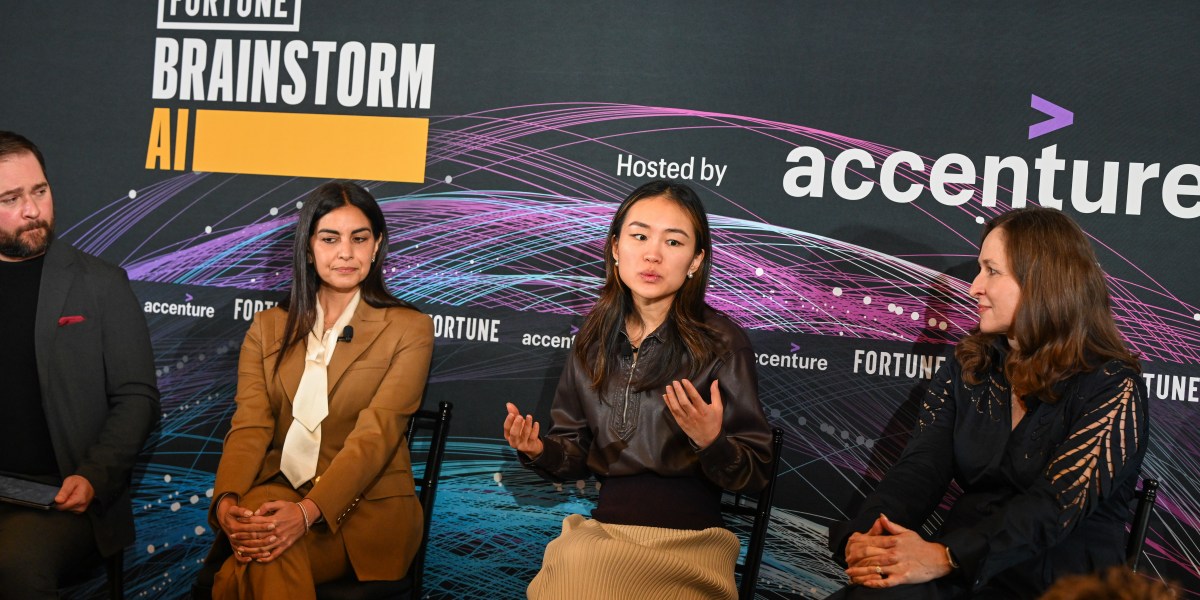
AI won’t automate creative jobs—but the way workers do them is about to change fundamentally. That’s according to executives from some of the world’s largest enterprise companies who spoke at the Fortune Brainstorm AI conference in San Francisco earlier this week.

“Most of us are producers today,” Nancy Xu, vice president of AI and Agentforce at Salesforce, told the audience. “Most of what we do is we take some objective and we say, ‘Okay, my goal is now to spend the next eight hours today to figure out how to chase after this customer, or increase my CSAT score, or to close this amount of revenue.”

With AI agents handling more tasks, Xu said that workers will shift “from producers to more directors.” Instead of asking, “How do I accomplish the goal?” they’ll instead focus on, “What are the goals that I want to accomplish, and then how do I delegate those goals to AI?” she said.

Creative and sales professionals are increasingly anxious about AI automation as tools like chatbots and AI image generators have proved to be good at doing many creative tasks in sectors like marketing, customer service, and graphic design. Companies are already deploying AI agents to take on tasks like handling customer questions, generating marketing content, and assisting with sales outreach. 

Pointing to a recent project with electric-vehicle maker Rivian, Elisabeth Zornes, chief customer officer at Autodesk, said that the company’s AI-powered tools enabled Rivian to test designs through digital wind tunnels rather than clay models. “It shaved off about two years of their development cycle,” Zornes said.

As AI takes on some of these lower-level tasks, Zornes said, workers can focus on more creative projects.

“With AI, the floor has been raised, but so has the ceiling,” she added. “We have an opportunity to create more, to be more imaginative.”

The uneven impact of AI

The shift to AI-augmented work may not benefit all workers equally, however.

Salesforce’s Xu said AI’s impact won’t be evenly distributed between high and low performers. “The near-term impact of AI will largely be that we’re going to take the bottom 50 percentile performers inside a role and bring them into the top 50 percentile,” she said. “If you’re in the top 10 percentile, the superstar salespeople, creatives, the impact of AI is actually much less.”

While leaders were keen to emphasize that AI will augment, rather than replace, creative workers, the shift could reshape some traditional career ladders and impact workforce development. If AI agents handle entry-level execution work, companies may need to hire fewer people, and some learning opportunities may disappear for younger workers. 

Ami Palan, senior managing director at Accenture Song, said that to successfully implement AI agents, companies may need to change the way they think about their corporate structure and workforce.

“We can build the most robust technology solution and consider it the Ferrari,” she said. “But if the culture and the organization of people are not enabled in terms of how to use that, that Ferrari is essentially stuck in traffic.”

Read more from Brainstorm AI:

Cursor developed an internal AI help desk that handles 80% of its employees’ support tickets, says the $29 billion startup’s CEO

OpenAI COO Brad Lightcap says ‘code red’ will force the company to focus, as the ChatGPT maker ramps up enterprise push

Amazon robotaxi service Zoox to start charging for rides in 2026, with ‘laser focus’ on transporting people, not deliveries, says cofounder


Source link

Continue Reading

Business

Trump says ‘starting’ land strikes over drugs in latest warning

Published

on


President Donald Trump said the US would be “starting” land strikes on drug operations in Latin America, though again declined to provide details on when and where the escalation of his military campaign would actually begin, or if countries could still do anything to avert the threatened action.

“We knocked out 96% of the drugs coming in by water, and now we’re starting by land, and by land is a lot easier, and that’s going to start happening,” Trump told reporters Friday in the Oval Office.

The US president for days has been pledging to broaden the effort, which comes after the Pentagon has launched a series of attacks on what it has called drug-smuggling boats in international waters off the coast of South America.

While Trump’s posturing has largely been seen as a pressure campaign against Venezuelan President Nicolás Maduro, he on Friday insisted the land targeting may not only impact Venezuela.

Read more: Trump Says US Eyes Land Strikes Next After Drug Boat Attacks

“It doesn’t necessarily have to be in Venezuela,” he said, adding that “people that are bringing in drugs to our country are targets.” 

Trump has justified the actions in part by framing the fight against drug smuggling as akin to combat operations. He told reporters that if overdose deaths were counted like combat deaths, it would be “like a war that would be unparalleled.”

Striking targets on land would represent a major escalation, and Maduro earlier this week said that if his nation came under foreign attack, the working class should mount a “general insurrectionary strike” and push for “an even more radical revolution.”

Join us at the Fortune Workplace Innovation Summit May 19–20, 2026, in Atlanta. The next era of workplace innovation is here—and the old playbook is being rewritten. At this exclusive, high-energy event, the world’s most innovative leaders will convene to explore how AI, humanity, and strategy converge to redefine, again, the future of work. Register now.


Source link

Continue Reading

Trending

Copyright © Miami Select.