
Politics
Online safety — strawberries — oily — fumes — spaced out

Online safety
The debate over internet safety for minors has drawn the attention of Congress. But lawmakers in Florida’s congressional delegation differ on the quality of the work done so far.
Rep. Gus Bilirakis, a Palm Harbor Republican who chairs the House Commerce, Manufacturing and Trade Subcommittee, introduced the Kids Online Safety Act (KOSA) (HR 6484), legislation he said would impose safety standards on Big Tech.
“Children and teens are constantly connected to devices, and their reality is now a blend of virtual and real-world experiences — conditions that have been proven to exacerbate isolation and negative social interactions, such as sexual abuse,” Bilirakis said.
“We’ve seen far too many children and teens succumb to tragedy after being exposed to dangers online. After multiple congressional hearings and whistleblower testimonies, there is widespread, bipartisan consensus that Big Tech is failing to mitigate risks, empower parents and safeguard its youngest users. Our legislation will require them to do so.”
The bill would define a set of harms to minors and require social media platforms to develop practices and procedures to mitigate threats of physical violence, sexual exploitation and access to unlawful products for minors. The legislation also provides parents with tools to monitor children’s online activity, requires independent audits of platforms’ adherence to rules, and creates reporting mechanisms for activity that could harm youth.
But the key difference between this year’s KOSA and last year’s online safety package is that Bilirakis remains the only sponsor. Last year, Rep. Kathy Castor helped craft the legislation, along with an update to the Children and Teens’ Online Privacy Protection Act (COPPA). The Tampa Democrat, however, has not signed on to the package this year and has offered only criticism of the products unveiled by GOP colleagues. She said the new bills weaken past regulations and create “ineffectual versions” of prior laws.
“KOSA is intended to give young people and parents meaningful content-neutral tools and transparency to keep young people safe online, while holding Big Tech accountable for addictive design features and predatory algorithms that push harmful and inappropriate content to our kids,” Castor said.
She offered a similarly poor review for a version of COPPA introduced by GOP Reps. Laurel Lee of Thonotosassa and Tim Walberg of Minnesota.
“House Republicans need to strengthen the bills to protect kids in the modern age and to gain bipartisan support. I encourage House Republicans to spend more time listening to families who support a strong federal law and less time meeting with Big Tech executives who value profits over kids’ best interests,” Castor said.
But Lee said her legislation would strengthen online protections for children and improve today’s environment. Her bill would prohibit tech companies from collecting personal information from users ages 13 to 16 without their consent and would ban the targeting of ads at children. Restrictions would also be imposed on how much data could be collected from minors.
“Protecting children and teens online requires laws that reflect today’s digital landscape,” Lee said.
“COPPA 2.0 provides necessary updates to existing law, sets clear limits on data collection, and ensures platforms act to protect the privacy and data of young users. This legislation provides parents with stronger tools and creates a safer, more accountable online environment for minors. I am proud to support this effort alongside my colleague.”
Specialty growers
Florida leads the nation in the growth of certain specialty seasonal crops, such as strawberries. As the U.S. Department of Agriculture (USDA) considers relief for farmers facing unfair trade practices, Sen. Rick Scott doesn’t want those growers to be ignored.
The Naples Republican sent a letter to Agriculture Secretary Brooke Rollins urging the agency to consider and include specialty crops in any relief package being crafted.
“For years, Florida’s specialty crop producers have battled unfair trade practices and market distortions caused by Communist China, Latin America, and other foreign markets while also facing challenges such as citrus greening and hurricanes,” Scott wrote.
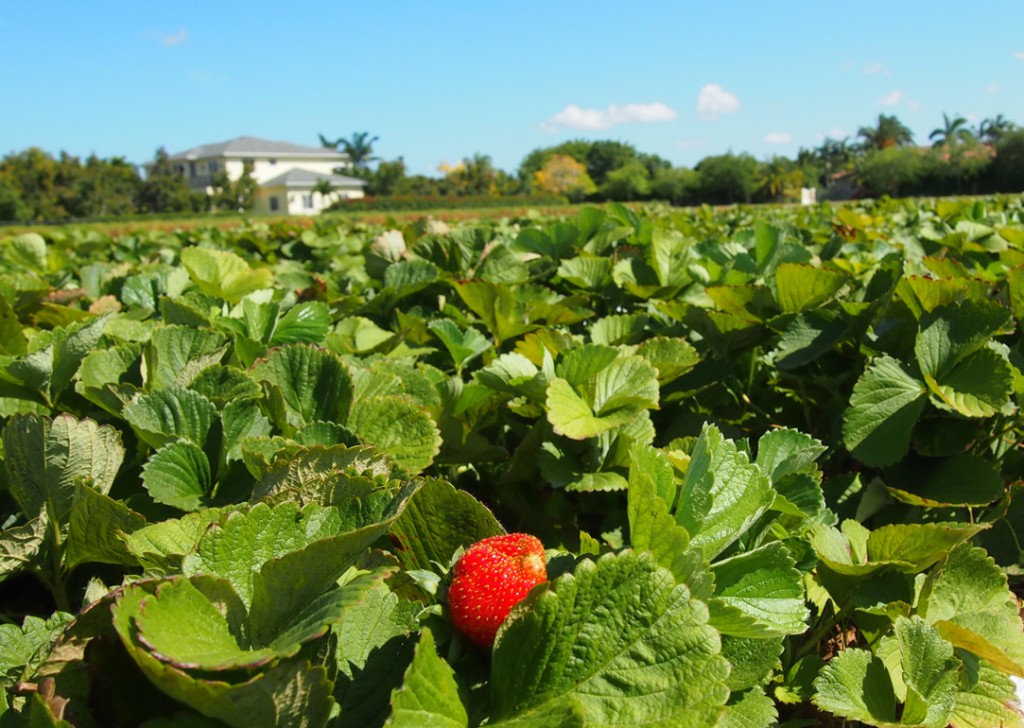
“Many of their foreign competitors enjoy government subsidies and operate under far weaker labor and environmental standards — even for imports into the United States — while Florida’s growers are held to some of the highest production standards in the world, leaving them to compete on an uneven playing field.”
He pointed specifically at a history of Mexico “dumping” low-quality products in the U.S. market at discount prices. While the administration has discussed major crops such as soybeans in relief talks, Scott wants to ensure that Florida’s prevalent crops also receive due consideration.
“For too long, these hardworking farmers have been left behind while other commodity producers have received significant federal relief. I also recognize the USDA will fund such support with tariff revenues, which is a meaningful way to drive these investments back into the United States’ economy. To ensure these funds go directly to American growers and businesses, I ask that any aid prohibit the use of dollars to purchase agricultural commodities, equipment, or materials made in Communist China,” he wrote.
“It would be unacceptable for taxpayer-funded relief meant to support American farmers to flow, even indirectly, to the Chinese Communist Party or its state-backed industries.”

Oil opposition
Every member of Florida’s congressional delegation locked arms and voiced opposition to opening Florida’s shores to offshore oil drilling.
Sens. Ashley Moody and Scott, along with Rep. Vern Buchanan, led a letter signed by the whole Florida congressional delegation urging President Donald Trump to uphold his first-term executive order extending a ban on oil and gas leasing off Florida’s Gulf and east coasts through 2032.
“President Trump made the right call in 2020 when he protected Florida from offshore drilling, and we’re asking him to keep those safeguards in place,” said Buchanan, a Sarasota Republican and co-Chair of the Florida congressional delegation.

“Florida’s coastline is essential to our tourism-based economy, environment and military readiness. A single mistake offshore could cost our state billions of dollars. We cannot afford to lose even an inch of these critical protections.”
The Florida lawmakers sent the letter in response to a program proposed by the Department of the Interior’s Bureau of Ocean Energy Management, which would open part of the Eastern Gulf to new oil and gas drilling. The area overlaps with waters explicitly protected under Trump’s executive order.
Lawmakers also warn that the newly proposed leasing area falls inside the Gulf Test Range, a large military training zone used for advanced air and weapons systems testing. They describe the range as a critical national security asset.
“The Gulf Test Range remains an integral part of Department of War training to ensure mission readiness and is supported by multiple military bases in Florida’s Panhandle,” the lawmakers wrote. “Collectively, these bases employ tens of thousands of military and civilian personnel and are of critical importance to national security.”
Fighting fumes
Carbon monoxide can be a silent killer, but Rep. Jimmy Patronis is doing his part to sound off about it. The Fort Walton Republican filed a bipartisan bill (HR 934) with Rep. Josh Gottheimer, a New Jersey Democrat, which recognizes November as Carbon Monoxide Action and Awareness Month.
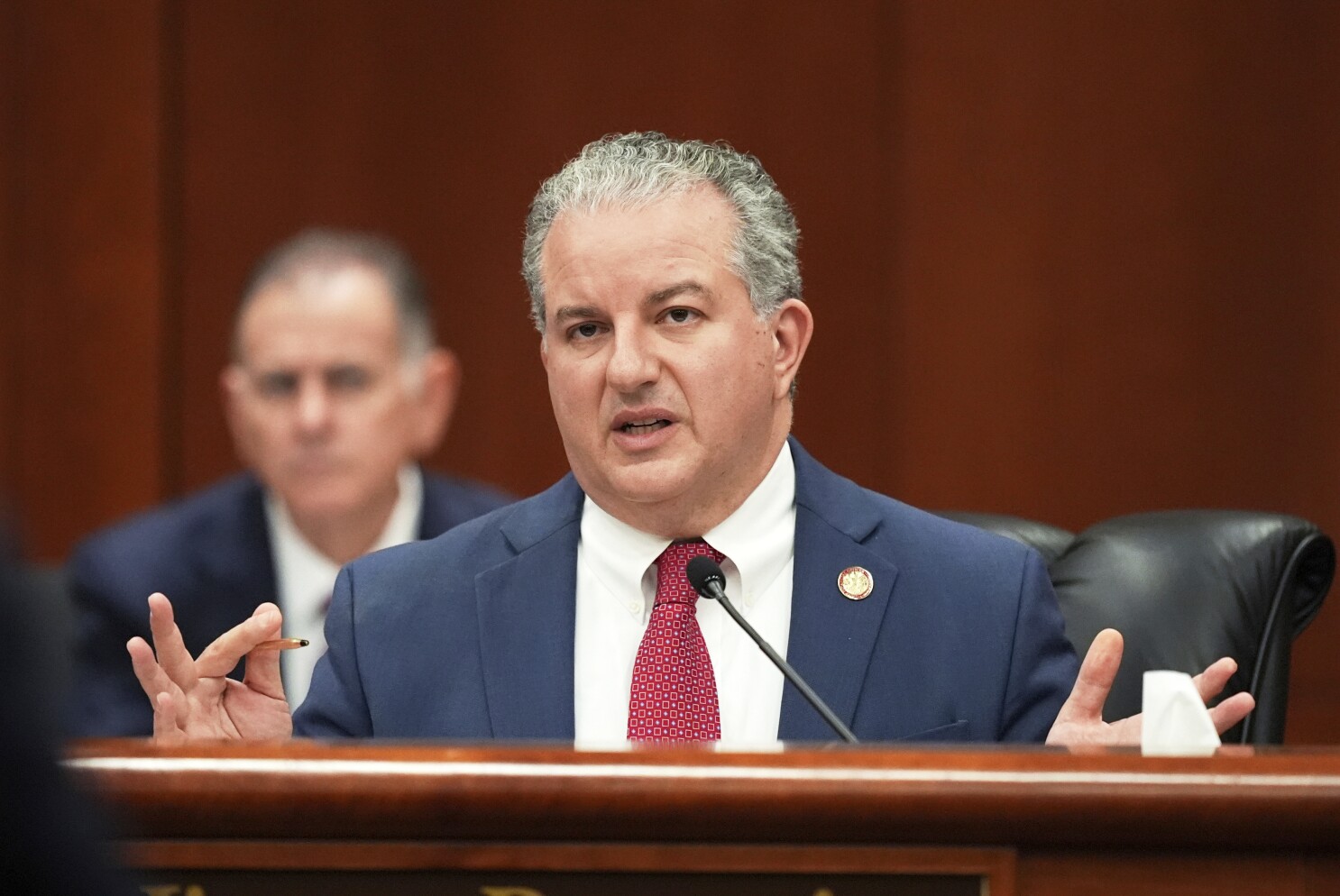
“As a former state fire marshal, I’ve seen how carbon monoxide becomes a serious risk after hurricanes, especially when generators aren’t used safely,” said Patronis, who served more than eight years as Florida’s Chief Financial Officer. “We have to prevent these tragedies in our homes and having a working carbon monoxide alarm is a simple step that can save lives.”
He noted that 82 million citizens, about a third of the country, have no carbon monoxide detectors in their homes, despite the harm it causes and the $1.3 billion Americans spend annually on it.

Whose schools?
Legislation requiring disclosure on foreign funding for schools just cleared the House.
Rep. Aaron Bean’s Transparency in Reporting of Adversarial Contributions to Education (TRACE) Act (HR 1049) will require schools to show their curricula to parents if foreign funds finance them and to notify parents of any overseas transactions in which they are involved.

The bill would also stipulate that parents be notified of how many school employees, if any, are being compensated by another country or foreign adversary and whether foreign nations have donated to the institution.
“American schools are for education, not espionage. Yet this is what happens when our institutions of learning accept the Trojan horse of foreign funding,” said Bean, a Fernandina Beach Republican.
“The TRACE Act puts parents back in charge, exposes foreign influence for what it is, and slams the door on hostile nations trying to reach America’s youth. Now it’s up to the Senate to pass the TRACE Act to solidify parents’ rights, defend our classrooms, and keep our schools rooted in freedom.”
New space race
The U.S. remains the only nation to land a man on the moon, but Rep. Mike Haridopolos said that doesn’t mean the space race has ended.
At a hearing of the House Science, Space and Technology Committee, the Indian Harbor Beach Republican and Committee Chair opened with a reminder that China had its own plans to dominate the interstellar field.
“For generations, the United States led humanity into space with unmatched ingenuity and without a true rival. However, that situation is changing as China moves methodically, relentlessly and ruthlessly to tighten its grip on space capabilities and seek the strategic advantages it confers by any means possible,” Haridopolos said.

“History reminds us that great-power competition shapes the destiny of civilizations. Just as the rivalry between Spain and Great Britain defined the oceans in the 16th and 17th centuries, the competition between the United States and China will define the space domain today. Whoever leads beyond Earth will shape the future of Earth.”
He noted China’s Project 921, its human spaceflight program, which launched in 1992. Chinese President Xi Jinping has stepped up investment in that effort, including the launch of a module for its own space station in 2021.
“China’s commercial space sector has since surged forward, aimed to compete with America’s world-leading commercial space industry. This is not accidental. It is strategic. And to be clear, the objective is not merely to keep up. Their objective is to outpace, outmaneuver, and ultimately defeat the United States,” Haridopolos said.
“America is not standing still. In my district, at the Kennedy Space Center, we surpassed 100 launches just two weeks ago. Roughly 95% of those launches came from a single commercial company, SpaceX, (which) first launched in 2006. China is not even close, at around 73 launches. Still, Beijing is pressing ahead. Their plans include landing ‘taikonauts’ on the lunar surface by 2030 and constructing a research base at the Moon’s South Pole by 2035.”
Federalizing D.C.
The National Guard continues to patrol Washington in groups of four, months after Trump called in forces to crack down on crime in the city. But following the death of Army Specialist Sarah Beckstrom and the shooting of Air Force Staff Sergeant Andrew Wolfe, Rep. Anna Paulina Luna wants Trump to double down.
The St. Petersburg Republican sent a letter to the President urging him to re-federalize the District of Columbia.

“This was not a random act of violence. This was an attack on uniformed service members who were deployed,” Luna said. “Specialist Sarah Beckstrom did not die on some distant battlefield or in a war-torn foreign country. She died here, in the United States, protecting American citizens. And Staff Sergeant Andrew Wolfe continues to fight for his life. Washington, D.C. is in crisis, and temporary measures are not enough.”
She asserted that the previous crackdown did result in crime rates going down, and that local leadership of the nation’s capital city could not be trusted to do so.
“History proves that when Washington, D.C. falls into crisis, federal leadership is not just warranted but needed,” Luna said. “The capital of the United States cannot be allowed to deteriorate into a place where criminals feel empowered to murder the very people protecting it. Specialist Beckstrom deserved better. Andrew Wolfe deserves better. Every Guardsman, every federal employee, and every American in this city deserves better.”
Mayor Muriel Bowser, for her part, took credit for a reduction in the city’s overall homicide rate in 2025.
“D.C.’s homicide rate is at its lowest in eight years. And the highest homicide case closure rate in 13 years,” she said. “Any crime is a crime too many, but we’re headed in the right direction.”
Celebrating first responders
Buchanan held a ceremony this week honoring first responders in Florida’s 16th Congressional District.
“As first responders, fire departments and EMS teams are summoned on short notice to serve their communities,” Buchanan said. “Oftentimes, they arrive at scenes of great adversity and trauma, to which they reliably bring strength and composure. I believe these awards are a fitting tribute to our first responders and a reminder of the important role they play in our communities.”

Honors included a Career Service Award to Hillsborough County Fire Rescue Battalion Chief Jeff Martin. He also gave an Associate Service Award to Manatee County Public Safety’s Adam Nover, and Dedication and Public Service Awards to East Manatee Fire Rescue Firefighter Rob Day, Hillsborough County Fire Rescue Fire Capt. Ralph Mascaro and the entire Sun City Center Emergency Squad.
Buchanan also presented Preservation of Life Awards to Hillsborough County Fire Rescue Capt. Clifford Davis, Firefight/Paramedics Jacob Campbell and Anna Inman, and Firefighter Maurice Swan and Manatee County EMS Charge Paramedic Peterson Gustave and District Chiefs William Thayer and Beth Tucciarone.
Foreign scams
The House Foreign Affairs Committee advanced legislation to crack down on foreign scams. Rep. Brian Mast, the Stuart Republican who chairs the Committee, said the bill would help dismantle transnational crime rings taking advantage of Americans.

“As Chairman of the House Foreign Affairs Committee, I’ve made it a priority to confront threats facing Americans from abroad — whether it’s rogue regimes, terrorist organizations or, in this case, ruthless criminal syndicates running massive online scam operations,” Mast said.
“These foreign scammers are preying on hardworking families, seniors and our veterans, stealing billions of dollars and destroying lives. That’s why I’m proud our Committee passed HR 5490 today to hunt and shut down these criminal networks.”
The bill was part of a markup, so it will now go to a House floor vote, along with 10 other bills adopted by the Committee.
Clinical support
Palm Beach State College held the opening for a renovated Respiratory Clinical Lab, a project funded in part by $700,000 in federal funding secured by Rep. Lois Frankel.
“Thanks to Congresswoman Frankel’s support, our students now have a state-of-the-art lab that gives them the real-world training that sets them apart in today’s competitive job market,” said PBSC President Ava L. Parker.
The West Palm Beach Democrat attended the ceremony.

“Working people build our community, and Palm Beach State College’s students are training for some of the most essential jobs in our health care system,” she said. “With this federal investment, this new respiratory clinical lab provides the opportunity for students to access the tools and hands-on experience they need to work hard and earn good wages while delivering lifesaving care to our neighbors. When working people do well, our entire economy and community grow stronger.”
The renovations include upgraded access to medical gas lines, ventilators and specialized equipment. That will help train more students in skills including intubation, ventilator management, pulmonary testing and neonatal and cardiac resuscitation.
Foreign policy sound off
A sign outside Rep. Sheila Cherfilus-McCormick’s Washington office makes clear she isn’t seeing visitors following her indictment on federal charges. But the Miramar Democrat hasn’t shied from offering her own criticism of the Trump administration’s policies against immigrants, including many in the nation legally.
Cherfilus-McCormick issued a lengthy statement slamming a pause in green cards for individuals from 19 countries and an end to temporary protected status for many living in her own district, she said.

“The new immigration policies, restricting green-card holders, banning asylum-seekers from 19 countries, cutting worker visas and ending TPS will have serious economic consequences. We need strategic workforce-driven policies, merit-based pathways, and continued TPS provisions.”
In particular, Cherfilus-McCormick remains the only sitting Haitian American in Congress and the Representative for one of the highest concentrations of Haitians in the U.S. She said immigrants play a vital part in the U.S. economy.
“Without immigrant labor, businesses close, projects stall and communities suffer. Immigrants have powered America’s economy for generations,” she said. “They harvest our food, care for our families, build our homes and support our hospitals, farms and small businesses. In Florida alone, they are nearly 30% of the workforce and generate more than $170 billion in spending power.”

Florida’s tree
The National Christmas Tree was lit in a televised ceremony featuring the Beach Boys this week. But beside the large tree in the Ellipse just south of the White House, smaller trees from each of the nation’s 50 states and from several U.S. territories were also put on display.

That included Florida’s tree, located closest to the White House this year. Ornaments decorated by students from Cornerstone Charter Academy in Belle Isle adorn the branches, bringing Christmas cheer from south of Orlando. Such state icons of the Florida Panther, sea turtles and Everglades wildlife inspired illustrations on every disc-shaped ornament.
“I was inspired by the wildlife in Florida to create this art piece. The lower parts of our state (Everglades) have alligators, the beaches have dolphins, and the orange groves contain oranges,” said student Lyneli.
“The sky has the sun and rainclouds since Florida weather is unexpected/random at times. My family heads to the beach and it goes from sunny to sunny/stormy/rainy, which is insane.”

On this day
Dec. 9, 1906 — “Exposé lands on Belgium King bribing Senate Committee” via People’s World — The New York American newspaper reported King Leopold II of Belgium bribed the Senate Commission on the Congo to recommend support of his Congo Free State project. The Congo Free State propaganda war was a worldwide media propaganda campaign. Leopold conceived the idea of a Congo Free State, with himself as the Sovereign ruler. He sent President Chester Arthur carefully edited copies of cloth-and-trinket treaties and worked to convince the United States, with its growing economic and military power, to recognize treaties. Leopold’s men told Southern Congressmen the Congo Free State could be a new home for formerly enslaved people. Congress decided the treaties had legal standing.
Dec. 9, 1869 — “Knights of Labor, America’s first national labor union, founded” via History.com — Uriah Smith Stephens, a descendant of Quaker settlers and a former indentured servant, founded a secret order of tailors in Philadelphia called the Noble and Holy Order of the Knights of Labor. It would become the first major national labor organization in the United States. Earlier that decade, Stephens tried to organize Philadelphia’s garment cutters, using work stoppages as leverage. When that failed to pressure employers into providing better pay and working conditions, he had an epiphany: their strength would come only in numbers. In response, he launched the Knights of Labor as a national organization.
___
Peter Schorsch publishes Delegation, compiled by Jacob Ogles, edited and assembled by Phil Ammann and Ryan Nicol, with contributions by Jesse Mendoza.