Connect with us

Business

One man is responsible for the McDonald’s Dollar Menu, Pizza Hut’s stuffed crust, and Smashburger. Meet Tom Ryan

Published

on


Tom Ryan still remembers when he was hired by Pizza Hut in 1988 to be its director of new products. Shortly after he started there, he told First We Feast he vividly remembers his company’s chief operating officer walking into his office and delivering a warning that stuck with him: “You’re in trouble, because everything there is to do with pizza has now been done.”

“I went home that night and said, you know, this is how a lot of the world thinks about things,” Ryan told The Denver Post in 2013. “I don’t think like that. I’m gonna change the world.”​​

He did. Ryan, who holds a doctorate in flavor and fragrance chemistry from Michigan State University, went on to create some of the most successful fast-food innovations of the past three decades. His portfolio includes Pizza Hut’s stuffed crust pizza as well as the McDonald’s Dollar Menu, the McGriddle, and the McFlurry, plus Smashburger, the burger chain he co-founded in 2007 and sold to Jollibee in 2018.

​The science of stuffed crust

Ryan’s stuffed crust breakthrough at Pizza Hut came after he found “cheese is the most important thing that drives most people’s value perception of pizza.” But engineering cheese inside the crust presented a technical challenge. His first attempt, he recalled, tasted pretty good, but looked like a tire.

“The real work came after we realized it was [good] idea, and we had to figure out how to fit [the cooking process] into our operation,” Ryan told First We Feast. “Baking a pizza with cheese in the crust and baking a thin pizza is like baking a turkey and a chicken wing at the same time. And so there was a lot of technical work that went into how you design the dough and the pan it’s cooked in, so that you can have the [two elements of this] product coming through the same oven in the same amount of time.”

After a year and a half of development work, the product launched in 1995. Pizza Hut sold more than $1 billion worth of stuffed crust pizzas in the first year, and overall sales rose approximately 10%.​​

Ryan also introduced the Meat Lover’s and Pepperoni Lover’s pizzas, breadsticks, chicken wings, and Sicilian pizza during his tenure at Pizza Hut.

​Moving to Mickey D’s

McDonald’s recruited Ryan in the late 1990s as Worldwide Chief Concept Officer. Tasked with boosting breakfast sales, he created the McGriddle—”We basically took the Grand Slam Denny’s breakfast and put it in your hand,” as he described it to First We Feast.

The innovation required solving how to deliver maple flavor without mess. “We worked hard to get those little syrup crystals, and once we had that, McGriddles happened really quickly,” Ryan said.

He also developed McDonald’s fruit-and-yogurt parfait using vanilla yogurt that “tasted more like vanilla pudding” to appeal to Americans who didn’t actually like yogurt. In addition, Ryan introduced the McFlurry to U.S. markets and spearheaded the Dollar Menu, which launched nationally in late 2002.

​Spreading the culinary wealth

After positions at Quiznos—where he created the Steakhouse Beef Dip and Prime Rib Sub—Ryan co-founded Smashburger with Rick Schaden in 2007. The chain grew to more than 360 locations and was twice named by Forbes as “America’s Most Promising Company.”​

Then Jollibee came along. The Philippines-based company acquired Smashburger in stages—first buying a 40% stake for $100 million in 2015, then 85% in another $100 million deal in 2018, before finally getting 100% of the company in a $10 million deal just 10 months later—for a total investment north of $445 million.

Gourmet Magazine named Ryan one of the “25 Top Food Entrepreneurs of the Last 25 Years.” He remains CEO of Smashburger and serves as Global Taste Advisor to Jollibee, while also founding Tom’s Urban and Tom’s Watch Bar.

For this story, Fortune used generative AI to help with an initial draft. An editor verified the accuracy of the information before publishing.


Source link

Continue Reading

Business

Billionaire Palantir cofounder Joe Lonsdale calls elite college undergrads a ‘loser generation’ as data reveals rise in students seeking support for disabilities
Published

on


That reality is showing up on a campus. A growing share of college students are seeking medical evaluations for ADHD, anxiety, and depression—and requesting academic accommodations such as extended time on exams and papers. At some of the country’s selective universities, the numbers are striking: more than 20% of undergraduates at Brown and Harvard are registered as disabled. At UMass Amherst, it’s 34%; Stanford, 38%, according to data analyzed by The Atlantic.

While it’s clear that many students requesting accommodations do so for legitimate medical reasons and that increased diagnoses may reflect greater mental-health awareness, some experts have raised concerns about overdiagnosis and whether universities are making it too easy for students to qualify. And the debate has set off a wildfire on social media this week, catching the attention of high-profile business leaders, including Joe Lonsdale, the billionaire venture capitalist and Palantir cofounder.

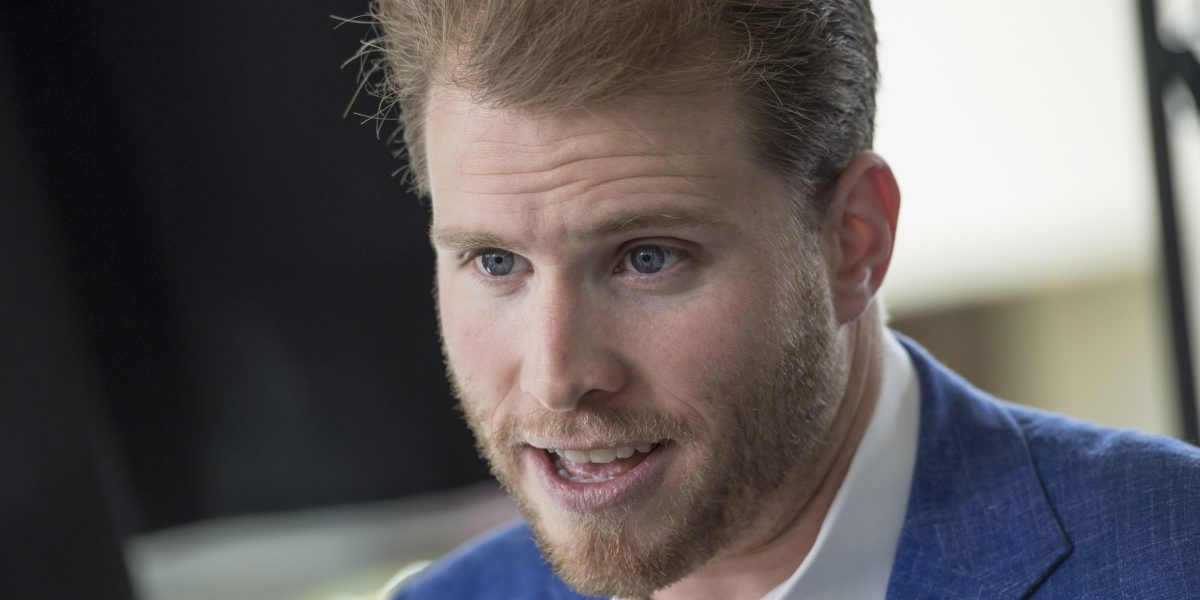
Lonsdale’s response offered no sympathy. “Loser generation,” he wrote in reaction to a graph showing the rising number of undergraduate students reporting disabilities.

“At Stanford it’s a hack for housing though and at some point I get it, even if it’s not my personal ethics. Terrible leadership from the university.”

He argued that families have been slowly using disability accommodations to give their children an academic advantage—when they might not actually need it.

“Claiming your child has a disability to give them a leg up became an obvious dominant game theoretic strategy for parents without honor in the 2010’s,” Lonsdale wrote earlier this month on X. “Great signal to avoid a family / not do business with parents who act this way.”

And while it’s unclear how many students, if any, are trying to game the system, Lonsdale has made his broader view clear: he doesn’t think universities are preparing young people—or evaluating them—in ways that matter.

“No great companies are interested in the BS games played by universities,” he added.

Fortune reached out to Lonsdale for further comment.

Lonsdale’s complicated history with higher education

Though a Stanford alum himself, Lonsdale has a complicated history with the institution and higher education more broadly.

In the early 2010s, while serving as a mentor in a Stanford tech entrepreneurship course, Lonsdale was accused of sexual assault by a student—and banned from mentoring undergraduates for 10 years and from campus entirely. The assault charges were later dropped, but Lonsdale acknowledged violating a rule prohibiting consensual relationships between mentors and students.

Less than a decade later, in 2021, Lonsdale cofounded his own school—the University of Austin—with Niall Ferguson, Bari Weiss, and others. The institution prides itself on freedom of speech and overcoming the “mediocrity” of traditional higher education. It welcomed its first group of undergraduates last fall and remains unaccredited.

The school has drawn support from Lonsdale’s fellow Palantir cofounder and Stanford alum Alex Karp, who has also criticized the college system.

“Everything you learned at your school and college about how the world works is intellectually incorrect,” Karp, Palantir’s CEO, told CNBC earlier this year.

Instead, the 58-year-old said Palantir is building a new credential “separate from class or background,” that is the “best credential in tech.”

“If you did not go to school, or you went to a school that’s not that great, or you went to Harvard or Princeton or Yale, once you come to Palantir, you’re a Palantirian,” Karp said during an earnings call earlier this year. “No one cares about the other stuff.”


Source link

Continue Reading

Business

Exclusive: Crypto startup LI.FI raises $29 million for cross-blockchain price discovery tool
Published

on


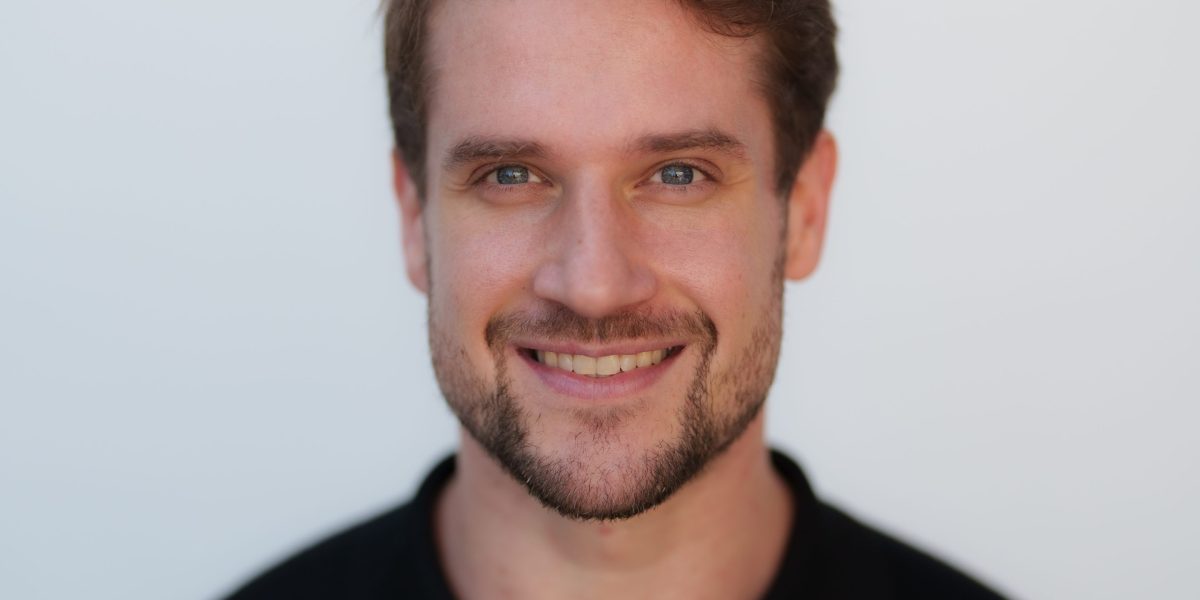
When businesses decide to engage with crypto, they quickly discover the landscape is fragmented across numerous blockchains. If they want to move assets between different chains, they must often rely on a technology called bridging that can prove insecure and expensive. Philipp Zentner, cofounder and CEO of LI.FI, created his company to address these issues. The startup provides businesses with price comparisons of exchange rates and bridging fees. It also aims to find businesses the most efficient and cost-effective pathway for each transaction. 

On Thursday, LI.FI announced that it raised $29 million in funding led by Multicoin and CoinFund, bringing the total capital to about $52 million. Zentner did not disclose the company’s valuation. 

“You can think of us like a combination of Google Flights and Google Maps,” he said in an interview with Fortune. “[We’re] a competitive price comparison and transaction pathfinding for businesses in crypto finance.”

The businesses that LI.FI partners with are fintechs, brokerage apps, trading desks, wallets, and neobanks. The startup has more than 800 partners, including Robinhood, Binance, and Kraken. The company says that its value proposition is that its service allows companies to go to market faster and saves them time on research, integration, and maintenance. 

Zentner says that LI.FI is profitable and generates revenue through transaction fees, though he declined to disclose specific revenue numbers. It has $8 billion in monthly transaction volume as of October, which is about seven times more than its monthly volume from a year prior. The company has more than 100 employees. 

“As crypto trading becomes a core feature inside mainstream fintech apps, the hardest problem is…making fragmented blockchains, liquidity, and execution work seamlessly together,” said Spencer Applebaum, investment partner at Multicoin Capital, in a statement. “LI.FI Protocol gives fintechs and web3 wallets a single API to offer both trading and cross-chain asset movement, handling on-chain routing and execution behind the scenes.”

With the new funding, LI.FI plans to expand into different transaction domains, including perpetual futures, yield opportunities, prediction markets, and lending markets. Zentner says with the new capital he also aims to hire more employees.

Join us at the Fortune Workplace Innovation Summit May 19–20, 2026, in Atlanta. The next era of workplace innovation is here—and the old playbook is being rewritten. At this exclusive, high-energy event, the world’s most innovative leaders will convene to explore how AI, humanity, and strategy converge to redefine, again, the future of work. Register now.


Source link

Continue Reading

Business

A San Francisco woman just gave birth in a Waymo robotaxi — and Waymo says it’s not the first time


Published

on


 Self-driving Waymo taxis have gone viral for negative reasons involving the death of a beloved San Francisco bodega cat and pulling an illegal U-turn in front of police who were unable to issue a ticket to a nonexistent driver.

But this week, the self-driving taxis are the bearer of happier news after a San Francisco woman gave birth in a Waymo.

The mother was on her way to the University of California, San Francisco medical center Monday when she delivered inside the robotaxi, said a Waymo spokesperson in a statement Wednesday. The company said its rider support team detected “unusual activity” inside the vehicle and called to check on the rider as well as alert 911.

Waymo, which is owned by Google’s parent company, Alphabet, declined to elaborate on how the vehicle knew something was amiss.

The company has said it has cameras and microphones inside as well as outside the cars.

The taxi and its passengers arrived safely at the hospital ahead of emergency services. Jess Berthold, a UCSF spokesperson, confirmed the mother and child were brought to the hospital. She said the mother was not available for interviews.

Waymo said the vehicle was taken out of service for cleaning after the ride. While still rare, this was not the first baby delivered in one of its taxis, the company said.

“We’re proud to be a trusted ride for moments big and small, serving riders from just seconds old to many years young,” the company said.

The driverless taxis have surged in popularity even as they court higher scrutiny. Riders can take them on freeways and interstates around San Francisco, Silicon Valley, Los Angeles and Phoenix.

In September, a Waymo pulled a U-turn in front of a sign telling drivers not to do that, and social media users dumped on the San Bruno Police because state law prohibited officers from ticketing the car. In October, a popular tabby cat named Kit Kat known to pad around its Mission District neighborhood was crushed to death by a Waymo.


Source link

Continue Reading

Trending

Copyright © Miami Select.