
Politics
Oh, snap! — big, beautiful — transients — LEOs — ‘Alcatraz’
Snapper season oversight
Florida sets the dates for red snapper season in the Gulf of Mexico, but the federal government dictates when Atlantic fishermen can reel in their catch. Members of the Florida congressional delegation want to revisit that.
Sen. Rick Scott, a Naples Republican, and Rep. John Rutherford, a Jacksonville Republican, led a letter to Commerce Secretary Howard Lutnick asking for management authority on snapper to be relegated to the states. The lawmakers noted that President Donald Trump’s administration recently ended National Oceanic and Atmospheric Administration closures that severely limited fishing on the Atlantic coast. However, it stated that states should make the call going forward about when boats are allowed to trawl.
“Florida has demonstrated its ability to use sound science to successfully manage red snapper in the Gulf. This success was made possible by President Trump during his first administration when he gave the five Gulf States a leading role in managing the red snapper fishery. Since then, the health of Florida’s Gulf red snapper population has continued to improve, growing the season from three to 126 days,” the letter reads.
“We believe the current abundance of South Atlantic red snapper, combined with strong interest from states in the region to take on a greater role in data collection and management, presents an extraordinary opportunity to make state-led management in the South Atlantic a resounding success, much like the model seen in the Gulf.”
Sen. Ashley Moody, a Plant City Republican, signed onto the letter. So did 19 Florida Republicans — everyone in the delegation except Space Coast Republican Rep. Mike Haridopolos. Additionally, one Democrat in the House, Rep. Jared Moskowitz of Parkland, also signed the letter.
“Every local angler I talk to says there are more red snapper off the coast of Northeast Florida than ever before,” Rutherford said. “Yet, the National Oceanic and Atmospheric Administration (NOAA) under President (Joe) Biden only gave us one day to fish last summer.”
He said it was time to hand over management to Florida Gov. Ron DeSantis, Georgia Gov. Brian Kemp and South Carolina Gov. Henry McMaster.
Going big
The “One Big Beautiful Bill” has become law, and members of the Florida congressional delegation predict huge impacts on the Sunshine State.
Moody, a Plant City Republican, voted in favor of the massive budget package, which makes tax cuts passed in Trump’s first term permanent. Trump signed the legislation on July 4.
“Today is a historic moment for the American people — especially Florida families who will have thousands of their hard-earned money back in their pockets following the passage of the monumental One Big Beautiful Bill,” she said.
“We are finally putting an end to the Biden-era madness. This was a vote for stronger border security, more job opportunities, preventing a $4 trillion tax increase, and securing financial common sense so our kids and grandkids have the opportunity to live their American Dream.”
Her Office said the bill will save an estimated $3,650 for the average Florida family and will prevent the loss of an estimated 399,000 jobs in the state.
She noted that the legislative package also included her Secure U.S. Leadership in Space Act, which makes spaceport facilities, such as those near the Kennedy Space Center, tax-exempt.
But Democrats see severe consequences in Florida and beyond. Moskowitz pointed to congressional estimates that the bill will kick more than 1.9 million Floridians off their current health care, more than any other state. For anyone in Florida who obtained insurance through the Affordable Care Act (ACA) marketplace, the average annual cost increase is expected to be $550.
“Republicans’ ‘One Big Beautiful Bill Act’ has nothing ‘beautiful’ about it. It’s a complete disaster. It knocks nearly 2 million Floridians off their health care,” Moskowitz said.
“It puts food assistance at risk for more than 250,000 Florida families in need. It raises energy costs, wipes out energy jobs, and repeals common sense clean energy tax credits. It raises the deficit by a whopping $3.4 trillion. And it does all that to pay for giant tax giveaways to billionaires and the wealthiest corporations.”
Rep. Kathy Castor, a Tampa Democrat, said the bill included carve-outs for gun manufacturers while cutting broadly popular programs, such as Pell Grants.
“Medicaid, the ACA and SNAP (the Supplemental Nutrition Assistance Program) are a lifeline for my neighbors in Florida. Slashing essential care and nutrition assistance means more Floridians will struggle to afford doctor visits, medications, long-term care and critical treatments, or to keep food on the table — essentials needed to stay healthy, keep their heads above water and our country strong,” she said.
However, Republicans felt confident that Floridians would benefit from the bill.
“This legislation gives Florida families real relief — protecting their paychecks, lowering their tax burden, and expanding opportunity,” said Rep. Laurel Lee, a Thonotosassa Republican.
“It makes the Trump tax cuts permanent, ends unfair taxes on tips and overtime, and preserves essential benefits like the child tax credit. It also strengthens critical programs like Medicaid and Social Security to ensure they work better and last longer. In addition, it empowers law enforcement to enforce our immigration laws and restore order at the Southern border.”

Right-hand man
House leadership just named Rep. Neal Dunn, a Panama City Republican, as the Vice Chair of the House Energy and Commerce Committee. He will work alongside Rep. Brett Guthrie, a Kentucky Republican, on vital economic issues.
“I am honored that Chairman Guthrie has selected me to serve alongside him as Vice Chair of the Energy and Commerce Committee,” Dunn said. “We accomplished a great deal together, along with Chairman (Buddy) Carter in the Health Subcommittee, to deliver on the promises we’ve made to strengthen American health care. I am eager to bring the same success to the full Committee as the Vice Chair and will continue collaborating with all my colleagues to ensure a collective, bottom-up approach to our work.”
Dunn also serves as Vice Chair of the House Energy and Commerce Health Subcommittee.
Housing, not handcuffs
As Florida and other states try to shut down homeless camping, Rep. Maxwell Frost filed legislation to ensure transients can’t be jailed for sleeping on public lands when there is nowhere else to go.
The Housing Not Handcuffs Act bars criminal or civil penalties for anyone living on public land unless a safe and accessible shelter is available. It also stops punishment for panhandling in public places, living in safely parked cars, and any type of religious prayer in public spaces.

The legislation would also restore privacy rights for personal property to the same level as in a private dwelling in response to the City of Grants Pass v. Johnson ruling decided by the Supreme Court last year.
“Since the Grants Pass decision, cities across the country have passed over 200 bills to criminalize homelessness, including in my own district,” said Frost, an Orlando Democrat.
“These policies don’t solve homelessness; instead, they dehumanize our unhoused, saddle them with criminal records, and make it even harder for them to find stable housing. It’s a vicious cycle that the Housing Not Handcuffs Act seeks to end.”
He filed the bill with Rep. Pramila Jayapal, a Washington Democrat.
Frost’s Office noted that homelessness in 2024 jumped by 18% nationwide, while shelter beds and rental homes remain in short supply.

Boon for LEOs?
House members, even those who voted against the “Big Beautiful Bill,” praised provisions that could help Florida police officers and agencies.
Rep. Vern Buchanan, a Republican from Longboat Key, supported the bill while advocating for the elimination of taxes on overtime pay. He co-wrote an op-ed in the Sarasota Herald-Tribune with Holmes Beach Police Chief William Tokajer.
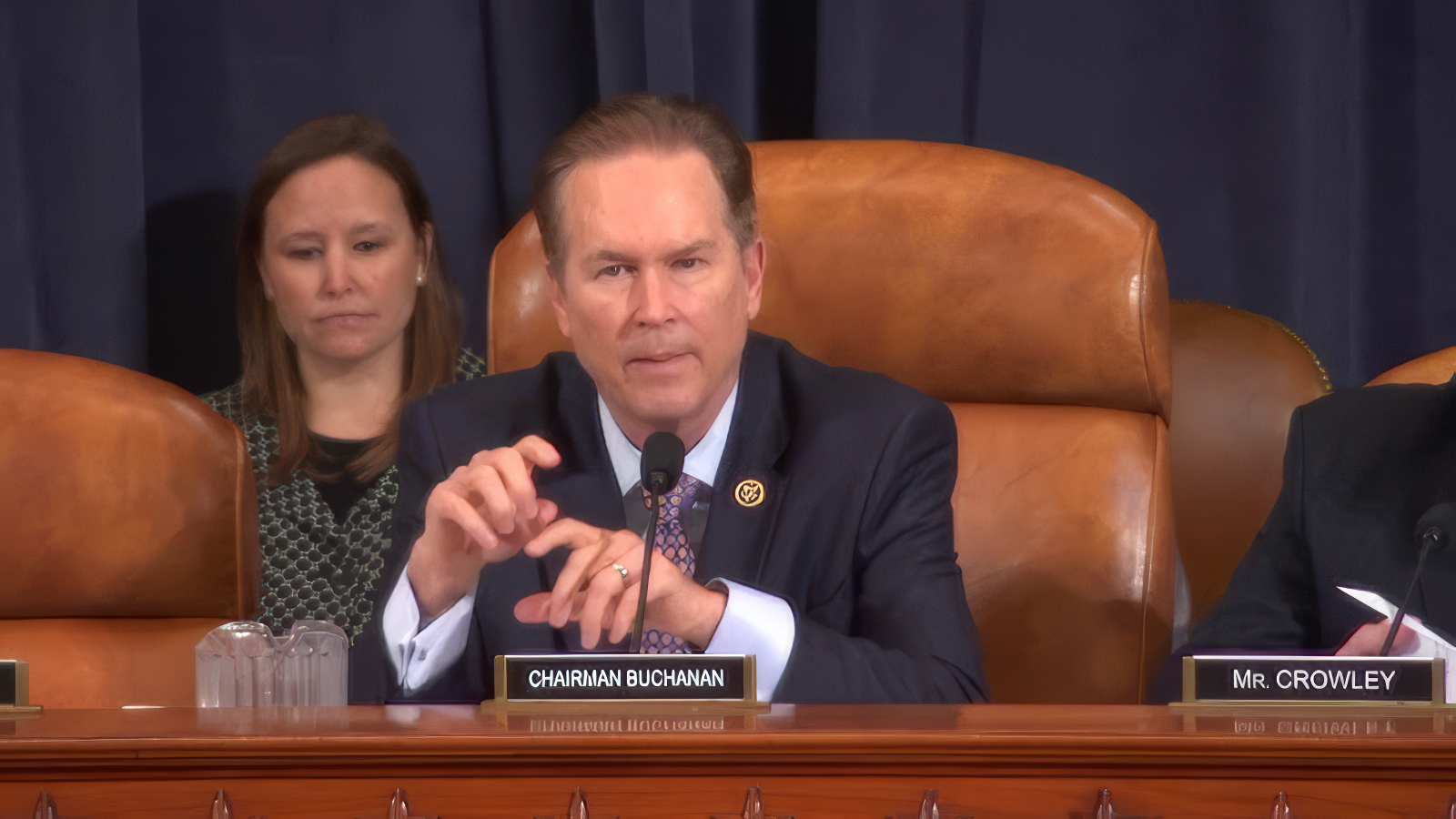
“Our law enforcement officers deserve our full support, and exempting their overtime pay from taxes will make a significant difference in their lives,” Buchanan said. He enthused about making “this proposal a reality for officers across the country looking to provide for their families.”
Meanwhile, Rep. Lois Frankel, a West Palm Beach Democrat who voted against the bill, said she was pleased that the legislation included reimbursements for local police who incur overtime while providing security for the President.
That’s a local issue regarding Trump, whose personal Mar-a-Lago residence is in Palm Beach County. Frankel previously filed the Presidential Security Resources Reimbursement Act with Rep. Tom Kean, a New Jersey Republican whose district includes Trump National Golf Club Bedminster.
Frankel’s office in March estimated that Florida law enforcement would incur $45 million in additional costs for protecting the President, all under orders from the Secret Service.
“This new grant program will ensure local and state agencies are not left shouldering the financial burden of presidential security operations. The grant period will cover expenses over the next five years, providing long-term support for those on the front lines of public safety,” reads a statement from Frankel.
“Importantly, this grant program will give local Palm Beach County law enforcement an opportunity to recover millions of dollars from the federal government for security provided to President Trump while he is in our area.”
Eye on Africa
Months after Rep. Sheila Cherfilus-McCormick urged an adviser to Trump to prioritize negotiations in Africa, the Miramar Democrat cheered a peace deal between the Democratic Republic of the Congo (DRC) and Rwanda.
“The commitments to end hostilities, allow humanitarian access, and facilitate the safe return of refugees are essential to achieving lasting peace,” Cherfilus-McCormick said.

“In May, I joined several of my colleagues in urging Senior Adviser Dr. Massad Boulos to ensure that the negotiations included provisions for U.S. humanitarian and global health assistance to reach conflict-affected regions in the DRC.”
That bore fruit, but many international observers warn that the peace between neighboring countries remains fragile. Cherfilus-McCormick said it’s in the U.S. interest to ensure the treaty lasts.
“This agreement also opens the door to future cooperation, including the development of a U.S.-DRC critical minerals agreement,” she said. “I encourage the administration to pursue this opportunity with a shared commitment to regional stability, economic development, and environmental responsibility.”
Cherfilus-McCormick introduced a congressional resolution earlier this year encouraging U.S. investment in Africa’s mineral sector. She said that remains vital to sustainability efforts in Africa and in North America.

USAID arguments
Researchers at Boston University released widely cited statistics on the human toll of cutting off foreign aid, particularly to combat HIV and tuberculosis. However, Rep. Brian Mast, in his capacity as Chair of the House Foreign Affairs Committee, questioned the university’s math.
“I am deeply concerned that Boston University is serving as a platform for the weaponization of academia, where federally funded professors are spreading disinformation about the ongoing reorganization of USAID and its consequences,” Mast wrote in a letter to Boston University.
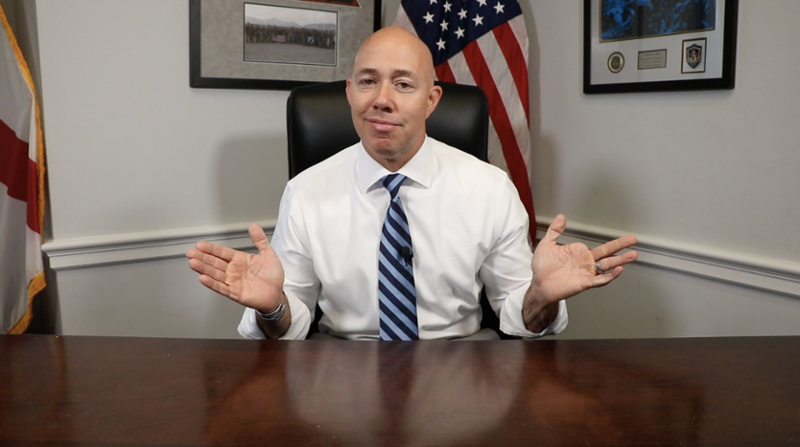
“Brooke Nichols, an associate professor at BU, is at the heart of this dangerous hysteria through her creation of the ‘Impact Counter,’ a dashboard of numbers that claim the restructuring of USAID has killed hundreds of thousands of people.”
Nichols, for her part, said the data released by the university serves to highlight the direct impact of policy decisions, such as eliminating most foreign aid.
“I want these numbers to be shared with policymakers and people that are trying to advocate from within the government, and for them to have these numbers to be able to say why funding should not stop,” said Nichols, a BU Center on Emerging Infectious Diseases faculty member. “I want people to cite it and use it to be outraged.”
Without laying out specifics, Mast said the data simply introduces erroneous assessments into the public square.
“This platform has become no better than a Russian bot farm or CCP propaganda,” he said. “Boston University is creating a breeding ground for far-left activists to exploit academia for political gain, which undermines the legitimacy of these institutions.”
‘Alcatraz’ outrage
Democrats in the congressional delegation nearly universally slammed the opening of a migrant detention center in the Everglades.
Rep. Debbie Wasserman Schultz, Democratic co-Chair of the delegation, led a letter to DeSantis urging him to abandon the so-called “Alligator Alcatraz” project.
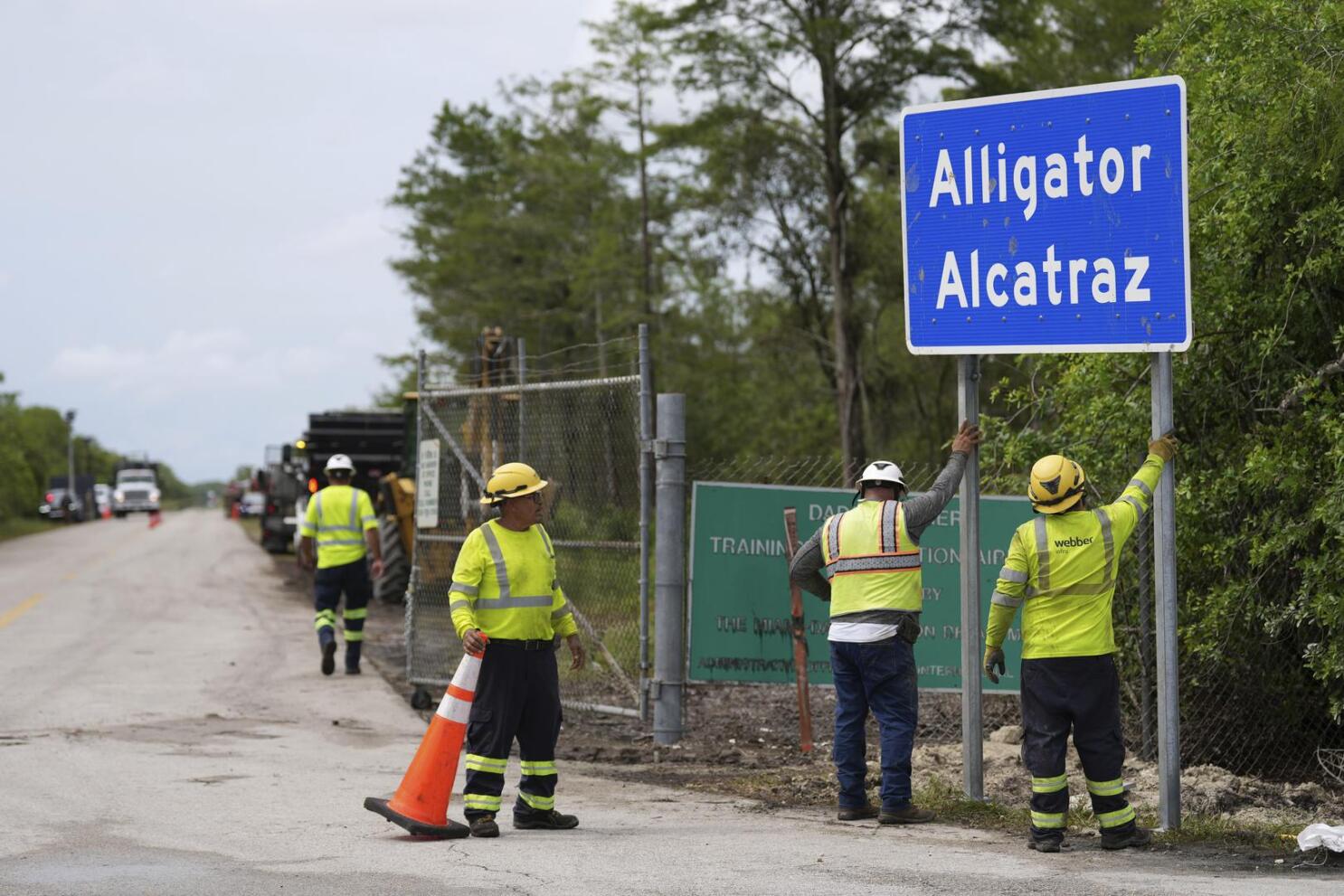
“We strongly and unequivocally oppose the construction of a temporary immigration detention facility at the Dade-Collier Training and Transition Airport site dubbed sarcastically as ‘Alligator Alcatraz’ in the heart of the Everglades,” the members said. “We are seriously concerned about the future treatment of immigrants at this facility. It is also important that we uplift grave concerns over the environmental and tribal impacts of your decision.”
Every Democrat representing Florida in the House signed onto the message. Notably, Parkland Democrat Moskowitz previously worked in DeSantis’ administration as the Director of Emergency Management, the very state agency operating the detention center.

TPS for Nicaraguans?
The dean of Florida’s congressional delegation is pressuring the Trump administration to shift course on revoking temporary protected status for refugees from Nicaragua.
Rep. Mario Díaz-Balart, a Hialeah Republican, urged Trump to reconsider its position, one the administration fought for the right to pursue in court.
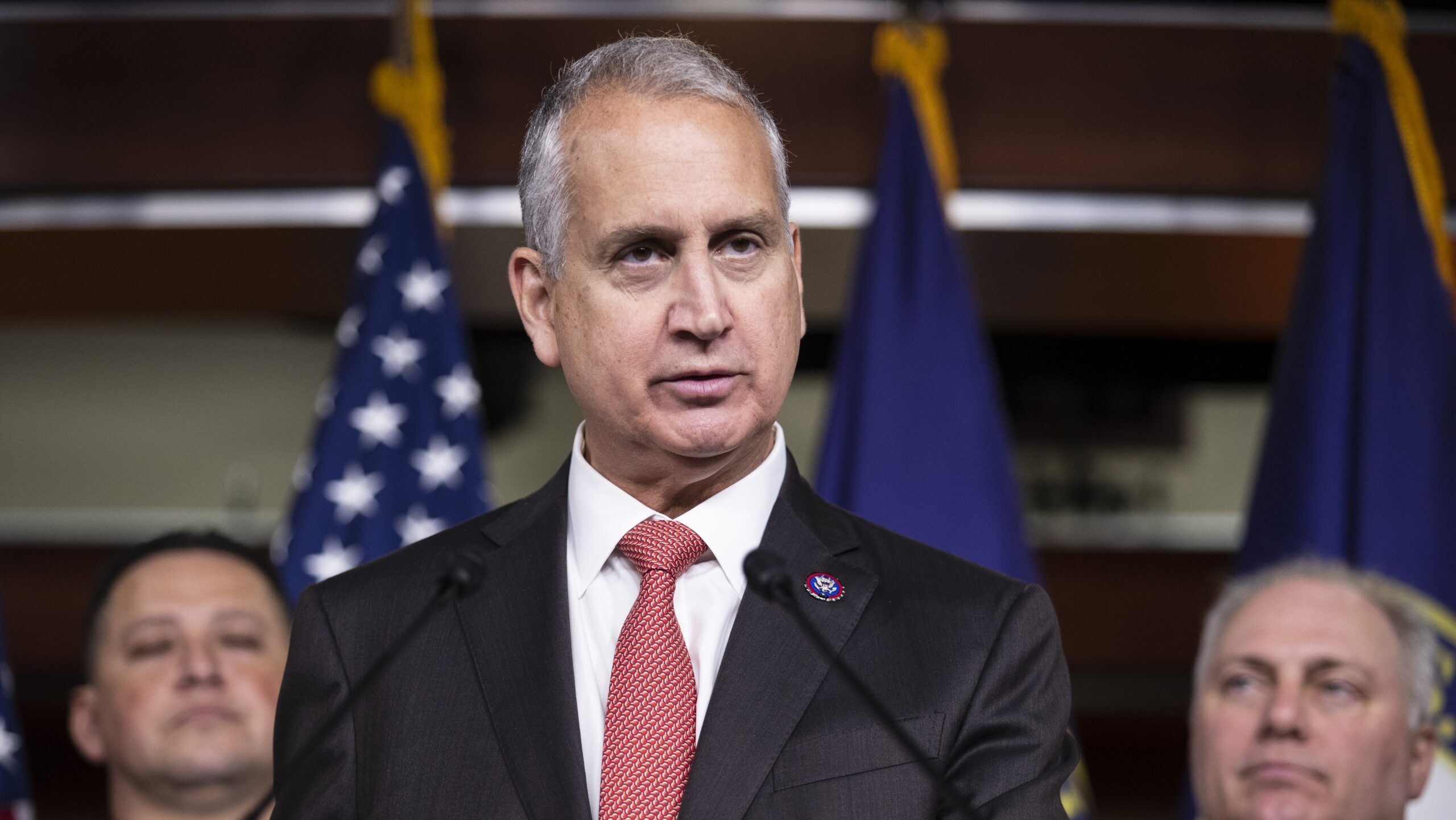
“For years, the Daniel Ortega and Rosario Murillo regime has deprived the Nicaraguan people of their fundamental freedoms, forcing thousands into exile in numerous countries, including the United States,” Díaz-Balart posted on X.
“While I commend the Trump administration for holding the Ortega-Murillo dictatorship accountable, I call on the administration to reconsider its decision to terminate TPS designation for Nicaraguan nationals living in the United States. I am profoundly concerned for those who cannot safely return to Nicaragua due to the dangers they are likely to face.”
For weeks, Díaz-Balart has attempted to negotiate the revocation of temporary protected status for other countries, including Venezuela.
“As my record shows, I have always supported TPS for those who truly need it and will continue to do everything possible to ensure that those seeking freedom from persecution and oppression are protected,” Díaz-Balart posted.
Autism assistance
Rep. María Elvira Salazar wants to see more federal spending directed to help children with autism. The Coral Gables Republican was among the introducing sponsors of the Autism Family Caregivers Act, a bipartisan bill.
The legislation would authorize Health and Human Services Secretary Robert F. Kennedy Jr. to establish a pilot program awarding grants to nonprofits and health care providers for caregiver skills training. The funding would specifically provide that education to family members of children with autism spectrum disorder or other developmental disabilities.
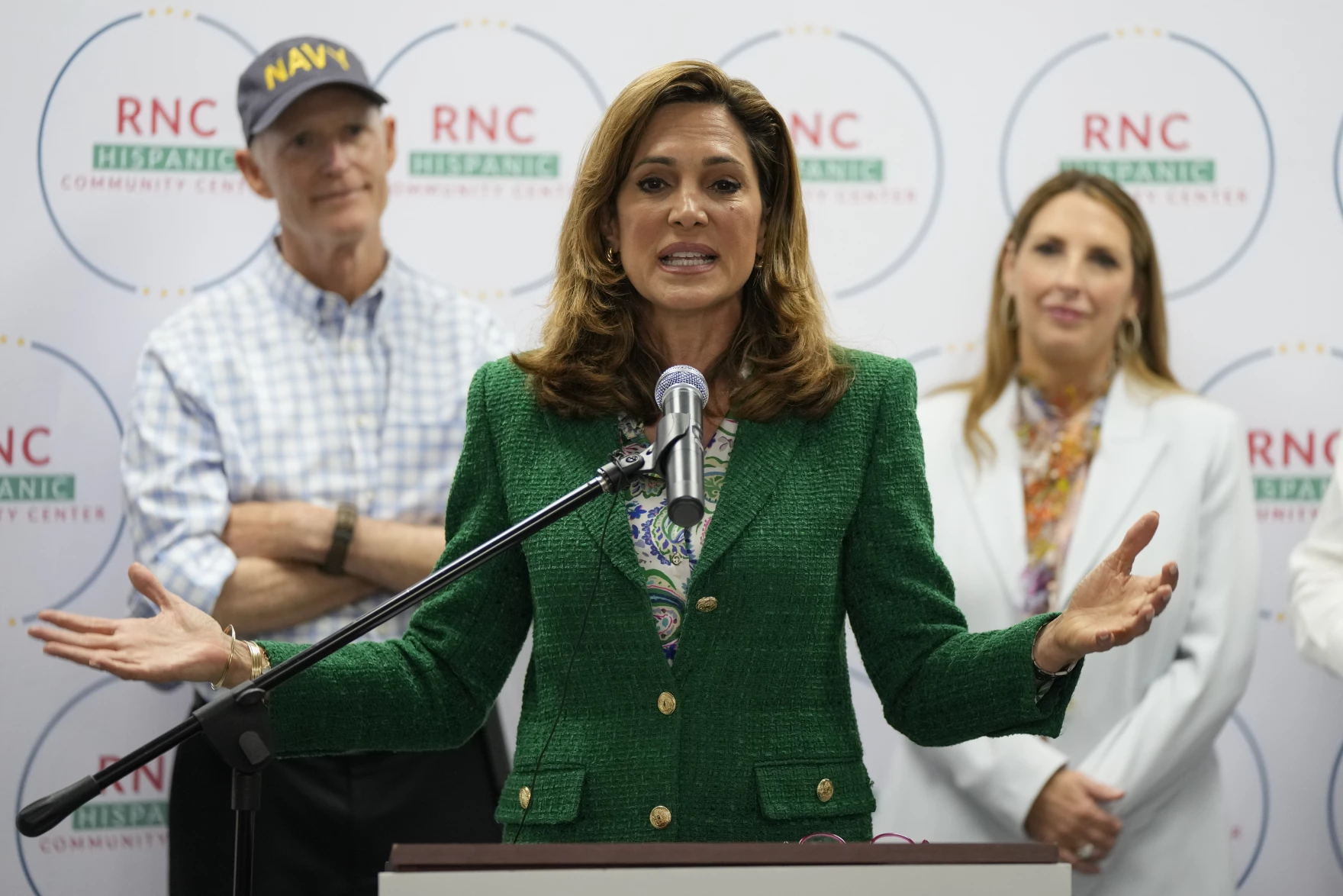
“This pilot program equips caregivers in Florida’s 27th District and nationwide with critical skills to care for loved ones with autism and developmental disabilities,” Salazar said. “Strong caregivers build resilient families, and resilient families strengthen America.”
She introduced the bill with Democratic Reps. Henry Cuellar of Texas, Grace Meng of New York and David Min of California, as well as Republican Reps. Don Bacon of Nebraska and Brian Fitzpatrick of Pennsylvania.
“We need to provide parents with the tools and support to empower their children’s growth and development,” Min said. “Caregiver skill training is proven to help children with special needs flourish. We owe it to our kids to provide them with the resources they need to thrive.”
Autism nonprofits welcomed the proposal.
“Families have told us time and again how critical caregiver support and training are to their children’s growth and well-being,” said Keith Wargo, President and CEO of Autism Speaks.
“The Autism Family Caregivers Act responds to that need — bringing evidence-based skills training into communities across the country and helping to address disparities in access to care. Empowering caregivers ultimately means empowering autistic people to thrive.”

On this day
July 8, 1797 — “Senate expels William Blount” via the United States Senate — When Tennessee entered the Union in 1796, the Legislature chose Blount as one of the state’s first Senators. Blount’s land speculations led him into serious financial difficulties, and he devised a scheme for Indians and frontiersmen to attack Spanish Florida and Louisiana, to transfer those territories to Great Britain. A letter in which Blount thinly disguised his desire to arouse the Creek and Cherokee Indians to aid his plan fell into the hands of Federalist President John Adams. After two of Blount’s colleagues testified that the letter was in his handwriting, the Senate, by a vote of 25-1, held the first expulsion of a U.S. Senator.
July 8, 1975 — “Gerald Ford announces candidacy for President” via The New York Times — President Ford formally announced he would seek the Republican nomination in 1976, to “finish the job I have begun.” Seated at the same 1858 desk in the White House Oval Office from which President Richard Nixon announced his resignation exactly 11 months ago, Ford pledged “an open and aboveboard campaign.” The expected declaration, by the first President ever to attain the White House through appointment, was deliberately brief, muted, and in an official setting, apparently meant to underline Ford’s stated determination “never to neglect my first duty as President.”
Happy birthday
Best wishes to Mast, who turns 45 on Thursday, July 10.
___
Peter Schorsch publishes Delegation, compiled by Jacob Ogles, edited and assembled by Phil Ammann and Ryan Nicol.
Post Views: 0