Connect with us

Business

Obituary: Steve Cropper, legendary Memphis guitarist, dies at 84

Published

on


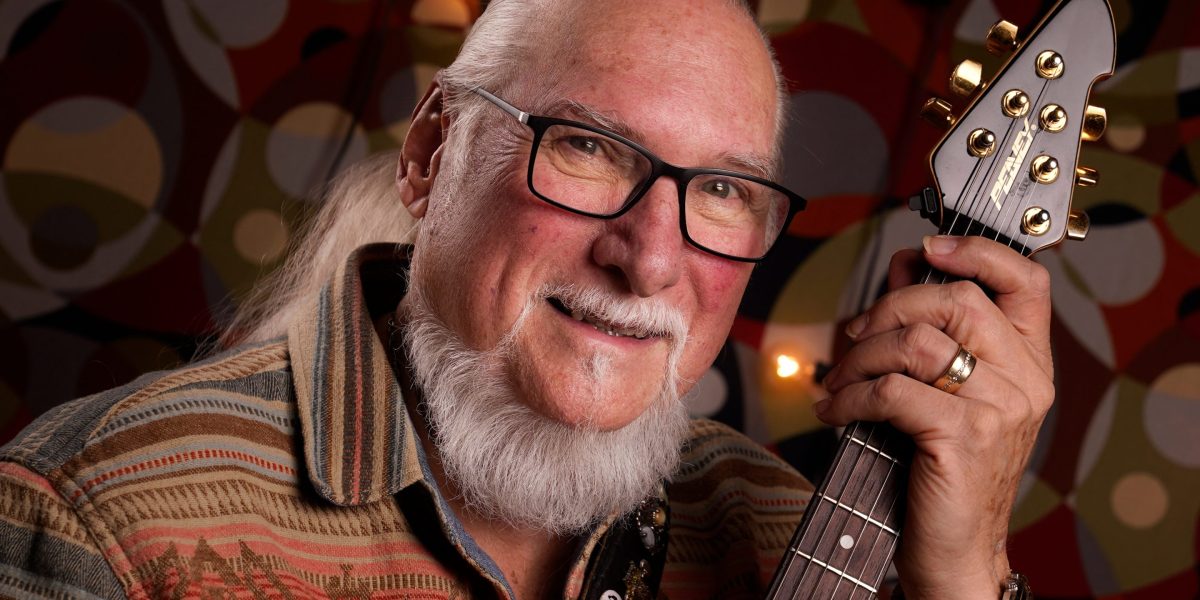
Steve Cropper, the lean, soulful guitarist and songwriter who helped anchor the celebrated Memphis backing band Booker T. and the M.G.’s at Stax Records and co-wrote the classics “Green Onions,” “(Sittin’ on) the Dock of the Bay” and “In the Midnight Hour,” has died. He was 84.

Pat Mitchell Worley, president and CEO of the Soulsville Foundation, said Cropper’s family told her that Cropper died on Wednesday in Nashville. The foundation operates the Stax Museum of American Soul Music in Memphis, located at the site of the former Stax Records, where Cropper worked for years.

A cause of death was not immediately known. Longtime associate Eddie Gore said he was with Cropper on Tuesday at a rehabilitation facility in Nashville, where Cropper had been after a recent fall. Cropper had been working on new music when Gore visited, he said.

“He’s such a good human,” Gore said. “We were blessed to have him, for sure.”

The guitarist, songwriter and record producer was not known for flashy playing, but his spare, catchy licks and solid rhythm chops helped define Memphis soul music. At a time when it was common for white musicians to co-opt the work of Black artists and make more money from their songs, Cropper was that rare white artist willing to keep a lower profile and collaborate.

‘Play it, Steve!’

Cropper’s very name was immortalized in the 1967 smash “Soul Man,” recorded by Sam & Dave. Midway, singer Sam Moore calls out “Play it, Steve!” as Cropper pulls off a tight, ringing riff, a slide sound that Cropper used a Zippo lighter to create. The exchange was reenacted in the late 1970s when Cropper joined the John Belushi-Dan Aykroyd act “The Blues Brothers” and played on their hit cover of “Soul Man.”

In a 2020 interview with The Associated Press, Cropper discussed his career and how he mastered the art of filling gaps with an essential lick or two.

“I listen to the other musicians and the singer,” Cropper said. “I’m not listening to just me. I make sure I’m sounding OK before we start the session. Once we’ve presented the song, then I listen to the song and the way they interpret it. And I play around all that stuff. That’s what I do. That’s my style.”

Rolling Stones guitarist Keith Richards, asked once about Cropper, said simply, “Perfect, man.” On a YouTube instructional video, guitar virtuoso Joe Bonamassa says Cropper’s moves are often copied.

“If you haven’t heard the name Steve Cropper, you’ve heard him in song,” Bonamassa said.

He got his first guitar at 14

Cropper was born near Dora, Missouri, but moved with his family to Memphis when he was 9 and got his first mail-order guitar at age 14, according to his website, playitsteve.com. Chuck Berry, Jimmy Reed and Chet Atkins were among his early influences.

Cropper was a Stax artist before the label was even called Stax, which Jim Stewart and Estelle Axton had founded as Satellite Records in 1957. In the early 1960s, Satellite signed up Cropper and his instrumental band the Royals Spades. The band soon changed its name to the Mar-Keys and had a hit with “Last Night.”

Satellite soon was later renamed Stax, where some of the Mar-Keys became the label’s horn section while Cropper and other Mar-Keys formed Booker T. and the M.G.’s. Featuring Cropper, keyboard player Booker T. Jones, bassist Donald “Duck” Dunn and drummer Al Jackson, they were known for their hit instrumentals “Green Onions,” “Hang ‘Em High” and “Time Is Tight,” and backed Otis Redding, Sam & Dave and others.

The racially integrated band, a rarity in its day, was so admired that even non-Stax artists recorded with them, notably Wilson Pickett. Jones, who is the only surviving member of the band, and Jackson are Black. Dunn and Cropper are white.

“When you walked in the door at Stax, there was absolutely no color,” Cropper said in the AP interview. “We were all there for the same reason — to get a hit record.”

Inspired by gospel song

In the mid-1960s, Atlantic Records executive Jerry Wexler brought Pickett to work with the Stax musicians. During a 2015 gathering with the National Music Publishers Association, Cropper acknowledged he had never heard of Pickett before working with him. He found some gospel recordings by Pickett, was taken by the line “I’ll see my Jesus in the midnight hour” and with a slight change helped write a secular standard.

“The man up there has been forgiving me for this ever since!” he said.

Cropper was inducted into the Rock and Roll Hall of Fame in 1992 as a member of Booker T. and the M.G.’s. That year, Cropper, Dunn and Jones played in an all-star tribute at Madison Square Garden to Bob Dylan. Al Jackson died in 1975, Dunn in 2012.

Rolling Stone magazine ranked Cropper 39th on its 100 Greatest Guitarists list, calling him “the secret ingredient in some of the greatest rock and soul songs.”

Cropper was especially close to Redding. In an interview on his website, Cropper recalled collaborating on “(Sittin’ on) the Dock of the Bay,” completed shortly before Redding’s death in a December 1967 plane crash and a No. 1 hit in 1968.

The brooding, folkish ballad was a bittersweet reflection on his triumphant appearance a few months earlier at the Monterey Pop Festival. Cropper would remember adding the final touches on the recording while still grieving for Redding.

“We had been looking for the crossover song,” he said. “This song, we knew we had it.”

Cropper was in the 1980 movie “The Blues Brothers” and its follow-up, “Blues Brothers 2000,” portraying “The Colonel” in the Blues Brothers band. In real life, he toured with them.

He was inducted into the Songwriters Hall of Fame in 2005, and two years later received a Grammy Award for lifetime achievement.

Cropper continued recording into his later years, including 2024’s “Friendlytown,” which was nominated for a Grammy. Earlier this year, Cropper received the Tennessee Governor’s Arts Award, the state’s highest honor in the arts.

___

Associated Press National Writer Hillel Italie contributed reporting from New York.


Source link

Continue Reading

Business

Netflix lines up $59 billion of debt for Warner Bros. deal

Published

on


Netflix Inc. has lined up $59 billion of financing from Wall Street banks to help support its planned acquisition of Warner Bros. Discovery Inc., which would make it one of the largest ever loans of its kind.

Wells Fargo & Co., BNP Paribas SA and HSBC Plc are providing the unsecured bridge loan, according to a statement Friday, a type of financing that is typically replaced with more permanent debt such as corporate bonds.

Under the deal announced Friday, Warner Bros. shareholders will receive $27.75 a share in cash and stock in Netflix. The total equity value of the deal is $72 billion, while the enterprise value of the deal is about $82.7 billion.

Bridge loans are a crucial step for banks in building relationships with companies to win higher-paying mandates down the road. 

A loan of $59 billion would rank among the biggest of its type, Anheuser-Busch InBev SA obtained $75 billion of loans to back its acquisition of SABMiller Plc in 2015, the largest ever bridge financing, according to data compiled by Bloomberg.


Source link

Continue Reading

Business

Stocks: Facing a vast wave of incoming liquidity, the S&P 500 prepares to surf to a new record high

Published

on


The S&P 500 index ticked up 0.3% yesterday, its eighth straight upward trading session. It is now less than half a percentage point away from its record high, and futures were pointing marginally up again this morning. Nasdaq 100 futures were even more optimistic, up 0.39% before the open in New York. The VIX “fear” index (which measures volatility) has sunk 12.6% this month, indicating that investors seem to have settled in for a calm, quiet, risk-on holiday season.

They have reason to be happy. Washington is preparing a wave of incoming liquidity that is likely to generate fresh demand for equities.

For instance, the CME FedWatch index shows an 87% chance that the U.S. Federal Reserve will deliver an interest rate cut next week, delivering a new round of cheaper money. Further cuts are expected in 2026.

Furthermore, Wall Street largely expects President Trump to announce that Kevin Hassett will replace Fed chairman Jerome Powell in May—and Hassett is widely regarded as a dove who will lean in favor of further rate cuts.

Elsewhere, the Fed has begun a series of “reserve management purchases,” a program in which the central bank will buy short-term T-bills—a move that will add more liquidity to markets generally.

Banks, brokers and trading platforms are also lining up to handle ‘Trump Accounts,’ into which the U.S. government will deposit $1,000 for every child. The trust fund can be invested in low-cost stock index trackers—a new source of investment demand coming online in the back half of 2026.

So it’s no surprise that nine major investment banks polled by the Financial Times expect stocks to rise in 2026; the average of their estimates is by 10%.

The Congressional Budget Office also estimates that the One Big Beautiful Bill Act will add 0.9% to U.S. GDP next year largely because it allows companies to immediately deduct capital expenditures from their taxes—spurring a huge round of corporate spending. 

With all that fresh money on the horizon, it’s clear why markets have shrugged off their worries about AI and Bitcoin. The only shock will be if the S&P fails to hit a new all-time high by the end of the year.

Here’s a snapshot of the markets ahead of the opening bell in New York this morning:

  • S&P 500 futures were up 0.2% this morning. The last session closed up 0.3%. 
  • STOXX Europe 600 was up 0.3% in early trading. 
  • The U.K.’s FTSE 100 was up 0.14% in early trading. 
  • Japan’s Nikkei 225 was up 2.33%. 
  • China’s CSI 300 was up 0.34%. 
  • The South Korea KOSPI was down 0.19%. 
  • India’s NIFTY 50 is up 0.18%. 
  • Bitcoin was flat at $93K.


Source link

Continue Reading

Business

Gen Z fears AI will upend careers. Can leaders change the narrative?

Published

on


Good morning. Are you communicating the purpose of AI with your younger employees? According to new data from Harvard, most fear AI is going to take their jobs.

The Institute of Politics at Harvard Kennedy School released the fall 2025 Harvard Youth Poll on Thursday, which finds a generation under profound strain. The nationwide survey of 2,040 Americans between 18 and 29 years old was conducted from Nov. 3–7. For these respondents, instability—financial, political, and interpersonal—has become a defining feature of daily life. 

Young Americans see AI as more likely to take something away than to create something new. A majority (59%) see AI as a threat to their job prospects, more than immigration (31%) or outsourcing of jobs to other countries (48%).

Nearly 45% say AI will reduce opportunities, while only 14% expect gains. Another 17% foresee no change and 23% are unsure—and this holds across education levels and gender. 

In addition, young people fear AI will undermine the meaning of work. About 41% say AI will make work less meaningful, compared to 14% who say it will make work more meaningful and 19% who think it will make no difference; a quarter (25%) say they are unsure.

In my conversations this year with CFOs and industry experts, many have said that the goal of using AI is to remove the mundane and manual aspects of work in order to create more meaningful, thought‑provoking opportunities. However, that message does not yet seem to be resonating with younger employees.

There is a lot of public discussion and widespread fear that AI will mostly take away jobs, but research by McKinsey Global Institute released last week offers a different perspective. According to the report, AI could, in theory, automate about 57% of U.S. work hours, but that figure measures the technical potential in tasks, not the inevitable loss of jobs, as Fortune reported.

Instead of mass replacement, McKinsey researchers argue the future of work will be defined by partnerships among people, agents, and robots—all powered by AI, but dependent on human guidance and organizational redesign. The primary reason AI will not result in half the workforce being immediately sidelined is the enduring relevance of human skills. 

The Harvard poll also found young people have greater trust in AI for school and work tasks (52% overall, 63% among college students) and for learning or tutoring (48% overall, 63% among college students). But trust drops sharply for personal matters. 

Young employees are considered AI natives. However, it is important to recognize that they have not experienced as many major technology shifts as more seasoned employees—like the dawn of the internet. It’s not to say that AI won’t change the workforce, but there’s still room and need for humans. It’s up to leaders to clearly communicate how AI will change roles, which tasks it will automate, and also provide ongoing training and guidance on how employees can still grow their careers in an AI-powered workplace.

Have a good weekend. See you on Monday.

SherylEstrada
sheryl.estrada@fortune.com

Leaderboard

Fortune 500 Power Moves

Amanda Brimmer was appointed CFO of leasing advisory and head of corporatedevelopment at JLL (No. 188), a global commercial real estate and investment management company. Reporting to JLL CFO Kelly Howe, Brimmer will partner with business leaders globally to drive financial growth and performance. Brimmer brings more than two decades of experience from Boston Consulting Group, where she most recently served as managing director and senior partner.

Galagher Jeff was appointed EVP and CFO of ARKO Corp. (No. 488), one of the largest convenience store operators and fuel wholesalers in the U.S., effective Dec. 1. Jeff most recently served as EVP and CFO for Murphy USA, Inc. Before that, he spent nearly 15 years in senior and executive finance roles with retailers, including Dollar Tree Stores, Inc., Advance Auto Parts, Inc. and Walmart Stores, Inc., in addition to a decade-long career in finance and strategy consulting at organizations including KPMG and Ernst & Young. 

Every Friday morning, the weekly Fortune 500 Power Moves column tracks Fortune 500 company C-suite shifts—see the most recent edition

More notable moves this week:

Barbara Larson, CFO of SentinelOne, a cybersecurity company, will transition from her role to pursue an opportunity outside of the cybersecurity industry. Larson will continue to serve in her role through mid-January 2026. Upon her departure, Barry Padgett, chief growth officer, will serve as interim CFO. Barry has more than 25 years of experience in operational leadership at enterprise software companies, including SAP and Stripe. SentinelOne has initiated a search for its next CFO.
Jessica Ross was appointed CFO of GitLab Inc. (Nasdaq: GTLB), a DevSecOps platform, effective Jan. 15. Ross joins the company from Frontdoor, where she served as CFO. She has more than 25 years of experience in finance, accounting, and operational leadership at companies like Salesforce and Stitch Fix, and spent 12 years in public accounting at Arthur Andersen and Deloitte.

Michele Allen was appointed CFO of Jersey Mike’s Subs, a franchisor of fast-casual sandwich shops, effective Dec. 1. Allen succeeds Walter Tombs, who is retiring from Jersey Mike’s in January after 26 years with the company. Allen brings more than 25 years of financial leadership experience. Most recently, she served as CFO and head of strategy at Wyndham Hotels & Resorts. Allen began her career with Deloitte as an auditor. 

Nick Tressler was appointed CFO of Vistagen (Nasdaq: VTGN), a late clinical-stage biopharmaceutical company, effective Dec. 1. Tressler brings over 20 years of financial leadership experience. Most recently, he served as CFO of DYNEX Technologies, and before that, he was the CFO at American Gene Technologies, International, and Senseonics Holdings, Inc. Tressler has also held senior finance roles at several biopharmaceutical companies.

Mike Lenihan was appointed CFO of Texas Roadhouse, Inc. (NasdaqGS: TXRH), a restaurant company, effective Dec. 3. Keith Humpich, who served as interim CFO, was appointed chief accounting and financial services officer of the company. Lenihan has nearly 30 years of finance experience, including the past 22 years in the restaurant industry. Most recently, he served as the CFO at CKE Restaurants, Inc.

Big Deal

The ADP National Employment Report, released on Dec. 3, indicated that private-sector employment declined by 32,000 jobs in November. ADP found that job creation has been flat during the second half of 2025, while pay growth has continued its downward trend. In November, hiring was particularly weak in manufacturing, professional and business services, information, and construction.

“Hiring has been choppy of late as employers weather cautious consumers and an uncertain macroeconomic environment,” said Nela Richardson, chief economist at ADP, in a statement. “And while November’s slowdown was broad-based, it was led by a pullback among small businesses.”

ADP’s report is an independent measure of labor market conditions based on anonymized weekly payroll data from more than 26 million private-sector employees in the U.S. The next major U.S. Jobs Report (Employment Situation) for November is scheduled for release on Dec. 16 by the Bureau of Labor Statistics.

Going deeper

Here are four Fortune weekend reads:

Overheard

“The Fed no more ‘determines’ interest rates than a meteorologist determines the weather.”

—Alexander William Salter states in a Fortune opinion piece. Salter is a senior fellow with the Independent Institute and an economics professor in the Rawls College of Business at Texas Tech University. He writes: “The Fed doesn’t set interest rates. As powerful as America’s central bank is, it’s still just one player in a globe-spanning ocean of financial markets. Instead, the Fed sets targets for short-term interest rates. Those target rates indicate the Fed’s general monetary policy stance, but they are not the substance of monetary policy.”


Source link

Continue Reading

Trending

Copyright © Miami Select.