Connect with us

Business

Nvidia chief still hopes to sell Blackwell chips to China

Published

on


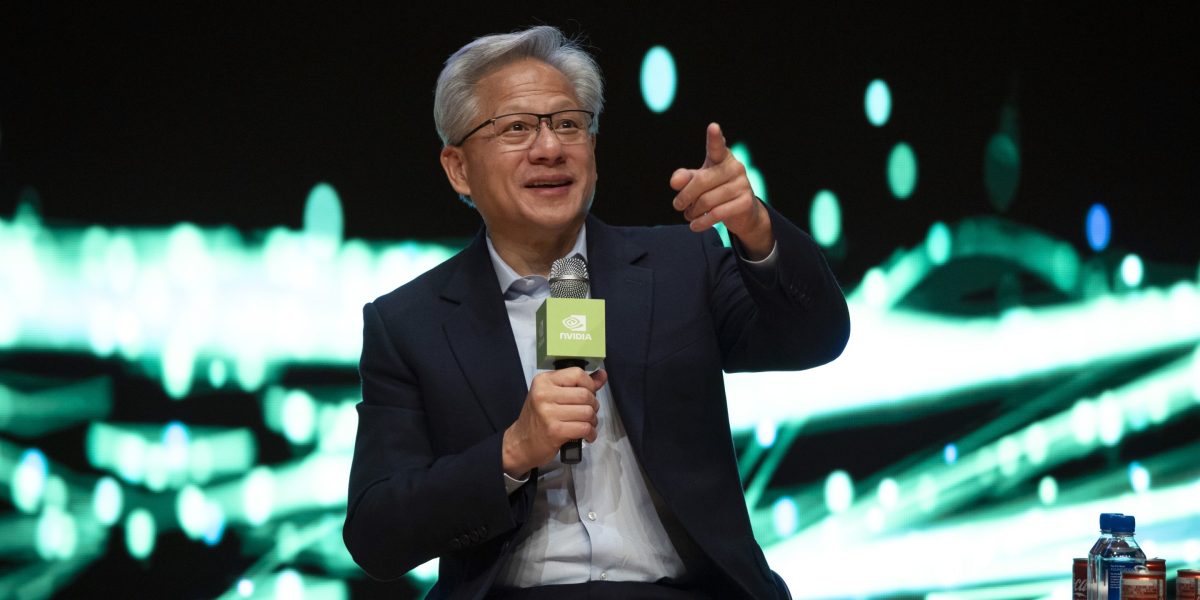
Nvidia Corp. Chief Executive Officer Jensen Huang still hopes to sell chips from the company’s Blackwell lineup to customers in China, though he has no current plans to do so, he told reporters Friday.

Asked whether Nvidia intends to sell AI accelerators from that family of products in the Asian country, the tech chief said, “I don’t know. I hope so someday.” 

Huang’s comments came a day after US President Donald Trump said he didn’t discuss the prospect of Blackwell chip sales in a meeting with Chinese counterpart Xi Jinping, despite saying earlier that he would do so. US Trade Representative Jamieson Greer, asked whether Blackwell chip sales to China would be discussed more going forward, said “I don’t think that’s on the table right now.”

Huang, speaking Friday in South Korea, expressed optimism that might change. “No decisions have been made, and we’ll see how it turns out,” said Huang, 62, of Nvidia’s Blackwell export plans. “I hope it turns out well.” The Nvidia chief said earlier this week that the company hasn’t applied for Washington’s permission to sell Blackwell chips to China, permits that are required under export controls first imposed in 2022.

Read More: Trump Says Nvidia Chip Talks With Xi Didn’t Cover Blackwell 

The Blackwell family of chips is Nvidia’s latest generation of artificial intelligence semiconductors and the industrial standard for developing and running large language models like OpenAI’s ChatGPT. The processors have capabilities that far surpass those of semiconductors that Washington effectively banned from export to China several years ago, as well as anything that’s currently available from Chinese competitors like Huawei Technologies Co. 

Selling those products to China, as Huang hopes to do, would require a dramatic departure from the Trump administration’s stated approach to the tech competition between the world’s two largest economies. Still, the president had put it on the table. Trump said months ago that he’d be open to allowing China shipments of an unspecified, downgraded Blackwell chip. Ahead of his meeting with Xi, Trump said he’d discuss the “super duper” Blackwell accelerators with the Chinese leader — remarks that helped make Nvidia the first $5 trillion business by market value. 

But while Trump and Xi did discuss Nvidia’s access to China in general, Trump said after the meeting, those talks did not touch on Blackwell chip approvals: “We’re not talking about the Blackwell,” Trump told reporters aboard Air Force One. “That just came out yesterday.”

Back in Washington, China hawks breathed a sigh of relief. Many US officials had worried that Trump, in an effort to reach a broader trade deal with Beijing, might give away what they consider to be the country’s strongest technological asset — and one with significant national security implications. Concern about Blackwell chip sales to the Asian country is one of the primary motivations behind a bipartisan congressional measure that could have major implications for Huang’s hopes for the China market.

The legislation, an earlier version of which has already passed the Senate, would require chipmakers like Nvidia to prioritize American customers before selling chips to buyers in arms-embargoed countries, including China. Hours after Trump and Xi concluded their meeting, lawmakers introduced the highly-anticipated bill to the US House of Representatives.

One congressional staffer, who requested not to be identified, described a sense of uncertainty akin to a fog of war when asked how Trump’s stance on Blackwell chips was playing on Capitol Hill.

Read More: AI Chip Export Controls Backed by House After Trump-Xi Talks

Nvidia has criticized trade restrictions as hamstringing US competitiveness and lobbied aggressively against chip export controls more broadly. “I think it’s really good for America and it’s really good for China that Nvidia could participate in the Chinese market,” Huang said Friday. Nvidia’s argument is that restricting Chinese AI developers from using American chips will only push them toward domestic alternatives.

To be sure, participating in China would also be really good for Nvidia: the world’s most valuable company wrote down billions of dollars in revenue earlier this year when Trump’s team restricted sales of a less-advanced processor called the H20. Washington later reversed course and greenlit H20 chip shipments, but Beijing has discouraged Chinese companies from using those accelerators.

Trump said Thursday that Nvidia and the Chinese government will have to keep talking about the chipmaker’s access to the Asian nation’s market, which is the world’s biggest for semiconductors. Huang, though, said the topic didn’t come up during his meeting Friday with Ren Hongbin, Chairman of the China Council for the Promotion of International Trade. 

“We were just talking mostly about enjoying each other’s company,” Huang said.


Source link

Continue Reading

Business

Fortune Article | Fortune

Published

on


The European Union’s top official on Tuesday described U.S. President Donald Trump’s planned new tariffs over Greenland as “a mistake especially between long-standing allies” and called into question Trump’s trustworthiness, while French President Emmanuel Macron said the bloc shouldn’t hesitate to use a powerful tool in retaliation.

European Commission President Ursula von der Leyen was responding to Trump’s announcement that starting February, a 10% import tax will be imposed on goods from eight European nations that have rallied around Denmark in the wake of his escalating calls for the United States to take over the semi-autonomous Danish territory of Greenland.

“The European Union and the United States have agreed to a trade deal last July,” Von der Leyen said at the World Economic Forum in Davos, Switzerland. “And in politics as in business – a deal is a deal. And when friends shake hands, it must mean something.”

“We consider the people of the United States not just our allies, but our friends. And plunging us into a downward spiral would only aid the very adversaries we are both so committed to keeping out of the strategic landscape,” she added.

She vowed that the EU’s response “will be unflinching, united and proportional.”

Trump has insisted the U.S. needs the territory for security reasons against possible threats from China and Russia.

Earlier Tuesday, U.S. Treasury Secretary Scott Bessent said America’s relations with Europe remain strong and urged trading partners to “take a deep breath” and let tensions driven the new tariff threats over Greenland “play out.”

“I think our relations have never been closer,” he said.

But Danish Prime Minister Mette Fredriksen, speaking in the Danish parliament, said that “the worst may still be ahead of us.” She said that “we have never sought conflict. We have consistently sought cooperation.”

Trump’s threats spark diplomatic flurry across Europe

The American leader’s threats have sparked outrage and a flurry of diplomatic activity across Europe, as leaders consider possible countermeasures, including retaliatory tariffs and the first-ever use of the European Union’s anti-coercion instrument.

The EU has three major economic tools it could use to pressure Washington: new tariffs, suspension of the U.S.-EU trade deal, and the “trade bazooka” — the unofficial term for the bloc’s Anti-Coercion Instrument, which could sanction individuals or institutions found to be putting undue pressure on the EU.

Macron said in Davos that “the anti-coercion mechanism is a powerful instrument and we should not hesitate to deploy it in today’s tough environment.” He pushed back against aggressive U.S. trade pressures and “an endless accumulation of new tariffs.”

Earlier Tuesday, Trump posted on social media that he had spoken with NATO Secretary General Mark Rutte. He said “I agreed to a meeting of the various parties in Davos, Switzerland.”

France’s Macron suggests G-7 meeting in Paris this week

Trump also posted a text message from Emmanuel Macron in which the French president suggested a meeting of members of the Group of Seven industrialized democracies in Paris after the Davos gathering. An official close to Macron, who spoke anonymously in line with the French presidency’s customary practices, confirmed the message shared by Trump is genuine.

Later, Trump posted some provocatively doctored images. One showed him planting the U.S. flag next to a sign reading “Greenland, U.S. Territory, Est. 2026.” The other showed Trump in the Oval Office next to a map that showed Greenland and Canada covered with the U.S. Stars and Stripes.

In a sign of how tensions have increased in recent days, thousands of Greenlanders marched over the weekend in protest of any effort to take over their island.

In his latest threat of tariffs, Trump indicated that the import taxes would be retaliation for last week’s deployment of symbolic numbers of troops from the European countries to Greenland — though he also suggested that he was using the tariffs as leverage to negotiate with Denmark.

Calls for a stronger Europe against Trump’s threats

Denmark’s minister for European affairs called Trump’s tariff threats “deeply unfair.” He said that Europe needs to become even stronger and more independent, while stressing there is “no interest in escalating a trade war.”

“You just have to note that we are on the edge of a new world order, where having power has unfortunately become crucial, and we see a United States with an enormous condescending rhetoric towards Europe,” Marie Bjerre told Danish public broadcaster DK on Tuesday.

Speaking on the sidelines of Davos, California Gov. Gavin Newsom slammed Europe’s response to Trump’s tariff threats as “pathetic” and “embarrassing,” and urged European leaders to unite and stand up to the United States.

“It is time to get serious, and stop being complicit,” Newsom told reporters. “It’s time to stand tall and firm, have a backbone.”

On Monday night, Greenland’s European backers looked at establishing a more permanent military presence in the High North to help guarantee security in the Arctic region, a key demand of the United States, Swedish Defense Minister Pål Jonson said.

Jonson said after talks with his counterparts from Denmark, Greenland and Norway that European members of NATO are currently “doing what’s called a reconnaissance tour in order to identify what kind of needs there are when it comes to infrastructure and exercises and so forth.”

In Moscow, Russian Foreign Minister Sergey Lavrov strongly denied any intention by Russia and China to threaten Greenland, while also describing Greenland as a “colonial gain” for Denmark. At a news conference, he said that “in principle, Greenland isn’t a natural part of Denmark.”

US-UK tensions over Chagos Islands

In another sign of tension between allies, the British government on Tuesday defended its decision to hand sovereignty of the Chagos Islands to Mauritius after Trump attacked the plan, which his administration previously supported.

Trump said that relinquishing the remote Indian Ocean archipelago, home to a strategically important American naval and bomber base, was an act of stupidity that shows why he needs to take over Greenland.

In a speech to lawmakers at Britain’s Parliament on Tuesday, U.S. House of Representatives Speaker Mike Johnson said he hoped to “calm the waters” as Trump roils the trans-Atlantic relationship with his desire to take over Greenland.

Johnson said the U.S. and the U.K. “have always been able to work through our differences calmly, as friends. We will continue to do that.”

___

AP writers Sylvie Corbet in Paris, Jill Lawless in London, Lorne Cook in Brussels, and Elaine Kurtenbach in Bangkok contributed to this report.



Source link

Continue Reading

Business

IWG CEO warns a 4-day week isn’t coming any time soon, despite what Bill Gates and Elon Musk say

Published

on


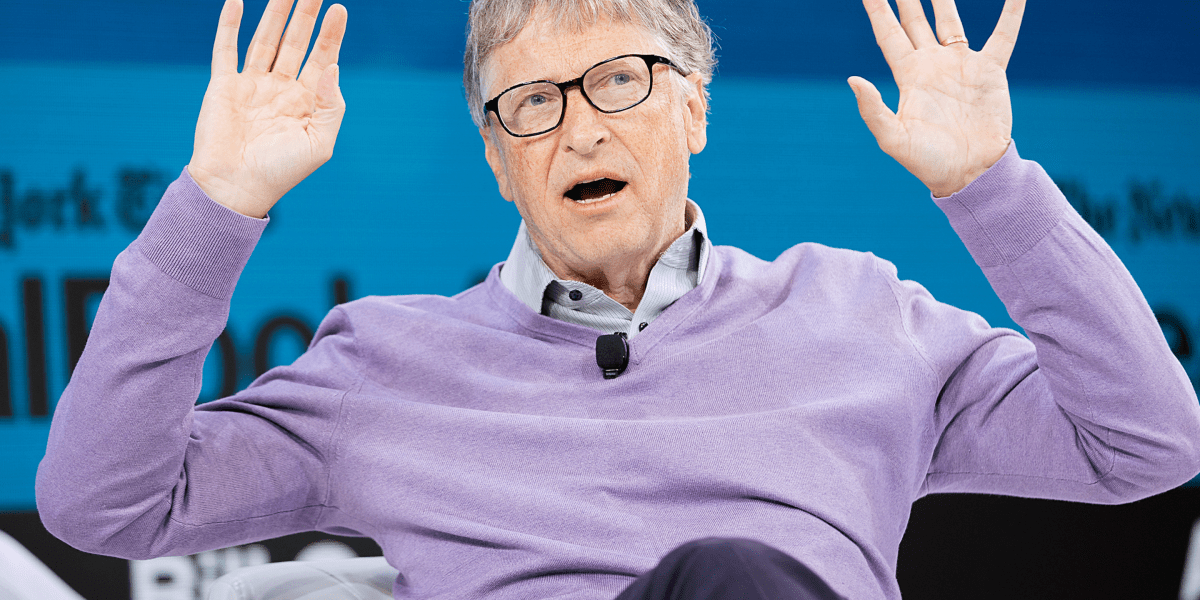
Billionaire Microsoft cofounder Bill Gates, JPMorgan CEO Jamie Dimon, Nvidia’s boss Jensen Huang, and Elon Musk have all made the same prediction in recent years: The workweek is about to shrink. Automation will take over routine tasks, they argue, freeing workers’ time and pushing a four-day work week toward becoming standard. Gates has even floated the idea of a two-day workweek.

But Mark Dixon, CEO and founder of International Workplace Group (IWG) CEO isn’t buying it. From his vantage point, running the world’s largest flexible office provider—with more than 8 million users across 122 countries and 85% of the Fortune 500 among its customers—the math doesn’t add up.

“Everyone is focused on productivity, so no time soon,” Dixon says flatly.

“It’s about the cost of labor,” Dixon explains to Fortune. The U.S. and U.K. are experiencing significant cost-of-living crises. At the same time, he says, businesses are experiencing a “cost of operating crisis.” 

“Everyone’s having to control their labor costs because all costs have gone up so much, and you can’t get any more money from customers, so therefore you have to get more out of people.”

Essentially, companies can’t afford to pay the same wages for fewer hours, and they can’t pass the difference on to customers. So any time ‘freed’ by automation is far more likely to be filled with new tasks than handed back to workers. 

Elon Musk says work will be optional in the future—but this CEO says AI may create more work, not less

Silicon Valley’s loudest voices frame AI as a route to more leisure. The world’s richest person and the boss of Space X, Tesla and X, Elon Musk has gone as far as predicting work will be completely “optional” and more like a hobby, in as little as 10 years. 

In reality, Dixon suggests that this scenario would only happen if there’s not enough work to go around, rather than bosses suddenly becoming benevolent. But in his eyes, AI will most likely create more—not less—work. 

Every major technological shift, he argues, has followed a similar arc: fear of displacement, followed by an expansion of opportunity.

“AI will speed up companies’ development, so there’ll be more work, it’ll just be different work,” he says.

In 19th-century Britain, Dixon recalls English textile workers protesting against new automated machinery, fearing it threatened their livelihoods, lowered wages, and de-skilled their craft during the Industrial Revolution. They were called Luddites.

“They went around the country smashing up the looms to stop progress. But look, in the end, you’ve heard of the Industrial Revolution. That’s what came from those looms and factory production.” As mass production made goods more available, retail grew; more managers were needed to oversee the machines; the middle class grew, and so on. 

Likewise, there was a similar palpable fear when computers first burst on the scene in the 1980s. The 1996 book Women and Computers detailed people fearing becoming “a slave” to machines and feeling aggressive towards computers.”

But since the explosion of the PC (and then the internet, the Cloud, social media, and so on), most professions have undergone a digital rebrand—instead of disappearing altogether. 

Copywriters now use laptops instead of typewriters; designers rely on Adobe Photoshop instead of pen and paper; and a plethora of IT roles were created along the way. 

“It’s impossible to stop progress,” Dixon concludes.  

“Companies have to do what companies have to do, and it’s really important for young people coming into the marketplace to work a little bit harder on really selecting the right jobs, the right avenue, getting extra skills in things like AI. Whatever job you’re going to do, you’ve got to be good at tech.”


Source link

Continue Reading

Business

Jerome Powell to attend Supreme Court oral argument on Lisa Cook’s attempted firing from Federal Reserve

Published

on


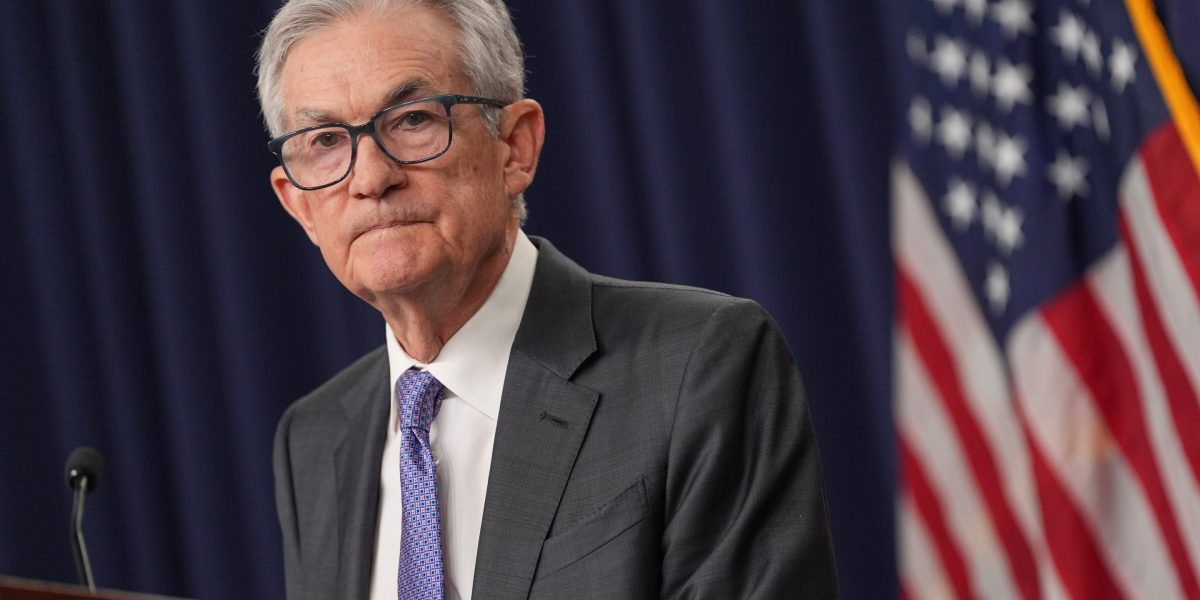
Federal Reserve Chair Jerome Powell will attend the Supreme Court’s oral argument Wednesday in a case involving the attempted firing of Fed governor Lisa Cook, an unusual show of support by the central bank chair.

The high court is considering whether President Donald Trump can fire Cook, as he said he would do in late August, in an unprecedented attempt to remove one of the seven members of the Fed’s governing board. Powell plans to attend the high court’s Wednesday session, according to a person familiar with the matter, who spoke on condition of anonymity.

It’s a much more public show of support than the Fed chair has previously shown Cook. But it follows Powell’s announcement last week that the Trump administration has sent subpoenas to the Fed, threatening an unprecedented criminal indictment of the Fed Chair. Powell — appointed to the position by Trump in 2018 — appears to be casting off last year’s more subdued reponse to Trump’s repeated attacks on the central bank in favor of a more public confrontation.

Powell issued a video statement Jan. 11 condemning the subpoenas as “pretexts” for Trump’s efforts to force him to sharply cut the Fed’s key interest rate. Powell oversaw three rate cuts late last year, lowering the rate to about 3.6%, but Trump has argued it should be as low as 1%, a position few economists support.

The Trump administration has accused Cook of mortgage fraud, an allegation that Cook has denied. No charges have been made against Cook. She sued to keep her job, and the Supreme Court Oct. 1 issued a brief order allowing her to stay on the board while they consider her case.

If Trump succeeds in removing Cook, he could appoint another person to fill her slot, which would give his appointees a majority on the Fed’s board and greater influence over the central bank’s decisions on interest rates and bank regulation.

Join us at the Fortune Workplace Innovation Summit May 19–20, 2026, in Atlanta. The next era of workplace innovation is here—and the old playbook is being rewritten. At this exclusive, high-energy event, the world’s most innovative leaders will convene to explore how AI, humanity, and strategy converge to redefine, again, the future of work. Register now.


Source link

Continue Reading

Trending

Copyright © Miami Select.