Connect with us

Business

Nvidia CEO Jensen Huang is ‘fairly confident’ that AI will increase productivity and hiring—but there’s a catch

Published

on


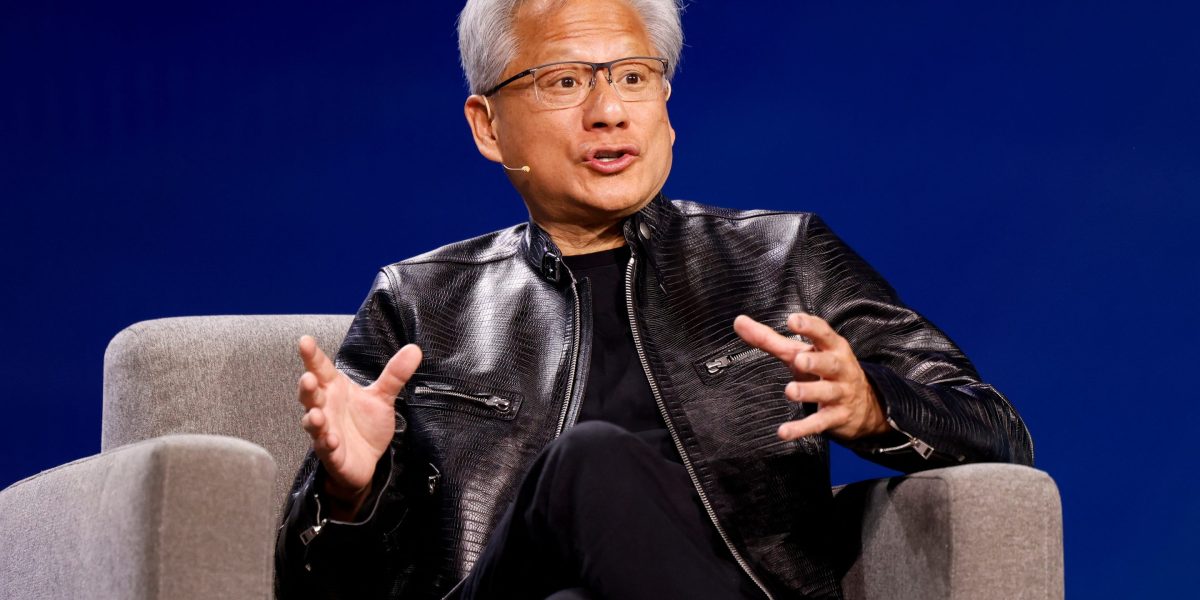
2025 was not the year labor economists hoped for. Last year was the worst year of non-recession job growth since 2003. Tariffs, tighter immigration, and economic uncertainty have all played a role—and artificial intelligence has become an easy scapegoat. But Nvidia CEO Jensen Huang doesn’t see AI as the villain behind today’s job market woes. 

Instead, he views the current slowdown as a period of adjustment—growing pains before a more productive and ultimately more prosperous economy takes shape.

“Our job is not to wrangle a spreadsheet or type into a keyboard—our job is generally more meaningful than that,” Huang told TIME. “I’m fairly confident that AI will drive productivity, revenue growth, and therefore more hiring.”

But his optimism comes with a caveat: the transition won’t be seamless. The rise of AI will force a broad reshuffling of roles and responsibilities across the job market, demanding new skills and adaptability from workers.

“This is for certain: everyone’s job will change because of AI. Some jobs will disappear—every industrial revolution some jobs are just gone—but a whole bunch of jobs are created,” the 62-year-old said.

And there’s an even bigger catch. In order to be part of this transformation, AI must be embraced; otherwise, the consequences could be stark.

“Everyone will have to use AI, because if you don’t, you’ll lose your job to someone who does.”

Nvidia declined Fortune’s request for comment.

2026 might not be any better for job seekers—but here’s how to stand out

Huang is not alone seeing long-term opportunity amid short-term turbulence. AMD CEO Lisa Su has also struck an optimistic tone—particularly for students entering the workforce just as AI shapes how work gets done.

“The Class of 2026 will be graduating at an exciting time, as AI transforms our world and expands what is possible,” she said in a statement announcing her as MIT’s 2026 commencement speaker. “And I look forward to celebrating them as they prepare to share their skills and ideas with the world.”

However, after a sluggish 2025, there’s little evidence that 2026 will offer immediate relief for job seekers—especially if tariff policy and other economic headwinds remain unchanged. For soon-to-be graduates, the outlook is particularly grim. 

More than half of employers rate the job market for the Class of 2026 as “poor” or “fair,” according to a survey from the National Association of Colleges and Employers—the most pessimistic outlook since the early days of the pandemic.

This is playing out in real time as young people are battling for a shrinking number of entry-level roles. At Bank of America, for example, just 2,000 recent graduates were hired from a pool of 200,000 applicants—an acceptance rate of about 1%, far more selective than Ivy League schools.

The bank’s CEO, Brian Moynihan, acknowledged that anxiety is widespread among Gen Z job seekers, but urged them not to retreat from it.

“If you ask them if they’re scared, they say they are. And I understand that. But I say, harness it … It’ll be your world ahead of you,” Moynihan told CBS News earlier this year. 

Huang has echoed that message, arguing that resilience—not entitlement—will be the defining trait of workers who succeed in an AI-driven economy.

“People with very high expectations have very low resilience—and unfortunately, resilience matters in success,” Huang said during an interview with the Stanford Graduate School of Business in 2024. “One of my great advantages is that I have very low expectations.”

Overcoming adversity, Huang said, is a rite of passage for successful people.

“I don’t know how to do it [but] for all of you Stanford students, I wish upon you ample doses of pain and suffering,” Huang added. “Greatness comes from character and character isn’t formed out of smart people—it’s formed out of people who suffered.”


Source link

Continue Reading

Business

Rural America is getting a bailout, but not from Trump—billionaires are riding to the rescue

Published

on


Rural America is getting a bailout.

Billionaires are increasingly stepping in to plug gaps in services, education, and opportunity that many small towns say have been ignored for years. While Washington remains gridlocked over how to revive areas left behind by industrial and demographic change, a growing class of wealthy donors is quietly reshaping the economic future of the countryside with nine-figure checks and thousands of acres of land.

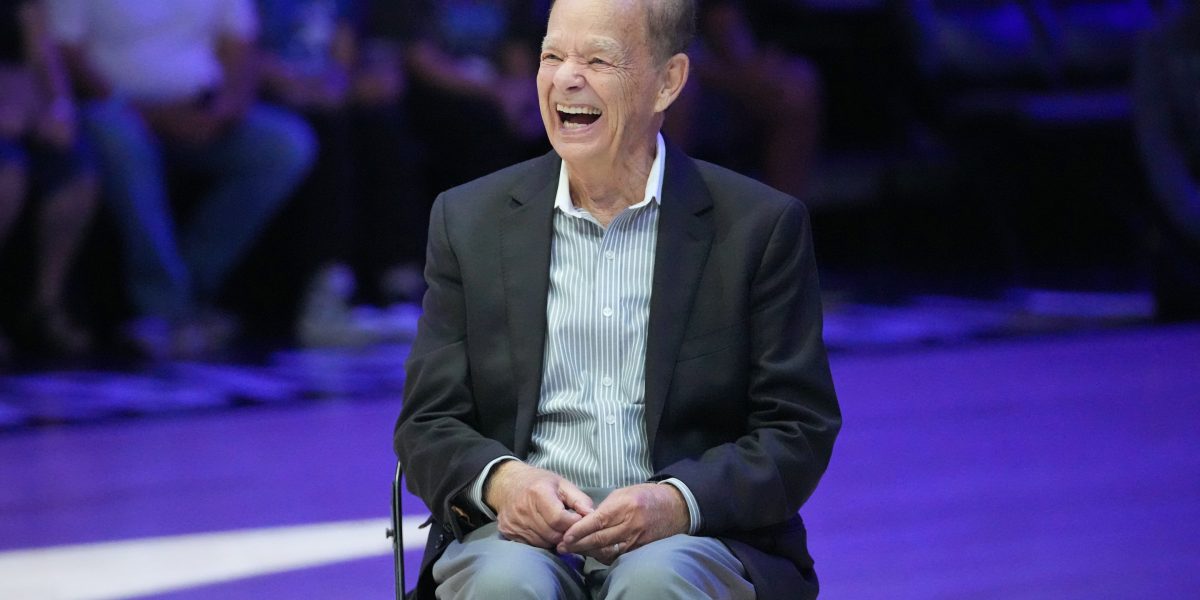
Minnesota billionaire Glen Taylor, who built Taylor Corp. into a printing empire and became his state’s wealthiest resident, is now redirecting a significant slice of his fortune back to the rural communities that raised him. The 84-year-old former dairy farm kid from outside Comfrey, Minnesota (pop. 376 as of 2024), is transferring farmland and securities worth roughly $100 million into the Taylor Family Farms Foundation, with a specific mandate to support rural areas in Minnesota and Iowa.

Rather than offering a one-time cash infusion, Taylor’s gift is structured to generate income for years, building on a 2023 transfer of about $173 million in farmland that already funds grants through regional nonprofit partners. Taylor said the move is rooted in his own upbringing in southern Minnesota, where he worked on farms and raised chickens, and in a desire to “make a positive impact on the lives of others in a region that I love so much,” Taylor said in a statement to the Observer.​

Billionaire rural wave

Taylor is part of a broader pattern in which ultrawealthy donors are focusing explicitly on small-town and rural America rather than the big-city universities and museums that long dominated philanthropy. Investment banker Byron Trott, who grew up in Union, Missouri, has pledged $150 million to a network of universities to boost enrollment from rural students, a push that has already helped drive a 20% increase in applications.

Philanthropist MacKenzie Scott has similarly turned her attention to rural education, donating $36 million to North Carolina institutions such as Robeson Community College and Bladen Community College to bolster opportunities in some of the country’s poorest counties. Together, these gifts signal a recognition among billionaires that the country’s economic and political fault lines increasingly run between thriving metros and struggling rural regions—and that private money can move faster than federal policy.

Politics, power and dependence

The surge of billionaire attention comes as rural voters remain a core political base for Trump, whose “forgotten men and women” rhetoric helped power his return to the White House but has not translated into a sweeping federal revival plan for small-town America. In that vacuum, philanthropists like Taylor, Trott, and Scott are effectively writing their own rural policy agendas through foundations and grantmaking, deciding which towns get ambulances, which fire departments get radios, and which students get a shot at college.

Trump’s administration has announced a $12 billion bailout for farmers in the wake of a wipeout amid his tariff regime, particularly for soybeans. At one point in 2025, as Trump and Treasury Secretary Scott Bessent announced support for like-minded ally Javier Milei in Argentina, China cut its U.S. soybean purchases to zero and began buying them from Argentina instead. After a Trump-Xi summit, China resumed soybean purchases, and more recently Argentina has repaid its full $20 billion credit line. Kentucky soybean farmer Caleb Ragland told the Associated Press in early January that Trump’s aid for farmers was “a Band-Aid on a deep wound. We need competition and opportunities in the market to make our future brighter.”

For this story, Fortune journalists used generative AI as a research tool. An editor verified the accuracy of the information before publishing.


Source link

Continue Reading

Business

Highway 1 along Big Sur reopens after 3 years of closures amid tourism-destroyin landslide

Published

on


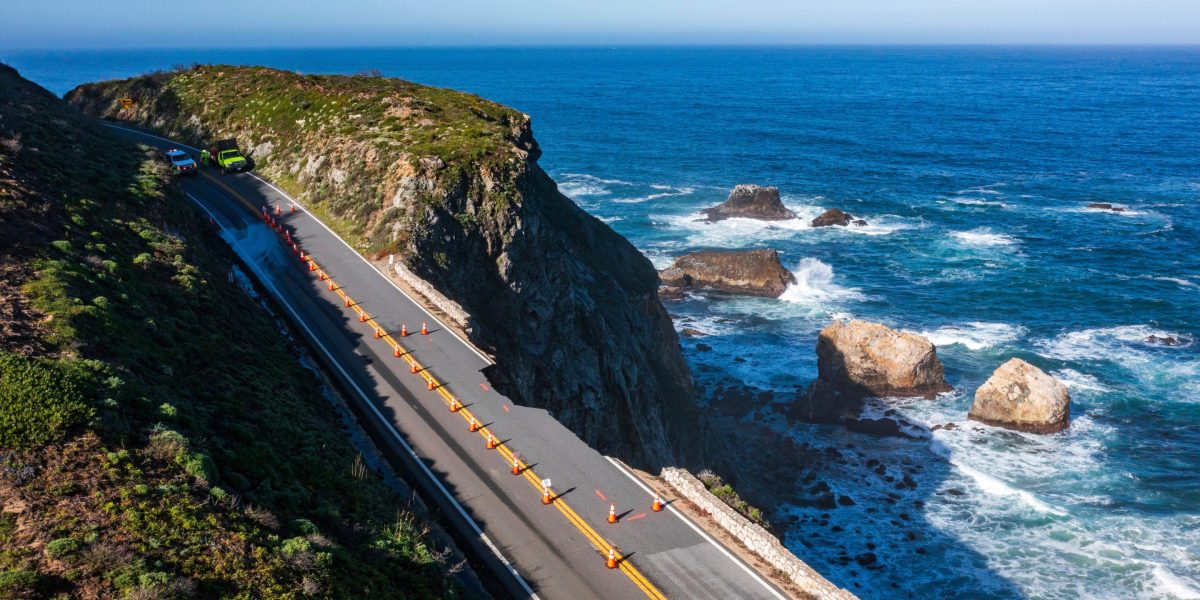
A 90-mile (145-kilometer) section of California’s Highway 1 along the famous Big Sur coast finally reopened Wednesday after three years of closures and repairs following a series of landslides and a roadway collapse that hampered tourism on the scenic route.

The reopening around midday came three months ahead of schedule, and business owners say that should give travelers plenty of time to plan their spring and summer road trips.

“Today is a monumental milestone for us,” said a relieved Colin Twohig, general manager of the Big Sur River Inn. “We’re hitting the light at the end of the tunnel after three long years.”

The first shutdown came in January 2023 when a series of powerful atmospheric rivers triggered a major landslide. The highway was buried again the following year during another wet winter, when a lane also collapsed down a cliff near the Rocky Creek Bridge.

The traffic stoppage between Carmel and Cambria cut off access to Big Sur, an isolated stretch of the state’s central coast where misty, forested mountains rise up from the ocean. What used to be a short drive between the southern and northern sections — with tiny Big Sur Village roughly in the middle — became an eight-hour trek inland and then back toward the seashore.

The isolated area, home to fewer than 2,000 residents, is known for its panoramic hiking trails along high cliffs and craggy beaches where seals and sea lions sometimes sprawl out. The late “Tropic of Cancer” author Henry Miller lived there for nearly two decades starting in the 1940s, and there’s now a library devoted to his work.

Highway 1 is famously a must for California visitors traveling between Los Angeles and San Francisco, and Twohig said he looks forward to seeing tourists in cars and motorhomes back on the road.

Twohig estimated that his inn, with 22 guest rooms, a large restaurant and a general store, saw a 20% drop in business. He said the road closure directly following COVID-19 restrictions was a one-two punch. The inn spent the down time making improvements and marketing heavily to entice California residents to visit during the off-seasons.

“When you have a hospitality business, you really rely on the busy season, and when there is no busy season, it can be a hard pill to swallow,” he said. “Having that lifeline back is huge.”

There were multiple closures at various locations throughout the past three years, and the last stretch that remained shut was a 7-mile (11-kilometer) span near Lucia, according to the California Department of Transportation, or Caltrans.

Gov. Gavin Newsom announced the opening on social media, thanking Caltrans for the speedy work in “reviving a vital economic lifeline for local business owners and residents affected by the closure.”

Caltrans, which has called Highway 1 the jewel of the state highway system, placed steel and concrete to shore up the collapsed cliffside.


Source link

Continue Reading

Business

If your phone is on SOS (and you can see this), yes, Verizon is having a major outage across the U.S.

Published

on


Many Verizon customers encountered a widespread outage on Wednesday, disrupting calling and other cellular services across the U.S.

The carrier acknowledged that there was an “issue impacting wireless voice and data services.” Verizon didn’t specify what was causing the disruptions, but said in an update shared on social media that it had deployed its engineering teams.

“We understand the impact this has on your day and remain committed to resolving this as quickly as possible,” the New York-based company wrote.

Outage tracker Downdetector showed that Verizon customers began to report issues with their service around noon E.T. Reports appeared to peak at more than 175,000 by 12:30 p.m. ET — but still remained elevated later into the afternoon, sitting at nearly 57,000 as of 3:30 p.m. ET.

Impacted users said their phones were in “SOS” mode or had other no signal messages. In cities like New York, alerts were sent out warning that the outage may disrupt 911 calls — urging residents to try landlines and devices from other carriers, if available, or visit a local police or fire station in-person in case of an emergency.

Per Downdetector, other major hubs impacted by Verizon’s outage included Washington D.C., Chicago, Houston, Los Angeles and Portland, Oregon. But consumers across the country said they were experiencing disruptions.

A handful of outage reports for other carriers also bubbled up on Wednesday — but companies like T-Mobile and AT&T quickly confirmed online that their services were operating normally. Both suggested that their customers may be encountering issues contacting people with Verizon’s service, however.

When cellular outages happen, some phone companies also urge consumers to try to connect to Wi-Fi and use internet calling. If Wi-Fi is still unavailable, there can be a limited number of other options — including sending messages via satellite on newer iPhones.

This story was originally featured on Fortune.com


Source link

Continue Reading

Trending

Copyright © Miami Select.