Connect with us

Business

‘Not the MAHA that we signed up for’: Robert F. Kennedy Jr. learns the perils of power and keeping his grassroots movement together

Published

on


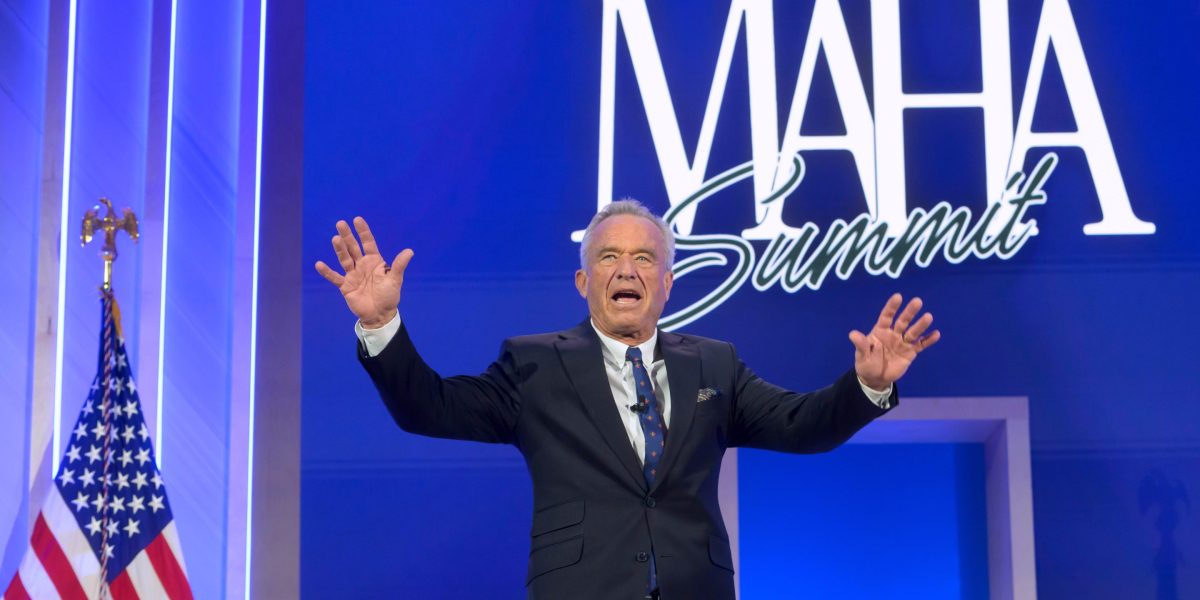
Yet online, a different narrative of his tenure was playing out as a small but vocal group of Kennedy’s supporters and former employees assailed top Trump administration advisers, claiming they were sabotaging him and redirecting MAHA away from its original goals.

“MAHA is not MAHA anymore,” Gray Delany, a former Department of Health and Human Services official ousted in August, said in a podcast interview that day. “I’m not there, but what I’ve heard of what’s happening today is not the MAHA that we signed up for.”

The criticisms, which grew loud enough that the health secretary took to social media to defend his colleagues two days later, exposed the cracks that are beginning to form within his coalition as it amasses power and broadens in scope.

Several of the environmental advocates and vaccine skeptics who helped propel Kennedy into politics have become impatient with what they view as inadequate action on their priorities. They’re also wary that the Health Department appears willing to collaborate with pharmaceutical companies, tech firms and other big corporations whose motives they don’t trust.

The fissures pose a threat to the cohesion of a movement that has given President Donald Trump an important ally and Republicans access to a new group of voters. They come as cracks have developed in Trump’s own Make America Great Again movement over issues like the Epstein files and the White House’s focus on global diplomacy.

In the wider public, MAHA has enjoyed soaring popularity. About two-thirds of Americans said they supported the “Make America Healthy Again” initiative from the federal government, according to an Ipsos poll from June.

“MAHA’s growth is a sign of its success,” said HHS spokesperson Andrew Nixon. “Secretary Kennedy is leading a broad coalition to make Americans healthier, guided by transparency, accountability and measurable results. The movement’s meaning hasn’t changed and it’s stronger than ever.”

Public health researchers say the genius that fuels Kennedy’s movement — the universal appeal of making Americans healthier — can also cause conflicts by inviting competing interests.

“This is a tale as old as time in politics,” said Matt Motta, a professor at Boston University School of Public Health. “The bigger your tent is, the harder it can be to make everyone happy.”

Frustration rises from within

Kennedy, a longtime environmental lawyer and anti-vaccine activist who helped lead the crusade against COVID-19 shots during the pandemic, has taken many steps to curtail vaccines this year. He pulled $500 million for their development, ousted and replaced every member of a federal vaccine advisory committee and pledged to overhaul a federal program for compensating Americans injured by shots. He also has repeatedly spread false and misleading information about vaccines while in office.

As recently as this week, in a move that thrilled Kennedy’s anti-vaccine base, the Centers for Disease Control and Prevention changed its website to contradict the longtime scientific conclusion that vaccines do not cause autism.

But many of Kennedy’s supporters in what they call the “health freedom” movement say it’s not enough. Some want punishments for companies that profited from vaccine and mask requirements during the pandemic. Others want mRNA-based COVID-19 shots pulled from the shelves, despite scientific consensus that they have saved millions of lives.

In their attacks on the administration last week, a few MAHA influencers and two fired HHS employees suggested White House chief of staff Susie Wiles and Kennedy’s close adviser, Stefanie Spear, were conspiring to limit Kennedy’s ability to restrict vaccines and crack down on pharmaceutical companies.

Some Kennedy supporters latched on to the claims and pointed to Wiles’ career history at a lobbying firm that has worked with Pfizer as evidence she’s trying to undermine him. They also shared years-old social media posts from Spear criticizing Trump.

Kennedy defended his colleagues in two posts on X, saying the MAHA movement has “no better friend in Washington” than Wiles and that Spear has become a Trump loyalist.

“Let’s focus on our extraordinary achievements to date and the monumental work that still needs to be done,” Kennedy wrote. “Let’s build our coalition instead of splintering it.”

The meaning of MAHA now depends on whom you ask

Since the “Make America Healthy Again” slogan debuted on the campaign trail last year, Kennedy and Trump have widened the MAHA tent considerably by inviting anyone into the fold who has concerns about Americans’ health, nutrition and chronic disease.

That’s attracted a diverse crowd, including moneyed interests — among them health data startups, artificial intelligence firms, drug manufacturers and even fast-food companies. Steak ’n Shake recently promoted its fries cooked in beef tallow, saying it was “proud to be part of the MAHA movement.”

At the recent MAHA event in Washington, hosted by the pro-Kennedy group MAHA Action, Kennedy and other federal health officials appeared on a stage that was occupied throughout the day by biotech companies like CRISPR Therapeutics and Regeneron, the brain-computer interface company Neuralink and various AI companies and health startups. The invitation list raised flags for some longtime Kennedy supporters.

“I was not thrilled about some of the people who were there,” said Leslie Manookian, president and founder of the Health Freedom Defense Fund, a nonprofit that promotes bodily autonomy. “I don’t think that we make America healthy again through pills, creams, injections, pharmaceuticals, chips, monitors, devices.”

Tony Lyons, president of MAHA Action, told The Associated Press that the MAHA movement’s strength “comes from its openness to ideas, from its dedication to including all voices, all perspectives, more dialogue, more fierce debate.”

“We don’t want to exclude anyone,” he said. “We don’t want to censor anyone.”

Ethan Augreen, who led Colorado’s volunteer effort for Kennedy’s presidential campaign last year, said he was concerned both by speakers at the event and by a recent Kennedy social media post about meeting with tech leaders to talk about personal health data.

He said he hoped Kennedy would fight corruption in America’s health care system and remove mRNA COVID-19 vaccines from the market.

“There’s definitely some alarm bells going,” Augreen said. “Grassroots MAHA people definitely don’t trust these corporations, and it’s not really apparent whether the administration is just getting in bed with them or really holding their feet to the fire.”

Kennedy and his team thread a needle on the MAHA message

At a recent Oval Office meeting, Kennedy stood with Trump and other administration leaders as they touted a deal with drugmakers Eli Lilly and Novo Nordisk to expand coverage and reduce the prices of weight-loss drugs.

Kennedy had previously expressed skepticism about GLP-1 weight-loss medications and has said he wants to focus on the root causes of disease instead of medicating the public. But he praised the deal, even as he was careful to add it wasn’t a “silver bullet.”

Dr. Mehmet Oz, the administrator of the Centers for Medicare and Medicaid Services, said during the MAHA event that scrutiny of it from Kennedy’s base was “understandable.” He defended the administration as using Trump’s negotiation playbook instead of going “head-to-head with adversaries.”

Several of Kennedy’s core supporters said they see the government as a deeply entrenched bureaucracy that won’t be easy to reform, even as they hope he’ll be able to remove toxins from food and the environment and further restrict vaccines. Kennedy, at an appearance with western governors Thursday, said he doesn’t intend to take away people’s access to vaccines.

Jeffrey Tucker, founder of the nonprofit Brownstone Institute who has rallied support behind Kennedy, said MAHA activists are idealistic but at times naive about the difficulty of government reform.

“It’s very important to hold on to your ideals,” he said. “But if you’re doing nothing but throwing rocks, then you can become a problem.”

Motta, the professor, said regardless of where MAHA goes next, it’s already bigger than any singular policy position.

“Identities do not go away easily,” he said. “They are deeply held; they are deeply integrated into our sense of self. And I would be shocked if this was a movement that faded.”

___

Associated Press writer Linley Sanders contributed to this report from Washington.


Source link

Continue Reading

Business

U.S. consumers are so strained they put more than $1B on BNPL during Black Friday and Cyber Monday

Published

on


Financially strained and cautious customers leaned heavily on buy now, pay later (BNPL) services over the holiday weekend.

Cyber Monday alone generated $1.03 billion (a 4.2% increase YoY) in online BNPL sales with most transactions happening on mobile devices, per Adobe Analytics. Overall, consumers spent $14.25 billion online on Cyber Monday. To put that into perspective, BNPL made up for more than 7.2% of total online sales on that day.

As for Black Friday, eMarketer reported $747.5 million in online sales using BNPL services with platforms like PayPal finding a 23% uptick in BNPL transactions.

Likewise, digital financial services company Zip reported 1.6 million transactions throughout 280,000 of its locations over the Black Friday and Cyber Monday weekend. Millennials (51%) accounted for a chunk of the sizable BNPL purchases, followed by Gen Z, Gen X, and baby boomers, per Zip.

The Adobe data showed that people using BNPL were most likely to spend on categories such as electronics, apparel, toys, and furniture, which is consistent with previous years. This trend also tracks with Zip’s findings that shoppers were primarily investing in tech, electronics, and fashion when using its services.

And while some may be surprised that shoppers are taking on more debt via BNPL (in this economy?!), analysts had already projected a strong shopping weekend. A Deloitte survey forecast that consumers would spend about $650 million over the Black Friday–Cyber Monday stretch—a 15% jump from 2023.

“US retailers leaned heavily on discounts this holiday season to drive online demand,” Vivek Pandya, lead analyst at Adobe Digital Insights, said in a statement. “Competitive and persistent deals throughout Cyber Week pushed consumers to shop earlier, creating an environment where Black Friday now challenges the dominance of Cyber Monday.”

This report was originally published by Retail Brew.


Source link

Continue Reading

Business

AI labs like Meta, Deepseek, and Xai earned worst grades possible on an existential safety index

Published

on


A recent report card from an AI safety watchdog isn’t one that tech companies will want to stick on the fridge.

The Future of Life Institute’s latest AI safety index found that major AI labs fell short on most measures of AI responsibility, with few letter grades rising above a C. The org graded eight companies across categories like safety frameworks, risk assessment, and current harms.

Perhaps most glaring was the “existential safety” line, where companies scored Ds and Fs across the board. While many of these companies are explicitly chasing superintelligence, they lack a plan for safely managing it, according to Max Tegmark, MIT professor and president of the Future of Life Institute.

“Reviewers found this kind of jarring,” Tegmark told us.

The reviewers in question were a panel of AI academics and governance experts who examined publicly available material as well as survey responses submitted by five of the eight companies.

Anthropic, OpenAI, and GoogleDeepMind took the top three spots with an overall grade of C+ or C. Then came, in order, Elon Musk’s Xai, Z.ai, Meta, DeepSeek, and Alibaba, all of which got Ds or a D-.

Tegmark blames a lack of regulation that has meant the cutthroat competition of the AI race trumps safety precautions. California recently passed the first law that requires frontier AI companies to disclose safety information around catastrophic risks, and New York is currently within spitting distance as well. Hopes for federal legislation are dim, however.

“Companies have an incentive, even if they have the best intentions, to always rush out new products before the competitor does, as opposed to necessarily putting in a lot of time to make it safe,” Tegmark said.

In lieu of government-mandated standards, Tegmark said the industry has begun to take the group’s regularly released safety indexes more seriously; four of the five American companies now respond to its survey (Meta is the only holdout.) And companies have made some improvements over time, Tegmark said, mentioning Google’s transparency around its whistleblower policy as an example.

But real-life harms reported around issues like teen suicides that chatbots allegedly encouraged, inappropriate interactions with minors, and major cyberattacks have also raised the stakes of the discussion, he said.

“[They] have really made a lot of people realize that this isn’t the future we’re talking about—it’s now,” Tegmark said.

The Future of Life Institute recently enlisted public figures as diverse as Prince Harry and Meghan Markle, former Trump aide Steve Bannon, Apple co-founder Steve Wozniak, and rapper Will.i.am to sign a statement opposing work that could lead to superintelligence.

Tegmark said he would like to see something like “an FDA for AI where companies first have to convince experts that their models are safe before they can sell them.

“The AI industry is quite unique in that it’s the only industry in the US making powerful technology that’s less regulated than sandwiches—basically not regulated at all,” Tegmark said. “If someone says, ‘I want to open a new sandwich shop near Times Square,’ before you can sell the first sandwich, you need a health inspector to check your kitchen and make sure it’s not full of rats…If you instead say, ‘Oh no, I’m not going to sell any sandwiches. I’m just going to release superintelligence.’ OK! No need for any inspectors, no need to get any approvals for anything.”

“So the solution to this is very obvious,” Tegmark added. “You just stop this corporate welfare of giving AI companies exemptions that no other companies get.”

This report was originally published by Tech Brew.


Source link

Continue Reading

Business

Hollywood writers say Warner takeover ‘must be blocked’

Published

on


Hollywood writers, producers, directors and theater owners voiced skepticism over Netflix Inc.’s proposed $82.7 billion takeover of Warner Bros. Discovery Inc.’s studio and streaming businesses, saying it threatens to undermine their interests.

The Writers Guild of America, which announced in October it would oppose any sale of Warner Bros., reiterated that view on Friday, saying the purchase by Netflix “must be blocked.”

“The world’s largest streaming company swallowing one of its biggest competitors is what antitrust laws were designed to prevent,” the guild said in an emailed statement. “The outcome would eliminate jobs, push down wages, worsen conditions for all entertainment workers, raise prices for consumers, and reduce the volume and diversity of content for all viewers.”

The worries raised by the movie and TV industry’s biggest trade groups come against the backdrop of falling movie and TV production, slack ticket sales and steep job cuts in Hollywood. Another legacy studio, Paramount, was sold earlier this year.

Warner Bros. accounts for about a fourth of North American ticket sales — roughly $2 billion — and is being acquired by a company that has long shunned theatrical releases for its feature films. As part of the deal, Netflix co-CEO Ted Sarandos has promised Warner Bros. will continue to release moves in theaters.

“The proposed acquisition of Warner Bros. by Netflix poses an unprecedented threat to the global exhibition business,” Michael O’Leary, chief executive officer of the theatrical trade group Cinema United, said in en emailed statement Friday. “The negative impact of this acquisition will impact theaters from the biggest circuits to one-screen independents.”

The buyout of Warner Bros. by Netflix “would be a disaster,” James Cameron, the director of some of Hollywood’s highest-grossing films in history including Titanic and Avatar, said in late November on The Town, an industry-focused podcast. “Sorry Ted, but jeez. Sarandos has gone on record saying theatrical films are dead.”

On a conference call with investors Friday, Sarandos said that his company’s resistance to releasing films in cinemas was mostly tied to “the long exclusive windows, which we don’t really think are that consumer friendly.”

The company said Friday it would “maintain Warner Bros.’ current operations and build on its strengths, including theatrical releases for films.”

On the call, Sarandos reiterated that view, saying that, “right now, you should count on everything that is planned on going to the theater through Warner Bros. will continue to go to the theaters through Warner Bros.” 

Competition from online outfits like YouTube and Netflix has forced a reckoning in Hollywood, opening the door for takeovers like the Warner Bros. deal announced Friday. Media giants including Comcast Corp., parent of NBCUniversal, are unloading cable-TV networks like MS Now and USA, and steering resources into streaming. 

In an emailed note to Warner Bros. employees on Friday, Chief Executive Officer David Zaslav said the board’s decision to sell the company “reflects the realities of an industry undergoing generational change in how stories are financed, produced, distributed, and discovered.”

The Producers Guild of America said Friday its members are “rightfully concerned about Netflix’s intended acquisition of one of our industry’s most storied and meaningful studios,” while a spokesperson for the Directors Guild of America raised concerns about future pay at Warner Bros.

“We will be meeting with Netflix to outline our concerns and better understand their vision for the future of the company,” the Directors Guild said.

In September, the DGA appointed director Christopher Nolan as its president. Nolan has previously criticized Netflix’s model of releasing films exclusively online, or simultaneously in a small number of cinemas, and has said he won’t make movies for the company.

The Screen Actors Guild said Friday that the transaction “raises many serious questions about its impact on the future of the entertainment industry, and especially the human creative talent whose livelihoods and careers depend on it.”

Oscar winner Jane Fonda spoke out on Thursday before the deal was announced. 

“Consolidation at this scale would be catastrophic for an industry built on free expression, for the creative workers who power it, and for consumers who depend on a free, independent media ecosystem to understand the world,” the star of the Netflix series Grace and Frankie wrote on the Ankler industry news website.

Netflix and Warner Bros. obviously don’t see it that way. In his statement to employees, Zaslav said “the proposed combination of Warner Bros. and Netflix reflects complementary strengths, more choice and value for consumers, a stronger entertainment industry, increased opportunity for creative talent, and long-term value creation for shareholders.”


Source link

Continue Reading

Trending

Copyright © Miami Select.