Connect with us

Business

North Korea unveils new intercontinental ballistic missile that may be tested in coming weeks

Published

on


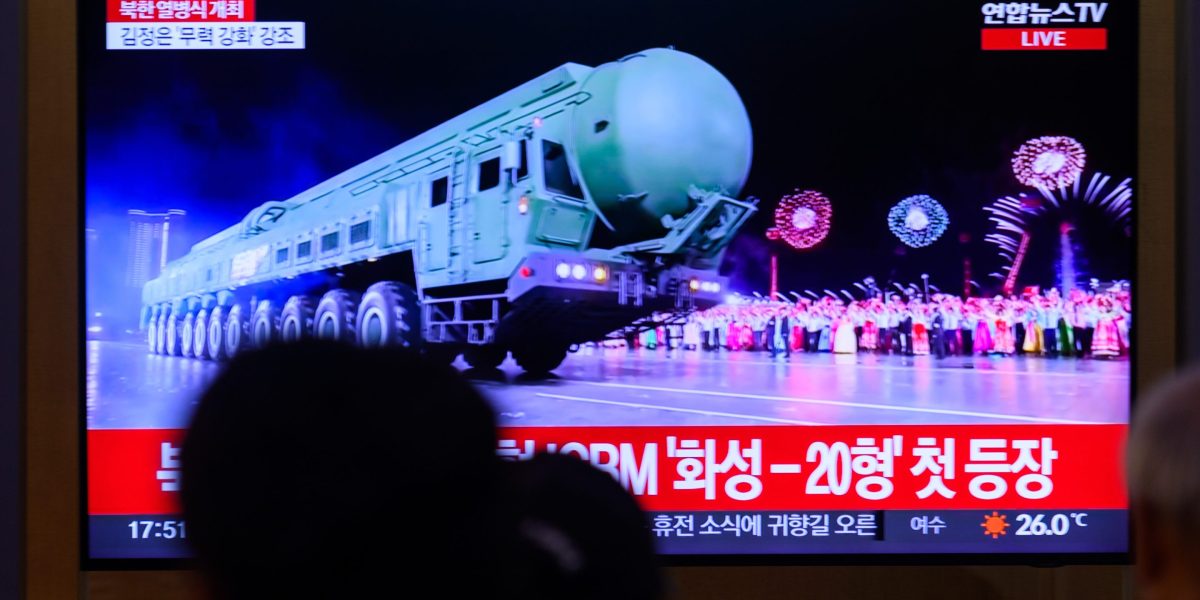
At a massive military parade attended by foreign leaders, North Korean leader Kim Jong Un rolled out his nuclear-armed military’s most powerful weapons, including a new intercontinental ballistic missile he may be preparing to test in coming weeks.

The parade, which began in the rain Friday night at Pyongyang’s main square and marked the 80th anniversary of the founding of the ruling Workers’ Party, highlighted Kim’s growing diplomatic footing and his relentless drive to build an arsenal that could target the continental United States and his rivals in Asia.

North Korean state media said Saturday that the parade featured a new, yet-to-be-tested ICBM called the Hwasong-20, which it described as the country’s “most powerful nuclear strategic weapon system.”

Joined by high-level Chinese, Vietnamese and Russian officials at a podium, Kim said in a speech that his military “should continue to grow into an invincible entity that destroys all threats,” but made no direct mention of the United States or South Korea.

He also praised the thousands of North Korean soldiers he sent to Russia to join its war against Ukraine, saying they displayed “heroic fighting spirit” and “ideological and spiritual perfection” in a battle for “international justice and genuine peace.”

Edited footage from North Korean state television showed what appeared to be tens of thousands of spectators packed into the brightly lit square, cheering and waving the national flag as columns of goose-stepping soldiers and missile-mounted vehicles rolled through the rain-soaked streets. The soldiers included troops Kim had sent to Russia, who marched under North Korean and Russian flags as state media hailed them as “invincible” warriors.

The Hwasong-20 is the latest addition to Kim’s growing list of ICBMs

North Korea in recent years has flight-tested a variety of ICBMs that could potentially reach the U.S. mainland, including missiles with built-in solid propellants that are easier to move and conceal and can be prepared for launch more quickly than the North’s previous liquid-fueled missiles.

The parade saw the debut of the massive Hwasong-20, with at least three of them wheeled out on 11-axle launcher trucks.

The new missile’s existence was first revealed in recent weeks as North Korea tested a new solid-fuel rocket engine that it said was intended for future ICBMs. State media said the engine, built with carbon fiber, is more powerful than past models.

Kim has called for the development of multi-warhead systems that would improve the chances of penetrating missile defenses, and some experts say the Hwasong-20 could be designed for that purpose.

Other weapons on display included shorter-range ballistic, cruise and hypersonic missiles, which the North previously described as capable of delivering nuclear strikes against targets in South Korea. The parade also featured Kim’s newest tanks, artillery systems and drones, which have been a key focus of his efforts to expand his conventional military capabilities after he spent much of his early rule concentrating on nuclear weapons and ballistic missiles.

High-level visitors highlight Kim’s growing diplomatic reach

Kim this week hosted a rare group of high-level foreign officials sent to Pyongyang to attend the anniversary celebrations, including Chinese Premier Li Qiang, former Russian President Dmitry Medvedev, now deputy head of Moscow’s Security Council, and Vietnamese Communist Party General Secretary To Lam.

During the parade, Kim took the central spot at the podium, flanked by Li to his right and Lam to his left, while Medvedev stood next to Lam.

The high-level visits highlight Kim’s increasingly assertive foreign policy as he seeks to break out of isolation and establish a larger role for North Korea in a united front against the U.S.-led West. North Korea has shunned any form of talks with Washington and Seoul since Kim’s high-stakes nuclear diplomacy with Donald Trump fell apart in 2019 during the American president’s first term. In a recent speech, Kim urged Washington to drop its demand for the North to surrender its nukes as a precondition for resuming diplomacy.

Kim also visited China last month and shared center stage with Chinese President Xi Jinping and Russian President Vladimir Putin at a massive military parade.

Kim on Friday separately met with Medvedev to discuss developing the “comprehensive strategic partnership and alliance” with Russia, the official Korean Central News Agency said. Medvedev praised the “bravery and self-sacrificing spirit” of North Korean soldiers who fought alongside Russian forces to repel a Ukrainian incursion into Russia’s Kursk border region, and called for expanded exchanges and cooperation between the two governments. Kim had also met Li and Lam on Thursday for talks on strengthening ties.

Since Russia’s invasion of Ukraine, Kim has made Russia the priority of his foreign policy, sending thousands of troops and large shipments of weapons, including artillery and ballistic missiles, to help fuel Putin’s war.

Fortune Global Forum returns Oct. 26–27, 2025 in Riyadh. CEOs and global leaders will gather for a dynamic, invitation-only event shaping the future of business. Apply for an invitation.


Source link

Continue Reading

Business

Fists, not football: There is no concussion protocol for domestic violence survivors

Published

on


It’s fall in America, and that means football. With football comes questions and concerns about concussions in athletes. How long does it take to fully recover from a concussion? What happens if an athlete returns to play too soon after a concussion? How many concussions are too many?

But it’s not just sports where concussions occur. The most common cause of concussion in NCAA athletes is a car accident. The most common cause of a concussion overall is a fall. And a hidden demographic of people experience brain injuries at an alarming rate: domestic violence survivors.

Every minute, 32 people in the United States experience violence at the hands of an intimate partner. Roughly half of American women and 40% of American men will experience domestic violence at least once in their lives. Most incidents go unreported. One study found that just one in five victims sought medical help immediately after suffering a head injury. Nearly all these injuries involve a blow to the neck or head. 

Current research indicates that more than 75% of domestic violence survivors suffer one or more traumatic brain injuries. In my experience, the most common response to the question, “How many concussions have you suffered,” is “Too many to count.” 

On any given Sunday, you will see up to 30 medical professionals standing on the sidelines of a professional football game. At a high school game, you are likely to see paramedics within eyesight of the players on the field. There are no medical providers who stand outside the home of domestic violence survivors waiting for an injury to occur. There is no concussion protocol for those who are abused.

In addition to repeated impacts to the head, domestic violence survivors often suffer strangulation, being choked, resulting in decreased oxygen to the brain, loss of bladder and bowel function, seizures, and sometimes death.

The long-term consequences of repeated concussion and strangulation include sleep disturbancedizzinesspersonality changes, and memory problems. The most common complaint of a domestic violence survivor who suffers one or more concussions is headaches. One silver lining is that these symptoms are treatable.

Thanks to widespread education and awareness campaigns, athletes have benefited from a sea change in how brain injuries are recognized and treated. We need to bring that same standard of care to survivors of domestic violence by establishing a concussion protocol tailored to their needs.

We must ensure domestic violence survivors receive concussion screenings when they reach the doctor’s office or emergency department — regardless of whether they exhibit clear signs of a traumatic brain injury. New technologies can make brain injury screening simple and accurate. 

Diagnostic tests, like Abbott’s Alinity i TBI test, can help providers evaluate people for traumatic brain injuries with a small blood sample, by measuring two blood biomarkers in the brain. We recently implemented this testing capability at the WVU Rockefeller Neuroscience Institute. We’re one of the first to adopt the brain injury test, where results come back in just 18 minutes. That quick turnaround is especially useful in situations where a provider may have limited time with a survivor who is hesitant to seek medical care. Finally, we must offer everything we provide to athletes: cognitive screening, concussion rehabilitation, and VIP treatment.

At the WVU Rockefeller Neuroscience Institute in Morgantown, we design a comprehensive, tailored treatment plan for each patient, which may also include psychiatry, physical rehabilitation, and speech and vision therapy. Personalized approaches like this one help resolve subtle, lingering problems and prepare patients to protect their brain health after they check out of the hospital. Survivors of domestic violence are our VIPs.

Society has rightly taken steps to ensure athletes receive top-notch treatment whenever they experience a traumatic brain injury. Survivors of domestic violence are every bit as deserving of that level of attention and care.

The opinions expressed in Fortune.com commentary pieces are solely the views of their authors and do not necessarily reflect the opinions and beliefs of Fortune.


Source link

Continue Reading

Business

FAA head hasn’t sold his stake in an airline despite promises to do so, Democratic Senator claims

Published

on


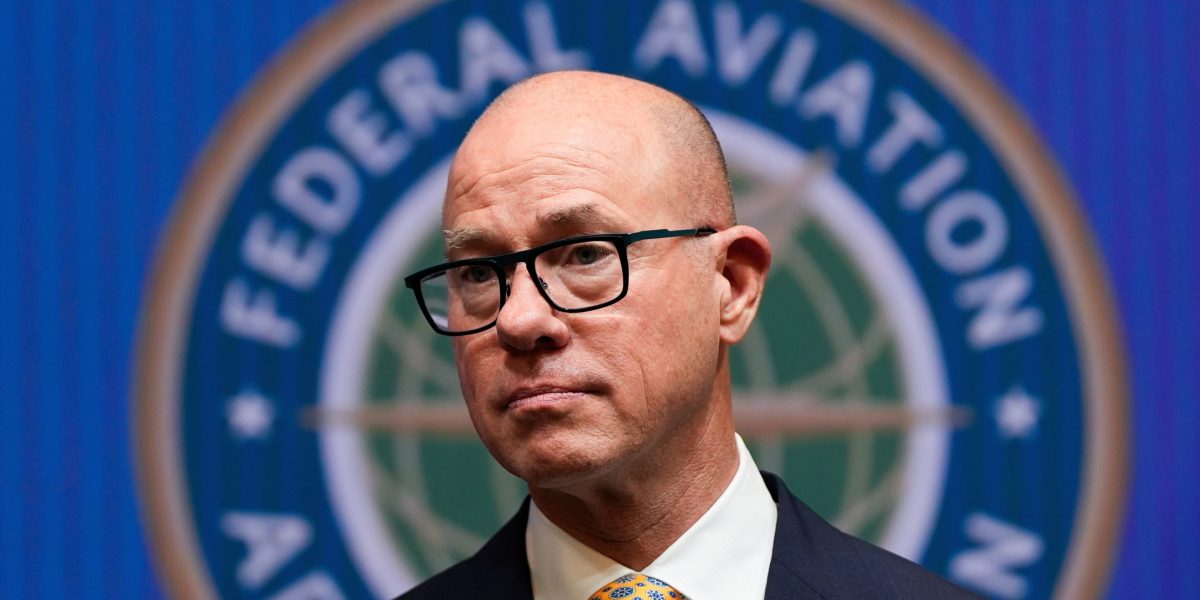
The head of the Federal Aviation Administration has not sold off his multimillion-dollar stake in the airline he led since 1999 despite a promise to do so as part of his ethics agreement, according to a Democratic senator.

In a letter to Bryan Bedford this week, Sen. Maria Cantwell said he vowed to sell all his shares in Republic Airways within 90 of his confirmation but 150 days have now passed. In Bedford’s financial disclosures, he estimated that his Republic stock was worth somewhere between $6 million and $30 million.

Republic completed a merger last month with another major regional airline, Mesa Air Group. Republic’s stock closed Thursday at $19.02, nearly double what it was before the deal was announced in April.

“It appears you continue to retain significant equity in this conflicting asset months past the deadline set to fully divest from Republic, which constitutes a clear violation of your ethics agreement. This is unacceptable and demands a full accounting,” Cantwell said in the letter.

Bedford declined a request for comment, and an FAA spokesperson said he plans to respond directly to Cantwell.

The agency has been in the spotlight since January, when an airliner collided with an Army helicopter over Washington, D.C., killing 67 people. The investigation has already highlighted shortcomings at the FAA, which failed to recognize an alarming number of close calls around Reagan National Airport in the years beforehand.

Then, in the spring, technical problems at the center that directs planes into New Jersey’s Newark Liberty International Airport highlighted a fragile and outdated system relied on by air traffic controllers.

And in the fall, a longstanding shortage of controllers led to thousands of flight cancellations and delays during the longest government shutdown ever as more controllers missed work while going without a paycheck.

Bedford has pledged to prioritize safety and upgrade the nation’s outdated air traffic control system. Congress approved $12.5 billion for that project, and last week the FAA picked the company that will oversee the work.

Join us at the Fortune Workplace Innovation Summit May 19–20, 2026, in Atlanta. The next era of workplace innovation is here—and the old playbook is being rewritten. At this exclusive, high-energy event, the world’s most innovative leaders will convene to explore how AI, humanity, and strategy converge to redefine, again, the future of work. Register now.


Source link

Continue Reading

Business

Arkansas becomes first state to cut ties with PBS, saying $2.5 million membership dues ‘not feasible’

Published

on


The commission that oversees public television in Arkansas voted Thursday to sever ties with PBS, making it the first state to end its contract with the broadcast giant that provides popular television programs such as “Sesame Street,” “Nova” and “Antiques Roadshow.”

The eight-member Arkansas Educational Television Commission, made up entirely of appointees of the governor, announced in a news release Thursday that it planned to disaffiliate from PBS effective July 1, citing annual membership dues of about $2.5 million it described as “not feasible.” The release also cited the unexpected loss of about that same amount of federal funding from the Corporation for Public Broadcasting, which was targeted for closure earlier this year and defunded by Congress.

PBS Arkansas is rebranding itself as Arkansas TV and will provide more local content, the agency’s Executive Director and CEO Carlton Wing said in a statement. Wing, a former Republican state representative, took the helm of the agency in September.

“Public television in Arkansas is not going away,” Wing said. “In fact, we invite you to join our vision for an increased focus on local programming, continuing to safeguard Arkansans in times of emergency and supporting our K-12 educators and students.”

PBS confirmed in an email Thursday that Arkansas is the first state to definitively sever ties with the broadcaster. Alabama considered similar action last month, but opted to continue paying its contract with PBS after public backlash from viewers and donors.

“The commission’s decision to drop PBS membership is a blow to Arkansans who will lose free, over the air access to quality PBS programming they know and love,” a PBS spokesperson wrote in an email to The Associated Press.

The demise of the Corporation for Public Broadcasting, is a direct result of President Donald Trump’s targeting of public media, which he has repeatedly said is spreading political and cultural views antithetical to those the United States should be espousing. The closure is expected to have a profound impact on the journalistic and cultural landscape — in particular, public radio and TV stations in small communities nationwide.

Arkansas House Democratic Leader Rep. Andrew Collins called the demise of PBS in Arkansas sad. “It’s certainly a loss for Arkansas families who value the programming of PBS,” he said.

CPB helps fund both PBS and NPR, but most of its funding is distributed to more than 1,500 local public radio and television stations around the country.


Source link

Continue Reading

Trending

Copyright © Miami Select.