
Politics
Nikki Fried calls Ron DeSantis’ redistricting push another ‘race to the bottom’ against Texas’ Greg Abbott
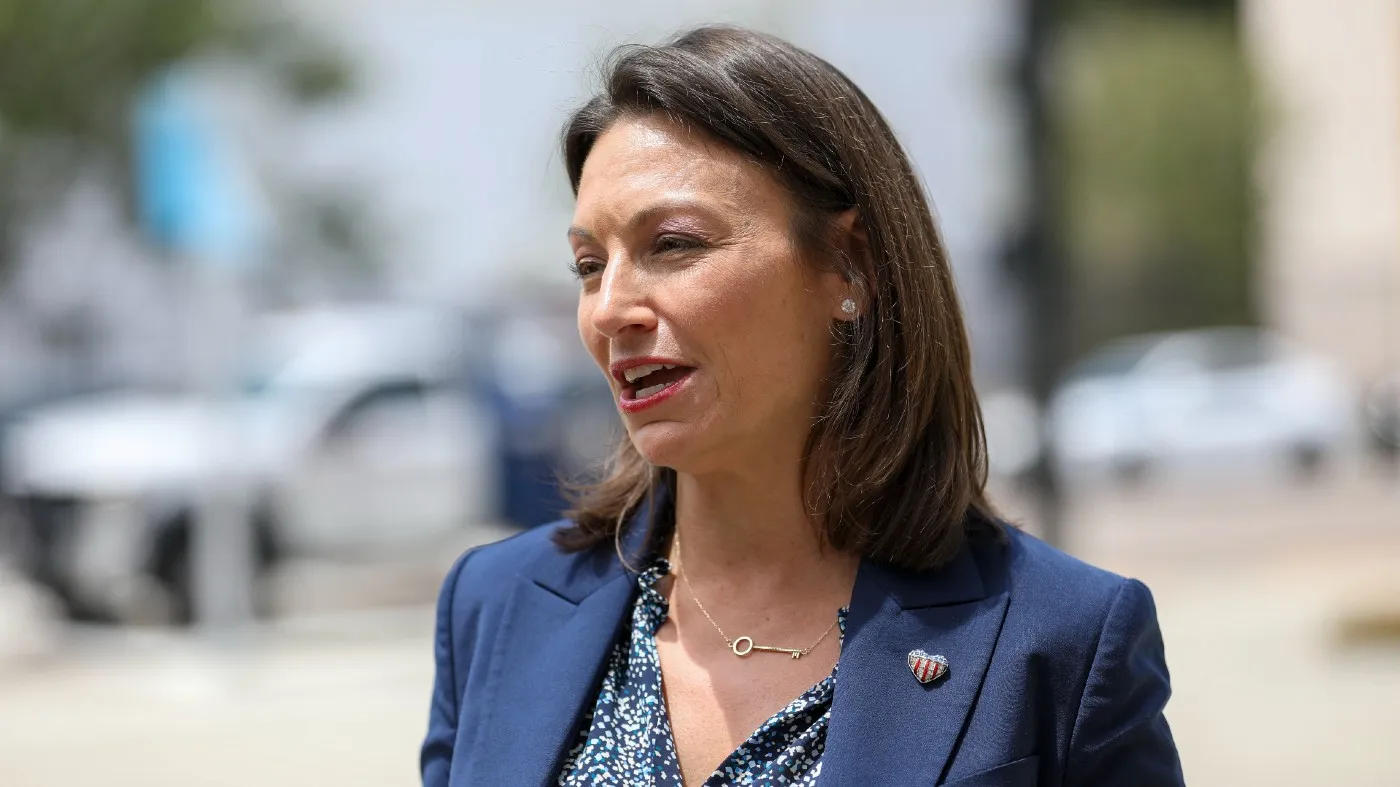
Florida Democratic Party (FDP) Chair Nikki Fried joined with Texas Democrats to blast mid-decade redistricting efforts in Republican-controlled states.
She accused Gov. Ron DeSantis of engaging in a “race to the bottom” with Texas Gov. Greg Abbott when it comes to undermining democracy.
“We all know this. If you live here in the in the state of Florida, we always have go back and forth. Is who is more diabolical? Abbott or DeSantis,” Fried said.
On a joint livestream hosted by the Texas Democratic Party with FDP, Fried and other Democratic leaders questioned the legality and intent of an effort to redraw congressional lines before the 2026 Midterms.
Fried said a push by President Donald Trump and GOP Governors to redraw congressional lines shows clear partisan intent, in direct conflict with the Fair Districts amendment passed by state voters in 2010. That measure, Fried noted, passed with 63% support, a higher margin than DeSantis or any current statewide elected official in Florida has earned in an election.
“A vast majority of Floridians want to choose who their elected officials are, not the other way around,” Fried said. “This isn’t about having fair maps. It is purely a power play.”
DeSantis, though, has argued Florida should be redistricted for a number of reasons. He has argued Florida’s population growth after the pandemic warrants a new census, and that Florida missed out wrongfully on at least one seat after the 2020 census.
He also argues a Florida Supreme Court ruling that upheld a congressional map his office drew and he signed in 2022 means Florida should take another look at South Florida districts to see if any jurisdictions were crafted with race as a motivating factor.
But Fried suggested that long list of reasons shows how unfocused DeSantis has been about any genuine justification for redistricting in the middle of the decade.
“They don’t have an actual clear message, because when you’re going into a situation with malice and with an intent to harm, then you have no good reasons,” Fried said.

Dan Gelber, a former state Representative and Miami Beach Mayor, also participated in the call. He served as General Counsel for Fair Districts Now when that group successfully convinced the Florida Supreme Court, albeit one with a different makeup, to toss a congressional map drawn by the Republican Legislature in 2012.
“Those fair district amendments were not passed to help Democrats,” Gelber said. “They were passed to create fairness for everybody, the League of Women Voters, the NAACP, those were our clients, and we can win.”
If anything, he thinks it would be easier to argue partisan gains serve as the motivating factor for redistricting now, a direct violation of Fair Districts and one that has nothing to do with the recent Supreme Court ruling about race factors.
“In 2015, we actually had a struggle to prove why they were doing it. We don’t have to struggle to prove that right now,” he said. “We know why they’re doing it because the President of the United States and the leader of the Republican Party has said why they want to do it. They want more Republicans.”
In Texas, the GOP-controlled Legislature isn’t under the same constitutional restrictions to avoid lines favoring one party. But Gelber said Florida lawmakers would wonder into legal trouble to take the same approach.
Post Views: 0