Connect with us

Business

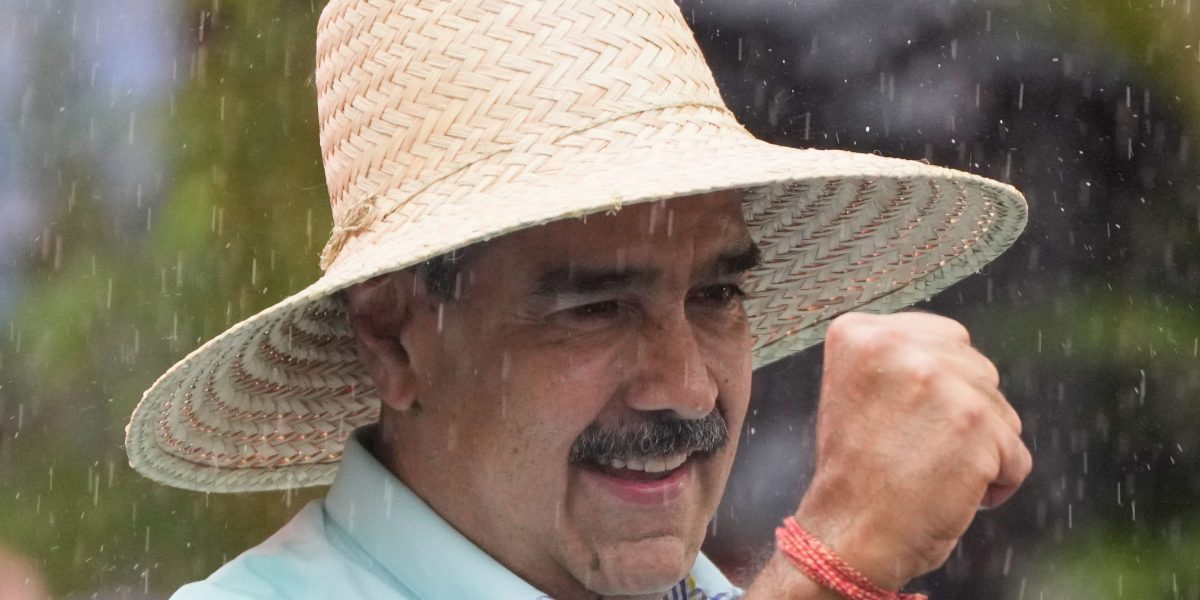
Nicolas Maduro rose from bus driver to president before presiding over Venezuela’s economic collapse

Published

on


U.S. President Donald Trump, in an early morning social media post, announced Maduro’s capture. Venezuela’s vice president, Delcy Rodríguez, later announced that the whereabouts of Maduro and his wife, Cilia Flores, remained unknown. Trump’s attorney general, Pam Bondi, said Maduro and Flores, would face charges after an indictment in New York.

Maduro’s fall was the culmination of months of stepped-up U.S. pressure on various fronts.

He had spent the last months of his presidency fueling speculation over the intentions of the U.S. government to attack and invade Venezuela with the goal of ending the self-proclaimed socialist revolution that his late mentor and predecessor, Hugo Chávez, ushered in 1999. Maduro, like Chávez, cast the United States as Venezuela’s biggest threat, railing against Democratic and Republic administrations for any efforts to restore democratic norms.

Maduro’s political career began 40 years ago. In 1986, he traveled to Cuba to receive a year of ideological instruction, his only formal education after high school. Upon his return, he worked as a bus driver for the Caracas subway system, where he quickly became a union leader. Venezuela’s intelligence agencies in the 1990s identified him as a leftist radical with close ties to the Cuban government.

Maduro eventually left his driver job and joined the political movement that Chávez organized after receiving a presidential pardon in 1994 for leading a failed and bloody military coup years earlier. After Chávez took office, the former youth baseball player rose through the ranks of the ruling party, spending his first six years as a lawmaker before becoming president of the National Assembly. He then served six years as foreign minister and a couple months as vice president.

Appointed the political heir to Chávez

Chávez used his last address to the nation before his death in 2013 to anoint Maduro as his successor, asking his supporters to vote for the then-foreign affairs minister should he die. The choice stunned supporters and detractors alike. But Chávez’s enormous electoral capital delivered Maduro a razor-thin victory that year, giving him his first six-year term, though he would never enjoy the devotion that voters professed for Chávez.

Maduro married Flores, his partner of nearly two decades, in July 2013, shortly after he became president. He called her the “first combatant,” instead of first lady, and considered her a crucial adviser.

Maduro’s entire presidency was marked by a complex social, political and economic crisis that pushed millions into poverty, drove more than 7.7 million Venezuelans to migrate and put thousands of real or perceived government opponents in prison, where many were tortured, some at his direction. Maduro complemented the repressive apparatus by purging institutions of anyone who dared dissent.

Venezuela’s crisis took hold during Maduro’s first year in office. The political opposition, including the now-Nobel Peace Prize winner María Corina Machado, called for street protests in Caracas and other cities. The demonstrations evidenced Maduro’s iron fist as security forces pushed back protests, which ended with 43 deaths and dozens of arrests.

Maduro’s United Socialist Party of Venezuela would go on to lose control of the National Assembly for the first time in 16 years in the 2015 election. Maduro moved to neutralize the opposition-controlled legislature by establishing a pro-government Constituent Assembly in 2017, leading to months of protests violently suppressed by security forces and the military.

More than 100 people were killed and thousands were injured in the demonstrations. Hundreds were arrested, causing the International Criminal Court to open an investigation against Maduro and members of his government for crimes against humanity. The investigation was still ongoing in 2025.

In 2018, Maduro survived an assassination attempt when drones rigged with explosives detonated near him as he delivered a speech during a nationally televised military parade.

Bedeviled by economic problems

Maduro was unable to stop the economic free fall. Inflation and severe shortages of food and medicines affected Venezuelans nationwide. Entire families starved and began migrating on foot to neighboring countries. Those who remained lined up for hours to buy rice, beans and other basics. Some fought on the streets over flour.

Ruling party loyalists moved the December 2018 presidential election to May and blocked opposition parties from the ballot. Some opposition politicians were imprisoned; others fled into exile. Maduro ran virtually unopposed and was declared winner, but dozens of countries did not recognize him.

Months after the election, he drew the fury after social media videos showed him feasting on a steak prepared by a celebrity chef at a restaurant in Turkey while millions in his country were going hungry.

Under Maduro’s watch, Venezuela’s economy shrank 71% between 2012 and 2020, while inflation topped 130,000%. Its oil production, the beating heart of the country, dropped to less than 400,000 barrels a day, a figure once unthinkable.

The first Trump administration imposed economic sanctions against Maduro, his allies and state-owned companies to try to force a government change. The measures included freezing all Venezuelan government assets in the U.S. and prohibiting American citizens and international partners from doing business with Venezuelan government entities, including the state-owned oil company.

Out of options, Maduro began implementing a series of economic measures in 2021 that eventually ended Venezuela’s hyperinflation cycle. He paired the economic changes with concessions to the U.S.-backed political opposition with which it restarted negotiations for what many had hoped would be a free and democratic presidential election in 2024.

Maduro used the negotiations to gain concessions from the U.S. government, including the pardon and prison release of one of his closest allies and the sanctions license that allowed oil giant Chevron to restart pumping and exporting Venezuelan oil. The license became his government’s financial lifeline.

Losing support in many places

Negotiations led by Norwegian diplomats did not solve key political differences between the ruling party and the opposition.

In 2023, the government banned Machado, Maduro’s strongest opponent, from running for office. In early 2024, it intensified its repressive efforts, detaining opposition leaders and human rights defenders. The government also forced key members of Machado’s campaign to seek asylum at a diplomatic compound in Caracas, where they remained for more than a year to avoid arrest.

Hours after polls closed in the 2024 election, the National Electoral Council declared Maduro the winner. But unlike previous elections, it did not provide detailed vote counts. The opposition, however, collected and published tally sheets from more than 80% of electronic voting machines used in the election. The records showed Edmundo González defeated Maduro by a more than 2-to-1 margin.

Protests erupted. Some demonstrators toppled statues of Chávez. The government again responded with full force and detained more than 2,000 people World leaders rejected the official results, but the National Assembly sworn in Maduro for a third term in January 2025.

Trump’s return to the White House that same month proved to be a sobering moment for Maduro. Trump quickly pushed Maduro to accept regular deportation flights for the first time in years. By the summer, Trump had built up a military force in the Caribbean that put Venezuela’s government on high alert and started taking steps to address what it called narco-terrorism.

For Maduro, that was the beginning of the end.


Source link

Continue Reading

Business

Down Arrow Button Icon

Published

on


The price of oil (as measured by Brent crude) fell nearly 2% overnight as traders digested the U.S. invasion of Venezuela and the capture of its dictator, Nicolás Maduro. Perhaps counterintuitively, they concluded that this would not have much effect on the price of oil—at least in the short term.

U.S. oil company stocks jumped up sharply in overnight trading. Chevron was up 7.82% premarket, Halliburton was up 8.45%, ConocoPhillips rose 7.54%, and ExxonMobil climbed 3.95%.

That, again, was something of a surprise, given that the potential for extra supply from Venezuela—assuming President Donald Trump gets the cooperation he wants from Maduro’s successor—would presumably be more likely to suppress U.S. oil prices than raise them.

The reality is that although Venezuela has vast reserves—about 17% of the entire planet’s oil is under Venezuelan soil—its production is feeble. Production declined by 75% between 2013 and 2020, according to the Financial Times, after successive Chavismo regimes nationalized the oil companies there, kicked out foreign oil drilling expertise, and triggered a flight of its own drilling specialists. It now supplies less than 1% of daily global oil supply.  

TradingEconomics.com

In order to tap the full potential of Venezuelan oil, U.S companies would need cast-iron guarantees that their assets there would not be renationalized; that they would be allowed to commercialize what they find; and that they would be free to explore Venezuela’s Orinoco oil belt for wells. The logistics are formidable and would require billions in investment and years of building to complete.

In that context, traders were in a decidedly risk-on mood this morning. S&P 500 futures were up 0.29%, after markets rose strongly in Asia and Europe. The STOXX Europe 600 was up 0.45% in early trading; Japan’s Nikkei 225 was up 2.97%, and the South Korea KOSPI was up 3.43%. Even Bitcoin is having a good day—it’s at $92.7K this morning after spending much of the Christmas period in the $80K band.

Likewise, following Trump’s renewed threat to invade Greenland, investors piled into defense stocks globally. German arms manufacturer Rheinmetall was up 7.4% before lunch in Europe; Sweden’s Saab AB (aircraft, not cars!) was up 5.75%; and Japan’s Mitsubishi Heavy Industries was up 8.39%.

The private sector is already on maneuvers. One former Chevron exec is raising a $2 billion fund for Venezuelan oil projects while Charles Myers, chairman of Signum Global Advisors, said he wants to visit Venezuela in March.

It’s a rare good day for the U.S. dollar, too. “Today’s initial reaction has been to send the dollar higher,” ING analyst Chris Turner told clients this morning. “The initial market reaction to Saturday’s extraordinary events in Venezuela has been a modest flight to quality, where gold and the Swiss franc are bid, and the dollar has found some support, too. The dollar was up 0.32% on the ICE U.S. Dollar Index (which compares the USD to a basket of major foreign currencies) despite being down by 9% over the last 12 months. Oil contracts are settled in dollars, so when the market is particularly active or volatile the demand for dollars goes up, strengthening the greenback against others.

Here’s a snapshot of the markets ahead of the opening bell in New York this morning:

  • S&P 500 futures were up 0.29% this morning. The last session closed up 0.19%.
  • STOXX Europe 600 was up 0.45% in early trading. 
  • The U.K.’s FTSE 100 was up 0.2% in early trading. 
  • Japan’s Nikkei 225 was up 2.97%. 
  • China’s CSI 300 was up 0.9%. 
  • The South Korea KOSPI was up 3.43%. 
  • India’s NIFTY 50 was down 0.3% 
  • Bitcoin rose to $92.7K.
Join us at the Fortune Workplace Innovation Summit May 19–20, 2026, in Atlanta. The next era of workplace innovation is here—and the old playbook is being rewritten. At this exclusive, high-energy event, the world’s most innovative leaders will convene to explore how AI, humanity, and strategy converge to redefine, again, the future of work. Register now.


Source link

Continue Reading

Business

Before Maduro arrest, opposition leader Mariá Corina Machado said Venezuelans should run country

Published

on


Good morning. A little over two months ago, I interviewed Venezuelan opposition leader and 2025 Nobel Peace Prize winner Mariá Corina Machado at the Fortune Global Forum. She spoke to us from an undisclosed location, later escaped to Norway, and remains in hiding. One of the most prominent advocates for reform in a country that was praised as a stable and affluent democracy just a generation ago, Machado was blocked from running for president in Venezuela’s 2024 election. Edmundo González ran in her place and won, according to independent observers. 

With Donald Trump’s surprise invasion of Venezuela to arrest President Nicolás Maduro and his wife on drug trafficking charges, many might have assumed that Machado would be chosen to lead. Instead, Trump picked Maduro’s deputy, Delcy Rodríguez, saying Machado lacked the respect needed.

Of course, much can change in the coming days. Rodríguez described Trump’s move as a criminal military intervention that violated international law while Machado thanked the U.S. for its action in a letter posted on X. But anyone who leads Venezuela right now faces a Faustian choice, as Trump has said the U.S. will temporarily “run” the country and boasted that Americans are “going to be taking a tremendous amount of wealth out of the ground” from the country’s vast oil reserves.

Rodríguez refuses to accept any violation of national sovereignty, despite Trump’s threats, and Machado won’t, either. The Nobel Prize winner said as much in her letter and was clearly hesitant to endorse the administration’s methods when we spoke in October. At that time, the U.S. was deploying war ships to the Caribbean and had blown up ten Venezuelan boats because of suspected drug trafficking. When I asked her if it was right for the U.S. to take such unilateral action, she deflected to accusing Maduro of criminal actions. While Machado welcomes U.S. support—“Maduro started the war; President Trump is ending the war”—she made it clear that Venezuelans could handle it from here.

“We are ready to take over; we know what we need to do,” she told me back in October, predicting a $1.7 trillion opportunity for foreign investors. “Venezuela will be the single biggest economic opportunity for decades to come in this region.” You can watch the full interview here. And be sure to check out Jeff Sonnenfeld’s memo to CEOs on the aftermath of U.S. action in Venezuela.

Contact CEO Daily via Diane Brady at diane.brady@fortune.com

Top news

Opportunity in Venezuela

Foreign investors are already circling Venezuela as the regime change promises to unlock business opportunities in the country. A former Chevron executive is raising $2 billion for Venezuelan oil projects while a group of American investors is planning to visit Venezuela in March. At the same time, the U.S. oil majors with enough resources and expertise to tap Venezuela’s proven oil reserves—the world’s largest—were reportedly blindsided by the Trump administration’s action, plus it’s unclear if the world has an appetite for more oil

How to ‘run’ Venezuela 

The urgent question following the U.S.’s ouster of Maduro is how the U.S. will “run” Venezuela, as Trump has promised to do. Trump suggested Sunday night that the U.S. has direct control of the country, while Secretary of State Marco Rubio has said the U.S. will coerce Venezuela’s new leadership to get what it wants. 

Bitcoin surges

Bitcoin hit a three-week high of just over $93,000 Monday following the U.S.’s arrest of Maduro. Investors seem to be regarding the top cryptocurrency as a safe haven amid geopolitical turmoil. Bitcoin ended 2025 down 6.5%. 

Is Greenland next?

The U.S.’s intervention in Venezuela is heightening tensions between Denmark and Washington as Trump and his allies suggest that they’re eyeing Greenland, a Danish territory, next. “We do need Greenland,” Trump said Sunday. Danish Prime Minister Mette Frederiksen has demanded that Trump stop his “threats against a historically close ally.”

The risk of ‘fiscal dominance’

Former Fed Chair Janet Yellen is warning that preconditions for “fiscal dominance”—in which the Federal Reserve maintains low interest rates to minimize debt servicing costs, rather than control inflation, due to the size of the federal debt—“are clearly strengthening.” If Trump succeeds in convincing the Fed to keep rates low for that reason, the U.S. could become a “banana republic,” Yellen says.

College matters again

As white collar hiring slows and companies dismantle DEI mandates, corporate recruiters are once again relying on university credentials as a way to screen potential candidates, favoring elite institutions. A survey of employers found that a quarter are now hiring from a shortlist of schools, up from 17% in 2022. 

BYD overtakes Tesla

China’s BYD is now the world’s largest seller of fully-electric vehicles after beating Tesla’s sales in 2025. BYD sold about 2.26 million battery-electric cars last year, nearly 28% more than in 2024, even as its overall auto business recorded its slowest annual growth in several years. Tesla, by contrast, has logged its second consecutive year of declining vehicle sales.

Another shutdown deadline

The U.S. Congress is back in session this week as the deadline for the next government shutdown looms less than four weeks away, though both Senate Minority Leader Chuck Schumer and Senate Majority Leader John Thune indicated over the holidays that another funding stalemate is unlikely.

The markets

S&P 500 futures were up 0.27% this morning. The last session closed up 0.19%. STOXX Europe 600 was up 0.36% in early trading. The U.K.’s FTSE 100 was up 0.13% in early trading. Japan’s Nikkei 225 was up 2.97%. China’s CSI 300 was up 1.90%. The South Korea KOSPI was up 3.43%. India’s NIFTY 50 was down 0.3%. Bitcoin was at $93K.

Around the watercooler

Behind glam luxury brands Michael Kors and Jimmy Choo lurks a troubled holding company losing millions by Amanda Gerut

Michael Saylor’s Strategy flirts again with the danger threshold at which his company is worth less than his Bitcoin by Jim Edwards

Even top CEOs check their phones first thing in the morning—these are the apps business executives are reaching for by Emma Burleigh

CEO of $90 billion Waste Management hauled trash and went to 1 a.m. safety briefings—‘It’s not always just dollars and cents’ by Amanda Gerut

Bosses are fighting a new battle in the RTO wars: It’s not about where you work, but when you work by Nick Lichtenberg

CEO Daily is compiled and edited by Joey Abrams, Claire Zillman and Lee Clifford.


Source link

Continue Reading

Business

Britain’s Royal Family is hiring a letter writer paying $43k based at Buckingham Palace

Published

on


The commuter life might be a drag, but what if your office was based in Buckingham Palace? Might that sweeten the deal?

Britain’s Royal Household is currently recruiting for a senior correspondence officer who will begin a two-year contract in March 2026. The role includes writing letters on behalf of the nation’s Royal family, paying £32,000 ($43,000) a year for the job.

Being a letter-writer sounds like an unusual role, but the posting explains: “Thousands of letters are addressed to The Monarch and Royal Family every year. Working as part of the Correspondence team, your challenge will be to ensure that each one receives a timely and well-composed response.”

Working members of the Royal Family—those which are most likely to receive correspondence from the public include King Charles, Queen Consort Camilla, The Prince of Wales (Prince William) and the Princess of Wales (born Catherine or “Kate” Middleton). Senior Royals also include the Princess Royal (Princess Anne), the Duke of Edinburgh (Prince Edward, the youngest child of Queen Elizabeth and her husband, Prince Philip), and his wife, the Duchess of Edinburgh (formerly known as Sophie Wessex).

When approached for comment, Buckingham Palace did not confirm which members of the Royal Family the candidate would be working with.

The posting details that the role will have a “specific portfolio” which forms part of a wider team responding to letters sent in by the public regarding social, community, and national matters. The correspondence team will then “draft bespoke responses that answer varying and often unique queries.”

A key responsibility of the role also entails “remain[ing] focused whilst processing a large number of letters, ensuring that the right response is delivered at exactly the right time.”

The job also comes with some unusual perks. A complimentary lunch is offered on-site “to keep you fuelled throughout the day,” the posting adds. The Mountbatten-Windsor family appears to have embraced the benefits of hybrid work. The post says: “Flexible and hybrid working varies across different roles, and we’ll discuss the options available to you that will suit both your job requirements and individual preferences.”

As well as more common benefits like parental leave and volunteering days, the successful applicant will also receive complimentary admission to any location owned by the Royal Household, as well as discounts at shops under the Royal Household umbrella.

The extras might provide some much-needed discretionary income in one of the world’s most expensive cities. The role’s modest salary of £32,000 a year is above London’s living wage—a salary high enough to maintain a normal standard of living—which the UK’s Living Wage Foundation estimates is £28,860 ($38,751) a year. However, the salary does come in behind the median gross annual earnings for full-time employees in the UK which, according to latest figures from the Office for National Statistics, sits at £39,039 ($52,419) a year.

In a world where AI is expected to unlock a new era of efficiency, it seems the Royal Family would rather stick with human responses instead of outsourcing to an artificial counterpart. Increasingly, such roles may become harder to find. A report from Microsoft researchers studying the occupational implications of generative AI in July revealed that among the roles most likely to be disrupted were translators, writers, editors, and data scientists chief among them.

The report added: “LLMs can contribute to broader parts of the information life cycle—including creation, interpretation, and communication, in more flexible ways than earlier technologies.”

Inside the Fortune 500 Europe Webinar – February 11, 2026: Join Europe’s top business leaders as they explore the strategies shaping the future of the region’s most powerful companies. Register your interest.


Source link

Continue Reading

Trending

Copyright © Miami Select.