Connect with us

Politics

Nick DiCeglie bills would address growth, hurricane reconstruction and public safety pressures
Published

on


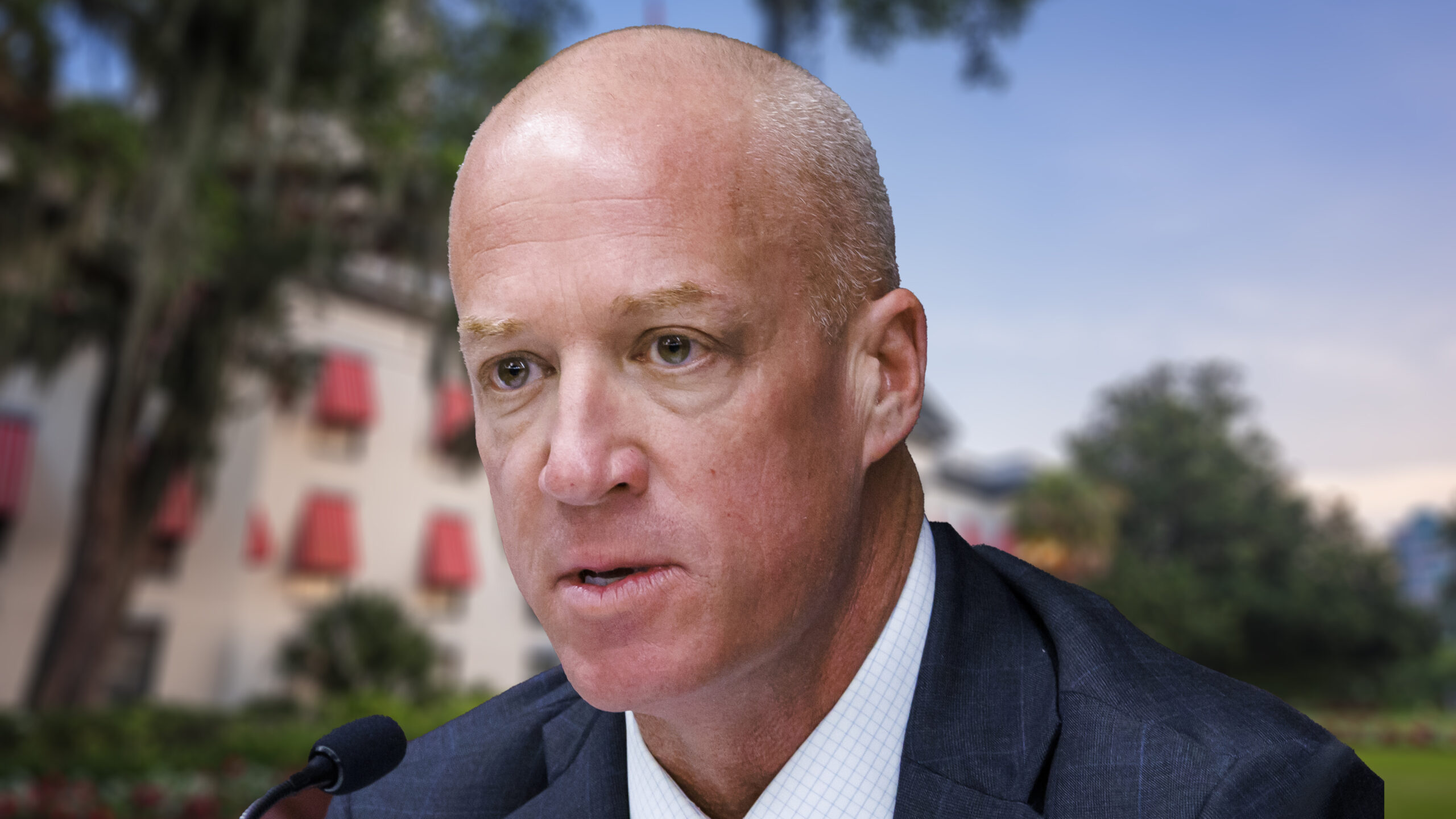
Republican Sen. Nick DiCeglie has filed a slate of bills that would speed up hurricane recovery, change how Florida handles self-defense claims by survivors of domestic violence, loosen regulatory requirements for certain professions, and update traffic safety and transportation rules.

Several of the bills, filed ahead of the Session’s start next week, target pressure points that have drawn legislative attention in recent years.

SB 1234 would make sweeping changes to Florida’s building permitting and inspection framework, significantly curbing the discretion of local governments while expanding the role of private providers.

The bill directs the Florida Building Commission to exempt certain residential hurricane and flood protection walls from permit requirements. It would also tighten when local governments may require permits at all, providing an exemption for most residential work valued under $7,500 from the permitting process — although the proposal does make limited exceptions for structural, electrical and plumbing work.

The proposal would also formalize the use of private providers for plan reviews and inspections, and requires that local governments reduce permit fees when private providers are used. It also would establish statutory deadlines for permit decisions, with applications automatically deemed approved if local governments fail to act within strict timeframes.

SB 1260 would authorize the Governor to allow qualified inspectors from states with mutual aid agreements to work in Florida during declared emergencies. It would also require that the Division of Emergency Management and the Department of Business and Professional Regulation develop relevant training programs, and direct local governments to create plans that anticipate supplemental personnel needs to speed up the permitting process after hurricanes and tropical storms.

SB 1228, also called the Survivor Safety Act, would create legal protections for survivors of domestic and dating violence who fight back against a known abuser. 

The bill would establish the presumption that a survivor acted with a reasonable fear of imminent death or great bodily harm when certain conditions are met, particularly in situations where there is documented prior abuse. The measure would also instruct juries on the presumption of reasonable fear, and shift the legal burden of proof to prosecutors and away from victims during a case. 

The bill would add mandates for trauma-informed training for law enforcement officers, prosecutors and Judges, and create a Survivor Self-Defense Case Review Panel within the Florida Commission on Offender Review.

St. Petersburg Democratic Rep. Michele Rayner filed the companion bill (HB 1127) in the House.

SB 1262 would ease administrative burdens for physical therapists by exempting certain services from the rule requiring a practitioner of record to review and sign treatment plans. Eligible services include those meant for health promotion, injury prevention, and wellness and fitness.

SB 1274 is a wide-ranging transportation bill that touches on traffic signal safety and monitoring, commercial transportation oversight, fuel tax administration and loosening up on golf cart registrations.

The bill would direct the Florida Department of Transportation to increase the minimum perception-reaction time for yellow traffic signals by 0.4 seconds, authorize the use of automated license plate recognition systems by private entities on certain properties, shift motor carriers from a registration-based system to a licensing system, revise due dates for motor fuel use tax returns, and allow certain golf carts that meet low-speed vehicle standards to be titled and registered for operation on designated roads without a state inspection.

If approved, the proposals would take effect July 1.


Source link

Continue Reading

Politics

Richie Floyd seeks re-election to St. Pete City Council, pledging to fight corporate influence

Published

on


St. Petersburg City Council member Richie Floyd is running for re-election, framing his campaign as a continuation of a grassroots effort focused on affordability, tenant protections and fighting corporate influence in local government.

Floyd’s first run for office four years ago was centered on a promise to help build a city that “works for everyone.” He said his tenure on the City Council has included fighting for tenant protections, opposing corporate handouts and working to improve neighborhood safety, while navigating resistance from what he described as an entrenched political status quo.

Floyd, a Democrat who was recently named as Vice Chair of the City Council, announced his re-election campaign in a video. He said the City Council has delivered on his campaign promises, and that his re-election bid is aimed at creating a city that is both affordable and sustainable, with a particular focus on utilities and infrastructure.

He criticized profit-driven utility models and said St. Petersburg should invest more heavily in water and stormwater systems to make them more resilient and reliable.

“For the last four years, we’ve been delivering on that promise,” Floyd said in the Monday video.

“Fighting for tenant protections, pushing back on corporate handouts, and working to make our neighborhood streets safer because St. Pete residents deserve a city that we can afford to call home. It hasn’t been easy, we’ve been up against a political status quo that refuses to make bold changes in favor of everyday people, but we need to invest in doing the difficult work that makes people’s lives better.”

First elected in 2021, Floyd ran a grassroots campaign powered by small-dollar donations and volunteer support, according to his campaign website. He is a Florida native who previously worked as an electrical engineer and as a science teacher with Pinellas County Schools. He lives in the Central Oak Park neighborhood with his wife, Miranda, and became involved in civic and political organizing after moving to St. Petersburg.

According to his campaign, Floyd supports building mixed-income, city-owned social housing, expanding small-scale housing options and providing legal assistance to tenants facing eviction. His platform also calls for limiting short-term rentals in residential neighborhoods. Floyd also criticized approaches that subsidize landlords while rents continue to rise, saying the city should instead pursue policies that deliver meaningful affordability for residents.

Floyd’s campaign highlights several actions taken during his time on the City Council, including expanded tenant rights, increased funding for street safety projects, a resolution defending reproductive health care rights and efforts to lower base utility fees. His policy agenda also includes increasing developer impact fees, opposing large corporate tax subsidies, investing more in city employees and expanding public arts programs beyond the downtown core.

In the campaign video, Floyd said he will continue to push back against state and federal policies he believes marginalize communities, pledging to stand up for minority and LGBTQ residents. His campaign materials also emphasize opposition to what he describes as abuses tied to immigration enforcement.

Floyd said grassroots involvement remains central to his campaign, encouraging residents to volunteer, donate what they can and engage their neighbors as he seeks another term on the City Council.

“That’s why I’m running for re-election to create a St. Pete that’s affordable, sustainable, and pushes back against those profiting off of our existence,” Floyd said.


Source link

Continue Reading

Politics

Barbara Sharief bill to delay child separation in questionable abuse claims gets first Senate OK

Published

on


Legislation by Broward Democratic Sen. Barbara Sharief to prevent the state from tearing apart families on false child abuse claims is again advancing in the Senate after almost becoming law last year.

Members of the Senate Children, Families and Elder Affairs Committee voted unanimously for the measure (SB 42), which Sharief described as a “child safety and due process bill.”

“Under current law, certain complex medical conditions can be misinterpreted as signs of abuse and neglect, particularly in medically complex children,” Sharief said.

“When that happens, families can be subjected to unnecessary investigations, and children can be removed from their homes without the benefit of appropriate medical expertise.”

SB 42 would change child welfare investigations by allowing the Department of Children and Families (DCF) to delay referring allegations of child abuse to law enforcement when a parent reports a specified preexisting diagnosis or requests a medical examination.

It would also require Child Protection Teams to consult with qualified pediatric medical professionals when evaluating medically complex children or diagnoses that can mimic abuse, and gives parents limited rights to request additional examinations — at their own expense or through insurance — while barring second opinions on sexual abuse determinations.

The bill is dubbed “Patterson’s Law,” named after Michael and Tasha Patterson and their twin sons, whom the DCF took custody of in 2022 after broken bones the boys suffered raised alarms during an emergency room visit.

The couple took the matter to court, citing medical evidence showing that like their mother, the boys — who have still not been returned — have a rare genetic disorder called Ehlers-Danlos syndrome that causes fragile bones and easy bruising.

Sharief, a doctor of nursing practice and former Broward Mayor, said various preexisting genetic conditions like Ehlers-Danlos, rickets, osteogenesis imperfecta and vitamin D deficiency can lead to signs of bodily harm that aren’t due to physical abuse, but the state’s process for determining whether that’s the case is faulty, and it’s hurting families.

More than a dozen people who appeared at the Monday committee meeting backed up Sharief’s assertions along with several organizations — Disability Rights of Florida, the Florida Justice Association and Florida chapter of the American Academy of Pediatrics among them — that signaled support for SB 42.

Tasha Patterson called the current system “broken,” as it “chooses to defend (DCF’s) mistakes instead of (correcting) them.” She detailed how DCF did not consider input from 12 experts on medically complex children and has continued to ignore evidence of non-abuse, including how her boys sustained additional injuries even after the state stepped in and while neither parent was with them.

“This year will make it four years of litigation to bring our children home. We are yet in another appeal,” she said. “My hope is that the system can learn to prioritize accountability, transparency and fairness when new information emerges.”

Another parent, Diana Sullivan, shared a similar story of how she and her husband were “thrust into an investigation process that treated the unknown as guilt.” The state, she said, took away her newborn daughter and other children after her daughter began exhibiting symptoms of Ehlers-Danlos and osteogenesis imperfecta.

Maddeningly, she continued, the initial DCF report included rare health maladies as a possible cause for the infant’s injuries, but the state still chose to take the children rather than investigate those possibilities.

“Tests were ordered. Answers were possible. But the tests were never run. Eight of our doctors, for a second opinion, deemed her condition not (to be) abuse and explained why,” she said. “We’re not asking for special treatment. We’re asking for humanity, a system … that protects children without destroying the families who love them.”

Sharief, in her closing remarks on the bill, noted that none of the people who spoke in support of SB 42 stand to benefit from it.

“They are here purely to prevent future families from going through the same thing,” she said.

SB 42 will next go to the Senate Appropriations Committee on Health and Human Services, its second-to-last stop before reaching a floor vote. Its identical companion in the House (HB 47), sponsored by Weston Democratic Rep. Robin Bartleman and Shalimar Republican Rep. Patt Maney, awaits a first committee hearing.

The Senate passed “Patterson’s Law” last Session on a 37-0 vote. The bill then died in the House, where Bartleman and Maney’s version of the legislation was denied a hearing in its third and final committee stop.


Source link

Continue Reading

Politics

Bill to rename Miami-Dade road after Charlie Kirk clears first Senate hurdle on party-line vote

Published

on


A Senate bill to honor late conservative activist Charlie Kirk with a roadway designation in Florida’s most populous county advanced through its first committee with full GOP support and none from Democrats.

The measure (SB 174), sponsored by Doral Republican Sen. Ana Maria Rodriguez, would rename a 1-mile stretch of Southwest 107th Avenue alongside Florida International University as “Charlie Kirk Memorial Avenue.”

Rodriguez said the goal is to recognize Kirk’s civic participation and youth engagement, not his ideology or controversial things he said.

But Kissimmee Democratic Sen. Kristen Arrington countered that ignoring Kirk’s rhetoric in the legislative process won’t stop people from wondering why the state would honor someone who, among other things, questioned the qualifications of Black pilots, said “prowling Blacks” routinely target White people in urban areas, and perpetuated the “great replacement theory.”

“When Floridians and visitors are visiting and they say, ‘Who is this?’ and if they don’t know, they look them up online,” she said. “I think some of the things they have seen Charlie Kirk has said will … disgust them.”

Kirk, 31, was shot and killed at a Utah university campus on Sept. 10. His death has been mourned nationally and internationally.

Kirk lived part-time in Florida. He owned a home in the Sarasota County portion of Longboat Key, an affluent municipality of some 7,500 residents. Kirk did not involve himself in local politics while there, several members of the Town Commission told Florida Politics.

Rodriguez said the roadway designation “doesn’t require universal agreement” with his statements, and there’s precedent for renaming roads after controversial figures.

“Florida has a long history of honoring individuals for their civic engagement, military service or public influence, even when opinions about them vary, and the Legislature routinely approves honorary roadway designations recognizing figures whose impact is undeniable,” she said. “I believe, and I think many people believe, that his was, regardless of political disagreement.”

Arrington and Democratic Sens. Tracie Davis of Tampa and Shevrin Jones of Miami Gardens voted against SB 174, which passed 6-3 and will next go to the Senate Appropriations Committee on Transportation, Tourism and Economic Development, its penultimate stop in the chamber.

A House version of the measure (HB 33) by Miami Republican Rep. Juan Porras awaits a hearing before the first of two committees to which it was referred.


Source link

Continue Reading

Trending

Copyright © Miami Select.