
Fashion
Next Memory’s solid perfumes win international award


Published
December 16, 2025
Czech streetwear specialist Footshop told FashionNetwork.com about its ambitions for the French market. It has now set its sights on Rue de Rivoli in Paris’s 1st arrondissement for its French flagship, FashionNetwork.com has learned. The opening date for this sixth store has not yet been announced.
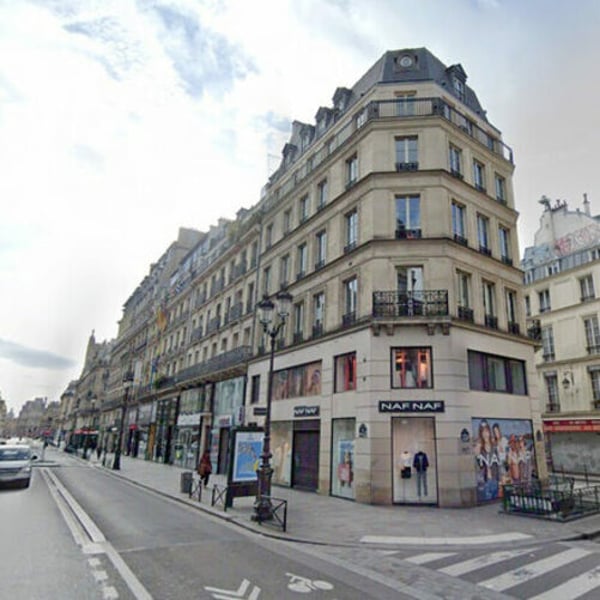
More precisely, the retailer has chosen 63 Rue de Rivoli. This address was long occupied by Dutch retailer Naf Naf, which opened there in 2009 and kept it during the downsising of its store network in 2020, up until its partial takeover by the Beaumanoir group last August.
With this address, Footshop secures a 237 square-metre, three-storey store, where the retailer will be flanked by menswear label Delaveine and Ray-Ban on one side, and by Bershka and Uniqlo on the other. Opposite, the building at 126 Rue de Rivoli, previously occupied by C&A, will in 2027 house a Radisson Collection hotel and 3,000 square metres of retail space.
Launched in Prague in 2012 by Peter Hajducek, Footshop will be well placed to attract shoppers from both Forum des Halles and the neighbouring Samaritaine. Aiming to become the European leader in streetwear, the company positions itself as a response to an increasingly discerning customer base.

This approach has prompted Nike, Adidas Originals, Puma, New Balance, Asics, and Birkenstock to collaborate with the retailer, which operates flagships in Prague, Budapest, Bucharest, Bratislava, and Warsaw, but relies primarily on online sales. The company recently said that its digital platforms, Footshop and Queens, are said to have generated 82 million visits and 585,000 downloads in one year.
After achieving sales of 61.6 million euros (75% generated internationally) in 2024, the company is expected to reach 82 million euros in 2025, representing annual growth of 40%.
This article is an automatic translation.
Click here to read the original article.
Copyright © 2025 FashionNetwork.com All rights reserved.

Published
December 16, 2025
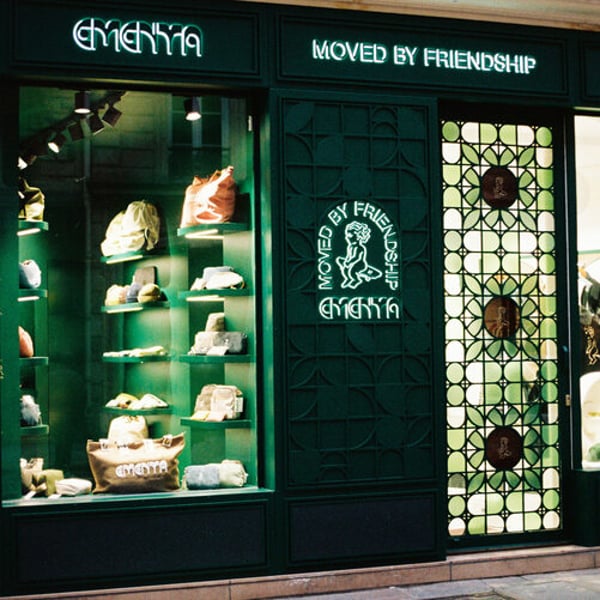
Just a stone’s throw from the bustle of Paris’ Les Halles, Ementa’s new boutique at 11, rue Montmartre gleams in green. The brand, ‘driven by friendship,’ has been revealing itself there, beyond its stained-glass doorway, since its official opening on December 6. It marks a new milestone for founders Emídio Silva, Nikita Gorev, and Raphael Castilho, whose adventure began amid Portugal’s markets.
Born directly from the skateboarding world, Ementa launched in 2007. The three friends, then students at Academia da Amadora near Lisbon, shared the dream of creating their own label, inspired by the sponsor pieces from their sporting circle. They knew little about running a business, but that didn’t stop them. They took out a loan and financed production of their first thousand T-shirts.
A retail turning point beginning in 2021
By 2021, time had passed, but Ementa remained active. That year, an opportunity arose to open its first boutique at LX Factory in the Portuguese capital. The shop was fitted out almost entirely in the DIY spirit cherished by its founders. Around six months later, Ementa opened a second brick-and-mortar shop on Rua da Boavista, near Cais do Sodré, again in Lisbon.

The third shop opened in 2023: Ementa’s flagship in Chiado, a lively district in southern Lisbon. ‘This project represented a far greater challenge than the previous ones,” the brand notes. “In 2024, we opened a boutique dedicated to collaborations with artists and exclusive collections, located right next to our first boutique at LX Factory,” it continues. The time then seemed ripe for Ementa to venture beyond the capital. On August 10, 2024, it inaugurated its fifth boutique, on Rua Sá da Bandeira in Porto- a ‘major challenge’ for the brand.
A mid-range positioning
This retail journey culminates today with the Paris opening. The brand also works with 27 stockists in total, including seven in France, one in Italy, two in Germany, and two in the Netherlands, with the remainder in Portugal. Its products are therefore available in several European countries. “Our aim is to be represented by avant-garde stockists with a sophisticated image and clear objectives,” says the brand.

Drawing on its skateboarding heritage, the Portuguese brand’s offer spans a wide range of ready-to-wear pieces, including jackets, jumpers, screen-printed sweatshirts and T-shirts, cropped polo shirts, corduroy trousers, jeans, and accessories. As a lifestyle brand, Ementa also offers plenty of scarves, socks, sunglasses, caps, a few pieces of jewellery, and bags. Its prices sit below those of brands such as Palace Skateboards and Drôle de Monsieur, even though the majority of its production takes place in northern Portugal.
Ementa now aims to maintain a rhythm of a drop every fortnight, to bridge the gap between its autumn-winter and spring-summer collections. The brand hopes to continue its retail adventure with new openings, strengthening its existing boutiques, and international expansion.
This article is an automatic translation.
Click here to read the original article.
Copyright © 2025 FashionNetwork.com All rights reserved.


Pro Soccer Player Attacks Retired Cop, Bar Worker After Allegedly Skipping Tab

Czech retailer Footshop chooses Paris’ 63 Rue de Rivoli for its French flagship

Ashley Moody says more Americans have died from fentanyl than have died in wars
-

 Politics8 years ago
Congress rolls out ‘Better Deal,’ new economic agenda
-
Entertainment8 years ago
New Season 8 Walking Dead trailer flashes forward in time
-
Politics8 years ago
Poll: Virginia governor’s race in dead heat
-
Entertainment8 years ago
The final 6 ‘Game of Thrones’ episodes might feel like a full season
-
Entertainment8 years ago
Meet Superman’s grandfather in new trailer for Krypton
-
Politics8 years ago
Illinois’ financial crisis could bring the state to a halt
-
Business8 years ago
6 Stunning new co-working spaces around the globe
-
Tech8 years ago
Hulu hires Google marketing veteran Kelly Campbell as CMO