New World Development Co. is seeking to sell its flagship 11 Skies mall to address liquidity constraints, according to people familiar with the matter.
Bloomberg
The company has held early-stage discussions with the Hong Kong airport authority on its plans, the people said, requesting not to be named because the matter is private. The talks are preliminary and subject to change, the people said.
The mall has been evaluated at a price range of HK$15 billion ($1.9 billion) to HK$17 billion, one of the people said. That means selling at a loss considering the company invested HK$20 billion for the project.
The company and the airport authority didn’t immediately respond to requests for comment.
The development of the 11 Skies mall has become a drag on New World, hampered by sluggish tenant sign-ups and concerns over weak foot traffic — fueled in part by uncertainty around airlines’ willingness to shift flights to Hong Kong’s second airport terminal next to the complex.
Facing liquidity pressure, New World Development is accelerating asset sales — including in mainland China — as it rushes to shore up its balance sheet. The company is also seeking to raise as much as $2 billion through a new loan facility, backed by its crown jewel, the Victoria Dockside complex in Hong Kong, underscoring the urgency of its capital-raising efforts.
New World missed its self-imposed target to complete the $2 billion loan deal, people familiar said earlier this week.
The company had HK$50 billion in completed investment properties in mainland China as of Dec. 31, according to Bloomberg Intelligence. Its prospects for selling the assets are clouded by the country’s ongoing real estate downturn and slowing economy.
In Shanghai, the company is seeking 2.85 billion yuan ($397 million) for its K11 tower, according to a property agent brochure.
Controlled by the family empire of Hong Kong tycoon Henry Cheng, New World has one of the highest debt burdens of any big developer in the city. Its net debt reached 95.5% of shareholders’ equity as of December, according to Bloomberg Intelligence.
The funding environment for troubled and small Hong Kong developers has become increasingly challenging given that property prices in the city are now around a nine-year low. Banks are demanding stricter refinancing terms and asking for more credit enhancements.
The Cheng clan, worth an estimated $21 billion as of March, proposed a semi-bailout to New World about two years ago, when it offered to take a subsidiary private and give the developer about HK$21.7 billion. The firm reported its first annual loss in 20 years for the 12 months ended June 2024.
Adrian Cheng, the eldest son of the family’s patriarch Henry Cheng, stepped down as chief executive officer soon after that, and he left the board recently. The Cheng family also owns a stake in Chow Tai Fook Jewellery Group Ltd. Adrian Cheng’s siblings include Sonia Cheng, who looks after the Rosewood Hotel and co-leads the jewelry business.
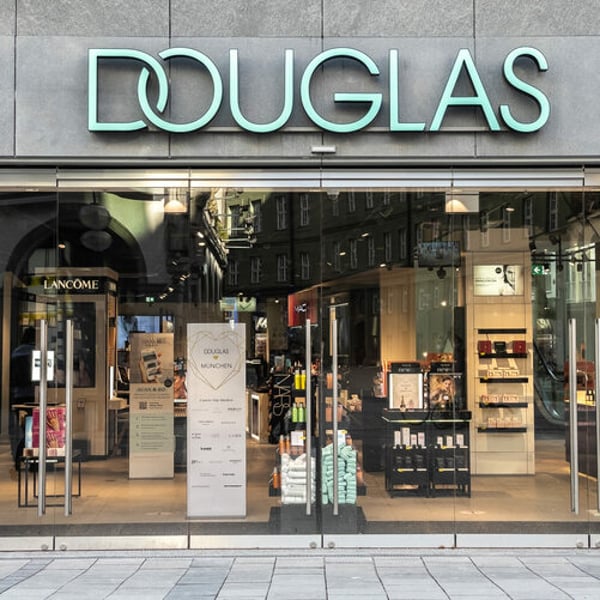
The perfumery chain Douglas posted higher revenue and earnings in the 2024/25 financial year. However, in the final quarter the company felt the impact of greater customer price sensitivity and intensifying competitive pressure from discount promotions, Douglas said in Düsseldorf on Thursday. In the financial year to the end of September, revenue rose by 2.8% to just under 4.6 billion euros. Earnings before interest, taxes, depreciation and amortisation (EBITDA) improved by 3.6% to 756.5 million euros.
shutterstock
“In a very volatile and therefore challenging year, we delivered results broadly in line with expectations,” said Group CEO Sander van der Laan. He expects the European premium beauty market to remain on a growth trajectory, although consumer uncertainty could persist. For the new 2025/26 financial year, Douglas anticipates a slight increase in revenue to between 4.65 and 4.8 billion euros, while the adjusted EBITDA margin is likely to decline from 16.8% to around 16.5%.
In the medium term, Douglas is targeting low- to mid-single-digit percentage growth and a stable adjusted EBITDA margin. The company is also exploring expansion beyond Europe: Group CEO van der Laan sees significant potential in the Gulf region, given its affluent clientele, and is considering market entry. A final decision is expected during 2026.
This article is an automatic translation. Click here to read the original article.
One of India’s richest states that’s heavily reliant on exports said high US tariffs are causing “irreparable damage” to businesses in the region and called on Prime Minister Narendra Modi to urgently seek a trade deal with Washington.
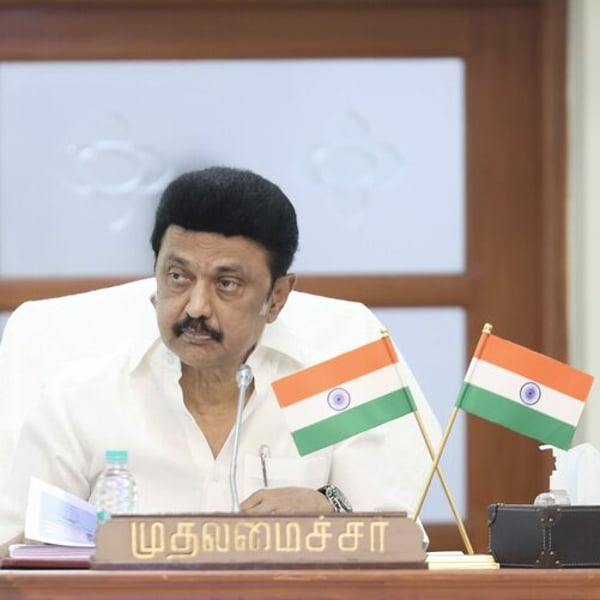
Tamil Nadu’s chief minister M K Stalin – MK Stalin- Facebook
M. K. Stalin, the chief minister of Tamil Nadu, said export orders have dried up in some districts, resulting in a daily loss of 600 million rupees ($6.7 million) in revenue. In Tiruppur district- also known as the knitwear capital of the nation- there’s been “a staggering wipe out” of 150 billion rupees in confirmed orders, forcing production cuts of up to 30%, Stalin said in a letter to Modi on Thursday.
US President Donald Trump slapped tariffs of 50% on Indian goods in August, one of the highest rates in the world, slashing exports to India’s biggest market and threatening Modi’s manufacturing ambitions. Despite months of negotiations and New Delhi officials expressing optimism of a deal soon, both sides remain locked in talks without any clear sign whether the tariffs will be lowered.
Stalin, who is part of the opposition and often critical of the Modi government, described the situation in Tamil Nadu as an “escalating crisis” in his letter to the prime minister. The resulting economic setback has pushed many small and medium enterprises to the “brink of collapse,” he added.
The US is India’s biggest export market and the high tariffs have impacted labour-intensive sectors such as textiles, gems and jewellery, and leather and footwear, forcing the federal government to step in with relief measures for exporters.
“The current trade stalemate is not merely an economic setback but a looming humanitarian challenge due to the irreparable damage caused by the tariffs,” Stalin said in his letter.
Ruled by the Dravida Munnetra Kazhagam party, Tamil Nadu is one of India’s largest exporting hubs for textiles, electronics, leather and footwear, and automobiles. As the country’s most industrialised state, it competes with Vietnam and Mexico and is home to Apple Inc. factories. Mobile phone exports are currently exempted from Trump’s tariffs.
Tamil Nadu contributes 28% to the nation’s textile exports and employs around 7.5 million people in the sector, Stalin said. The leather and footwear industry in the state contributes 40% to the nation’s sectoral exports and employs over one million workers, he said.
“In this context, I implore you to prioritise resolution of this tariff issue through bilateral agreement at the earliest possible juncture,” the letter said.
Chandrababu Naidu, chief minister of Andhra Pradesh state who is Modi’s coalition partner in the government, has also raised concerns about the damage the high US tariffs is having on the state’s shrimp exports.
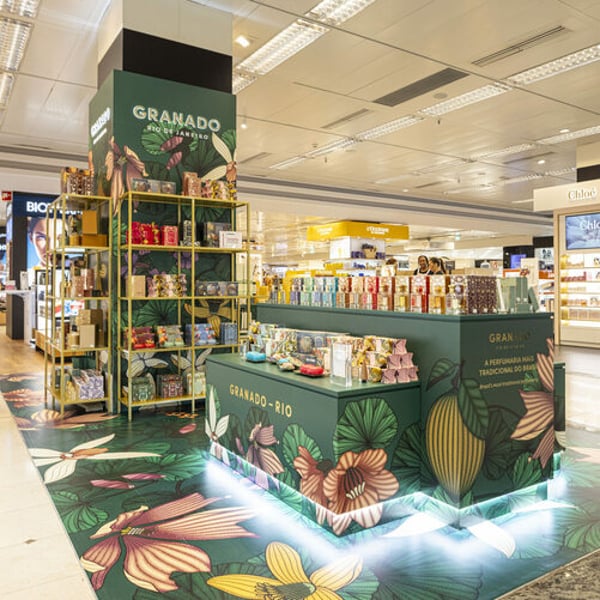
After two months of operating a Portuguese pop-up at Amoreiras Shopping Center in Lisbon, Granado, Brazil’s heritage perfumery and personal care house, has confirmed in a statement that the temporary space will remain open for six months, noting that this presence underscores its international expansion.
Granado
Granado began by launching a pop-up at El Corte Inglés, then invested in this kiosk, which opened on October 20, as part of a project to create a tropical oasis in the heart of one of the Portuguese capital’s most emblematic shopping centres, inviting visitors to immerse themselves in the world of luxury fragrances.
The pop-up showcases a little of almost everything the brand offers, from eau de parfum, eau de toilette, eau de cologne, soaps, perfumes, a home fragrance range, and coffrets ideal for Christmas.
Granado Pharmácias, founded in 1870 in Rio de Janeiro by the Portuguese José Antonio Coxito Granado, drew on empirical knowledge of botany and pharmacy to create remedies and hygiene products using plants from Brazil’s biodiversity. The brand stays true to this DNA and maintains a strong physical presence in Lisbon.
Since 2017, Granado has been bringing its carioca spirit to European capitals and leading retailers in Portugal, France and the UK, and sells online throughout Europe via its official website at Granado.eu.
The store in central Lisbon is at 98 Rua Garrett, in Chiado; and the one in the heart of Porto is at 354-360 Rua de Cedofeita. In Paris, it has stores at 21 Rue Bonaparte, in Saint-Germain-des-Prés; 11 Rue des Francs Bourgeois, in the Marais; 4 Rue du Marché Saint-Honoré; and in major Parisian department stores such as Galeries Lafayette, Samaritaine, and BHV. In London, it can be found at 44 Floral Street, in Covent Garden; and 59 King’s Road, in Chelsea; as well as in selected department stores, such as Liberty of London. It is also present in Brussels, at INNO.
In the US, it has its own stores in New York at 611 Madison Avenue; at 51 Prince Street in SoHo; and at Aventura Mall, Florida, among others. Not to mention the more than 100 standalone stores across Brazil.
This article is an automatic translation. Click here to read the original article.