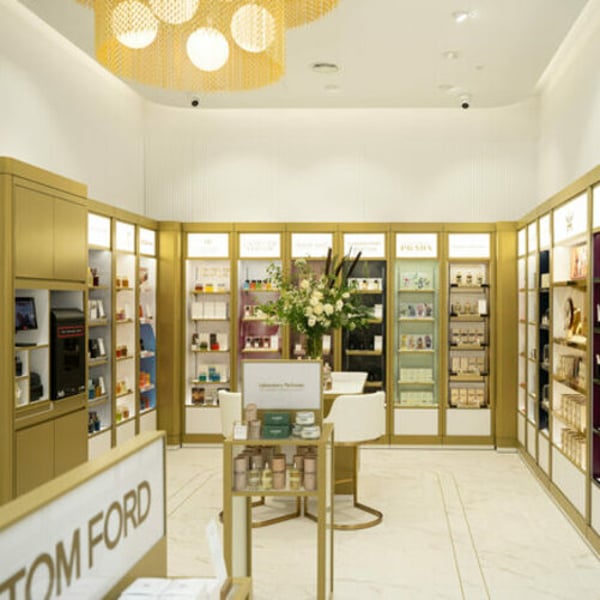
Since debuting in late July, The Perfume Shop boutique stores at Brent Cross and Lakeside “have exceeded expectations, delivering standout performance”, the retailer has said.
Image: The Perfume Shop
Expanding the retailer’s niche perfume portfolio, over 25 new brands have joined its boutique offer with niche scents now representing up to 16% of total store sales, “mirroring the UK’s overall niche market mix”, it said.
Sales trends also reveal that top-performing brands in-store differ from online, “showing that the boutiques are attracting a distinct customer base”.
“Brands that are still building awareness in the wider market are seeing particularly strong results in stores, thanks to the expertise of boutique staff who help customers discover the stories, artistry, and composition behind each scent”, The Perfume Shop noted.
Managing director Gill Smith, added: “Our boutique stores were created to redefine the perfume shopping experience, and the response since late July has been phenomenal.
“Our boutique stores have unlocked a new level of engagement with our customers. We’re seeing exceptional demand for niche and exclusive fragrances, brands like MCM are performing particularly well and our store teams are instrumental in sharing the craft and inspiration behind each scent. This unique experience is helping us reach new audiences and grow our market share across emerging and established brands alike.”
She also said the brand is exploring new niche lines and collaborations, with plans to launch exclusive new ranges at Brent Cross before Christmas.
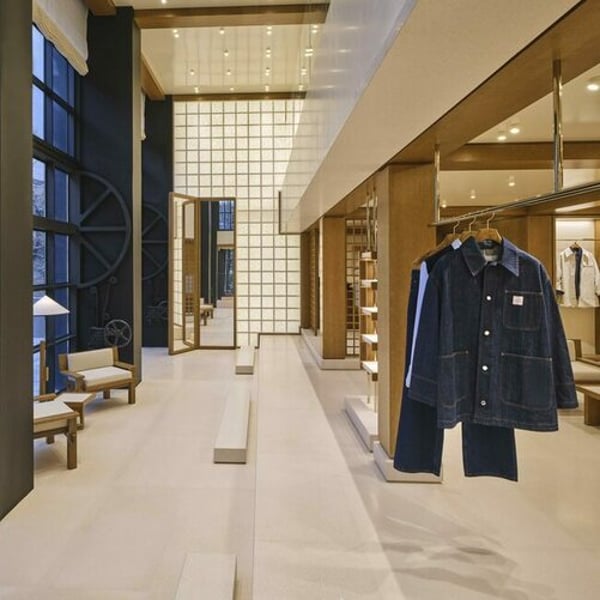
Ami Paris is continuing its flagship opening programme but instead of Europe, this time it has turned its attention to Asia with a debut in Seoul. It has just opened its new multi-level flagship in the heart of Hannam at 45, Itaewon-ro 55ga-gil, Yongsan-gu.
Ami Paris, Seoul
And it said this “signals a meaningful evolution for the brand’s retail experience: spanning over 425 sq m, it stands as Ami Paris’s largest flagship globally, introducing a Parisian wardrobe and gathering place rooted in the timeless principles of Korean Hanok architecture”.
It added that the space “embraces Seoul’s cool contemporary soul, connecting with a culturally rich neighborhood and a style-attentive crowd who value effortless elegance, art, and discovery”.
Intended to be more than a traditional boutique, the venue is conceived as an “urban haven and welcoming residence, representing a respectful adaptation to the local context, with a unique sense of intimacy and togetherness”.
It’s certainly an interesting design. Visitors are guided from the street through an underground passage, emerging into the Ami Garden (“a curated oasis of local flora including rowan and maple trees”) before “ascending to the main entrance. This transitional ritual marks a shift from the city’s pace to a serene, breathing space”.
The design concept is based in traditional Hanoks, “creating a cosy atmosphere through a refined interplay of materials: dark oak, granite, and Maljat stone, accented by Ami Paris’s signature elements of beige limewash, gold, champagne gold and mirror finishes”.
Custom wooden furniture and low-slung seating areas are designed to invite visitors to linger, while bespoke paper lighting, evocative of traditional Hanji, “bathes the interiors in a soft, diffused glow”.
The store also inaugurates an artist residency in collaboration with the Pipe Gallery. Talents “will be invited to engage with the space, ensuring the Ami Paris home remains a dynamic site of cultural conversation”.
At launch, the presentation features the work of Korean-French contemporary artist Chansong Kim.
The unpredictability involved in doing business with the US has come into sharper relief with the threat of new tariffs being applied to UK exports. And international delivery specialist ParcelHero said Britain’s small businesses “will be the first casualties of [President] Trump’s new Greenland tariff war”.
Donald Trump at the White House, Washington, D.C. (United States), 16 January 2026 – AFP
Any new tariffs come after extra duties were already imposed last year while the de minimis exemption was abolished.
In 2024, the UK exported around $828m-worth of textiles such as clothing to the US. Most of these products will have had a value of under $800 and that de minimis abolition will have had a huge impact.
But even those business selling luxury goods that didn’t previously qualify for zero duties under the de minimis rule have been hit hard already.
ParcelHero said that the UK currently has one of the most favourable US tariff rates of 10%, following a trade deal with the country, but “even so, a UK-made coat costing $800 is already likely to cost US shoppers at least an extra $80 (£60) more than it did at the beginning of 2025, assuming that the UK seller passed on all the tariff costs to their US customers. That may not be the only applicable tariff, however, as it could also attract a further tax depending on the item’s tariff code.”
With the new tariff threat just issued, from the beginning of February, “that same coat could cost American consumers around $960 due to the imposition of a further 10% tariff. More concerningly still, from June it could cost them more than $1,000, as February’s 10% tariff rises to 25%. UK specialist and family-run businesses will struggle to survive in the US market as American shoppers turn to cheaper products from elsewhere”.
Parcelhero thinks Trump’s tariff threat over Greenland will particularly impact small UK businesses — which are less able to absorb extra costs and to have the mega-marketing budgets to cement their desirability in consumers’ minds — disproportionately.
The company’s head of consumer research, David Jinks, said he “agrees with UK Prime Minister Keir Starmer that the imposition of new tariffs on the UK and seven other countries that oppose Trump’s plans to take control of Greenland is ‘completely wrong’.
“Many smaller UK exporters are already reeling from the impact of the 10% tariff imposed on the majority of UK products last year. On top of that came the axing of the US de minimis tariff exemption that previously enabled British goods valued at $800 (around £600) or under to enter America duty free. Britain’s SME manufacturers and exporters are likely to be the first casualties of Trump’s new tariff war. Many smaller UK companies may have to quit the US market entirely if the Greenland tariffs are imposed.
“The US is Britain’s largest single overseas market and in 2024, before Trump announced his ‘Liberation Day’ tariffs in April 2025, around 39,500 UK VAT-registered businesses exported goods to the US. Many of these are SME businesses and marketplace traders that are disproportionately affected by the new tariffs.”
And the company thinks that if the tariffs are applied, it will mean a wider move towards tariffs globally. “Whatever the ongoing impact of new US tariffs, the repeal of its de minimis rules and a potential tit-for-tat trade war over Greenland, we are inevitably looking at a period of continuing volatility and changes to US shipments,” Jinks added.
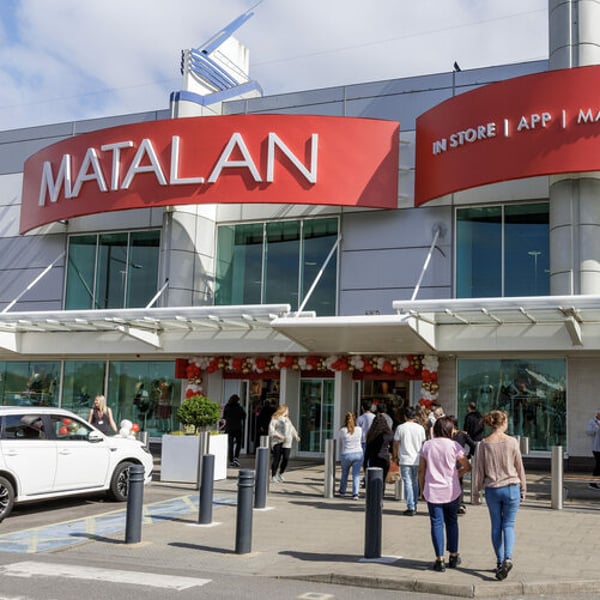
Matalan is the latest big-name UK retailer to report on the Golden Quarter as well as the narrower festive season and it appears to have done well late last year.
It said that in Q3 (the three months ended 28 November) EBITDA was up 38% year-on-year “reflecting sales growth and market share gains”.
The fashion and homewares retailer said that pre-IFRS16 EBITDA jumped to £27 million during the quarter on the back of like-for-like sales growth of 2%, coupled with its ongoing focus on margin and efficiencies. This builds on the strong momentum delivered in H1 2026, with pre-IFRS16 EBITDA up 53% to £61 million in the financial year to date.
Its digital performance was “very strong” in Q3, with like-for-like sales up 11% and Black Friday delivering its strongest ever online sales day outside of the pandemic. That reflects the firm’s heavy investment in this channel of late and with a new native app due to launch later this year alongside a refreshed loyalty scheme, it’s clearly expecting the outperformance to continue.
But its stores are a key part of its investment programme too and in particular, during Q3, its refreshed stores outperformed the wider estate by 12%. The company didn’t detail how the stores performed overall but did say that it plans to upgrade 40 more locations in its next financial year.
As for the nine weeks up to 2 January, like-for-like sales rose 1%, which is below the 2% recorded for Q3 but coming against a backdrop in which many retailers reported falls, it’s not a bad result.
Categories including women’s outerwear and men’s formalwear and sportswear performed particularly well and the retailer said it gained market share across both women’s and men’s in the period, “reflecting the renewed product offer and significant improvements in brand perception”.
Overall, it “outperformed the wider market in October through to December, delivering year-on-year sales growth ahead of peers”.
Executive chair Karl-Heinz Holland said: “Our business transformation continues to deliver tangible results, with another strong quarter of EBITDA performance, alongside a return to sales growth. This reflects our relentless focus on delivering better quality, style and value, underpinned by sustained investment in product, stores and digital. This has enabled us to outperform the market, despite a challenging trading backdrop. Looking ahead, we look forward to welcoming our new CEO next month and remain confident in the business delivering sustainable profitable growth.”






 Politics8 years ago