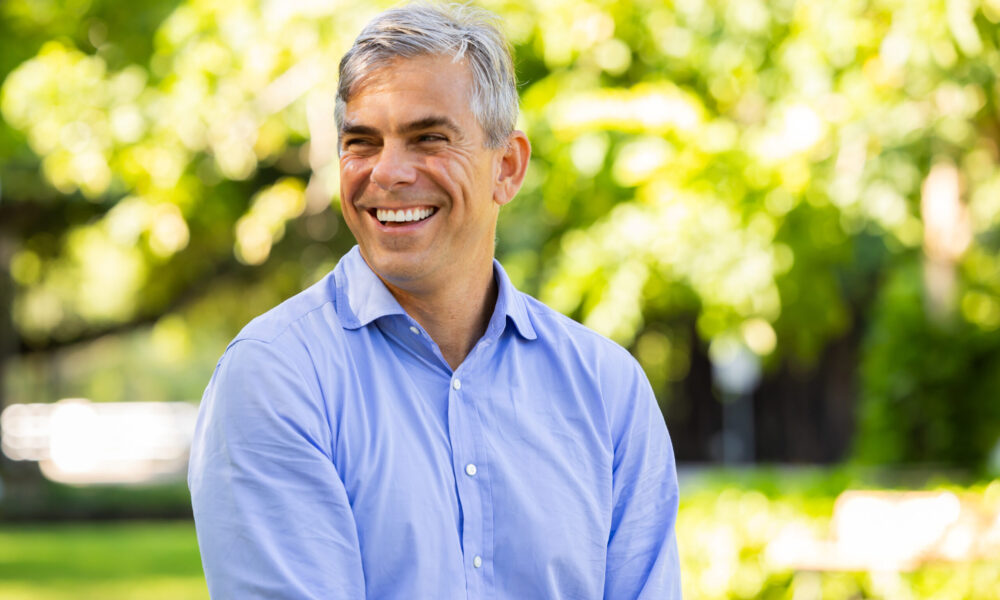
Nestor Menendez, a first-time candidate for the Coral Gables Commission’s Group 4 seat, is touting an early fundraising surge.
He reported raising $30,500 in his first quarter running for the seat now held by Ariel Fernandez, a frequent foil of Mayor Vince Lago at City Hall.
Menendez’s gains came through 42 personal checks between Oct. 20 and Dec. 29. All were from donors listing Coral Gables addresses, according to his campaign’s filings.
In a statement announcing the haul, Menendez — a lawyer at DiFalco Fernandez LLLP in an of-counsel capacity — framed the promising start as a neighborhood-backed campaign rather than an outside-funded effort.
“This city means so much to my family and me, and I am humbled by the strong support of friends and neighbors throughout the community,” he said.
“That trust strengthens my resolve to represent every resident with integrity and dedication.”
For now, Menendez has the field to himself. The City Clerk’s candidate list for the 2027 municipal cycle currently shows him as the only Group 4 candidate.
Menendez, who turns 50 on Jan. 26, is pitching himself as a civility-and-stability candidate in a city where political tensions have routinely spilled beyond the dais in recent years.
On his campaign website, he says he is running “with a clear mission: restore civility at City Hall, put families and residents first, and strengthen the community values that make Coral Gables the City Beautiful.”
The campaign is also leaning heavily on Menendez’s résumé inside city government. A University of Miami-trained lawyer, he has served on the city’s Planning & Zoning Board and Charter Review Committee.
State voter records show Menendez is a registered Republican and voted every year between 2022 and 2025. He also cast ballots in 2016, 2018 and 2020.
He first claimed Coral Gables as his primary city of residence between 2021 and 2022, state records show.
Coral Gables’ biennial election is on April 13, 2027 — for now. Voters are set to decide this April whether to shift the city’s 2027 election to November 2026 so it coincides with federal and state races, a move proponents say will boost turnout while lowering costs.