Connect with us

Business

National debt is already killing the American Dream, says economist Kurt Couchman

Published

on


The government’s $38.5 trillion national debt is suffocating the American Dream, a leading economist has warned, and if a highly debated debt crisis comes to fruition the country could be facing an all-out economic depression.

Many factors have been blamed for the death of the American Dream. Most recently, it has been housing stock, with President Trump moving to bar large Wall Street investors from buying up single-family homes. Elsewhere, JPMorgan CEO Jamie Dimon agrees that housing is a barrier but so is education, saying opportunities need to be more accessible to young people across the country.

Meanwhile, the rising cost of retirement, raising children and running a car has led many to believe they can only achieve the lofty heights of the American Dream if they have $5 million in the bank.

However, many of these symptoms trickle back to the vast sum America owes to its debtors, according to Kurt Couchman, a senior fellow in fiscal policy at thinktank Americans for Prosperity. In the final three months of 2025, the government spent $276 billion in interest on the debt, which the likes of Bridgewater Associates founder Ray Dalio warn will one day squeeze out government investment needed to bolster economic prosperity.

In a Congressional testimony last month, Couchman told the House Judiciary Subcommittee on the Constitution and Limited Government that “the growing debt risks a bond market reckoning with potentially dire consequences for the American people. The actions of their representatives in Congress will determine whether the conditions of the American Dream—peace, freedom, and prosperity—survive, or if the future is decline.”

Already, that future is being hampered, Couchman, author of ‘Fiscal Democracy in America’, told Fortune in a phone interview. The affordability crisis (inflation by any other name) was largely sparked by an “explosion” in monetary supply at the onset of the pandemic, he outlined.

“We’ve already experienced the inflationary aspects of excessive federal spending and debt,” Couchman, who previously worked in government addairs positions in the Committee for a Responsible Federal Budget, said. “We’re now at the point where if you look at [the Congressional Budget Office], World Bank and [International Monetary Fund] and others, they say that once the debt burden achieves it surpasses a certain threshold of GDP that it starts to slow the economic growth.”

Economists aren’t necessarily worried by the total level of debt (in fact, government debt is a necessary foundation of global markets). Rather it’s the debt-to-GDP ratio, which measures a nation’s borrowing against its growth. If this tips too far out of balance, growth can be hampered by the excessive amount of cash needed for interest payments.

“So that means there’s fewer opportunities,” Couchman added. “The opportunities that are there aren’t paying as well. Productivity is being suppressed.”

Is the worst-case scenario reality?

The worst-case scenario is a debt crisis. This is the moment at which the U.S. cannot find buyers for its debt and is either forced to rein in spending, agree to higher interest payments to secure loans, or significantly increase its money supply to lower the value of the repayments—which comes with inflationary or hyper-inflationary effects.

In this case, Couchman believes, the “likelihood of having a recession, if not a severe recession or maybe even a depression, become possibilities.” He added: “The global, economic instability could translate into some real security risks and even threats to our political systems because of the kinds of politicians that people may respond to if they’re feeling especially desperate. Those are all challenges to the American dream that stem from the growing debt burden.” 

Many speculators argue that while national debt is a problem, it is not a crisis that will ever become a reality: After all, one could argue the U.S. is too big to fail, and has within its own power the ability to avert such a squeeze.

And yet, Couchman argues that while a recession is an inevitability (“they happen every five years on average, plus or minus a few years, so sooner or later we’ll have one of those”) America has a chance to avoid anything more sinister if it “learn[s]] from the mistakes of others abroad or in the states before we get to that moment and turn the ship.”

A solution

There’s no easy fix for the government’s spending habits. At least, not a solution which will be popular, and as such, not one which elected politicians will be keen to put their neck on the line for. Because of this, the national debt issue is often described as a game of “chicken” with one administration to the next betting their successors will be the administration to address the poisoned chalice.

There are many options to rectify the balance, the least popular being to pull back spending. More broadly, the federal government could adopt a set of budget-balancing “fiscal rules.” While a more palatable option, that also means it’s less effective: According to an analysis from Oxford Economics of IMF data for more than 120 countries, on average, there’s a 1.1%-of-GDP improvement in the primary balance in the three years up to and including adopting a fiscal rule. However, there’s then a deterioration of the exact same percentage in the subsequent two years.

Couchman’s request is simpler: Transparency. The author and economist is making the same plea as Thomas Jefferson did to his Treasury Secretary more than 200 years ago, when he wrote: “We might hope to see the finances of the Union as clear and intelligible as a merchant’s books, so that every Member of Congress and every man of any mind in the Union should be able to comprehend them, to investigate abuses, and consequently to control them.”

“The most important thing Congress could do, to not only fix the budget but also restore democracy within Congress, is to do a real budget with all spending and all revenue in it so you can see everything,” Couchman said. “All the committees will get to manage their portfolios, and you can have real discussions about trade-offs, what’s more valuable, what’s not, what we need to do, and what we can live without.”

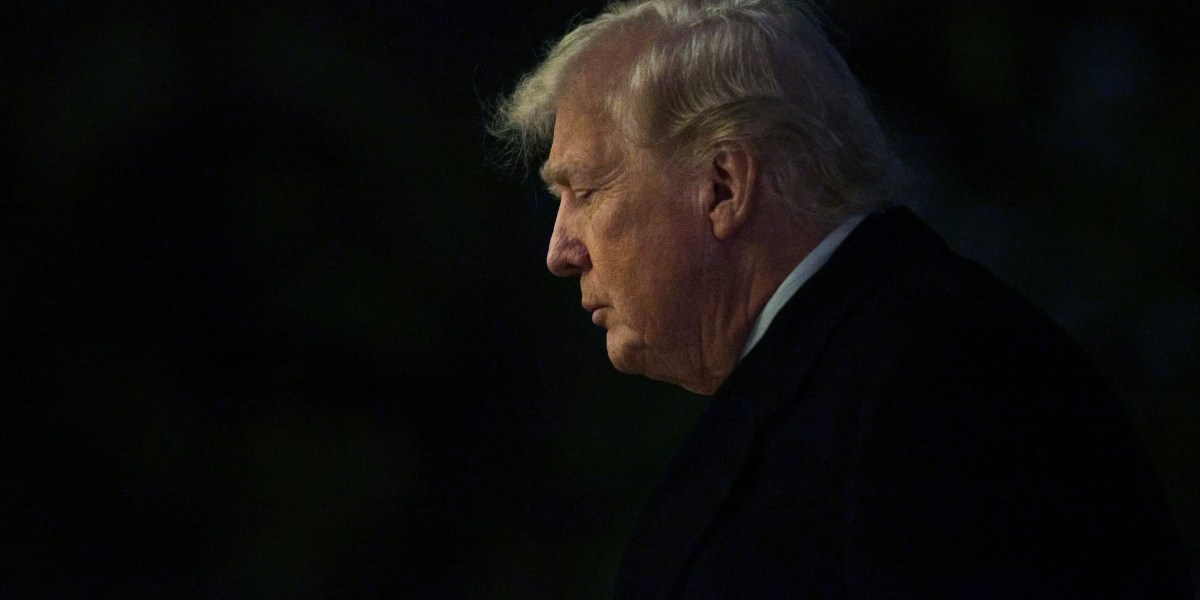

Source link

Continue Reading

Business

This CEO has a ‘1950s family structure in reverse’—her husband does the child care, cooking and cleaning: ‘I do the making money and paying taxes’

Published

on


For many CEOs, the workday begins before sunrise. Leaders like Nvidia’s Jensen Huang, Apple’s Tim Cook, and Disney’s Bob Iger have all said punishingly early mornings and rigid routines are their preference—and essential to running a global company. Life360 CEO Lauren Antonoff takes a different approach.

Rather than adhering to a tightly scripted daily schedule, Antonoff’s workdays are best described as “organic”—shaped less by the clock than by the flow of her month.

“I really think about my routine less in terms of what the morning tonight is, and really what the rhythm is over the course of a month,” she told Fortune.

On a typical day, that means starting work around 8:30 a.m.—a leisurely pace by some CEO standards. From there, her schedule is dictated largely by her first meeting of the day.

“Every day for me is very different,” she said. “I have probably a lot of meetings, but I try to also get time to read and reflect and communicate with people on my team.”

That flexibility, Antonoff noted, isn’t accidental—and wouldn’t have been possible without help at home. While she climbed the ladder to now lead a tech company with an over $7 billion market cap and took care of her household’s finances, her husband took the lead at home. Though he has worked as a real estate broker and entrepreneur, he was largely a full-time stay-at-home parent while their children were growing up.

Antonoff calls it a “1950s family structure in reverse.”

“Our children are now officially adults, but [my husband] did all the child care and all the cooking and cleaning and all of that stuff, and I do, the making the money and paying the taxes and that kind of stuff,” she added.

She encourages families—particularly working parents—to access what actually works for them, rather than defaulting to tradition.

“Giving yourself permission to depart from tradition can be incredibly freeing,” she said. “I feel incredibly lucky to have a career that supports our unusual arrangement, and an amazing husband who takes care of our family and me (and doesn’t make me do dishes).”

Forget work-life balance, Antonoff is a ‘workavert’

Not having an overly regimented work schedule doesn’t mean Antonoff isn’t putting in the time at work—if anything, it’s the opposite.

“I don’t have work-life [balance]—they’re not separate to me,” she said, adding that she describes herself not as an introvert or extrovert—but rather a “workavert,” meaning she is energized by the work grind.

Even when she’s off the clock, she finds ways to feed her curiosity about business, whether that means hearing about an interesting company or unpacking a problem raised by a family friend.

Antonoff isn’t alone. A number of high-profile business leaders have openly embraced work-centric lives. 

For Emma Grede, the idea of work-life balance isn’t possible for those seeking wide-reaching success. 

“If you are leading an extraordinary life to think that extraordinary effort wouldn’t be coupled to that somehow is crazy,” Grede told The Diary of a CEO podcast.

Thasunda Brown Duckett, president and CEO of the Fortune 500 financial services company TIAA, has repeatedly echoed this sentiment, calling work-life balance a “lie.”

Instead, she takes an active approach in dividing out her days to ensure she can effectively juggle responsibilities at home and in the office.

“The truth is I only have 100% of me, not 110%. Understanding that I am not 100% allocated to being a mom, they only get 30%, allows me to be more intentional,” Duckett told LinkedIn News in 2024. “So my children don’t get 100% of all of me. But within that allocation, they get 100%.”

Others take it even further. Nvidia CEO Jensen Huang has said wakes up at 4:30 a.m. to answer emails and is always thinking about work—even while washing dishes or watching a movie. He’s also said he never takes a day off, working seven days a week, including holidays.


Source link

Continue Reading

Business

I oversee a lab where engineers try to destroy my life’s work. It’s the only way to prepare for quantum threats

Published

on


The first time I handed over my credit card to a security lab, it came back to me broken. Not physically damaged, but compromised. In less than 10 minutes, the engineers had discovered my PIN.

This happened in the early 1990s, when I was a young engineer starting an internship at one of the companies that helped create the smart card industry. I believed my card was secure. I believed the system worked. But watching strangers casually extract something that was supposed to be secret and protected was a shock. It was also the moment I realized how insecure security actually is, and the devastating impact security breaches could have on individuals, global enterprises, and governments.

Most people assume security is about building something that’s unbreakable. In reality, security is about understanding exactly how something breaks, under what conditions, and how quickly. That is why, today, I run labs where engineers are paid to attack the very chips my company designs. They measure power fluctuations, inject electromagnetic signals, fire lasers, and strip away layers of silicon. Their job is to behave like criminals and hostile nation-states on purpose, because the only honest way to build trust is to try to destroy it first.

To someone outside the security world, this approach sounds counterintuitive. Why spend years designing secure hardware, only to invite people to tear it apart? The answer is straightforward: Trust that has never been tested is not trust. It is assumption. Assumptions fail quietly at first, and they fail at the worst possible moment.

Over the past three decades, I have watched secure chips move from a specialized technology into invisible infrastructure. Early in my career, much of my work focused on payment cards. Convincing banks and payment networks that a chip was safer than a magnetic stripe was not easy. At the time, there were fears about surveillance and tracking. What few people recognized was that these chips were becoming digital passports. They proved identity, authenticated devices, and determined what could and could not be trusted on a network.

Today, secure chips sit quietly inside credit cards, smartphones, cars, medical devices, home routers, industrial systems, and national infrastructure. Most people never notice them, which is often taken as a sign of success. In reality, that invisibility also creates risk. When security disappears from view, it is easy to forget that it must still evolve.

At a basic level, a secure chip does one essential thing. It protects a secret – a cryptographic identity that proves a device is genuine. All other security measures build upon that foundation. When a phone unlocks, when a car communicates with a charging station, when a medical sensor sends data to a hospital, or when a software update is delivered to a device in the field, all of those actions depend on that secret remaining secret.

The challenge is that chips do not simply store secrets. They use them. They calculate, communicate, and respond. The moment a chip does that, it begins to leak information. Not because it is poorly designed, but because physics cannot be negotiated. Power consumption shifts. Electromagnetic emissions change. Timing varies. With the right equipment and enough expertise, those signals can be measured and interpreted.

This is what happens inside our attack labs every day. Engineers listen to chips in much the same way an electricity provider can infer your daily routine from your power usage. They stress-test devices until they behave differently than intended. They introduce faults and observe how the chip responds. From those observations, they learn how an attacker would think, where information escapes, and how defenses must be redesigned.

Quantum computing enters this picture without drama or science fiction. Quantum does not change what attackers are after – they still want the secret. What quantum changes is the speed at which they can get it. Problems that would take classical computers thousands of years can collapse to minutes or seconds once sufficient quantum capability exists. The target remains the same. The timeline disappears.

This is why static security fails. Any system designed to be secure once and then left untouched is already aging toward obsolescence. If a system is never attacked, it will eventually fail, because the world around it does not stand still. Attack techniques evolve and improve. Tools become cheaper, more powerful, and more accessible – especially in the age of Artificial Intelligence. Knowledge about successful attacks spread globally, emboldening others to seek similar successes. 

Many organizations make the same mistake. They assume they will see the threat coming. They wait for visible breaches or public incidents before acting. With quantum, that logic breaks down. The first actors with meaningful quantum capability will not announce it. They will use it quietly. In fact, this is already happening now with Harvest Now-Decrypt Later (HNDL) attacks, where large amounts of encrypted data is collected and stored today for future quantum decryption. By the time attacks become obvious, the damage will already be done.

That reality is why governments and regulators are moving now. Across industries, requirements are emerging that systems must become quantum resilient within defined timelines. This is not driven by theory or hype. It is driven by the simple fact that updating cryptography, hardware, and infrastructure takes years, while exploiting weaknesses can take moments.

When I walk through our labs today, what strikes me most is not the sophistication of the tools, but the discipline of the process. Access is tightly controlled. Engineers are vetted and audited. Every experiment is documented. This is not curiosity-driven hacking. It is structured, repeatable testing designed to surface weaknesses early, while there is still time to fix them. Every successful attack becomes an input for a stronger design.

This is what leaders, system owners, and policymakers need to understand. Security does not fail suddenly. It fails quietly, long before anyone notices. Preparing for quantum threats is not about predicting the exact moment a breakthrough occurs. It is about accepting that once it does, there will be no grace period. The only responsible approach is to assume your systems will be attacked and to make sure that happens under controlled conditions, before someone else decides the timing for you.

The opinions expressed in Fortune.com commentary pieces are solely the views of their authors and do not necessarily reflect the opinions and beliefs of Fortune.


Source link

Continue Reading

Business

FBI asks agents to voluntarily travel to Minneapolis

Published

on


The FBI is asking agents across the US to travel to Minneapolis for temporary duty, according to people familiar with the situation.

The bureau in recent days sent messages to agents nationwide seeking volunteers to temporarily transfer to the city, the people said. The messages didn’t specifically reference the anti-Immigration and Customs Enforcement protests that have escalated in the city and didn’t detail the assignment, the people said.

The Department of Justice and the Department of Homeland Security have already been increasing their presence in Minneapolis. The city has become a focal point of anti-ICE protests since an officer shot and killed a woman, Renee Good, on Jan. 7 while she was in her car.

It wasn’t immediately clear what the FBI would ask agents who volunteered to travel to Minneapolis to do. FBI agents have traditionally focused on national security-related tasks such as counter-terrorism, organized crime and high-profile violent crimes. 

FBI Director Kash Patel and US Deputy Attorney General Todd Blanche on Friday visited Minneapolis, according to a post shared on Patel’s X account. Patel said in the post that the FBI was “cracking down on violent rioters and investigating the funding networks supporting the criminal actors with multiple arrests already.”

The FBI declined to comment. 

President Donald Trump has also threatened to send military forces to quell demonstrations. 

A federal judge on Friday ordered immigration officers not to arrest, detain, pepper-spray or otherwise retaliate against peaceful protesters in Minneapolis after demonstrators alleged their constitutional rights were being violated. 

The Department of Homeland Security “is taking appropriate and constitutional measures to uphold the rule of law and protect our officers and the public from dangerous rioters,” Tricia McLaughlin, a spokesperson for the agency, said in a statement to Bloomberg in response to the ruling.

Immigration has traditionally not been a core FBI mission. Roughly one-quarter of agents within the bureau were assigned to work on immigration-related duties, according to data that Senator Mark Warner, a Virginia Democrat, shared with media outlets in October.


Source link

Continue Reading

Trending

Copyright © Miami Select.